Ranking · Economy
Gold reserves by country
The United States holds the most gold of any country, 8,133.5 tonnes. Germany is second with 3,349.3 tonnes, followed by Italy (2,451.9), France (2,437.0) and China (2,346.4). These five countries hold 57% of the gold in the reserves of the 128 countries listed.
Five countries hold 57% of the gold in national reserves
Share of the gold reserves of the 128 countries listed, July 2026
 United States 25%
 10%
7%
7%
7%
Everyone else 43%
10%
7%
7%
7%
Everyone else 43%
- United States 8,133.5
- Germany 3,349.3
- Italy 2,451.9
- France 2,437.0
- China 2,346.4
- Everyone else 14,162.4
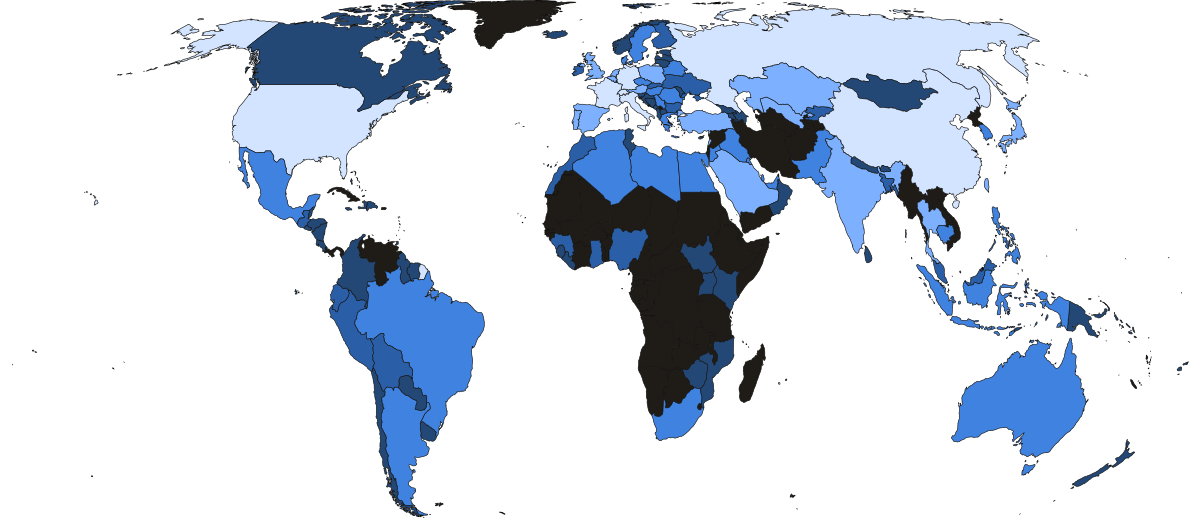
- Under 10
- 10–50
- 50–200
- 200–1,000
- Over 1,000
- Not in this ranking
- Under 5%
- 5%–15%
- 15%–30%
- 30%–60%
- Over 60%
- Not in this ranking
- Under 10
- 10–50
- 50–200
- 200–1,000
- Over 1,000
- Not in this ranking
| # | Country | Tonnes | Share of reserves | End of 2021 | Change since 2021 |
|---|---|---|---|---|---|
| 1 | United States |
8,133.5 | 81.3% | 8,133.5 | 0.0 |
| 2 | Germany |
3,349.3 | 80.8% | 3,359.1 | −9.8 |
| 3 |  Italy Italy |
2,451.9 | 77.0% | 2,451.9 | 0.0 |
| 4 |  France France |
2,437.0 | 78.6% | 2,436.5 | +0.5 |
| 5 |  China China |
2,346.4 | 8.0% | 1,948.3 | +398.1 |
| 6 |  Russia Russia |
2,326.5 | 42.6% | 2,301.7 | +24.8 |
| 7 |  Switzerland Switzerland |
1,039.9 | 12.3% | 1,040.0 | −0.1 |
| 8 |  India India |
880.5 | 16.2% | 754.1 | +126.4 |
| 9 |  Japan Japan |
846.0 | 8.5% | 846.0 | 0.0 |
| 10 |  Turkey Turkey |
772.5 | 61.0% | 657.7 | +114.8 |
| 11 |  Poland Poland |
640.2 | 28.2% | 230.8 | +409.4 |
| 12 |  Netherlands Netherlands |
612.5 | 70.1% | 612.5 | 0.0 |
| 13 |  Uzbekistan Uzbekistan |
430.8 | 87.1% | 362.0 | +68.8 |
| 14 |  Taiwan Taiwan |
423.9 | 9.4% | 423.6 | +0.3 |
| 15 |  Portugal Portugal |
382.7 | 79.0% | 382.6 | +0.1 |
| 16 |  Kazakhstan Kazakhstan |
369.8 | 76.0% | 402.4 | −32.6 |
| 17 |  Saudi Arabia Saudi Arabia |
323.1 | 7.9% | 323.1 | 0.0 |
| 18 |  United Kingdom United Kingdom |
310.3 | 19.2% | 310.3 | 0.0 |
| 19 |  Lebanon Lebanon |
286.8 | 74.5% | 286.8 | 0.0 |
| 20 |  Spain Spain |
281.6 | 29.5% | 281.6 | 0.0 |
| 21 |  Austria Austria |
280.1 | 71.5% | 280.0 | +0.1 |
| 22 |  Thailand Thailand |
234.5 | 11.0% | 244.2 | −9.7 |
| 23 |  Belgium Belgium |
227.4 | 54.7% | 227.4 | 0.0 |
| 24 |  Singapore Singapore |
203.5 | 5.9% | 153.7 | +49.8 |
| 25 |  Iraq Iraq |
175.6 | 26.1% | 96.4 | +79.2 |
| 26 |  Algeria Algeria |
173.6 | 34.7% | 173.6 | 0.0 |
| 27 |  Brazil Brazil |
172.4 | 6.0% | 129.7 | +42.7 |
| 28 |  Libya Libya |
146.7 | 20.8% | 116.6 | +30.1 |
| 29 |  Philippines Philippines |
133.5 | 16.8% | 158.8 | −25.3 |
| 30 |  Egypt Egypt |
129.7 | 31.5% | 80.9 | +48.8 |
| 31 |  Sweden Sweden |
125.7 | 22.3% | 125.7 | 0.0 |
| 32 |  South Africa South Africa |
125.5 | 22.2% | 125.3 | +0.2 |
| 33 |  Mexico Mexico |
120.0 | 5.9% | 120.0 | 0.0 |
| 34 |  Qatar Qatar |
116.2 | 24.7% | 56.7 | +59.5 |
| 35 |  Greece Greece |
114.7 | 66.7% | 114.1 | +0.6 |
| 36 |  Hungary Hungary |
110.0 | 19.3% | 94.5 | +15.5 |
| 37 |  South Korea South Korea |
104.4 | 3.1% | 104.4 | 0.0 |
| 38 |  Romania Romania |
103.6 | 15.6% | 103.6 | 0.0 |
| 39 |  Indonesia Indonesia |
87.0 | 7.8% | 78.6 | +8.4 |
| 40 |  Czechia Czechia |
84.1 | 6.0% | 10.6 | +73.5 |
| 41 |  Australia Australia |
79.9 | 14.3% | 69.9 | +10.0 |
| 42 |  Kuwait Kuwait |
79.0 | 22.9% | 79.0 | 0.0 |
| 43 |  Jordan Jordan |
77.8 | 36.9% | 64.5 | +13.3 |
| 44 |  United Arab Emirates United Arab Emirates |
75.0 | 3.7% | 55.4 | +19.6 |
| 45 |  Denmark Denmark |
66.5 | 6.8% | 66.5 | 0.0 |
| 46 |  Pakistan Pakistan |
64.8 | 31.4% | 64.6 | +0.2 |
| 47 |  Argentina Argentina |
61.7 | 16.8% | 54.8 | +6.9 |
| 48 |  Cambodia Cambodia |
57.3 | 30.3% | 50.4 | +6.9 |
| 49 |  Serbia Serbia |
54.8 | 20.2% | 37.3 | +17.5 |
| 50 |  Belarus Belarus |
53.9 | 49.2% | 53.4 | +0.5 |
| 51 |  Kyrgyzstan Kyrgyzstan |
48.7 | 79.5% | 10.2 | +38.5 |
| 52 |  Malaysia Malaysia |
44.8 | 4.4% | 38.9 | +5.9 |
| 53 |  Finland Finland |
43.9 | 25.8% | 49.0 | −5.1 |
| 54 |  Bulgaria Bulgaria |
41.0 | 64.2% | 40.8 | +0.2 |
| 55 |  Peru Peru |
34.7 | 5.8% | 34.7 | 0.0 |
| 56 |  Slovakia Slovakia |
31.7 | 22.3% | 31.7 | 0.0 |
| 57 |  Ukraine Ukraine |
27.4 | 6.9% | 27.1 | +0.3 |
| 58 |  Ecuador Ecuador |
26.3 | 30.0% | 31.3 | −5.0 |
| 59 |  Ghana Ghana |
24.6 | 32.8% | 8.7 | +15.9 |
| 60 |  Bolivia Bolivia |
22.5 | 91.5% | 42.5 | −20.0 |
| 61 |  Morocco Morocco |
22.1 | 5.4% | 22.1 | 0.0 |
| 62 |  Nigeria Nigeria |
21.5 | 5.4% | 21.4 | +0.1 |
| 63 |  Guatemala Guatemala |
15.5 | 6.0% | 6.9 | +8.6 |
| 64 |  Bangladesh Bangladesh |
14.3 | 5.9% | 14.0 | +0.3 |
| 65 |  Cyprus Cyprus |
13.9 | 63.9% | 13.9 | 0.0 |
| 66 |  Guinea Guinea |
13.2 | 50.7% | 4.2 | +9.0 |
| 67 |  Mauritius Mauritius |
12.4 | 16.6% | 12.4 | 0.0 |
| 68 |  Ireland Ireland |
12.0 | 11.4% | 9.5 | +2.5 |
| 69 |  Chile Chile |
9.8 | 2.4% | 0.2 | +9.6 |
| 70 |  Paraguay Paraguay |
8.2 | 11.0% | 8.2 | 0.0 |
| 71 |  Nepal Nepal |
8.0 | 5.3% | 8.0 | 0.0 |
| 72 |  Mongolia Mongolia |
7.9 | 18.9% | 9.7 | −1.8 |
| 73 |  Georgia Georgia |
7.8 | 13.5% | 0.0 | +7.8 |
| 74 |  North Macedonia North Macedonia |
6.9 | 15.5% | 6.9 | 0.0 |
| 75 |  Tunisia Tunisia |
6.8 | 9.4% | 6.8 | 0.0 |
| 76 |  Latvia Latvia |
6.7 | 14.3% | 6.7 | 0.0 |
| 77 |  Oman Oman |
6.7 | 3.6% | 0.0 | +6.7 |
| 78 |  Lithuania Lithuania |
5.8 | 10.5% | 5.8 | 0.0 |
| 79 |  Bahrain Bahrain |
4.7 | 10.4% | 4.7 | 0.0 |
| 80 |  Colombia Colombia |
4.7 | 1.1% | 4.7 | 0.0 |
| 81 |  Zimbabwe Zimbabwe |
4.6 | 37.9% | 0.0 | +4.6 |
| 82 |  Brunei Brunei |
4.5 | 14.5% | 4.5 | 0.0 |
| 83 |  Slovenia Slovenia |
4.2 | 15.5% | 3.2 | +1.0 |
| 84 |  Mozambique Mozambique |
3.9 | 10.2% | 3.9 | 0.0 |
| 85 |  Albania Albania |
3.7 | 5.2% | 2.8 | +0.9 |
| 86 |  Bosnia and Herzegovina Bosnia and Herzegovina |
3.5 | 3.7% | 3.0 | +0.5 |
| 87 |  Luxembourg Luxembourg |
2.2 | 9.6% | 2.2 | 0.0 |
| 88 |  El Salvador El Salvador |
2.1 | 4.8% | 1.4 | +0.7 |
| 89 |  Iceland Iceland |
2.0 | 3.3% | 2.0 | 0.0 |
| 90 |  Papua New Guinea Papua New Guinea |
2.0 | 7.3% | 1.3 | +0.7 |
| 91 |  Trinidad and Tobago Trinidad and Tobago |
2.0 | 4.4% | 1.9 | +0.1 |
| 92 |  Haiti Haiti |
1.8 | 6.5% | 1.8 | 0.0 |
| 93 |  Suriname Suriname |
1.2 | 7.9% | 1.5 | −0.3 |
| 94 |  Uruguay Uruguay |
1.0 | 0.8% | 0.1 | +0.9 |
| 95 |  Honduras Honduras |
0.7 | 0.8% | 0.7 | 0.0 |
| 96 |  Dominican Republic Dominican Republic |
0.6 | 0.5% | 0.6 | 0.0 |
| 97 |  Bhutan Bhutan |
0.5 | 4.6% | 0.6 | −0.1 |
| 98 |  Sri Lanka Sri Lanka |
0.5 | 0.8% | 3.0 | −2.5 |
| 99 |  Malta Malta |
0.4 | 2.9% | 0.1 | +0.3 |
| 100 |  Estonia Estonia |
0.2 | 1.4% | 0.2 | 0.0 |
| 101 |  Moldova Moldova |
0.1 | 0.2% | 0.1 | 0.0 |
| 102 |  Maldives Maldives |
0.1 | 1.3% | 0.0 | +0.1 |
| 103 |  Samoa Samoa |
0.1 | 1.6% | · | |
| 104 |  Armenia Armenia |
0.0 | 0.0% | 0.0 | 0.0 |
| 105 |  Azerbaijan Azerbaijan |
0.0 | 0.0% | 0.0 | 0.0 |
| 106 |  Bahamas Bahamas |
0.0 | 0.0% | 0.0 | 0.0 |
| 107 |  Belize Belize |
0.0 | 0.0% | 0.0 | 0.0 |
| 108 |  Barbados Barbados |
0.0 | 0.0% | 0.0 | 0.0 |
| 109 |  Canada Canada |
0.0 | 0.0% | 0.0 | 0.0 |
| 110 |  Comoros Comoros |
0.0 | 0.6% | 0.0 | 0.0 |
| 111 |  Cape Verde Cape Verde |
0.0 | 0.0% | 1.0 | −1.0 |
| 112 |  Costa Rica Costa Rica |
0.0 | 0.0% | 0.0 | 0.0 |
| 113 |  Fiji Fiji |
0.0 | 0.3% | 0.0 | 0.0 |
| 114 |  Guyana Guyana |
0.0 | 0.0% | · | |
| 115 |  Croatia Croatia |
0.0 | 0.0% | 0.0 | 0.0 |
| 116 |  Jamaica Jamaica |
0.0 | 0.0% | 0.0 | 0.0 |
| 117 |  Kenya Kenya |
0.0 | 0.0% | 0.0 | 0.0 |
| 118 |  Liberia Liberia |
0.0 | 0.0% | 0.0 | 0.0 |
| 119 |  Montenegro Montenegro |
0.0 | 0.0% | 0.0 | 0.0 |
| 120 |  Nicaragua Nicaragua |
0.0 | 0.0% | 0.0 | 0.0 |
| 121 |  Norway Norway |
0.0 | 0.0% | 0.0 | 0.0 |
| 122 |  New Zealand New Zealand |
0.0 | 0.0% | 0.0 | 0.0 |
| 123 |  Solomon Islands Solomon Islands |
0.0 | · | 0.2 | −0.2 |
| 124 |  Sierra Leone Sierra Leone |
0.0 | 0.0% | 0.0 | 0.0 |
| 125 |  San Marino San Marino |
0.0 | 0.0% | 0.0 | 0.0 |
| 126 |  South Sudan South Sudan |
0.0 | 0.0% | 0.0 | 0.0 |
| 127 |  Timor-Leste Timor-Leste |
0.0 | 0.0% | 0.0 | 0.0 |
| 128 |  Uganda Uganda |
0.0 | 0.0% | 0.0 | 0.0 |
| # | Country | Share of reserves | Tonnes | End of 2021 | Change since 2021 |
|---|---|---|---|---|---|
| 1 | Bolivia |
91.5% | 22.5 | 42.5 | −20.0 |
| 2 | Uzbekistan |
87.1% | 430.8 | 362.0 | +68.8 |
| 3 | United States |
81.3% | 8,133.5 | 8,133.5 | 0.0 |
| 4 | Germany |
80.8% | 3,349.3 | 3,359.1 | −9.8 |
| 5 | Kyrgyzstan |
79.5% | 48.7 | 10.2 | +38.5 |
| 6 | Portugal |
79.0% | 382.7 | 382.6 | +0.1 |
| 7 | France |
78.6% | 2,437.0 | 2,436.5 | +0.5 |
| 8 | Italy |
77.0% | 2,451.9 | 2,451.9 | 0.0 |
| 9 | Kazakhstan |
76.0% | 369.8 | 402.4 | −32.6 |
| 10 | Lebanon |
74.5% | 286.8 | 286.8 | 0.0 |
| 11 | Austria |
71.5% | 280.1 | 280.0 | +0.1 |
| 12 | Netherlands |
70.1% | 612.5 | 612.5 | 0.0 |
| 13 | Greece |
66.7% | 114.7 | 114.1 | +0.6 |
| 14 | Bulgaria |
64.2% | 41.0 | 40.8 | +0.2 |
| 15 | Cyprus |
63.9% | 13.9 | 13.9 | 0.0 |
| 16 | Turkey |
61.0% | 772.5 | 657.7 | +114.8 |
| 17 | Belgium |
54.7% | 227.4 | 227.4 | 0.0 |
| 18 | Guinea |
50.7% | 13.2 | 4.2 | +9.0 |
| 19 | Belarus |
49.2% | 53.9 | 53.4 | +0.5 |
| 20 | Russia |
42.6% | 2,326.5 | 2,301.7 | +24.8 |
| 21 | Zimbabwe |
37.9% | 4.6 | 0.0 | +4.6 |
| 22 | Jordan |
36.9% | 77.8 | 64.5 | +13.3 |
| 23 | Algeria |
34.7% | 173.6 | 173.6 | 0.0 |
| 24 | Ghana |
32.8% | 24.6 | 8.7 | +15.9 |
| 25 | Egypt |
31.5% | 129.7 | 80.9 | +48.8 |
| 26 | Pakistan |
31.4% | 64.8 | 64.6 | +0.2 |
| 27 | Cambodia |
30.3% | 57.3 | 50.4 | +6.9 |
| 28 | Ecuador |
30.0% | 26.3 | 31.3 | −5.0 |
| 29 | Spain |
29.5% | 281.6 | 281.6 | 0.0 |
| 30 | Poland |
28.2% | 640.2 | 230.8 | +409.4 |
| 31 | Iraq |
26.1% | 175.6 | 96.4 | +79.2 |
| 32 | Finland |
25.8% | 43.9 | 49.0 | −5.1 |
| 33 | Qatar |
24.7% | 116.2 | 56.7 | +59.5 |
| 34 | Kuwait |
22.9% | 79.0 | 79.0 | 0.0 |
| 35 | Sweden |
22.3% | 125.7 | 125.7 | 0.0 |
| 36 | Slovakia |
22.3% | 31.7 | 31.7 | 0.0 |
| 37 | South Africa |
22.2% | 125.5 | 125.3 | +0.2 |
| 38 | Libya |
20.8% | 146.7 | 116.6 | +30.1 |
| 39 | Serbia |
20.2% | 54.8 | 37.3 | +17.5 |
| 40 | Hungary |
19.3% | 110.0 | 94.5 | +15.5 |
| 41 | United Kingdom |
19.2% | 310.3 | 310.3 | 0.0 |
| 42 | Mongolia |
18.9% | 7.9 | 9.7 | −1.8 |
| 43 | Philippines |
16.8% | 133.5 | 158.8 | −25.3 |
| 44 | Argentina |
16.8% | 61.7 | 54.8 | +6.9 |
| 45 | Mauritius |
16.6% | 12.4 | 12.4 | 0.0 |
| 46 | India |
16.2% | 880.5 | 754.1 | +126.4 |
| 47 | Romania |
15.6% | 103.6 | 103.6 | 0.0 |
| 48 | North Macedonia |
15.5% | 6.9 | 6.9 | 0.0 |
| 49 | Slovenia |
15.5% | 4.2 | 3.2 | +1.0 |
| 50 | Brunei |
14.5% | 4.5 | 4.5 | 0.0 |
| 51 | Australia |
14.3% | 79.9 | 69.9 | +10.0 |
| 52 | Latvia |
14.3% | 6.7 | 6.7 | 0.0 |
| 53 | Georgia |
13.5% | 7.8 | 0.0 | +7.8 |
| 54 | Switzerland |
12.3% | 1,039.9 | 1,040.0 | −0.1 |
| 55 | Ireland |
11.4% | 12.0 | 9.5 | +2.5 |
| 56 | Thailand |
11.0% | 234.5 | 244.2 | −9.7 |
| 57 | Paraguay |
11.0% | 8.2 | 8.2 | 0.0 |
| 58 | Lithuania |
10.5% | 5.8 | 5.8 | 0.0 |
| 59 | Bahrain |
10.4% | 4.7 | 4.7 | 0.0 |
| 60 | Mozambique |
10.2% | 3.9 | 3.9 | 0.0 |
| 61 | Luxembourg |
9.6% | 2.2 | 2.2 | 0.0 |
| 62 | Taiwan |
9.4% | 423.9 | 423.6 | +0.3 |
| 63 | Tunisia |
9.4% | 6.8 | 6.8 | 0.0 |
| 64 | Japan |
8.5% | 846.0 | 846.0 | 0.0 |
| 65 | China |
8.0% | 2,346.4 | 1,948.3 | +398.1 |
| 66 | Saudi Arabia |
7.9% | 323.1 | 323.1 | 0.0 |
| 67 | Suriname |
7.9% | 1.2 | 1.5 | −0.3 |
| 68 | Indonesia |
7.8% | 87.0 | 78.6 | +8.4 |
| 69 | Papua New Guinea |
7.3% | 2.0 | 1.3 | +0.7 |
| 70 | Ukraine |
6.9% | 27.4 | 27.1 | +0.3 |
| 71 | Denmark |
6.8% | 66.5 | 66.5 | 0.0 |
| 72 | Haiti |
6.5% | 1.8 | 1.8 | 0.0 |
| 73 | Brazil |
6.0% | 172.4 | 129.7 | +42.7 |
| 74 | Czechia |
6.0% | 84.1 | 10.6 | +73.5 |
| 75 | Guatemala |
6.0% | 15.5 | 6.9 | +8.6 |
| 76 | Singapore |
5.9% | 203.5 | 153.7 | +49.8 |
| 77 | Mexico |
5.9% | 120.0 | 120.0 | 0.0 |
| 78 | Bangladesh |
5.9% | 14.3 | 14.0 | +0.3 |
| 79 | Peru |
5.8% | 34.7 | 34.7 | 0.0 |
| 80 | Morocco |
5.4% | 22.1 | 22.1 | 0.0 |
| 81 | Nigeria |
5.4% | 21.5 | 21.4 | +0.1 |
| 82 | Nepal |
5.3% | 8.0 | 8.0 | 0.0 |
| 83 | Albania |
5.2% | 3.7 | 2.8 | +0.9 |
| 84 | El Salvador |
4.8% | 2.1 | 1.4 | +0.7 |
| 85 | Bhutan |
4.6% | 0.5 | 0.6 | −0.1 |
| 86 | Malaysia |
4.4% | 44.8 | 38.9 | +5.9 |
| 87 | Trinidad and Tobago |
4.4% | 2.0 | 1.9 | +0.1 |
| 88 | United Arab Emirates |
3.7% | 75.0 | 55.4 | +19.6 |
| 89 | Bosnia and Herzegovina |
3.7% | 3.5 | 3.0 | +0.5 |
| 90 | Oman |
3.6% | 6.7 | 0.0 | +6.7 |
| 91 | Iceland |
3.3% | 2.0 | 2.0 | 0.0 |
| 92 | South Korea |
3.1% | 104.4 | 104.4 | 0.0 |
| 93 | Malta |
2.9% | 0.4 | 0.1 | +0.3 |
| 94 | Chile |
2.4% | 9.8 | 0.2 | +9.6 |
| 95 | Samoa |
1.6% | 0.1 | · | |
| 96 | Estonia |
1.4% | 0.2 | 0.2 | 0.0 |
| 97 | Maldives |
1.3% | 0.1 | 0.0 | +0.1 |
| 98 | Colombia |
1.1% | 4.7 | 4.7 | 0.0 |
| 99 | Uruguay |
0.8% | 1.0 | 0.1 | +0.9 |
| 100 | Honduras |
0.8% | 0.7 | 0.7 | 0.0 |
| 101 | Sri Lanka |
0.8% | 0.5 | 3.0 | −2.5 |
| 102 | Comoros |
0.6% | 0.0 | 0.0 | 0.0 |
| 103 | Dominican Republic |
0.5% | 0.6 | 0.6 | 0.0 |
| 104 | Fiji |
0.3% | 0.0 | 0.0 | 0.0 |
| 105 | Moldova |
0.2% | 0.1 | 0.1 | 0.0 |
| 106 | Armenia |
0.0% | 0.0 | 0.0 | 0.0 |
| 107 | Azerbaijan |
0.0% | 0.0 | 0.0 | 0.0 |
| 108 | Bahamas |
0.0% | 0.0 | 0.0 | 0.0 |
| 109 | Belize |
0.0% | 0.0 | 0.0 | 0.0 |
| 110 | Barbados |
0.0% | 0.0 | 0.0 | 0.0 |
| 111 | Canada |
0.0% | 0.0 | 0.0 | 0.0 |
| 112 | Cape Verde |
0.0% | 0.0 | 1.0 | −1.0 |
| 113 | Costa Rica |
0.0% | 0.0 | 0.0 | 0.0 |
| 114 | Guyana |
0.0% | 0.0 | · | |
| 115 | Croatia |
0.0% | 0.0 | 0.0 | 0.0 |
| 116 | Jamaica |
0.0% | 0.0 | 0.0 | 0.0 |
| 117 | Kenya |
0.0% | 0.0 | 0.0 | 0.0 |
| 118 | Liberia |
0.0% | 0.0 | 0.0 | 0.0 |
| 119 | Montenegro |
0.0% | 0.0 | 0.0 | 0.0 |
| 120 | Nicaragua |
0.0% | 0.0 | 0.0 | 0.0 |
| 121 | Norway |
0.0% | 0.0 | 0.0 | 0.0 |
| 122 | New Zealand |
0.0% | 0.0 | 0.0 | 0.0 |
| 123 | Sierra Leone |
0.0% | 0.0 | 0.0 | 0.0 |
| 124 | San Marino |
0.0% | 0.0 | 0.0 | 0.0 |
| 125 | South Sudan |
0.0% | 0.0 | 0.0 | 0.0 |
| 126 | Timor-Leste |
0.0% | 0.0 | 0.0 | 0.0 |
| 127 | Uganda |
0.0% | 0.0 | 0.0 | 0.0 |
| # | Country | End of 2021 | Tonnes | Share of reserves | Change since 2021 |
|---|---|---|---|---|---|
| 1 | United States |
8,133.5 | 8,133.5 | 81.3% | 0.0 |
| 2 | Germany |
3,359.1 | 3,349.3 | 80.8% | −9.8 |
| 3 | Italy |
2,451.9 | 2,451.9 | 77.0% | 0.0 |
| 4 | France |
2,436.5 | 2,437.0 | 78.6% | +0.5 |
| 5 | Russia |
2,301.7 | 2,326.5 | 42.6% | +24.8 |
| 6 | China |
1,948.3 | 2,346.4 | 8.0% | +398.1 |
| 7 | Switzerland |
1,040.0 | 1,039.9 | 12.3% | −0.1 |
| 8 | Japan |
846.0 | 846.0 | 8.5% | 0.0 |
| 9 | India |
754.1 | 880.5 | 16.2% | +126.4 |
| 10 | Turkey |
657.7 | 772.5 | 61.0% | +114.8 |
| 11 | Netherlands |
612.5 | 612.5 | 70.1% | 0.0 |
| 12 | Taiwan |
423.6 | 423.9 | 9.4% | +0.3 |
| 13 | Kazakhstan |
402.4 | 369.8 | 76.0% | −32.6 |
| 14 | Portugal |
382.6 | 382.7 | 79.0% | +0.1 |
| 15 | Uzbekistan |
362.0 | 430.8 | 87.1% | +68.8 |
| 16 | Saudi Arabia |
323.1 | 323.1 | 7.9% | 0.0 |
| 17 | United Kingdom |
310.3 | 310.3 | 19.2% | 0.0 |
| 18 | Lebanon |
286.8 | 286.8 | 74.5% | 0.0 |
| 19 | Spain |
281.6 | 281.6 | 29.5% | 0.0 |
| 20 | Austria |
280.0 | 280.1 | 71.5% | +0.1 |
| 21 | Thailand |
244.2 | 234.5 | 11.0% | −9.7 |
| 22 | Poland |
230.8 | 640.2 | 28.2% | +409.4 |
| 23 | Belgium |
227.4 | 227.4 | 54.7% | 0.0 |
| 24 | Algeria |
173.6 | 173.6 | 34.7% | 0.0 |
| 25 | Philippines |
158.8 | 133.5 | 16.8% | −25.3 |
| 26 | Singapore |
153.7 | 203.5 | 5.9% | +49.8 |
| 27 | Brazil |
129.7 | 172.4 | 6.0% | +42.7 |
| 28 | Sweden |
125.7 | 125.7 | 22.3% | 0.0 |
| 29 | South Africa |
125.3 | 125.5 | 22.2% | +0.2 |
| 30 | Mexico |
120.0 | 120.0 | 5.9% | 0.0 |
| 31 | Libya |
116.6 | 146.7 | 20.8% | +30.1 |
| 32 | Greece |
114.1 | 114.7 | 66.7% | +0.6 |
| 33 | South Korea |
104.4 | 104.4 | 3.1% | 0.0 |
| 34 | Romania |
103.6 | 103.6 | 15.6% | 0.0 |
| 35 | Iraq |
96.4 | 175.6 | 26.1% | +79.2 |
| 36 | Hungary |
94.5 | 110.0 | 19.3% | +15.5 |
| 37 | Egypt |
80.9 | 129.7 | 31.5% | +48.8 |
| 38 | Kuwait |
79.0 | 79.0 | 22.9% | 0.0 |
| 39 | Indonesia |
78.6 | 87.0 | 7.8% | +8.4 |
| 40 | Australia |
69.9 | 79.9 | 14.3% | +10.0 |
| 41 | Denmark |
66.5 | 66.5 | 6.8% | 0.0 |
| 42 | Pakistan |
64.6 | 64.8 | 31.4% | +0.2 |
| 43 | Jordan |
64.5 | 77.8 | 36.9% | +13.3 |
| 44 | Qatar |
56.7 | 116.2 | 24.7% | +59.5 |
| 45 | United Arab Emirates |
55.4 | 75.0 | 3.7% | +19.6 |
| 46 | Argentina |
54.8 | 61.7 | 16.8% | +6.9 |
| 47 | Belarus |
53.4 | 53.9 | 49.2% | +0.5 |
| 48 | Cambodia |
50.4 | 57.3 | 30.3% | +6.9 |
| 49 | Finland |
49.0 | 43.9 | 25.8% | −5.1 |
| 50 | Bolivia |
42.5 | 22.5 | 91.5% | −20.0 |
| 51 | Bulgaria |
40.8 | 41.0 | 64.2% | +0.2 |
| 52 | Malaysia |
38.9 | 44.8 | 4.4% | +5.9 |
| 53 | Serbia |
37.3 | 54.8 | 20.2% | +17.5 |
| 54 | Peru |
34.7 | 34.7 | 5.8% | 0.0 |
| 55 | Slovakia |
31.7 | 31.7 | 22.3% | 0.0 |
| 56 | Ecuador |
31.3 | 26.3 | 30.0% | −5.0 |
| 57 | Ukraine |
27.1 | 27.4 | 6.9% | +0.3 |
| 58 | Morocco |
22.1 | 22.1 | 5.4% | 0.0 |
| 59 | Nigeria |
21.4 | 21.5 | 5.4% | +0.1 |
| 60 | Bangladesh |
14.0 | 14.3 | 5.9% | +0.3 |
| 61 | Cyprus |
13.9 | 13.9 | 63.9% | 0.0 |
| 62 | Mauritius |
12.4 | 12.4 | 16.6% | 0.0 |
| 63 | Czechia |
10.6 | 84.1 | 6.0% | +73.5 |
| 64 | Kyrgyzstan |
10.2 | 48.7 | 79.5% | +38.5 |
| 65 | Mongolia |
9.7 | 7.9 | 18.9% | −1.8 |
| 66 | Ireland |
9.5 | 12.0 | 11.4% | +2.5 |
| 67 | Ghana |
8.7 | 24.6 | 32.8% | +15.9 |
| 68 | Paraguay |
8.2 | 8.2 | 11.0% | 0.0 |
| 69 | Nepal |
8.0 | 8.0 | 5.3% | 0.0 |
| 70 | Guatemala |
6.9 | 15.5 | 6.0% | +8.6 |
| 71 | North Macedonia |
6.9 | 6.9 | 15.5% | 0.0 |
| 72 | Tunisia |
6.8 | 6.8 | 9.4% | 0.0 |
| 73 | Latvia |
6.7 | 6.7 | 14.3% | 0.0 |
| 74 | Lithuania |
5.8 | 5.8 | 10.5% | 0.0 |
| 75 | Bahrain |
4.7 | 4.7 | 10.4% | 0.0 |
| 76 | Colombia |
4.7 | 4.7 | 1.1% | 0.0 |
| 77 | Brunei |
4.5 | 4.5 | 14.5% | 0.0 |
| 78 | Guinea |
4.2 | 13.2 | 50.7% | +9.0 |
| 79 | Mozambique |
3.9 | 3.9 | 10.2% | 0.0 |
| 80 | Slovenia |
3.2 | 4.2 | 15.5% | +1.0 |
| 81 | Bosnia and Herzegovina |
3.0 | 3.5 | 3.7% | +0.5 |
| 82 | Sri Lanka |
3.0 | 0.5 | 0.8% | −2.5 |
| 83 | Albania |
2.8 | 3.7 | 5.2% | +0.9 |
| 84 | Luxembourg |
2.2 | 2.2 | 9.6% | 0.0 |
| 85 | Iceland |
2.0 | 2.0 | 3.3% | 0.0 |
| 86 | Trinidad and Tobago |
1.9 | 2.0 | 4.4% | +0.1 |
| 87 | Haiti |
1.8 | 1.8 | 6.5% | 0.0 |
| 88 | Suriname |
1.5 | 1.2 | 7.9% | −0.3 |
| 89 | El Salvador |
1.4 | 2.1 | 4.8% | +0.7 |
| 90 | Papua New Guinea |
1.3 | 2.0 | 7.3% | +0.7 |
| 91 | Cape Verde |
1.0 | 0.0 | 0.0% | −1.0 |
| 92 | Honduras |
0.7 | 0.7 | 0.8% | 0.0 |
| 93 | Dominican Republic |
0.6 | 0.6 | 0.5% | 0.0 |
| 94 | Bhutan |
0.6 | 0.5 | 4.6% | −0.1 |
| 95 | Chile |
0.2 | 9.8 | 2.4% | +9.6 |
| 96 | Estonia |
0.2 | 0.2 | 1.4% | 0.0 |
| 97 | Solomon Islands |
0.2 | 0.0 | · | −0.2 |
| 98 | Uruguay |
0.1 | 1.0 | 0.8% | +0.9 |
| 99 | Malta |
0.1 | 0.4 | 2.9% | +0.3 |
| 100 | Moldova |
0.1 | 0.1 | 0.2% | 0.0 |
| 101 | Georgia |
0.0 | 7.8 | 13.5% | +7.8 |
| 102 | Oman |
0.0 | 6.7 | 3.6% | +6.7 |
| 103 | Zimbabwe |
0.0 | 4.6 | 37.9% | +4.6 |
| 104 | Maldives |
0.0 | 0.1 | 1.3% | +0.1 |
| 105 | Armenia |
0.0 | 0.0 | 0.0% | 0.0 |
| 106 | Azerbaijan |
0.0 | 0.0 | 0.0% | 0.0 |
| 107 | Bahamas |
0.0 | 0.0 | 0.0% | 0.0 |
| 108 | Belize |
0.0 | 0.0 | 0.0% | 0.0 |
| 109 | Barbados |
0.0 | 0.0 | 0.0% | 0.0 |
| 110 | Canada |
0.0 | 0.0 | 0.0% | 0.0 |
| 111 | Comoros |
0.0 | 0.0 | 0.6% | 0.0 |
| 112 | Costa Rica |
0.0 | 0.0 | 0.0% | 0.0 |
| 113 | Fiji |
0.0 | 0.0 | 0.3% | 0.0 |
| 114 | Croatia |
0.0 | 0.0 | 0.0% | 0.0 |
| 115 | Jamaica |
0.0 | 0.0 | 0.0% | 0.0 |
| 116 | Kenya |
0.0 | 0.0 | 0.0% | 0.0 |
| 117 | Liberia |
0.0 | 0.0 | 0.0% | 0.0 |
| 118 | Montenegro |
0.0 | 0.0 | 0.0% | 0.0 |
| 119 | Nicaragua |
0.0 | 0.0 | 0.0% | 0.0 |
| 120 | Norway |
0.0 | 0.0 | 0.0% | 0.0 |
| 121 | New Zealand |
0.0 | 0.0 | 0.0% | 0.0 |
| 122 | Sierra Leone |
0.0 | 0.0 | 0.0% | 0.0 |
| 123 | San Marino |
0.0 | 0.0 | 0.0% | 0.0 |
| 124 | South Sudan |
0.0 | 0.0 | 0.0% | 0.0 |
| 125 | Timor-Leste |
0.0 | 0.0 | 0.0% | 0.0 |
| 126 | Uganda |
0.0 | 0.0 | 0.0% | 0.0 |
Why they rank where they do
-
United States
Until 1971, foreign governments could exchange their dollars for US gold at $35 an ounce. On the evening of August 15, 1971, President Nixon announced that they no longer could.
-
Germany
The Bundesbank moved 674 tonnes of gold to Frankfurt from Paris and New York between 2013 and 2017, three years ahead of schedule. In late January 2026, after President Trump's clash with Denmark over Greenland, economists, a taxpayers' group and a Greens politician in Germany called for bringing the gold in New York home too. Bundesbank president Joachim Nagel said on January 28, 2026: "I have no doubt that our gold is safely kept at the Fed in New York."
-
Italy
In December 2025 the European Central Bank twice urged Italy to reconsider a budget amendment from the governing Brothers of Italy party. The amendment passed with the budget law of December 30, 2025. It says the gold "managed and held by the Bank of Italy" belongs "to the Italian People". The gold stayed on the Bank of Italy's balance sheet, and Economy Minister Giancarlo Giorgetti called the provision "a political principle".
-
France
Between 1963 and 1966, under President Charles de Gaulle, France turned dollars into gold and brought 3,313 tonnes home from New York and London, in about 44 voyages on passenger liners and 129 flights. The popular story that de Gaulle sent a warship to collect it is a myth. Between July 2025 and January 2026 the Banque de France sold its last 129 tonnes in New York and bought standard bars in Europe, making a gain of about €12.8 billion. All French gold is now in Paris.
-
China
China's central bank reported gold purchases for 18 months in a row from November 2022, paused from May to October 2024, and has reported purchases every month since November 2024. In a note dated September 23, 2026, Goldman Sachs estimated that China bought about 35 tonnes of gold in July 2026, about 75% more than the roughly 20 tonnes the central bank reported.
-
Russia
The IMF's latest figure for Russia is from November 2025. The Bank of Russia sold 43.5 tonnes in the first half of 2026, matching sales by the Finance Ministry that pay for the budget deficit. By the Bank of Russia's own count, it held about 2,277 tonnes on August 1, 2026, its lowest since January 2020.
-
Switzerland
Switzerland removed the franc's link to gold from its constitution on January 1, 2000. The Swiss National Bank then sold 1,300 tonnes between 2000 and 2005 and another 250 tonnes in 2007 and 2008. On November 30, 2014, Swiss voters rejected the "Save our Swiss gold" initiative by 77.3%.
-
India
In July 1991, during a balance-of-payments crisis, the Reserve Bank of India pledged 46.91 tonnes of gold with the Bank of England and the Bank of Japan for a $405 million loan. The Reserve Bank of India repaid the loan between September and November 1991.
-
Turkey
The IMF figure includes about 242 tonnes of gold that Turkey's central bank holds for commercial banks, under reserve requirements, deposits and swaps. The World Gold Council leaves that gold out and puts Turkey's own official gold at 530.6 tonnes. Turkey's central bank sold about 85 tonnes in the first seven months of 2026 to defend the lira.
-
Poland
The National Bank of Poland bought 90 tonnes of gold in 2024 and 102 tonnes in 2025, more than any other central bank. On January 20, 2026 its board approved buying up to 150 tonnes more, for a target of 700 tonnes. Governor Adam Glapiński said on September 10, 2026 that Poland's gold had reached 648 tonnes.
-
Uzbekistan
Uzbekistan's central bank sold 1 tonne of gold in April 2026 and another in July, but it still added 40 tonnes over the first seven months of 2026.
-
United Kingdom
Between July 1999 and March 2002, under Chancellor Gordon Brown, the Bank of England sold about 395 tonnes of the UK's gold in 17 auctions, at an average of $274.90 an ounce. The auctions raised about $3.5 billion, near a 20-year low in the gold price. Traders nicknamed the period "Brown's Bottom".
-
Lebanon
Lebanon's Law No. 42 of 1986 bars any sale of the central bank's gold without an act of parliament. About a third of Lebanon's gold is reportedly stored in the United States, but the central bank has not said where.
-
Czechia
The Czech National Bank held about 12 tonnes of gold at the end of 2022 and plans to reach 100 tonnes by 2028. It had bought gold for 41 months in a row as of July 2026.
-
Canada
Canada sold the last of its gold coins between December 2015 and February 2016, leaving 77 ounces. Canada's official reserves have shown no gold since.
Which country has the most gold?
The United States holds 8,133.5 tonnes of gold, more than any other country. Germany, Italy and France together hold 8,238.2 tonnes, slightly more than the United States alone. The US Treasury carries its gold on the books at $42.2222 an ounce, a price set by law in 1973. At that price, the gold is worth about $11 billion. At the market price of about $4,027 an ounce at the end of July 2026, the same gold was worth about $1.05 trillion.
Fort Knox holds 147.3 million ounces, 56% of the Treasury's gold. West Point holds 54.1 million ounces, Denver 43.9 million and the Federal Reserve Bank of New York 13.5 million. US gold peaked at about 22,000 tonnes in August 1949.
United States8,133.5
The next 3 together8,238.2
Germany, Italy and France
Why are central banks buying so much gold?
Buying jumped in 2022, when Western governments froze about $300 billion of Russia's central bank reserves. Reserves held as dollars or euros can be frozen, but gold kept in a country's own vaults cannot. Central banks bought 1,082 tonnes of gold in 2022, 1,051 in 2023, 1,092 in 2024 and 863 in 2025. From 2010 to 2021 they bought an average of 473 tonnes a year. Poland and China added the most.
The price rose with the buying. Gold first passed $4,000 an ounce on October 8, 2025 and reached a record $5,595.47 on January 29, 2026. By the end of 2024, gold had passed the euro to become the second-largest reserve asset after the US dollar. In a World Gold Council survey published June 16, 2026, a record 45% of central banks said they planned to add gold in the next 12 months.
- Poland+409.4
- China+398.1
- India+126.4
- Turkey+114.8
- Iraq+79.2
- Czechia+73.5
- Uzbekistan+68.8
- Qatar+59.5
Change in gold reserves from December 2021 to July 2026, in tonnes
Where do countries keep their gold?
Many central banks keep part of their gold at the Federal Reserve Bank of New York or the Bank of England, the world's two largest gold custodians. The Bank of England's vaults hold about 400,000 bars, worth more than £200 billion, for the UK government, commercial banks and other central banks. The Bank of England owns only two of those bars.
At the end of 2025, 51% of Germany's gold was in Frankfurt, 37% in New York and 12% in London. In 2014 the Dutch central bank moved 122.5 tonnes from New York to Amsterdam, and between March and August 2026 it moved about 86 tonnes from New York and Ottawa to London. In November 2019 Poland flew 100 tonnes home from London in eight flights. By March 2026, 680 of India's 880.5 tonnes were in India.
Which countries hold the most of their reserves in gold?
Bolivia has the highest share, 91.5%, but that figure is from its latest report to the IMF, for April 2025. Uzbekistan follows at 87.1%. The United States, Germany, Portugal, France and Italy each keep close to 80% of their reserves in gold.
The United States and the eurozone countries issue the dollar and the euro, the currencies other central banks hold as reserves, so they need few foreign currencies of their own. Most of their gold dates from the decades when currencies were tied to gold. Countries with large trade surpluses, such as China and Japan, hold mostly foreign currencies. Gold is only 8.0% of China's reserves and 8.5% of Japan's.
- Bolivia91.5%
- Uzbekistan87.1%
- United States81.3%
- Germany80.8%
- Kyrgyzstan79.5%
- Portugal79.0%
- France78.6%
- Italy77.0%