
Country profile · South America
 Colombia
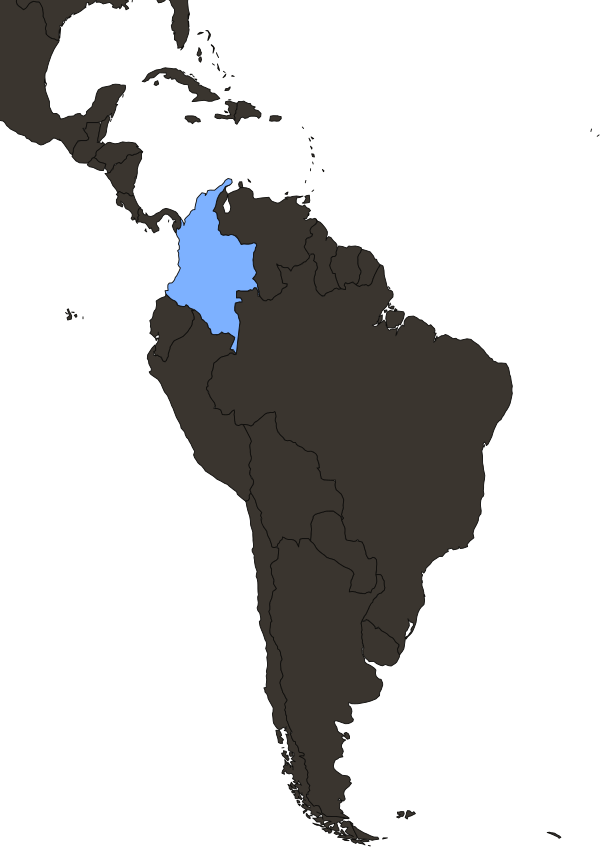
Colombia has 53.4 million people (2025) and Latin America's fourth-largest economy. Abelardo de la Espriella, a right-wing lawyer, became president on August 7, 2026, after winning by less than one point. He ended all peace talks with armed groups. Colombia hosts 2.8 million Venezuelans, more refugees and migrants needing protection than any other country.
Where Colombia ranks
All rankings →How does Colombia vote at the UN?
Colombia's voting record →Share of recorded UN General Assembly votes on which Colombia and each country voted the same way, 2025.
Who runs Colombia?
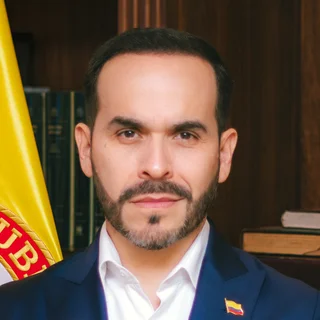
President Abelardo de la Espriella has run Colombia since August 7, 2026. He beat Iván Cepeda in the June 21 runoff by 49.66% to 48.70%, the narrowest margin on record in percentage points. His 12,960,166 votes were the most any Colombian candidate has received. President Trump endorsed him. He succeeded Gustavo Petro, Colombia's first leftist president, whom the US Treasury sanctioned in October 2025. Born in Bogotá on July 31, 1978 and raised in Montería, he is a lawyer whose firm defended politicians convicted of ties to paramilitaries. He once represented Alex Saab, later charged with laundering money for Venezuela's government. He holds Colombian, Italian and US citizenship, campaigned as "El Tigre" and had never held elected office. His party, Defensores de la Patria, has no Senate seats, but 13 parties back the government, giving it about 63 of 103 seats (chart).
- Government coalition (13 parties) 63
- Opposition, led by Pacto Histórico 29
- Independents 11
Campaign photo (2026): Abelardo de la Espriella, Wikimedia Commons, CC0
Who are Colombia's allies and rivals?
The United States is Colombia's main ally. On August 7, 2026 the State Department pledged $1 billion in security aid, pending Congress. US Secretary of State Marco Rubio visited Barranquilla on September 8. Washington still lists Colombia as failing in the drug fight, with a waiver that keeps aid flowing, and charges a 12.5% tariff on some goods. Colombia joined the Shield of the Americas on August 12. President de la Espriella restored relations with Israel and recognized Israeli sovereignty over the Golan Heights on August 10. He announced breaks with Cuba and Nicaragua in July 2026 and broke with Iran on September 25. Ecuador is a partner after a tariff war ended in June. Colombia has had an ambassador in Venezuela again since August, but the ELN guerrillas operate from Venezuelan territory. Nicaragua won sea area around San Andrés at the International Court of Justice in 2012 (map).
Allies and partners
 United States$1 billion security aid pledged, August 2026
 IsraelTies restored, Golan recognized, August 2026
 SpainSecond-largest foreign investor after the US
 EcuadorTariff war ended June 2026
 PanamaSecond-largest export market


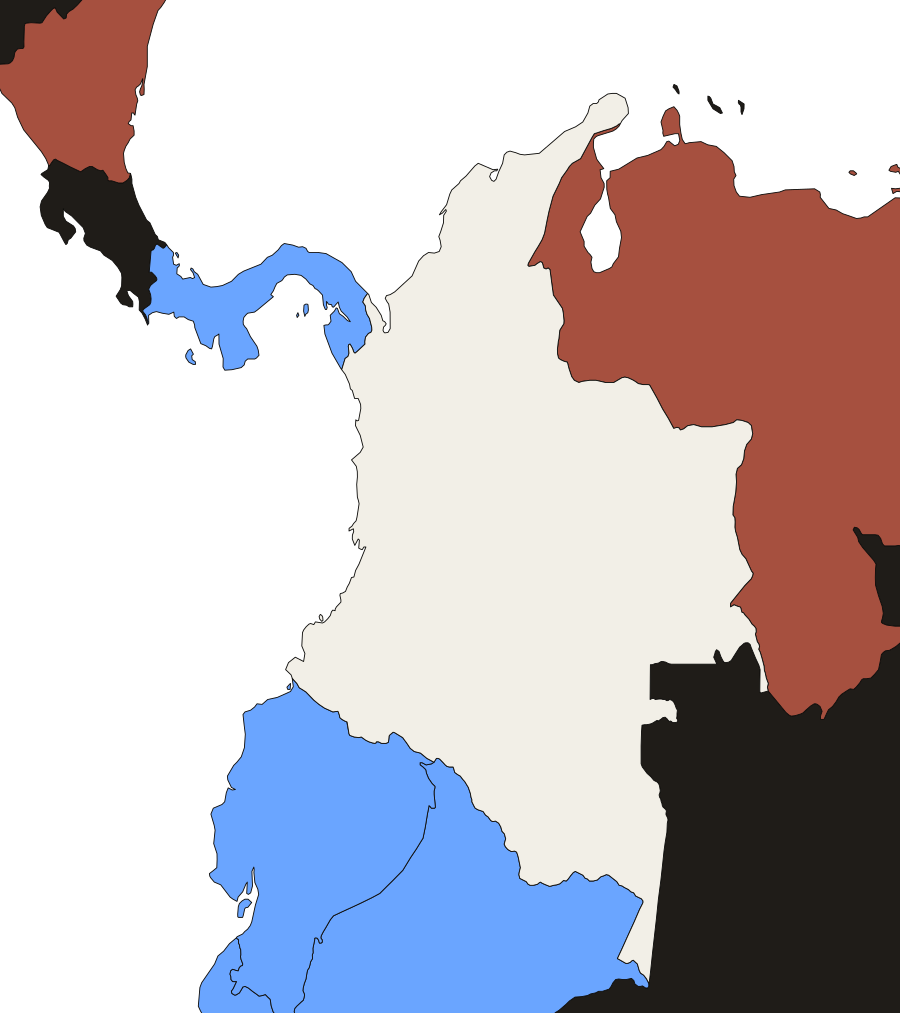
- Catatumbo ELN fighting displaced over 100,000 people in 2025. The new government's first air strike hit here on August 11, 2026.
- San Andrés Colombian islands. The ICJ gave Nicaragua much of the surrounding sea in 2012.
- Darién Gap Jungle route to Panama. 520,085 migrants crossed in 2023, about 3,091 in 2025.
- Santa Rosa island Amazon island that Peru made a district in 2025. Colombia disputes it.
- Colombia
- Partner
- Tensions
Who does Colombia trade with?
The United States bought 29.6% of Colombia's goods exports in 2025, and China supplied 27.5% of its imports, more than the United States (chart). Exports were $50.2 billion and imports $70.5 billion, a deficit of $16.4 billion (DANE). Oil and its products earned $12.5 billion, a quarter of exports, but proven reserves cover only 7.4 years. President de la Espriella said in September 2026 he would reopen exploration, including fracking. Coffee earned $5.85 billion and passed coal as the second export. Colombia is the world's second-largest flower exporter. Colombians abroad sent home a record $13.1 billion in remittances in 2025, more than oil exports earned that year. A US 12.5% tariff from July 24, 2026 covers about 30% of sales to the United States. Coffee, oil, coal and bananas are exempt, but flowers are not. The economy grew 2.6% in 2025.
Sells to
Share of Colombia's exports
- United States29.6%
- Panama7.3%
 India4.3%
 Brazil3.8%
 Netherlands3.7%
Buys from
Share of Colombia's imports
 China27.5%
- United States22.9%
 Mexico5.0%
- Brazil5.0%
 Germany3.3%
Goods, 2025. Shares of Colombia's exports and imports, from Colombia's statistics department (DANE).
How strong is Colombia's military?
Colombia spent $14.5 billion on its military in 2025, 3.2% of GDP, the highest share in Latin America (chart). The IISS counts 285,000 active troops. Military service is compulsory for men. Colombia fought Peru in 1932-33 and sent troops to the Korean War, but its wars have mostly been against armed groups at home. It signed a deal with Sweden's Saab in November 2025 for 17 Gripen jets, about $3.6 billion. It is NATO's first Latin American partner and a US major non-NATO ally. The 2016 peace deal disarmed about 13,000 FARC guerrillas, but armed groups have grown since: the Defense Ministry counted 28,802 members in July 2026, against 15,120 in 2022. The largest is the Clan del Golfo. President de la Espriella ended all peace talks by September 2026 and ordered air strikes. Colombia has no nuclear weapons.
Military spending as a share of GDP in the Americas, 2025
Full ranking →- Colombia3.2%
- United States3.1%
 Canada1.6%
 Chile1.5%
- Brazil1.1%
- Mexico0.7%
 Argentina0.6%
SIPRI Military Expenditure Database, 2026 edition
How much cocaine does Colombia produce?
UNODC estimates that Colombia could have produced 3,001 tonnes of cocaine in 2024, about three quarters of the world's supply. Coca covered a record 261,000 hectares in 2024, against 48,000 in 2013. Most grows on the Pacific coast and in Catatumbo. Forced eradication fell from 20,325 hectares in 2023 to 9,403 in 2024. Colombia stopped aerial spraying in 2015, after the WHO's cancer agency called glyphosate "probably carcinogenic." In August 2026 the government lifted the 2015 suspension and planned a test with glufosinate in Putumayo, but a court suspended it on September 22. The United States has listed Colombia as failing in the drug fight since September 2025. US strikes on suspected drug boats, which began that month, have killed at least 234 people. Colombia seized a record amount of cocaine in 2025.