
Ranking · Military
Military spending by country
The United States spent $954 billion on its military in 2025, more than the next six countries combined. China was second, at an estimated $336 billion. World military spending reached a record $2.9 trillion, the 11th rise in a row, and the United States accounted for about a third of it.
Where the world's $2.9 trillion went
Share of world military spending, 2025
 United States 33%
 12%
7%
Everyone else 42%
12%
7%
Everyone else 42%
- United States $954bn
- China $336bn
- Russia $190bn
- Germany $114bn
- India $92.1bn
- Everyone else $1.21tn
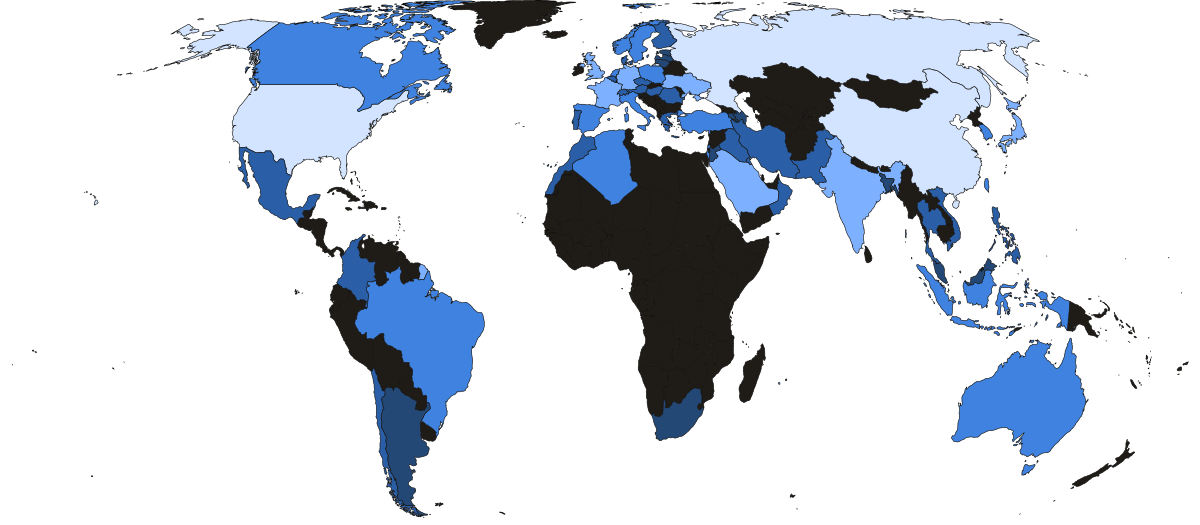
- Under $5bn
- $5bn–$15bn
- $15bn–$50bn
- $50bn–$150bn
- Over $150bn
- Not in this ranking
- Under 1%
- 1%–2%
- 2%–3%
- 3%–5%
- Over 5%
- Not in this ranking
| # | Country | Spending | Share of GDP | Share of world |
|---|---|---|---|---|
| 1 | United States |
$954bn | 3.1% | 32.9% |
| 2 | China est. |
$336bn | 1.7% | 11.6% |
| 3 |  Russia est. Russia est. |
$190bn | 7.5% | 6.6% |
| 4 |  Germany Germany |
$114bn | 2.3% | 3.9% |
| 5 |  India India |
$92.1bn | 2.3% | 3.2% |
| 6 |  United Kingdom United Kingdom |
$89.0bn | 2.4% | 3.1% |
| 7 |  Ukraine Ukraine |
$84.1bn | 39.6% | 2.9% |
| 8 |  Saudi Arabia est. Saudi Arabia est. |
$83.2bn | 6.5% | 2.9% |
| 9 |  France France |
$68.0bn | 2.0% | 2.3% |
| 10 |  Japan Japan |
$62.2bn | 1.4% | 2.1% |
| 11 |  Israel Israel |
$48.3bn | 7.8% | 1.7% |
| 12 |  Italy Italy |
$48.1bn | 1.9% | 1.7% |
| 13 |  South Korea South Korea |
$47.8bn | 2.6% | 1.6% |
| 14 |  Poland Poland |
$46.8bn | 4.5% | 1.6% |
| 15 |  Spain Spain |
$40.2bn | 2.1% | 1.4% |
| 16 |  Canada Canada |
$37.5bn | 1.6% | 1.3% |
| 17 |  Australia Australia |
$35.3bn | 1.9% | 1.2% |
| 18 |  Turkey Turkey |
$30.0bn | 1.9% | 1.0% |
| 19 |  Netherlands Netherlands |
$28.9bn | 2.2% | 1.0% |
| 20 |  Algeria Algeria |
$25.4bn | 8.8% | 0.9% |
| 21 |  Brazil Brazil |
$23.9bn | 1.1% | 0.8% |
| 22 |  Taiwan Taiwan |
$18.2bn | 2.1% | 0.6% |
| 23 |  Singapore Singapore |
$17.4bn | 3.0% | 0.6% |
| 24 |  Norway Norway |
$17.0bn | 3.3% | 0.6% |
| 25 |  Sweden Sweden |
$16.5bn | 2.5% | 0.6% |
| 26 |  Indonesia Indonesia |
$15.0bn | 1.0% | 0.5% |
| 27 |  Denmark Denmark |
$14.9bn | 3.3% | 0.5% |
| 28 |  Belgium Belgium |
$14.5bn | 2.0% | 0.5% |
| 29 |  Colombia Colombia |
$14.5bn | 3.2% | 0.5% |
| 30 |  Mexico Mexico |
$13.6bn | 0.7% | 0.5% |
| 31 |  Pakistan Pakistan |
$11.9bn | 2.9% | 0.4% |
| 32 |  Vietnam Vietnam |
$10.5bn | 2.2% | 0.4% |
| 33 |  Romania Romania |
$9.7bn | 2.3% | 0.3% |
| 34 |  Greece Greece |
$8.4bn | 3.0% | 0.3% |
| 35 |  Kuwait Kuwait |
$8.1bn | 4.7% | 0.3% |
| 36 |  Finland Finland |
$8.1bn | 2.6% | 0.3% |
| 37 |  Switzerland Switzerland |
$7.6bn | 0.8% | 0.3% |
| 38 |  Iran Iran |
$7.4bn | 2.1% | 0.3% |
| 39 |  Czechia Czechia |
$7.1bn | 1.8% | 0.2% |
| 40 |  Iraq Iraq |
$6.4bn | 2.4% | 0.2% |
| 41 |  Philippines Philippines |
$6.4bn | 1.3% | 0.2% |
| 42 |  Austria Austria |
$6.4bn | 1.1% | 0.2% |
| 43 |  Morocco Morocco |
$6.3bn | 3.5% | 0.2% |
| 44 |  Oman Oman |
$6.0bn | 5.7% | 0.2% |
| 45 |  Thailand Thailand |
$6.0bn | 1.0% | 0.2% |
| 46 |  Portugal Portugal |
$5.9bn | 1.7% | 0.2% |
| 47 |  Chile Chile |
$5.3bn | 1.5% | 0.2% |
| 48 |  Hungary Hungary |
$5.0bn | 2.0% | 0.2% |
| 49 |  Azerbaijan Azerbaijan |
$4.9bn | 6.5% | 0.2% |
| 50 |  Malaysia Malaysia |
$4.9bn | 1.0% | 0.2% |
| 51 |  Argentina Argentina |
$3.9bn | 0.6% | 0.1% |
| 52 |  Bangladesh Bangladesh |
$3.8bn | 0.8% | 0.1% |
| 53 |  South Africa South Africa |
$3.2bn | 0.7% | 0.1% |
| 54 |  Lithuania Lithuania |
$3.0bn | 3.1% | 0.1% |
| 55 |  Jordan Jordan |
$2.6bn | 4.6% | 0.1% |
| 56 |  Latvia Latvia |
$1.7bn | 3.6% | 0.1% |
| 57 |  Armenia Armenia |
$1.7bn | 6.1% | 0.1% |
| 58 |  Estonia Estonia |
$1.6bn | 3.4% | 0.1% |
| # | Country | Share of GDP | Spending | Share of world |
|---|---|---|---|---|
| 1 | Ukraine |
39.6% | $84.1bn | 2.9% |
| 2 | Algeria |
8.8% | $25.4bn | 0.9% |
| 3 | Israel |
7.8% | $48.3bn | 1.7% |
| 4 | Russia est. |
7.5% | $190bn | 6.6% |
| 5 | Saudi Arabia est. |
6.5% | $83.2bn | 2.9% |
| 6 | Azerbaijan |
6.5% | $4.9bn | 0.2% |
| 7 | Armenia |
6.1% | $1.7bn | 0.1% |
| 8 | Oman |
5.7% | $6.0bn | 0.2% |
| 9 | Kuwait |
4.7% | $8.1bn | 0.3% |
| 10 | Jordan |
4.6% | $2.6bn | 0.1% |
| 11 | Poland |
4.5% | $46.8bn | 1.6% |
| 12 | Latvia |
3.6% | $1.7bn | 0.1% |
| 13 | Morocco |
3.5% | $6.3bn | 0.2% |
| 14 | Estonia |
3.4% | $1.6bn | 0.1% |
| 15 | Norway |
3.3% | $17.0bn | 0.6% |
| 16 | Denmark |
3.3% | $14.9bn | 0.5% |
| 17 | Colombia |
3.2% | $14.5bn | 0.5% |
| 18 | United States |
3.1% | $954bn | 32.9% |
| 19 | Lithuania |
3.1% | $3.0bn | 0.1% |
| 20 | Singapore |
3.0% | $17.4bn | 0.6% |
| 21 | Greece |
3.0% | $8.4bn | 0.3% |
| 22 | Pakistan |
2.9% | $11.9bn | 0.4% |
| 23 | South Korea |
2.6% | $47.8bn | 1.6% |
| 24 | Finland |
2.6% | $8.1bn | 0.3% |
| 25 | Sweden |
2.5% | $16.5bn | 0.6% |
| 26 | United Kingdom |
2.4% | $89.0bn | 3.1% |
| 27 | Iraq |
2.4% | $6.4bn | 0.2% |
| 28 | Germany |
2.3% | $114bn | 3.9% |
| 29 | India |
2.3% | $92.1bn | 3.2% |
| 30 | Romania |
2.3% | $9.7bn | 0.3% |
| 31 | Netherlands |
2.2% | $28.9bn | 1.0% |
| 32 | Vietnam |
2.2% | $10.5bn | 0.4% |
| 33 | Spain |
2.1% | $40.2bn | 1.4% |
| 34 | Taiwan |
2.1% | $18.2bn | 0.6% |
| 35 | Iran |
2.1% | $7.4bn | 0.3% |
| 36 | France |
2.0% | $68.0bn | 2.3% |
| 37 | Belgium |
2.0% | $14.5bn | 0.5% |
| 38 | Hungary |
2.0% | $5.0bn | 0.2% |
| 39 | Italy |
1.9% | $48.1bn | 1.7% |
| 40 | Australia |
1.9% | $35.3bn | 1.2% |
| 41 | Turkey |
1.9% | $30.0bn | 1.0% |
| 42 | Czechia |
1.8% | $7.1bn | 0.2% |
| 43 | China est. |
1.7% | $336bn | 11.6% |
| 44 | Portugal |
1.7% | $5.9bn | 0.2% |
| 45 | Canada |
1.6% | $37.5bn | 1.3% |
| 46 | Chile |
1.5% | $5.3bn | 0.2% |
| 47 | Japan |
1.4% | $62.2bn | 2.1% |
| 48 | Philippines |
1.3% | $6.4bn | 0.2% |
| 49 | Brazil |
1.1% | $23.9bn | 0.8% |
| 50 | Austria |
1.1% | $6.4bn | 0.2% |
| 51 | Indonesia |
1.0% | $15.0bn | 0.5% |
| 52 | Thailand |
1.0% | $6.0bn | 0.2% |
| 53 | Malaysia |
1.0% | $4.9bn | 0.2% |
| 54 | Switzerland |
0.8% | $7.6bn | 0.3% |
| 55 | Bangladesh |
0.8% | $3.8bn | 0.1% |
| 56 | Mexico |
0.7% | $13.6bn | 0.5% |
| 57 | South Africa |
0.7% | $3.2bn | 0.1% |
| 58 | Argentina |
0.6% | $3.9bn | 0.1% |
Why they rank where they do
-
United States
The United States keeps about 750 military bases abroad. Russia, next on that measure, has about 21.
-
China
China has raised its military budget for 31 consecutive years, the longest unbroken streak SIPRI has recorded for any country.
-
Russia
Defense and security absorb roughly a third of all Russian federal spending, a share unseen since the Soviet Union.
-
India
The May 2025 clash with Pakistan pushed Indian spending up mid-year. Air force equipment spending ended about 50% above budget.
-
Israel
Israel's spending was nearly double its 2022 level, kept high by the 12-day war with Iran in June 2025.
-
Poland
Poland is heading toward 5% of GDP, the highest share in NATO, and aims to build the largest land army in Europe.
-
Spain
Spain raised its military budget by half in 2025 and crossed 2% of GDP for the first time since NATO set that target in 2014, but has refused to commit to NATO's new 5% goal.
-
Taiwan
Taiwan's military budget grew faster in 2025 than in any year since at least 1988 as Chinese military drills around the island intensified.
How does US military spending compare with other countries?
The United States spent $954 billion in 2025. The next six countries together, China, Russia, Germany, India, the United Kingdom and Ukraine, spent $905 billion. US spending still fell 7.5% after inflation in 2025, mainly because the United States approved no new military aid for Ukraine that year.
The United States$954bn
The next six countries together$905bn
China, Russia, Germany, India, United Kingdom and Ukraine
Which countries spend the most on their military as a share of GDP?
Ukraine spends 39.6% of GDP on its military, the heaviest burden of any country. Algeria is next at 8.8%, followed by Israel at 7.8% and Russia at 7.5%. Saudi Arabia and Azerbaijan each spend 6.5%. NATO set a guideline of 2% of GDP in 2014. Several NATO members now exceed it, including Poland at 4.5%, the United Kingdom at 2.4% and Germany at 2.3%.
- Ukraine39.6%
- Algeria8.8%
- Israel7.8%
- Russia7.5%
- Saudi Arabia6.5%
- Azerbaijan6.5%
- Armenia6.1%
- Oman5.7%
2% of GDP, the NATO guideline set in 2014
A broken bar runs off the scale.
How much does China really spend on its military?
China's official 2025 defense budget was 1.78 trillion yuan, about $249 billion, a 7.2% rise and the tenth year in a row of single-digit growth. Analysts widely consider the official figure an undercount because the budget leaves out much military research, paramilitary forces and space programs. SIPRI estimates China's real spending at $336 billion, 1.7% of GDP and about a third more than the official figure.
How much has Germany's military spending grown?
Germany spent $113.6 billion on its military in 2025, up from $88.5 billion in 2024. That is an increase of more than a quarter in a single year. Russia's invasion of Ukraine in 2022 triggered the shift. Berlin exempted defense spending above 1% of GDP from its constitutional debt brake so it could borrow to rearm. Germany has set a target of 3.5% of GDP by 2029.
Read more
-
 Blog
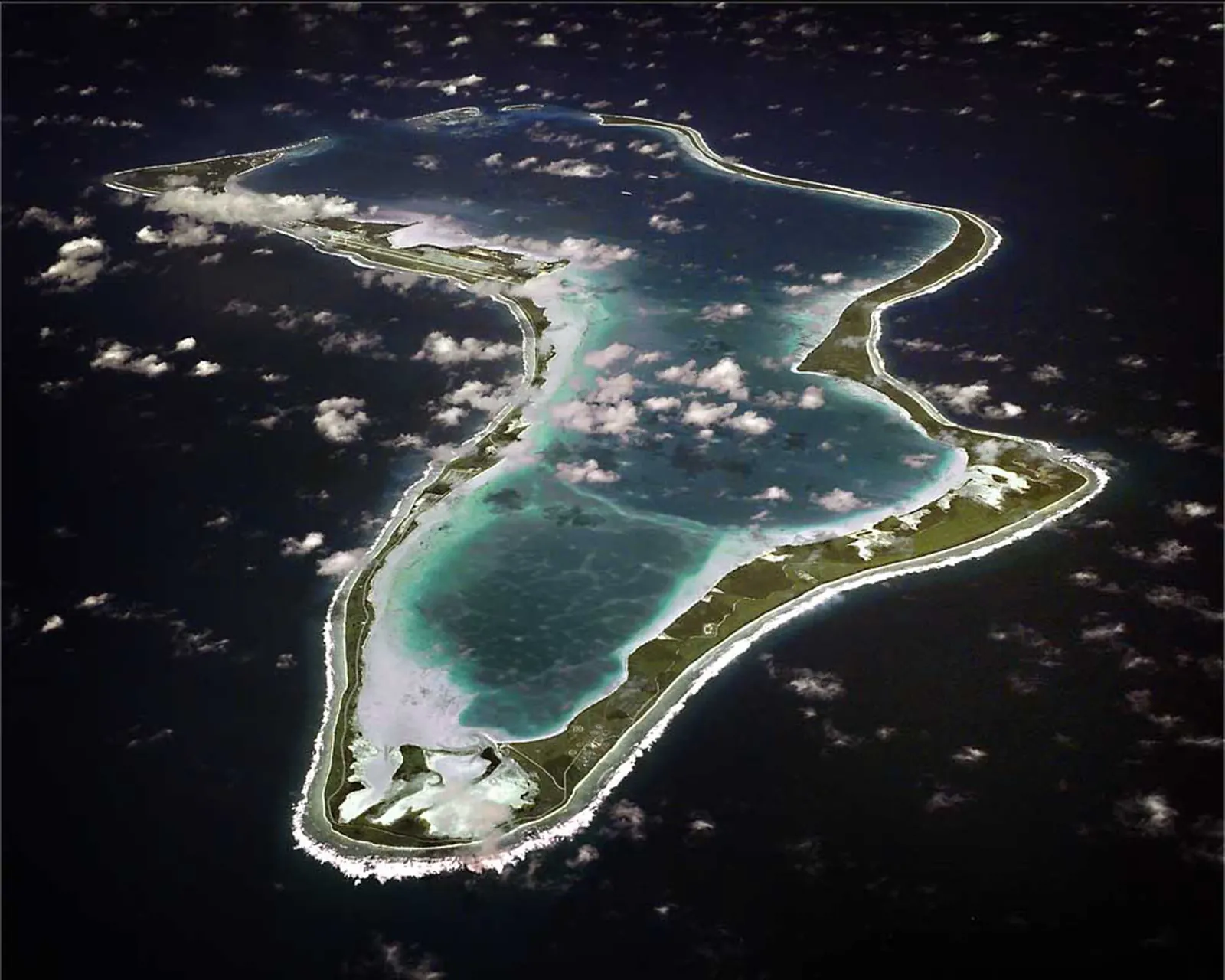
Why does the United States have 750 military bases around the world?
The US operates roughly 750 military sites in 80 countries, more than every other nation combined. Here is where they are, what they cost, and why they keep growing.
Blog
Why does the United States have 750 military bases around the world?
The US operates roughly 750 military sites in 80 countries, more than every other nation combined. Here is where they are, what they cost, and why they keep growing.
-
 Blog
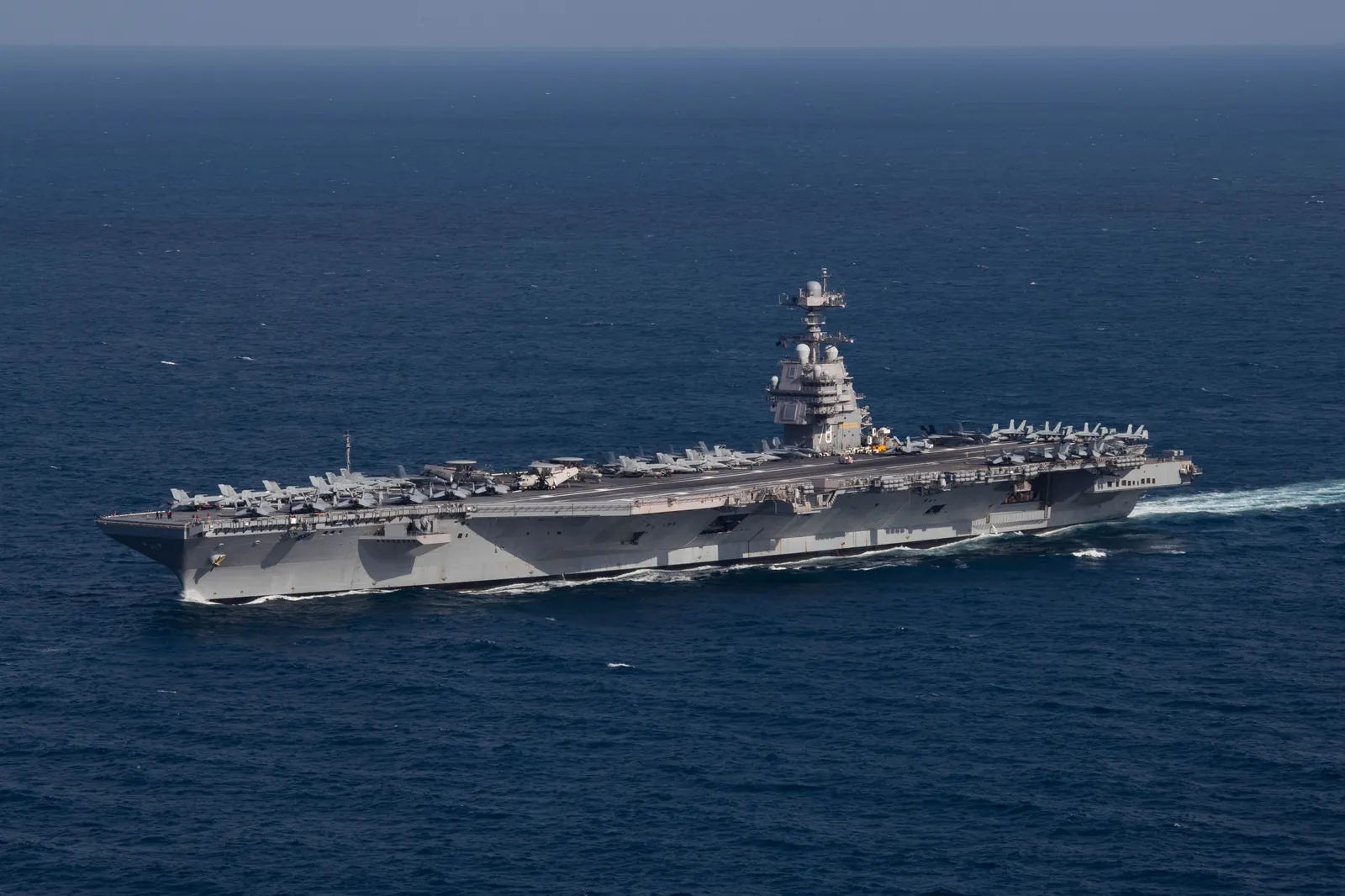
Are Aircraft Carriers Already Obsolete?
A US supercarrier costs $13 billion. The Chinese missile built to sink it costs under $11 million, and two recent wars suggest the math has changed.
Blog
Are Aircraft Carriers Already Obsolete?
A US supercarrier costs $13 billion. The Chinese missile built to sink it costs under $11 million, and two recent wars suggest the math has changed.