
Country profile · South America
 Uruguay
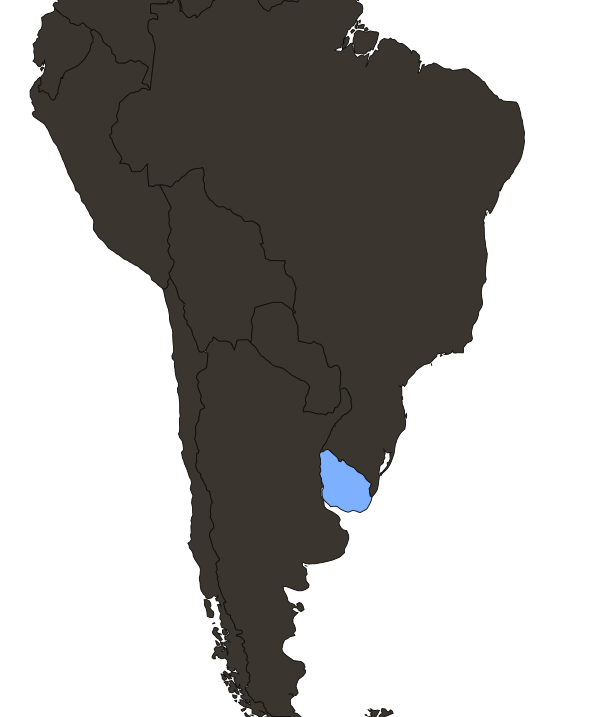
 is a small South American country of about 3.5 million people between Brazil and Argentina. It has the second-highest GDP per person in South America, after Guyana. President Yamandú Orsi, a former history teacher, has led a left-wing Broad Front government since March 2025. China is its largest export market, and 98% of its electricity came from renewable sources in 2025.
Where Uruguay ranks
All rankings →Who runs Uruguay?
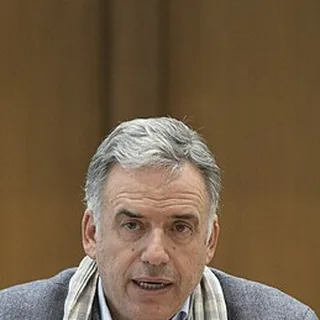
President Yamandú Orsi was born on June 13, 1967 in rural Canelones, near Montevideo. His father was a farm worker and his mother a seamstress. The family later moved to the town of Canelones and opened a general store. Orsi trained as a history teacher and taught for over a decade. He was elected mayor of Canelones in 2015 and re-elected in 2020. He belongs to the faction of José "Pepe" Mujica, the former Tupamaro guerrilla and president who died on May 13, 2025. Orsi is widely seen as Mujica's political heir. He won the runoff of November 24, 2024 with 49.84% against 45.87% for Álvaro Delgado of the National Party. Orsi took office on March 1, 2025, the first president born outside Montevideo in over 100 years. His Broad Front holds 16 of the 30 elected Senate seats but only 48 of the 99 seats in the Chamber of Representatives (chart). Only 24% of Uruguayans approved of Orsi in October 2026 (Cifra poll). Homicides rose about 13% in the first nine months of 2026.
- Broad Front 48
- National Party 29
- Colorado Party 17
- Others 5
Photo (August 2026): Presidency of Uruguay, Wikimedia Commons, CC BY 2.0 (cropped)
Who are Uruguay's allies and rivals?
Uruguay belongs to Mercosur, the South American trade bloc, with Brazil, Argentina and Paraguay. It has chaired the bloc since June 30, 2026. President Yamandú Orsi wants Mercosur members to be free to sign trade deals with outside countries on their own. The EU-Mercosur trade deal was signed on January 17, 2026, and Uruguay has applied it provisionally since May 1, 2026. China is Uruguay's largest export market. In 2018 Uruguay became the first Mercosur country to join China's Belt and Road. Orsi met Xi Jinping in Beijing on February 3, 2026, and both backed a Mercosur-China trade deal. Since July 24, 2026 the United States has charged a 12.5% tariff on some Uruguayan goods, but beef and pulp are exempt. Venezuela expelled Uruguay's diplomats in July 2024, and ties are still cut. Uruguay is the 13th-largest contributor of troops and police to UN missions (UN, May 2026). It has had soldiers in Congo since 2001.
Allies and partners
 BrazilSecond-largest export market; Mercosur partner
 ArgentinaMercosur partner; Orsi calls ties with Milei very good
 ChinaLargest export market; Orsi met Xi in 2026
- European UnionMercosur trade deal applied since May 2026
 United StatesLargest buyer of Uruguayan beef
Tensions
 VenezuelaExpelled Uruguay's diplomats in 2024; ties still cut
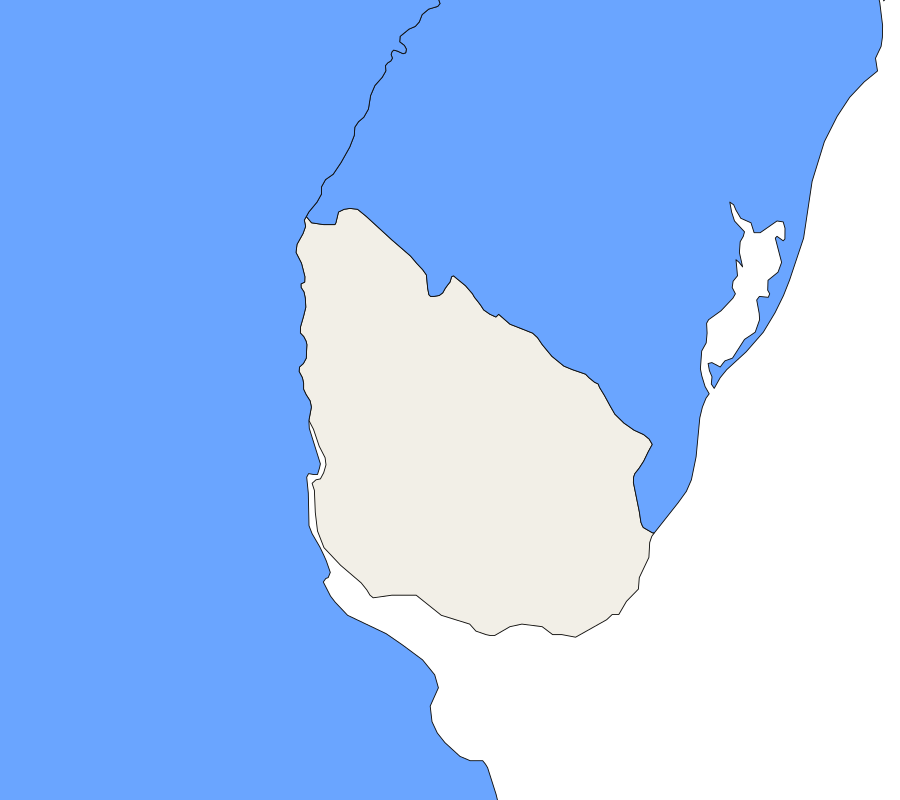
- Fray Bentos UPM pulp mill on the border river. Argentina sued, but the International Court of Justice let it keep running in 2010.
- Paysandú Site of a planned green-hydrogen fuels plant by HIF Global. Argentina has objected.
- Paso de los Toros UPM's second pulp mill, opened in 2023. A new 273 km railway links it to Montevideo's port.
- Uruguay
- Partner
Who does Uruguay trade with?
Uruguay exported $13.49 billion of goods in 2025, the most in a decade, and imported $11.46 billion (Uruguay XXI, including free trade zones). China bought 25.9% of exports (chart), mostly soybeans, beef and pulp. Brazil came second with 14.6%. Beef was the largest export, at a record $2.68 billion, and the United States was its top buyer. Uruguay has about 11.8 million cattle, roughly 3.4 for every person, and every animal has carried an electronic ear tag since 2006. Pulp came second, at $2.31 billion. The Finnish company UPM opened a second mill at Paso de los Toros in 2023, which made pulp the top export in 2024. China takes 46% of the pulp and 86% of the soybeans. A drought in early 2026 roughly halved the soybean crop, and the economy shrank 0.8% in the second quarter. On October 14, 2026 Spain's Solaria announced a $5.7 billion data center and solar project.
Sells to
Share of Uruguay's exports
- China25.9%
- Brazil14.6%
 European Union13.6%
- United States11.5%
- Argentina4.1%
Buys from
Share of Uruguay's imports
- China26.0%
- Brazil23.8%
- European Union13.6%
- Argentina11.5%
- United States5.5%
Goods including free trade zones, 2025. Uruguay XXI.
Why are Uruguay's laws so liberal?
Uruguay is the most secular country in Latin America. In a 2014 Pew survey, 37% of people said they had no religion. A 1919 law completed the separation of church and state and renamed Christmas "Family Day" and Holy Week "Tourism Week". Both names are still official. Uruguay legalized abortion in the first 12 weeks in 2012 and same-sex marriage in 2013. In December 2013, under President Mujica, it became the first country to legalize the production and sale of recreational cannabis. The state regulates the whole market. Pharmacies began selling it in July 2017, and 88,955 people were registered to buy it there in April 2026. In October 2025 Uruguay became the first Latin American country to legalize euthanasia by law. The law has applied since April 2026, and the first case followed in May. Colombia and Ecuador allowed euthanasia only through court rulings.
How does Uruguay get almost all its electricity from renewables?
In 2025, 98% of Uruguay's electricity came from renewable sources: hydropower 46%, wind 34%, biomass 14% and solar 4% (Ministry of Industry and Energy). That year 8% of the power generated was sold abroad. In 2008 the national energy director, Ramón Méndez, drew up an energy policy to 2030 that all parties endorsed. Uruguay now sells surplus electricity abroad, almost all of it to Argentina since 2022, and earned about $1.32 billion from it between 2016 and August 2025. Electric vehicles were 20% of new vehicles sold in 2025, and about 37% in 2026 so far. Spain's Solaria plans 300 to 350 megawatts of new solar power in Florida department as part of a $5.7 billion data center project announced on October 14, 2026. HIF Global plans a plant in Paysandú to make synthetic fuels from green hydrogen, but no final investment decision had been made by mid-2026.