
Disputed territory · Middle East
Gaza Strip
Ceasefire since Oct 2025, with Israeli strikesUpdated November 1, 2026
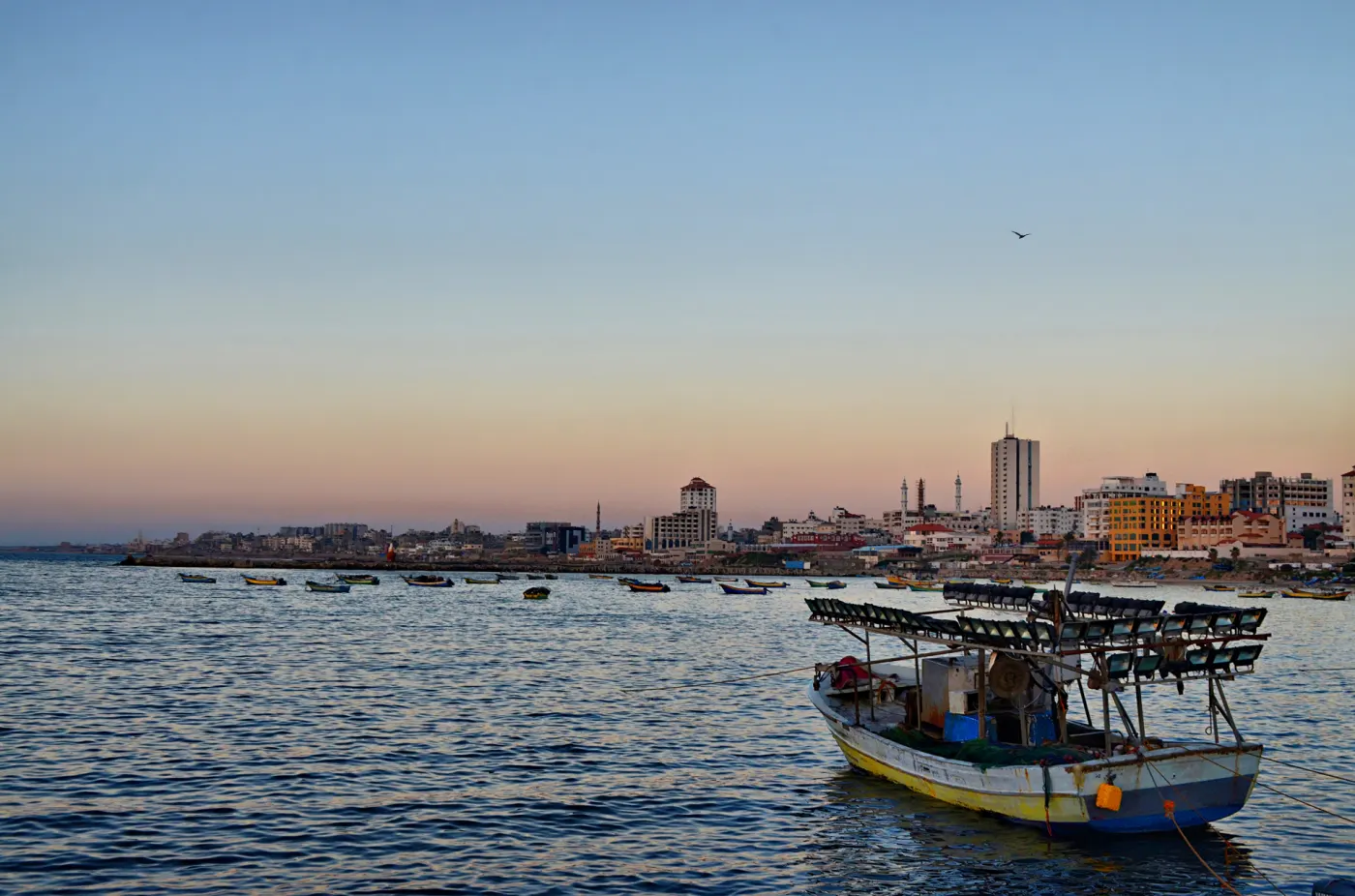
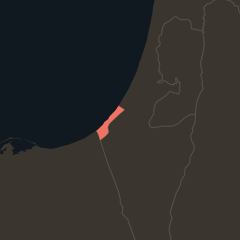
The Gaza Strip is a 365 km² coastal territory between Israel and Egypt. Israel captured it from Egypt in 1967 and withdrew its settlers and troops in 2005. Hamas took control in 2007. Israeli forces returned after Hamas attacked Israel on October 7, 2023. Under a ceasefire in force since October 10, 2025, Israeli forces hold at least 60% of the Strip, behind a demarcation called the Yellow Line. Hamas holds the rest. The Palestinians claim Gaza as part of the State of Palestine. The UN considers Gaza occupied, and Israel says its occupation ended in 2005.
- Captured by Israel
- 1967
- from Egypt, left in 2005, back since 2023
- Area
- 365 km²
- about 41 km long, 6 to 12 km wide
- Killed in Gaza
- 74,500+
- Gaza Health Ministry, Oct 31, 2026
- Israel holds
- At least 60%
- UN inquiry; Israel's army says 63%
 Palestine
Gaza Strip in 30 seconds
- Israel captured Gaza from Egypt in 1967 and withdrew its settlers and troops in 2005. Hamas, which Israel, the United States and the European Union designate a terrorist organization, took control from the Fatah-led Palestinian Authority in 2007. Israel and Egypt then restricted movement in and out.
- Hamas attacked Israel on October 7, 2023, killing about 1,200 people and taking 251 hostages, by Israeli figures. Israel launched an air and ground war. The Gaza Health Ministry counts more than 74,500 Palestinians killed.
- A ceasefire under a US plan took effect on October 10, 2025, and Hamas freed the last 20 living hostages. Israeli forces hold at least 60% of Gaza behind the Yellow Line.
- A UN-endorsed stabilization force and a Palestinian technocratic committee are meant to take over, but neither has entered Gaza. Hamas has not disarmed, and Israel says it will not pull back until Hamas does.
Who controls the Gaza Strip?
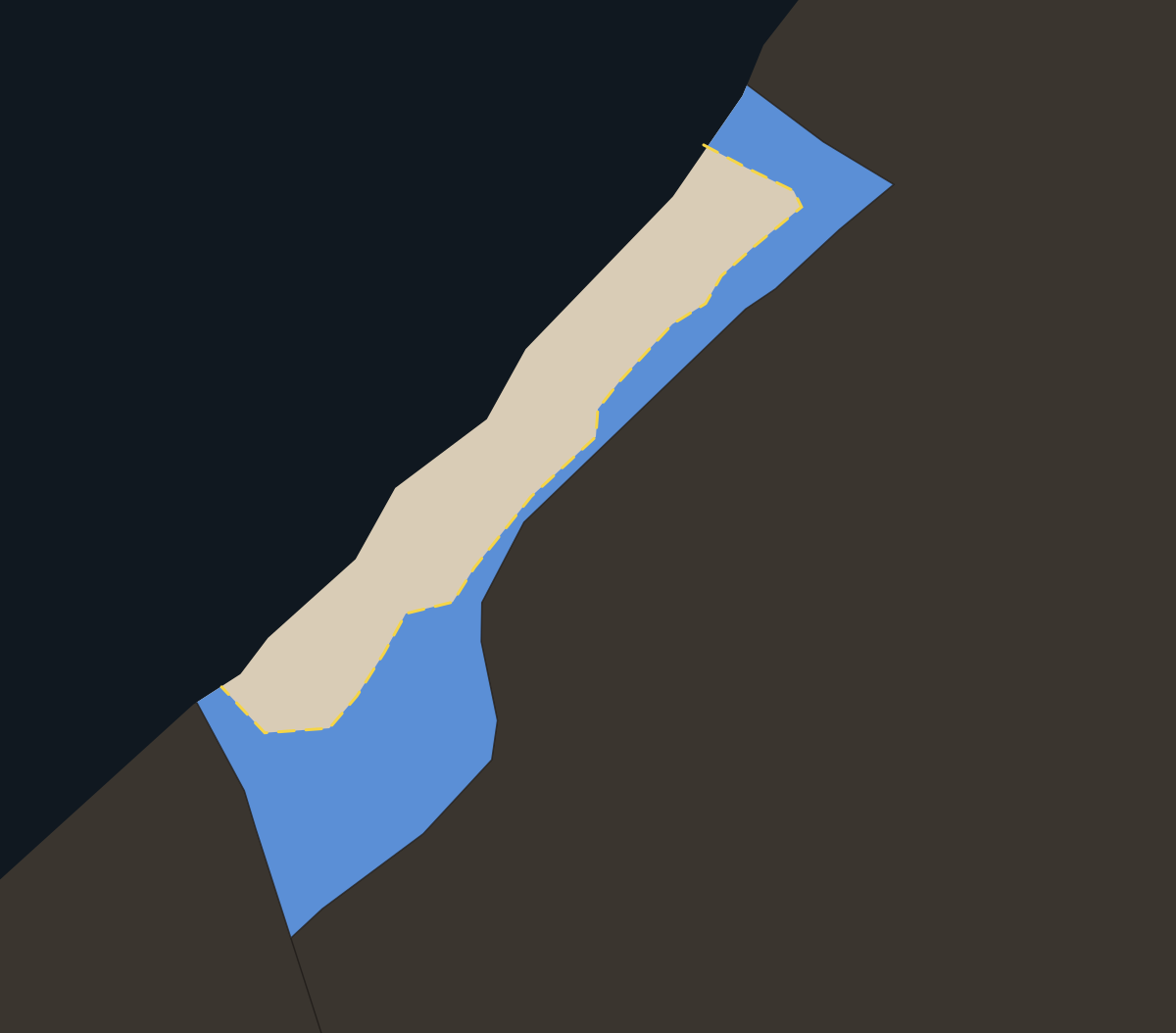
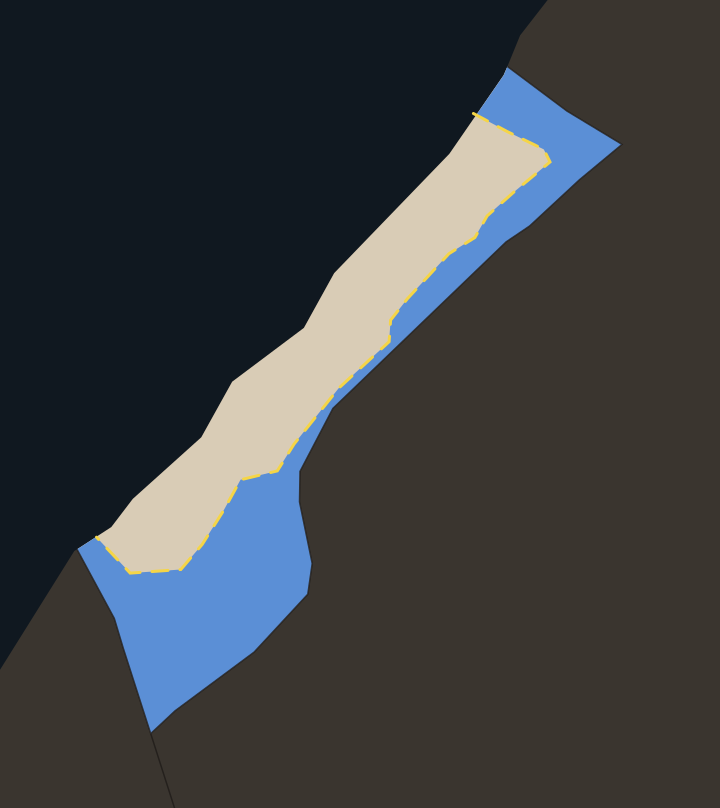
Israeli forces hold at least 60% of the Gaza Strip, behind a line of yellow concrete blocks called the Yellow Line. Hamas holds the rest. Israeli forces pulled back to the line under the ceasefire of October 10, 2025. The line runs east of Gaza City, Deir al-Balah and Khan Younis, then turns west to the sea north of Rafah. Israel holds Beit Hanoun, Rafah and the Rafah crossing. Almost all of Gaza's 2.1 million people live in the part west of the line, by UN figures.
At first Israel held about 53% of Gaza. On May 28, 2026, Prime Minister Benjamin Netanyahu said Israel held 60% and had ordered the army to take 70%. A UN commission of inquiry said Israel controlled at least 60% by September 2, 2026. In early October the commander of the Israeli army's Gaza Division said it held 63%. The UN commission counted at least 196 Palestinians killed near the line from the ceasefire to early April 2026. Israel says its troops fire on people who cross the line and threaten them.
Israel says it will not pull back further until Hamas is disarmed. Its army chief, Eyal Zamir, called the line "a new border line" and "a forward defensive line for our communities" in December 2025. Hamas says it will not fully disarm until Israeli forces leave Gaza.
Who holds the Gaza Strip
 Israeli forces
37%Hamas
 ISRAEL
EGYPT
Mediterranean
Sea Gaza City Beit Hanoun Erez Deir al-Balah Khan Younis Rafah Rafah crossing Kerem Shalom
 ISRAEL
EGYPT
Mediterranean
Sea Gaza City Beit Hanoun Erez Deir al-Balah Khan Younis Rafah Rafah crossing Kerem Shalom
How did Israel and Hamas come to control Gaza?
Egypt took the Gaza Strip in the 1948 Arab-Israeli war and ran it until 1967, but never annexed it. About 200,000 Palestinians who fled or were driven from their homes in what became Israel took refuge there, tripling its population, by UNRWA's account.
Israel captured Gaza in the Six-Day War of June 1967. It kept troops there and built 21 settlements. Under the Oslo accords, the Palestinian Authority took over most of Gaza in May 1994, while Israel kept the settlements and the border with Egypt. In 2005 Prime Minister Ariel Sharon withdrew about 8,000 settlers and all Israeli troops, a step Israel calls the disengagement. Israel kept control of Gaza's airspace, its coast and most of its borders.
Hamas, an Islamist movement founded in 1987, won the Palestinian legislative election in January 2006. In June 2007 Hamas took control of Gaza from the Fatah party of Palestinian Authority President Mahmoud Abbas. Abbas called it a coup. Hamas says it acted to stop a plan by Fatah, backed by the United States, to remove it by force. Israel and Egypt then restricted movement in and out of Gaza. Israel says the restrictions keep weapons from reaching Hamas. Palestinians call them a blockade that punishes Gaza's civilians. Hamas and other groups fired thousands of rockets at Israel from Gaza, and Israel fought wars with Hamas in 2008, 2012, 2014 and 2021.
How Gaza changed hands
- 1948Egypt takes Gaza. About 200,000 refugees arrive in what Palestinians call the Nakba.
- 1967Israel captures Gaza from Egypt in the Six-Day War
- 1987Hamas is founded during the first Palestinian uprising
- 1994The Palestinian Authority takes over most of Gaza under the Oslo accords
- 2005Israel withdraws all settlers and troops
- 2006Hamas wins the Palestinian legislative election
- 2007Hamas takes Gaza from Fatah by force. Israel and Egypt tighten the crossings.
- Oct 2023Hamas attacks Israel. Israeli forces return to Gaza.
- Oct 2025A ceasefire takes effect under Trump's plan
What happened in the Gaza war?
On October 7, 2023, Hamas-led fighters broke through the fence around Gaza and attacked towns, army posts and a music festival in southern Israel. They killed about 1,200 people, most of them civilians, and took 251 hostages, according to Israeli figures. Hamas said it was answering Israel's occupation, its blockade of Gaza and Israeli actions at the al-Aqsa Mosque in Jerusalem. Israel launched air strikes the same day and sent ground troops into Gaza on October 27. Israel said its goals were to destroy Hamas and bring the hostages home.
The Gaza Health Ministry counted 74,594 Palestinians killed and 175,834 wounded from October 7, 2023 to October 31, 2026, including 1,580 killed after the October 2025 ceasefire. The ministry, which Israel says Hamas controls, does not separate civilians from fighters. The UN uses its figures. A senior Israeli military official said in January 2026 that about 70,000 Gazans had been killed. Before the ceasefire, the Israeli military said it had killed at least 22,000 fighters. The Israeli military has named 973 soldiers killed on all fronts since October 7, 2023, 475 of them in the ground war in Gaza.
Israel halted all aid to Gaza from March 2 to May 19, 2025, saying it wanted to press Hamas to free more hostages. The IPC hunger monitor confirmed famine in Gaza City in August 2025. Israel rejected the finding.
The war in numbers
- 74,594 killed in GazaGaza Health Ministry, October 31, 2026, without separating civilians from fighters
- About 1,200 killed in Israelon October 7, 2023, by Israeli figures
- 251 hostages takenthe last 20 living hostages were freed on October 13, 2025
- The Gaza warThe ceasefire, the death toll and who backs whom
What is Trump's plan for Gaza?
The White House published a 20-point plan on September 29, 2025, and its ceasefire took effect on October 10. Hamas freed the last 20 living hostages on October 13, and Israel released 1,968 Palestinian prisoners and detainees. UN Security Council Resolution 2803 endorsed the plan on November 17, 2025, by 13 votes to none, with Russia and China abstaining. It welcomed a Board of Peace, chaired by Trump, as Gaza's transitional administration and authorized an International Stabilization Force. The Palestinian Authority welcomed the resolution. Hamas rejected it, saying it imposed "an international guardianship mechanism" on Gaza.
The plan says that no one will be forced to leave Gaza and that "Israel will not occupy or annex Gaza." Israeli forces are to hand the land they hold to the stabilization force in stages tied to disarmament. Israel would keep a "security perimeter presence" until Gaza is "properly secure from any resurgent terror threat." In February 2025 Trump had proposed that the United States take over Gaza and that its people move to other countries. Egypt, Jordan and the Palestinians rejected that idea.
What the 20-point plan says
- A ceasefire and hostage releasein force since October 10, 2025
- No forced departures"No one will be forced to leave Gaza"
- No annexation"Israel will not occupy or annex Gaza"
- Staged Israeli pullbacktied to Hamas's disarmament, with a "security perimeter" kept
- A Board of Peacechaired by Trump, as Gaza's transitional administration
- A stabilization forceauthorized by UN Security Council Resolution 2803
Who will run and rebuild Gaza?
Indonesia, Morocco, Kazakhstan, Albania, Kosovo and Uganda have pledged troops for the International Stabilization Force. Israel's security cabinet approved a first deployment of about 200 troops on July 26, 2026, but as of late October the force had not deployed. A committee of Palestinian technocrats led by Ali Shaath was formed in January 2026 to run Gaza. It works from Cairo because Israel has not let it in. In July 2026 Hamas said it had dissolved its administration in Gaza to hand over to the committee. Israel called the move a "stunt".
The UN, the World Bank and the European Union estimate that rebuilding Gaza will cost about $70 billion. Israel says Gaza will not be rebuilt until Hamas disarms. In late July 2026 the mediators said Hamas had agreed to a roadmap to give up its weapons. Netanyahu said Israel did not agree to it, and Hamas has not disarmed.
The ceasefire since October 2025
- Sep 2025Trump publishes his 20-point plan for Gaza
- Oct 10, 2025The ceasefire takes effect
- Oct 13, 2025Hamas frees the last 20 living hostages
- Nov 2025The UN Security Council endorses the plan (Resolution 2803)
- Jan 2026The Board of Peace and the technocratic committee are formed
- Feb 2026The Rafah crossing reopens for people. Five countries pledge troops.
- May 2026Netanyahu says Israel holds 60% and orders the army to take 70%
- Jul 2026Hamas dissolves its Gaza administration. Mediators say it agreed to a disarmament roadmap, and Israel disagrees.
- Oct 2026Israel's army says it holds 63% of Gaza. The stabilization force and the committee have not entered.
What is the legal status of Gaza?
The Palestinians claim Gaza as part of the State of Palestine, with the West Bank and East Jerusalem. Abbas told the UN in September 2025 that "Gaza is an integral part of the State of Palestine." By most counts, about 157 of the 193 UN members recognize Palestine.
Israel says it ended its occupation of Gaza when it withdrew in 2005, and its Supreme Court ruled in 2008 that Israel no longer had effective control there. The UN still considers Gaza occupied. In an advisory opinion of July 19, 2024, the International Court of Justice said Israel's presence in the occupied Palestinian territory, including Gaza, is unlawful and must end as rapidly as possible. The court said Israel kept the duties of an occupying power in Gaza after 2005, to the extent of its effective control there. The opinion is not binding, and Israel rejected it.
South Africa accuses Israel of genocide in Gaza at the ICJ. In January 2024 the court ordered Israel to prevent acts of genocide and to let aid in, and it called for the hostages' release. The court has not ruled on the charge, which Israel rejects. In November 2024 the International Criminal Court issued arrest warrants for Netanyahu, his former defense minister Yoav Gallant and Hamas military chief Mohammed Deif, whose death Hamas later confirmed. Israel challenges the court's jurisdiction.
International rulings on Gaza
- ICJ advisory opinion, July 2024Israel's presence in the occupied Palestinian territory, including Gaza, is unlawful (11 votes to 4, not binding). Israel rejected it.
- ICJ genocide case, pendingSouth Africa accuses Israel of genocide. Israel denies it. The court ordered measures to prevent genocidal acts in 2024 but has not ruled.
- ICC arrest warrants, Nov 2024For Netanyahu, Gallant and Hamas's Mohammed Deif. Israel challenges the court's jurisdiction.
- UN Commission of Inquiry, Oct 2026Said Israel controlled at least 60% of Gaza and committed genocidal acts after the ceasefire. Israel called the report a "misinformation campaign".
What is at stake in the Gaza Strip?
People
About 2.2 million people lived in Gaza before the war and about 2.1 million at the end of 2025, by Palestinian statistics. About 1.6 million of them were registered refugees in 2023, by UNRWA figures. The Gaza Health Ministry counts more than 74,500 killed. Gaza's civil defense estimates that 8,000 to 10,000 more lie under rubble. The IPC hunger monitor projected in July 2026 that 1.4 million people would face crisis-level hunger or worse by the end of 2026.
A Palestinian state
The Palestinians want Gaza and the West Bank, with East Jerusalem, for a state. Netanyahu's government rejects a Palestinian state, and Netanyahu told the UN in September 2025 that one would be "national suicide" for Israel. The ceasefire plan mentions a possible path to statehood once Gaza is rebuilt and the Palestinian Authority is reformed.
Security
Israel says it needs to control Gaza's border areas and airspace to stop weapons from reaching armed groups there. Hamas fired thousands of rockets at Israel before the October 7 attack. Israel also says Hamas used tunnels under Gaza to move fighters and hold hostages.
Questions about the Gaza Strip
Is there a ceasefire in Gaza?
Yes. A ceasefire under President Trump's 20-point plan has been in force since October 10, 2025, and full-scale fighting has not resumed. Israeli forces still hold at least 60% of Gaza behind the Yellow Line. The Gaza Health Ministry says 1,580 people were killed between the ceasefire and October 31, 2026. Hamas accuses Israel of breaking the ceasefire with its strikes and by moving the Yellow Line. Israel says its strikes respond to attacks on its troops and to fighters who cross the line.
Is the Gaza Strip part of Israel?
No. Israel captured Gaza from Egypt in 1967 and withdrew its settlers and troops in 2005. Israeli forces returned during the war that began in 2023 and now hold at least 60% of the Strip under the ceasefire. Israel has not annexed Gaza. The Palestinians claim it as part of the State of Palestine. The International Court of Justice said in 2024 that Gaza is part of the occupied Palestinian territory. Israel says its occupation of Gaza ended in 2005.
Is Hamas a terrorist organization?
Israel, the United States, the European Union, the United Kingdom, Canada, Australia and some other countries designate Hamas a terrorist organization. Russia, China, Turkey and Qatar do not. Hamas calls itself a national liberation movement. It won the 2006 Palestinian legislative election and took full control of Gaza in 2007.
Who runs Gaza now?
No single authority runs all of Gaza. Israeli forces control at least 60% of the territory behind the Yellow Line. Several armed Palestinian groups opposed to Hamas, such as the Popular Forces, operate in the Israeli-held area. Netanyahu said in June 2025 that Israel had "activated" clans in Gaza that oppose Hamas. Hamas holds the area west of the line. In July 2026 Hamas said it had dissolved its administration there, but its ministries and police stayed in place, and Israel called the move a "stunt". A Palestinian technocratic committee, set up in January 2026 under the US plan, is meant to take over but has not been allowed into Gaza. An international stabilization force authorized by the UN Security Council has not deployed. Aid cargo enters mainly through the Kerem Shalom crossing, called Karem Abu Salem in Arabic, UN agencies say.
How many people have died in the Gaza war?
The Gaza Health Ministry counted 74,594 Palestinians killed and 175,834 wounded from October 7, 2023 to October 31, 2026. The ministry does not separate civilians from fighters. About 1,200 people were killed in Israel on October 7, by Israeli figures. The Israeli military has named 973 soldiers killed on all fronts since October 7, 475 of them in the ground war in Gaza.