War · Middle East
The Gaza war
Ceasefire since October 10, 2025Updated October 31, 2026
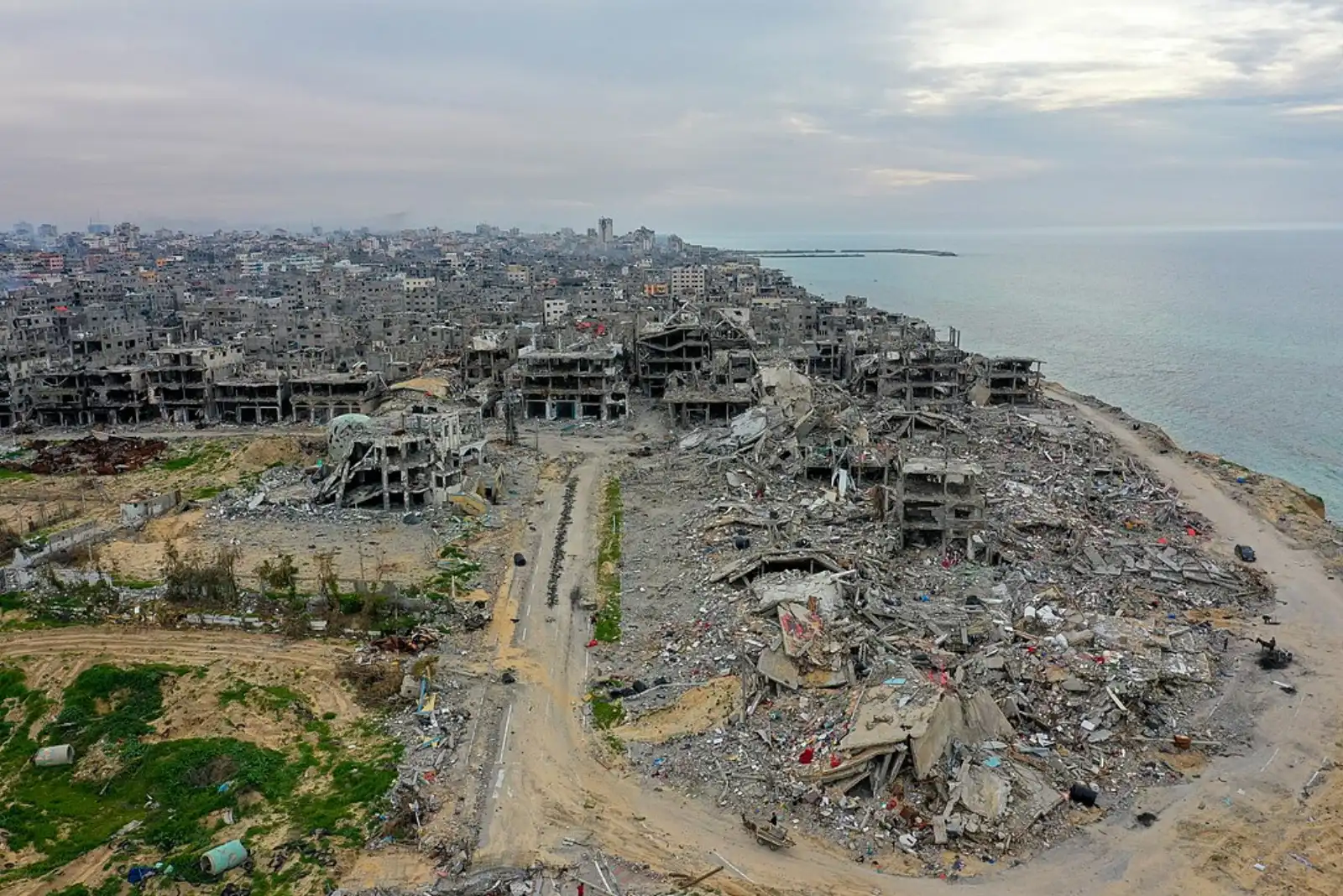
Hamas attacked Israel on October 7, 2023, killing about 1,200 people and taking 251 hostages, by Israeli counts. Israel answered with an air and ground war in Gaza. The Gaza Health Ministry counts more than 74,500 Palestinians killed, without separating civilians from fighters. A ceasefire under a US plan took effect on October 10, 2025. Hamas freed the last 20 living hostages, and Israel freed 1,968 Palestinian prisoners and detainees. Israeli forces still hold at least 60% of Gaza, behind the "Yellow Line." Hamas has not disarmed.
- Started
- October 2023
- about 1,200 killed in Israel on Oct 7, Israel says
- Ceasefire
- Oct 10, 2025
- under Trump's 20-point plan
- Killed in Gaza
- 74,500+
- Gaza Health Ministry, Oct 29, 2026
- Hostages taken
- 251
- last 20 living ones freed Oct 13, 2025
- Israel holds
- At least 60%
- of Gaza, say Netanyahu and a UN inquiry
Who backs whom in the Gaza war?
Israel and Hamas, the governments and groups that arm or fund them, and the mediators.
 United StatesIsrael's main arms supplier. Gives $3.8 billion in military aid a year under a 2016 agreement.
 GermanyIsrael's second-largest arms supplier. Halted exports of arms usable in Gaza from August to November 2025.
State
 Israel
Led by Prime Minister Benjamin Netanyahu, who stays in office until a new government forms after the October 27, 2026 election. Israel says it went to war after October 7 to destroy Hamas and bring the hostages home. It holds at least 60% of Gaza under the ceasefire.
Militant group
Hamas
An Islamist movement that won the 2006 Palestinian legislative election and took full control of Gaza from the rival Fatah party in 2007. It still holds the area west of the Yellow Line. Israel, the United States, the European Union, the United Kingdom, Canada and Australia designate it a terrorist organization. Hamas calls itself a national liberation movement. Khalil al-Hayya, its chief negotiator, became its leader in July 2026.
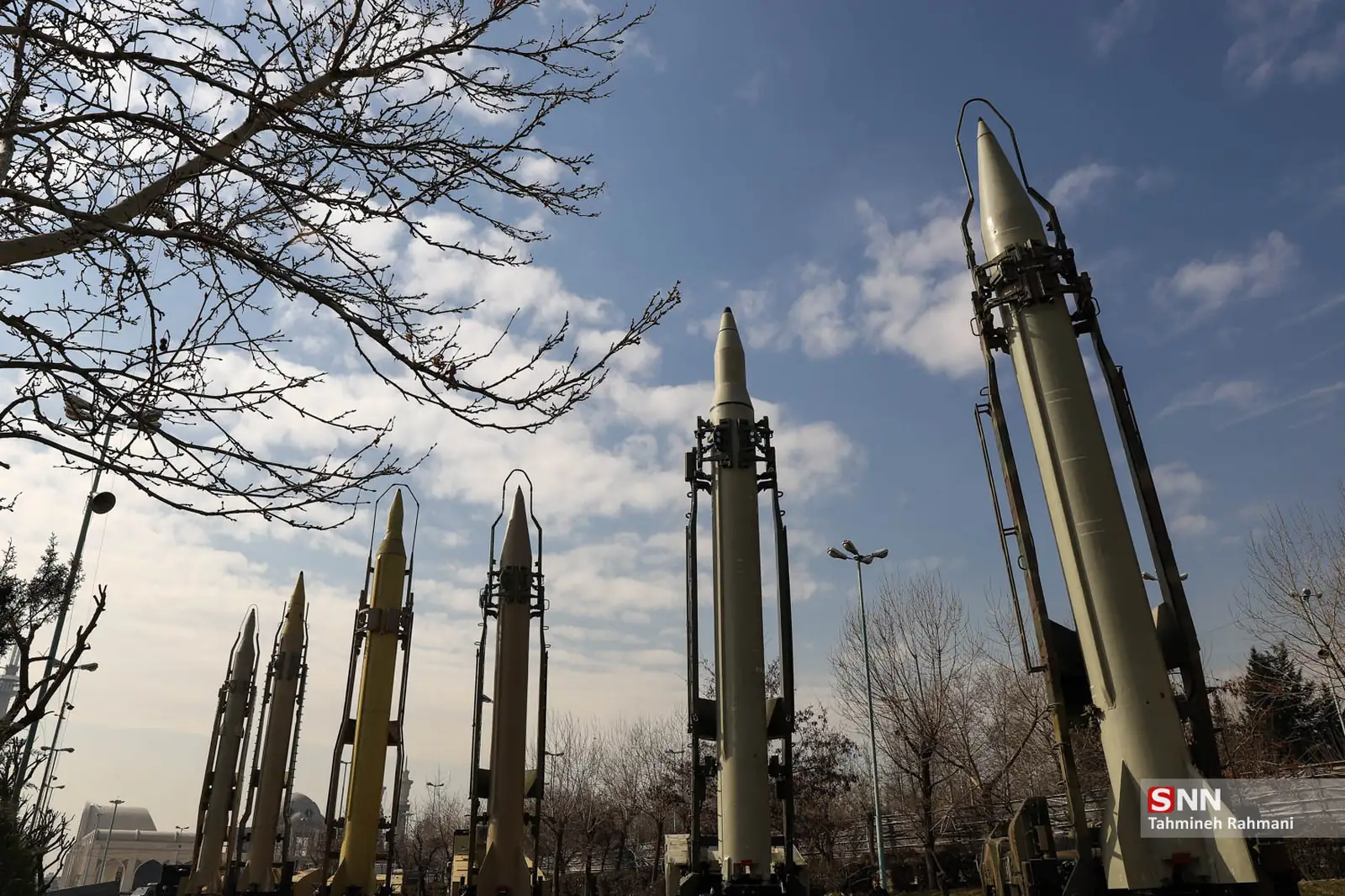
 IranFunded, armed and trained Hamas for years. Iran praised the October 7 attack but denied any role in it.
- Hezbollah (Lebanon)Fired on Israel from October 8, 2023 in support of Hamas, until a ceasefire in November 2024.
- Houthis (Yemen)Fired missiles at Israel and attacked Red Sea shipping from late 2023, saying they acted for Gaza.
 Qatar · Hosts Hamas's political office and mediated the hostage deals. Israel struck Hamas leaders in Doha in September 2025.
 Egypt · Mediated the ceasefire talks, hosted at Sharm el-Sheikh, and controls its side of the Rafah crossing.
 Turkey · Signed the October 2025 deal as a guarantor, with the United States, Egypt and Qatar.
United States · Wrote the 20-point plan. President Trump chairs the Board of Peace that oversees it.
Confirmed
Who controls Gaza now?
The Gaza Strip is about 41 km long and 6 to 12 km wide. Israeli forces hold the north, east and south, behind the Yellow Line. The pins mark towns and crossings, and the line itself is not drawn.

- Beit HanounIsraelA town in the far north, next to the Erez crossing. Israeli forces hold it, behind the Yellow Line.
- Gaza CityGaza's largest city. Israeli forces hold its eastern edge, and in October 2026 they moved the Yellow Line markers west in the Shujayea neighborhood, Al Jazeera reported. Hamas controls the rest.
- Deir al-BalahHamasIn central Gaza, west of the Yellow Line. Many displaced families live in tent camps here.
- Khan YounisGaza's second-largest city. Israeli troops fought here from December 2023 to April 2024. Israel now holds its eastern part, behind the Yellow Line.
- RafahIsraelOn the Egyptian border. Israeli forces entered Rafah in May 2024 and hold the whole area. The Rafah crossing to Egypt reopened for people on February 2, 2026.
- Kerem ShalomAn Israeli crossing, called Karem Abu Salem in Arabic, where Gaza, Israel and Egypt meet. It has been the only crossing for aid cargo since Israel closed Zikim on May 24, 2026, UN agencies say.
How did the Gaza war start?
On October 7, 2023, Hamas-led fighters broke through the fence around Gaza and attacked towns, army posts and a music festival in southern Israel. They killed about 1,200 people, most of them civilians, and took 251 hostages into Gaza, according to Israeli figures. At the Nova music festival, 378 people were killed. It was the deadliest day in Israel's history.
Hamas called the attack "Al-Aqsa Flood." Hamas said it was answering Israel's occupation of Palestinian land, its blockade of Gaza, Israeli actions at the al-Aqsa Mosque in Jerusalem and the thousands of Palestinians held in Israeli prisons.
Israel withdrew its soldiers and settlers from Gaza in 2005. Israel says it has not occupied Gaza since then. The UN still considered Gaza occupied, because Israel kept control of its airspace, its coast and most of its borders. Israel and Egypt had restricted movement in and out of Gaza since Hamas took control of the Strip in 2007. Israel says the blockade keeps weapons from reaching Hamas, which had fired thousands of rockets at Israel in earlier wars.
Israel's security cabinet formally declared war on October 8. The Israeli government set three goals: destroy Hamas's military and governing capabilities, bring all the hostages home, and make sure Gaza no longer threatens Israel. Israel launched air strikes on October 7 and sent ground troops into northern Gaza on October 27, 2023. Israeli forces moved into Khan Younis in December 2023 and into Rafah in May 2024.
How the war unfolded
- Oct 7, 2023Hamas attacks Israel. About 1,200 killed and 251 taken hostage.
- Oct 27, 2023Israeli ground forces enter northern Gaza.
- Nov 2023A week-long truce frees 105 hostages in exchange for 240 Palestinian prisoners.
- Dec 2023South Africa takes Israel to the ICJ, accusing it of genocide. Israel rejects the charge.
- Oct 2024Israeli troops kill Hamas leader Yahya Sinwar in Rafah.
- Nov 2024The ICC issues arrest warrants for Netanyahu, Yoav Gallant and Hamas's Mohammed Deif.
- Jan 2025A ceasefire and hostage exchange begins.
- Mar 2025Israel halts all aid on March 2, saying it wants to press Hamas to free more hostages. It resumes its offensive on March 18. Aid stays blocked until May 19.
- Aug 2025The IPC hunger monitor confirms famine in Gaza City. Israel rejects the finding.
- Oct 2025A ceasefire under Trump's 20-point plan takes effect on October 10. Hamas frees the last 20 living hostages on October 13.
- Jul 2026Mediators say Hamas agreed to a roadmap to give up its weapons. Netanyahu says Israel did not agree to it.
- Oct 2026Israel holds at least 60% of Gaza. The stabilization force has not deployed.
How many people have been killed in Gaza?
The Gaza Health Ministry counted 74,570 Palestinians killed and 175,808 wounded from October 7, 2023 to October 29, 2026. That includes 1,574 killed after the ceasefire took effect. The ministry is part of the Hamas-run government, and it does not say how many of the dead were fighters. The UN uses its figures. In January 2026 a senior Israeli military official said the army believes about 70,000 Gazans were killed, close to the ministry's count. Before the ceasefire, the Israeli military said it had killed at least 22,000 fighters in Gaza. Gaza's civil defense estimates that another 8,000 to 10,000 bodies lie under rubble.
About 1,200 people were killed in Israel on October 7, according to Israeli figures. The Israeli military has named 973 soldiers killed on all fronts since October 7, 2023, including that day. Of these, 475 died in the ground offensive in Gaza, according to a Times of Israel tally of October 23, 2026.
A UN commission of inquiry said on October 26, 2026 that Israeli fire along the Yellow Line had killed at least 196 Palestinians since the ceasefire. Israel's mission in Geneva called the report part of a "misinformation campaign" and called for the commission to be dissolved. Israel and Hamas accuse each other of breaking the ceasefire. Four Israeli soldiers were killed by fighters in Gaza in the first nine months of the ceasefire, Reuters reported in July 2026.
Killed in Gaza
74,500+
Palestinians killed since October 2023
The Gaza Health Ministry's count, which includes 1,574 people killed after the ceasefire. It does not separate civilians from fighters.
What is in the Gaza ceasefire deal?
The ceasefire is the first phase of President Trump's 20-point plan, announced on September 29, 2025. It took effect on October 10, 2025. On October 13 Hamas freed the last 20 living hostages, and Israel released 1,968 Palestinian prisoners and detainees. Of these, 250 were serving long or life sentences for attacks on Israelis. About 1,700 were people from Gaza whom Israel had detained during the war and held without charge. Hamas then handed over the remains of dead hostages. The last remains, those of police officer Ran Gvili, were recovered by the Israeli military on January 26, 2026.
Israeli forces pulled back to a line marked with yellow concrete blocks, called the Yellow Line. At first the line left Israel holding about 53% of Gaza. On May 28, 2026, Netanyahu said Israel held 60% and that he had ordered the army to take 70%. A UN commission of inquiry said in October 2026 that Israel controlled at least 60%. Human Rights Watch put the area behind the line at about 64%. The Israeli military says it fires on people who cross the line and threaten its troops.
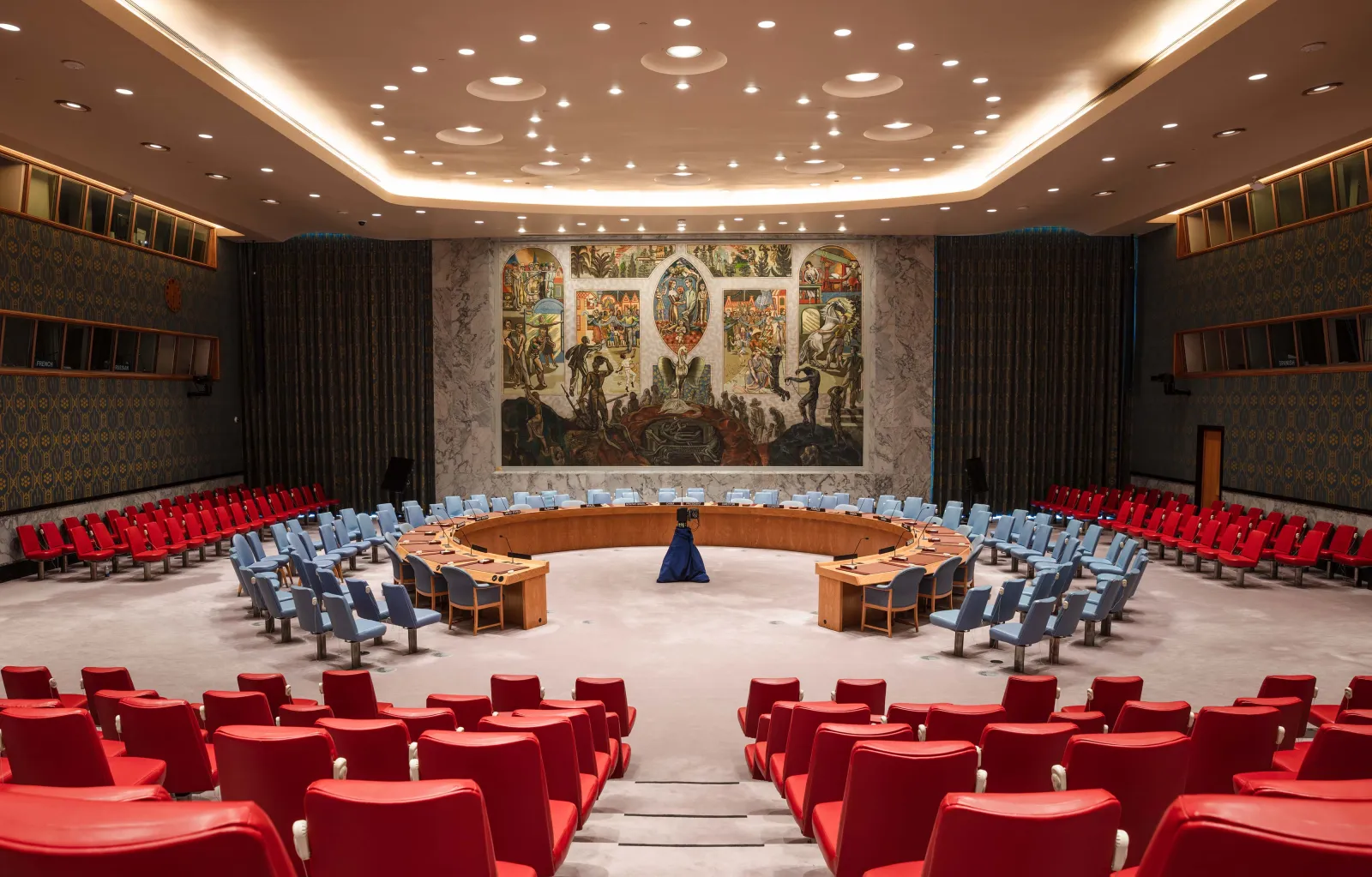
UN Security Council resolution 2803 of November 17, 2025 endorsed the plan. It set up a Board of Peace, chaired by Trump, and authorized an International Stabilization Force. Indonesia, Morocco, Kazakhstan, Albania, Kosovo and Uganda have pledged troops, and the force's American commander has said it could grow to 20,000 soldiers. Israel's cabinet approved a first deployment of up to 200 troops on July 26, 2026. As of late October 2026, the force had not deployed in Gaza. A committee of Palestinian technocrats, set up in January 2026 to run Gaza, works from Cairo because Israel has not let it in. The Board of Peace urged Israel in October to admit both.
Yellow Line
At least 60%
Of Gaza held by Israeli forces
The area behind the Yellow Line. It was about 53% when the ceasefire began. Human Rights Watch put it at about 64% in October 2026.
Is Israel committing genocide in Gaza?
South Africa took Israel to the International Court of Justice (ICJ) in December 2023, accusing it of genocide. South Africa's case cites the number of civilians killed, the blocking of food and aid, and statements by Israeli leaders, such as Defense Minister Yoav Gallant's order of a "complete siege" of Gaza on October 9, 2023. In January 2024 the court ordered Israel to take all measures in its power to prevent acts of genocide and to let aid in. It also called for the immediate and unconditional release of the hostages held in Gaza. The court has not ruled on whether genocide took place. Israel filed its defense in March 2026, and the court has set deadlines for written arguments running to May 2029.
In November 2024 the International Criminal Court (ICC) issued arrest warrants for Netanyahu and his former defense minister, Yoav Gallant. The charges include the war crime of starvation as a method of warfare. The ICC also issued a warrant for Mohammed Deif, the head of Hamas's armed wing, whose death Hamas later confirmed. Netanyahu called the decision antisemitic. The warrants for Netanyahu and Gallant remain in force while the court considers Israel's challenge to its jurisdiction.
A UN commission of inquiry concluded in September 2025 that Israel was committing genocide in Gaza. In October 2026 it said this had continued after the ceasefire. Amnesty International and the Israeli rights group B'Tselem have reached the same conclusion. Israel rejects the charge. Israel says it acted in self-defense after October 7 and that its war was against Hamas. It says it warned civilians to leave combat areas, and that Hamas put them in danger by fighting from homes, hospitals and tunnels. The United States and Germany also reject the genocide charge.
How could the Gaza war end?
Israel's government says it will not withdraw from its current lines until Hamas is completely disarmed. In late July 2026 the Board of Peace and the mediators, Egypt, Qatar, Turkey and the United States, said Hamas had agreed to a 15-point roadmap to give up all its weapons. Under it, Israel would withdraw step by step as weapons are handed over, and a Palestinian committee would take over Gaza's administration. Netanyahu said Israel did not agree to the framework. Hamas negotiator Ghazi Hamad said Hamas would not carry out any step until Israel meets its own obligations. As of October 2026, Hamas had not disarmed.
The 20-point plan mentions a possible path to a Palestinian state. Hamas and the Palestinian Authority say a lasting peace needs a Palestinian state in Gaza and the West Bank. The PLO, which leads the Palestinian Authority, recognized Israel in 1993. Hamas does not recognize Israel. In 2017 Hamas said it could accept a state on the 1967 lines, but it did not drop its claim to all of historic Palestine. Netanyahu's government rejects a Palestinian state. Netanyahu told the UN in September 2025 that a Palestinian state would be "national suicide" for Israel. Israel voted in an election on October 27, 2026, and Netanyahu stays prime minister until a new government forms.
Aid enters mainly through Kerem Shalom, the only crossing for aid cargo since Israel closed Zikim on May 24, 2026, according to UN agencies. Israel says it lets in enough aid and accuses Hamas of stealing it. The Rafah crossing to Egypt reopened for people on February 2, 2026. Gaza's Health Ministry says repeated closures leave 21,468 sick and wounded people waiting to leave for treatment. The IPC hunger monitor projected in July 2026 that 1.4 million people, 67% of Gazans, would face crisis-level hunger or worse by the end of 2026.
Questions about the Gaza war
What happened on October 7, 2023?
Hamas-led fighters broke through the fence from Gaza into southern Israel. They killed about 1,200 people, most of them civilians, and took 251 hostages, according to Israeli figures. It was the deadliest day in Israel's history. Israel launched air strikes the same day and a ground invasion of Gaza on October 27.
Is there a ceasefire in Gaza?
Yes. A ceasefire under a US plan has been in force since October 10, 2025, and full-scale fighting has not resumed. Israeli forces still hold at least 60% of Gaza. The Gaza Health Ministry says 1,574 people were killed between the ceasefire and October 29, 2026. Hamas accuses Israel of breaking the ceasefire with its strikes and by moving the Yellow Line. Israel says its strikes respond to attacks on its troops and to fighters who cross the line.
How many people have died in the Gaza war?
The Gaza Health Ministry counted 74,570 Palestinians killed and 175,808 wounded by October 29, 2026. About 1,200 people were killed in Israel on October 7, according to Israeli figures. The Israeli military has named 973 soldiers killed on all fronts since then, 475 of them in the ground war in Gaza.
Were all the hostages freed?
Yes. Hamas freed the last 20 living hostages on October 13, 2025, and Israel released 1,968 Palestinian prisoners and detainees. The remains of the last dead hostage, police officer Ran Gvili, were recovered on January 26, 2026.
Is Hamas a terrorist organization?
Israel, the United States, the European Union, the United Kingdom, Canada and Australia designate Hamas a terrorist organization, and some other countries do too. Russia, China, Turkey and Qatar do not. Hamas calls itself a national liberation movement.
What is the Yellow Line?
A line of yellow concrete blocks that marks how far Israeli forces pulled back under the October 2025 ceasefire. Israel holds the area behind it, at least 60% of Gaza by a UN inquiry's count. The UN, Reuters and the BBC have reported that Israeli forces moved the blocks westward in places. An Israeli military source told Reuters it was not possible to mark the line exactly as it appears on maps.