
Disputed territory · Arctic
Hans Island
Settled: split in two in 2022Updated November 1, 2026
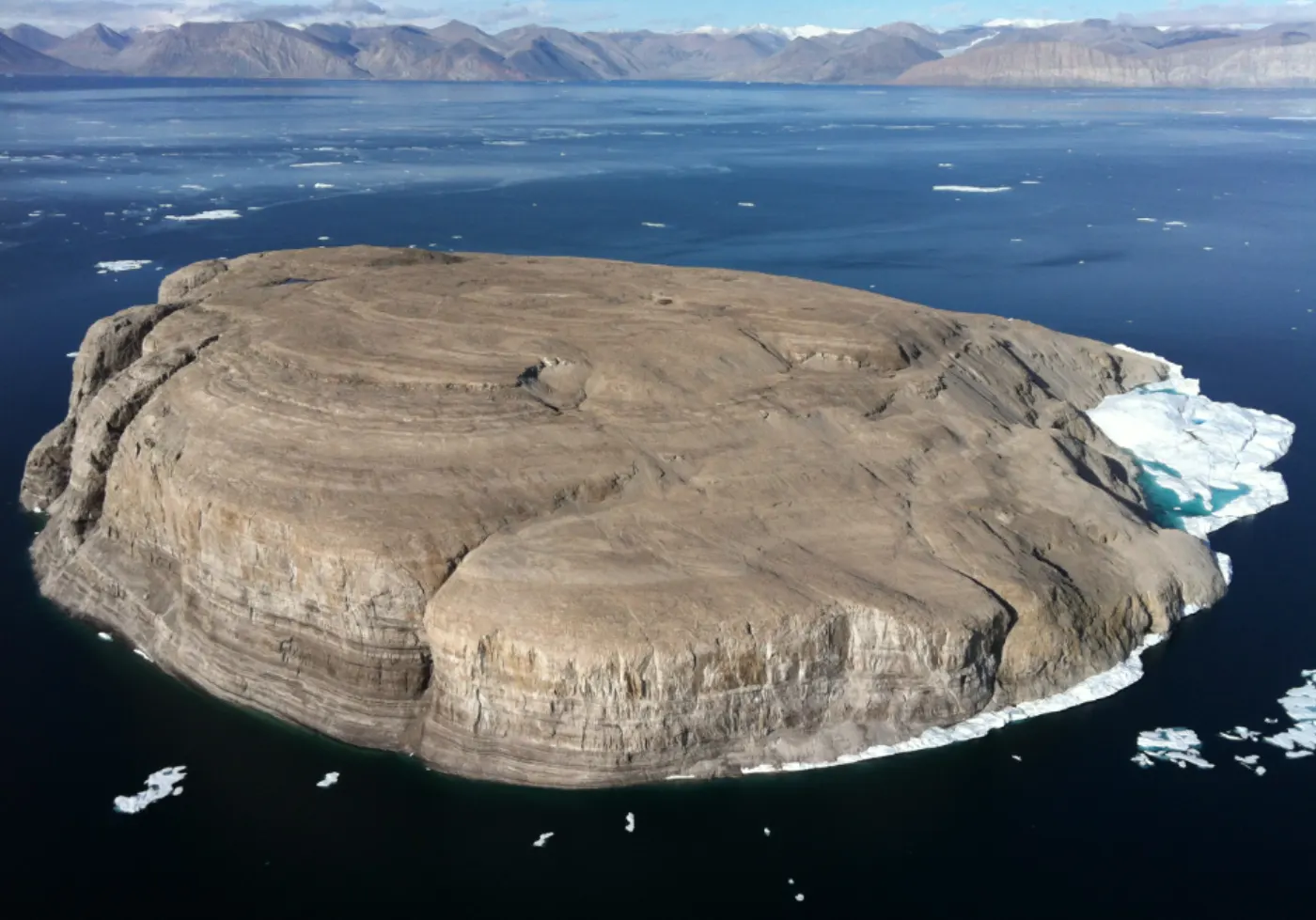
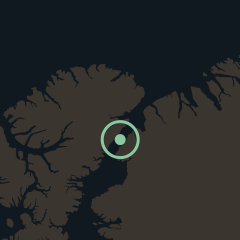
Hans Island is a 1.3 km² uninhabited rock in the Kennedy Channel of Nares Strait, between Canada's Ellesmere Island and Greenland. Canada and Denmark both claimed it and left it out of their 1973 sea boundary treaty. On June 14, 2022, Canada, Denmark and Greenland signed an agreement in Ottawa that splits the island along a ravine. Denmark, through Greenland, holds the eastern part, about 60% of the island. Canada holds the western part, about 40%. The deal also completed a sea boundary of about 3,962 km, which the two governments call the world's longest.
- Area
- 1.3 km²
- about 60% Denmark (Greenland), 40% Canada
- Dispute lasted
- 1973 to 2022
- 49 years, ended by treaty
- Sea boundary
- ~3,962 km
- the world's longest, say both governments
- Greenlandic name
- Tartupaluk
- "kidney-shaped," after the island's outline
Hans Island in 30 seconds
- Hans Island is a bare, uninhabited rock in the Kennedy Channel between Ellesmere Island and Greenland. It is about 1.3 km².
- A 1973 treaty drew the sea boundary through Nares Strait but left the island out. Canada and Denmark argued over it for 49 years.
- The dispute became known as the whisky war. Each side planted flags and left bottles of Canadian whisky or Danish schnapps for the other to find.
- On June 14, 2022, Canada, Denmark and Greenland signed an agreement splitting the island along a ravine. Canada now shares a land border with the Kingdom of Denmark.
Who owns Hans Island?
Canada and Denmark each own part of Hans Island. On June 14, 2022, the two countries signed an agreement in Ottawa that divides the island along a natural ravine running north to south. Denmark, through Greenland, received the eastern part, about 60% of the island. Canada received the western part, about 40%. Inuit from Greenland and Nunavut keep the right to move freely across the whole island to hunt and fish.
Canada's foreign minister, Mélanie Joly, Denmark's foreign minister, Jeppe Kofod, and Greenland's prime minister, Múte B. Egede, signed the agreement. Greenland's parliament approved it in May 2023. Denmark's parliament approved it on December 19, 2023, by 109 votes to none. In May 2023, Canada's government told its Parliament that it first had to change border and customs rules for the island and expected the treaty to enter into force in 2024 or 2025.
The agreement also settled the Lincoln Sea boundary, north of the island, and the continental shelf boundary in the Labrador Sea, far to the south. The full sea boundary runs about 3,962 km. Canada and Denmark call it the world's longest maritime boundary.
How Hans Island was split
 Denmark (Greenland)
40%
 Canada
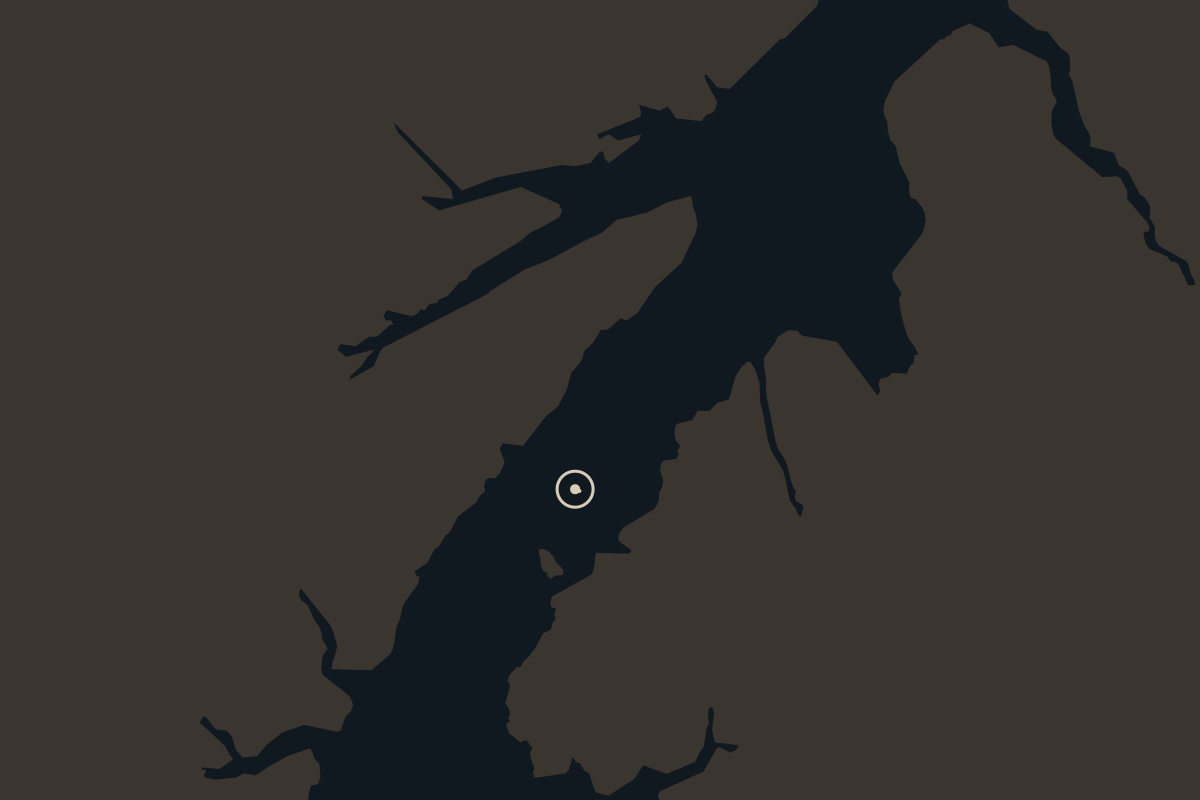 CANADA
GREENLAND
(Denmark) Ellesmere
Island Kennedy
Channel Nares Strait Hans Island
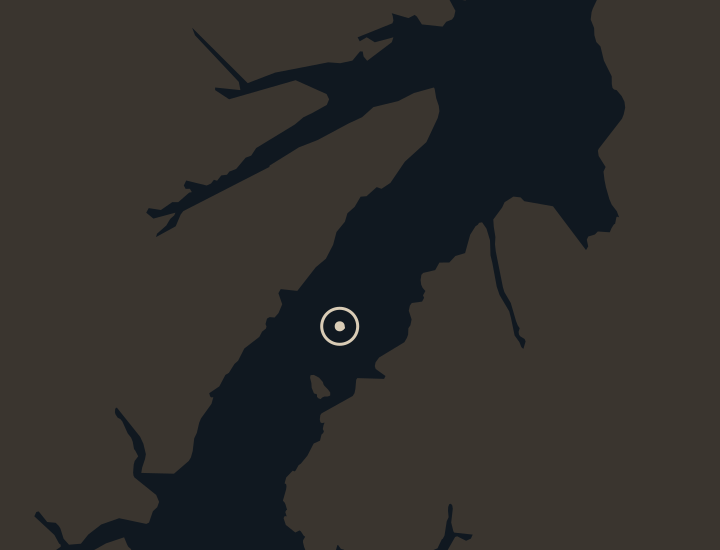 CANADA
GREENLAND
(Denmark) Ellesmere
Island Kennedy
Channel Hans Island
What was the whisky war?
The whisky war was a friendly contest in which Canadian and Danish visitors took turns planting flags on Hans Island and leaving bottles of liquor for the other side.
On July 28, 1984, Tom Høyem, Denmark's minister for Greenland, flew to the island by helicopter. He planted a Danish flag and left a note reading "Velkommen til den danske ø" (Welcome to the Danish island). Accounts say he also left a bottle of schnapps or brandy. Canada protested. Many accounts say Canadian soldiers had visited earlier that year and left a Canadian flag and a bottle of Canadian whisky. Over the next two decades, visitors from both countries repeated the pattern. Canadians left whisky. Danes left schnapps.
Danish flags went up again in 1988, 1995, 2002 and 2003, and Canada protested. On August 1, 2003, Commander Per Starklint of the Danish frigate HDMS Triton hoisted a Danish flag on the island. On July 13, 2005, Canadian soldiers raised a Canadian flag and built an inukshuk there. A week later, Canada's defense minister, Bill Graham, visited by helicopter. Denmark sent Canada a formal protest. No one was ever hurt. The two countries are NATO allies.
The whisky war
- 1973A Canada-Denmark treaty draws the sea boundary but leaves the island out
- 1984Denmark's minister Tom Høyem plants a Danish flag; Canada protests
- 2003A Danish frigate's commander hoists the Danish flag
- 2005Canadian soldiers raise a flag and Canada's defense minister visits; Denmark protests
- 2018Canada, Denmark and Greenland set up a joint task force
- 2022The three sign a deal in Ottawa splitting the island
- 2023Greenland's and Denmark's parliaments approve the deal
Why did the dispute last 49 years?
On December 17, 1973, Canada and Denmark signed a treaty drawing their continental shelf boundary through Nares Strait, the narrow passage between Ellesmere Island and Greenland. The treaty lists 127 points. The line stops at point 122, southwest of Hans Island, and starts again at point 123, northeast of it. The two governments could not agree on who owned the island, so they left it out.
Denmark argued that the island is geologically part of Greenland, that it lies slightly closer to Greenland, and that an expedition including the Greenlander Hans Hendrik named it in the 1850s. Canada argued that Denmark's claim had lapsed because Denmark had not exercised sovereignty there.
The island has no residents and little economic value, and the two countries are close allies. Neither government was under pressure to settle. On May 23, 2018, at a meeting in Ilulissat, Greenland, Canada, Denmark and Greenland announced a joint task force on three open boundary issues: Hans Island, the Lincoln Sea boundary and the Labrador Sea continental shelf beyond 200 nautical miles. The signing followed on June 14, 2022.
The 1973 treaty
127
Points on the sea-floor boundary
The 1973 treaty set 127 points from Davis Strait to Nares Strait. The line stops at point 122, southwest of Hans Island, and starts again at point 123, northeast of it.
What is Hans Island?
Hans Island is a small, barren, uninhabited rock in the Kennedy Channel, part of Nares Strait. It sits almost halfway between Ellesmere Island, Canada's northernmost island, and Greenland. The island covers about 1.3 km² of bare rock. It lies at about 80 degrees 49 minutes north.
The island's English name comes from Hans Hendrik, a Greenlandic Inuk hunter, guide and interpreter born around 1834 in Fiskenæsset, Greenland. Hendrik joined several 19th-century Arctic expeditions, serving with Elisha Kent Kane, Isaac Israel Hayes, Charles Francis Hall and the British Arctic Expedition of 1875 to 1876. Accounts differ on who named the island after him: Kane's expedition in the 1850s or Hall's Polaris expedition in 1871. Hendrik's memoirs were published in English in 1878.
The island's Greenlandic name is Tartupaluk, meaning "kidney-shaped," which describes its outline from above.
The parties
Questions about Hans Island
Does anyone live on Hans Island?
No. Hans Island is uninhabited. It is a bare rock with no buildings and almost no vegetation. Its visitors have been soldiers, scientists and officials from Canada and Denmark.
Does Canada border Europe?
Since the 2022 agreement on Hans Island, Canada has had a land border with the Kingdom of Denmark, a European country. The border runs across the island, between Canada's part and the part that belongs to Greenland. Greenland is part of the Danish realm but lies in North America. Before 2022, Canada's only land neighbor was the United States.
What is Nares Strait?
Nares Strait is the narrow passage between Ellesmere Island and Greenland, connecting the Lincoln Sea in the north to Baffin Bay in the south. The Kennedy Channel, where Hans Island sits, is one of its parts. The strait is named after George Nares, a British naval officer who led an Arctic expedition there in 1875 and 1876.
Is Greenland part of Denmark?
Greenland is part of the Kingdom of Denmark but governs itself under a 2009 self-government act. Denmark handles defense and foreign affairs. Greenland's parliament, the Inatsisartut, runs most domestic policy. In 2025 and 2026 President Trump's public interest in Greenland put its status in the spotlight. On September 22, 2026, Denmark and Greenland signed a defense agreement with the United States that keeps Greenland's status unchanged.