
Who will win the 2026 midterm elections?
Republicans hold both chambers by narrow margins, but Democrats lead the generic ballot by 8 points and the president's approval is at 37 percent. Here is what the numbers say about November 3.

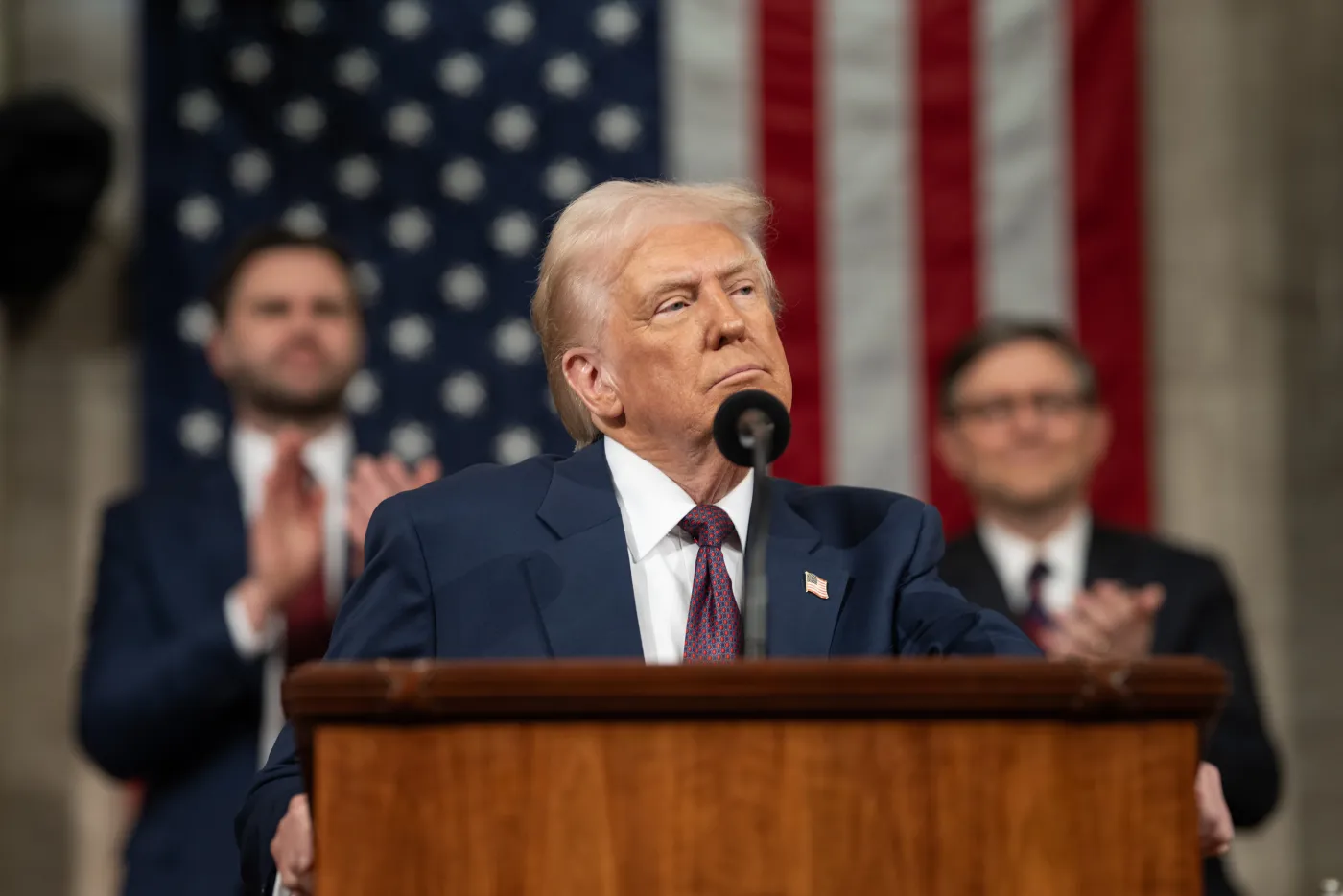
In 2010, Barack Obama called his first midterm election a "shellacking." His party lost 63 House seats and six Senate seats. His approval rating at the time was about 45 percent. Donald Trump's approval rating in September 2026 is 37 percent, with 60 percent of the country disapproving. Among independents, the number is 34 percent, a drop of 14 points since inauguration. Five weeks before election day, every major indicator points in the same direction.
The 2026 midterm elections are on November 3. All 435 seats in the House of Representatives and 35 Senate seats are on the ballot, including special elections in Florida and Ohio to fill the seats left by Marco Rubio and JD Vance when they joined the administration. Republicans hold both chambers by thin margins. Democrats need to flip three House seats and four Senate seats to take over. The polls, the president's numbers, and 90 years of midterm history all favor them. The question is how far the swing goes.
The pattern that almost never breaks
In the last 90 years, only three presidents have gained seats for their party in a midterm election. Franklin Roosevelt did it in 1934, during the worst economic crisis in American history. Bill Clinton did it in 1998, while Republicans were trying to impeach him. George W. Bush did it in 2002, one year after the September 11 attacks. Every other president lost seats.
The average loss is 28 House seats. When the president's approval rating is below 50 percent, the average rises to 37 seats. Trump's approval is 13 points below that threshold.
The reason is straightforward. The voters who turned out to elect the president tend to stay home two years later. The voters who are angry about something show up. Midterm electorates are smaller, older, and more motivated by opposition than by loyalty. The result is almost always a correction, and the size of the correction tracks closely with how unpopular the president is.
The House is likely to flip
Republicans hold the House 220 seats to 215. Democrats need a net gain of three to take control.
The clearest signal in House elections is the generic ballot, the national poll that asks voters whether they prefer a Democratic or Republican candidate for Congress. As of late September, Democrats lead the generic ballot by 7 to 9 points, depending on which aggregator you use. That is among the widest Democratic margins since 2018, the last time the party won a midterm by a large margin and picked up 41 seats.
About 66 House races are considered competitive this cycle, spread across New York, California, and swing districts in between. Forecasting models give Democrats an 85 to 90 percent chance of taking the House. Democrats need three seats. More than 60 competitive races give them many paths to get there.
The Senate is a closer fight
The Senate map in 2026 is the mirror image of 2024. Last cycle, Democrats were defending seats in deep-red states like West Virginia, Montana, and Ohio. They lost all three. This time, Republicans are defending 23 of the 35 seats on the ballot, and several are in states that are competitive or lean left. Democrats need to flip four seats and hold everything they have.
The most vulnerable Republican seats are in Maine, North Carolina, and Iowa, where retirements have created open races and where tariffs have hurt the local economy. Texas has entered competitive territory for the first time in decades. On the other side, Democrats are defending seats in Georgia and Michigan without the incumbents who won them. Two special elections in Florida and Ohio, to fill the seats Rubio and Vance left when they joined the administration, add more uncertainty.
Forecasting models give Democrats about a 59 percent chance of winning the Senate. It is a real contest, not a foregone conclusion.
The issues working against Republicans
The economy is the top concern for voters, and it is working against the president's party. GDP growth is around 2 percent, modest but not a recession. The problem is specific: the administration's tariff policies have raised consumer prices and discouraged business investment. A Washington Post-ABC poll from February 2026 found that 57 percent of Americans disapprove of Trump's handling of the economy. That number is hard to run against.
Then there is the war. American strikes on Iran have escalated into a wider conflict in the Middle East, and the Pentagon is seeking $200 billion from Congress to fund it. The war is deeply unpopular. To help pay for it, Republicans in Congress have proposed further cuts to healthcare spending. The budget bill that passed in 2025 already cut more than $1 trillion from Medicaid over a decade. The combination of a new war and cuts to health coverage is exactly the kind of issue that moves voters in a midterm.
The government-efficiency initiative that Elon Musk led before leaving his White House role earlier this year has also become a liability. Cuts to the State Department left the government unable to help Americans stranded in the Middle East when the conflict expanded. Immigration, typically a strong issue for Republicans, has not helped either: 58 percent of voters oppose the administration's handling of it, driven in part by enforcement actions that separated families in places like Minnesota.
What a Democratic Congress would mean abroad
A Democratic House or Senate would not control foreign policy, but it would control the money. The $200 billion the Pentagon wants for the Iran campaign needs congressional approval. A Democratic majority could block it, attach conditions, or force a withdrawal timeline. Tehran, which is already betting that American public opinion will end the war before the military does, would have reason to wait rather than negotiate.
Ukraine is the opposite case. Democrats have been more willing than Republicans to fund Kyiv. A Democratic Congress would likely restore military aid that the Republican majority cut or delayed, which would change the battlefield calculation for both Ukraine and Russia. For Moscow, a Democratic midterm would mean the weapons pipeline reopens.
China is watching the tariffs. The trade war has hurt American farmers and manufacturers, but it has also hurt Chinese exporters. A Democratic Congress could block new tariffs or force the administration to negotiate. Beijing would read a Republican loss as a sign that the tariff strategy is politically unsustainable, and plan accordingly. On Taiwan, both parties broadly support defending the island, so the midterms are unlikely to shift that calculus.
What will probably happen
The House is very likely to flip to Democratic control. The generic ballot, the historical pattern, and the president's approval numbers all point the same direction, and Democrats need only three seats in a cycle with more than 60 competitive races. The real question is the size of the new Democratic majority.
The Senate is genuinely uncertain. Democrats have a favorable map, a strong political environment, and well-known candidates in several target states. But flipping four seats is a large swing. Senate races depend on individual candidates and state-level dynamics more than House races do. A Democrat can run well ahead of the party in Maine and still lose in Georgia.
The most likely outcome on November 3 is that Democrats take the House and the Senate comes down to two or three races decided by small margins. If Trump's approval drops further or the Middle East conflict escalates, Democrats could take both chambers. If the economy stabilizes and Republican candidates run strong state-level campaigns, the Senate holds.
Either way, the Republican trifecta that began in January 2025 is almost certainly ending. A Democratic House would block the administration's legislative agenda, launch oversight investigations, and control the federal budget. A Democratic Senate on top of that would add power over judicial nominations and cabinet confirmations. Both outcomes would define the last two years of Trump's term and set the stage for 2028. The pattern that has held for 90 years shows no sign of breaking this time.
Test what you learned
5 questions on this article. About two minutes, no signup.