
Why did Persia change its name to Iran?
In 1935, Reza Shah asked the world to stop calling his country Persia. The name he chose was the one Iranians had used for over a thousand years.
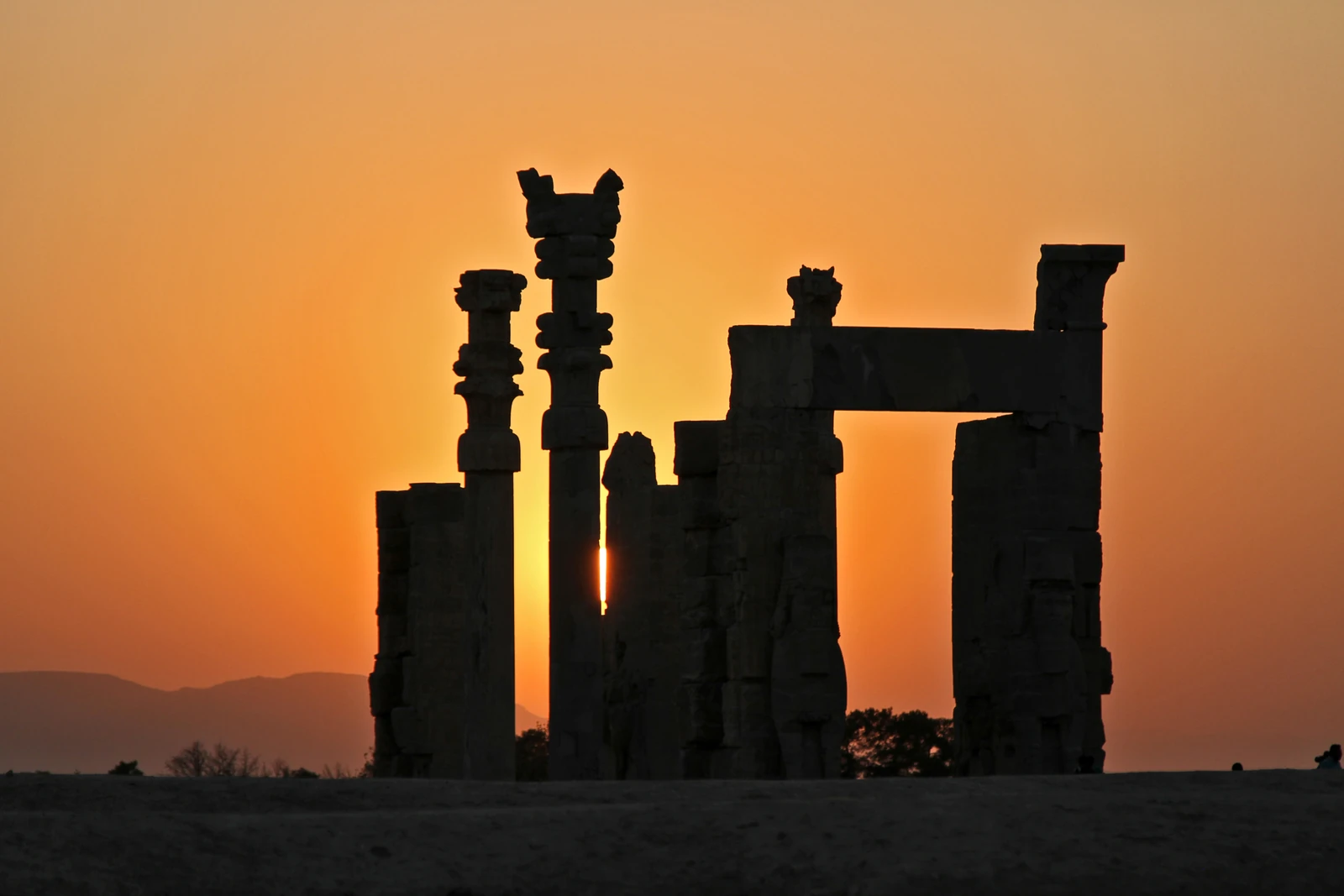
In 1935, the Iranian government sent a circular to every foreign embassy in Tehran. From now on, the country was to be called Iran, not Persia. The instruction came from Reza Shah Pahlavi, who had spent the previous decade rebuilding the country from the ground up. But the change was not what most people assume. Reza Shah was not inventing a new name. He was asking the rest of the world to use the name Iranians had been using for their own country for over a thousand years.
The name the Greeks gave it
"Persia" was never an Iranian word. It came from the Greeks, who named the Achaemenid Empire after the province where it started: Pars (modern Fars), in southwestern Iran. Cyrus the Great ruled from Pars when he built his empire in the 550s BC, and the Greek name for that one province became the name for the whole country. It stuck for 2,500 years. Europeans called the country Persia. Mapmakers labeled it Persia. The British signed oil concessions with the "Anglo-Persian Oil Company."
Iranians never used it. In their own languages, the country had been "Iran" since at least the third century AD, when the Sasanian dynasty adopted the title Eranshahr: the realm of the Aryans. The word goes back further still. Darius I, carving his royal inscriptions around 520 BC, described himself as an Ariya, an Aryan. "Iran" descends from the same Old Iranian root, Aryānām, meaning "of the Aryans." Long before anyone connected the word to twentieth-century racial politics, it was simply what the people who lived there called themselves and their homeland.
So when a European diplomat arrived in Tehran in the 1920s and said he was visiting "Persia," his hosts heard something like a foreigner calling the Netherlands "Holland."
The modernizer who renamed a country
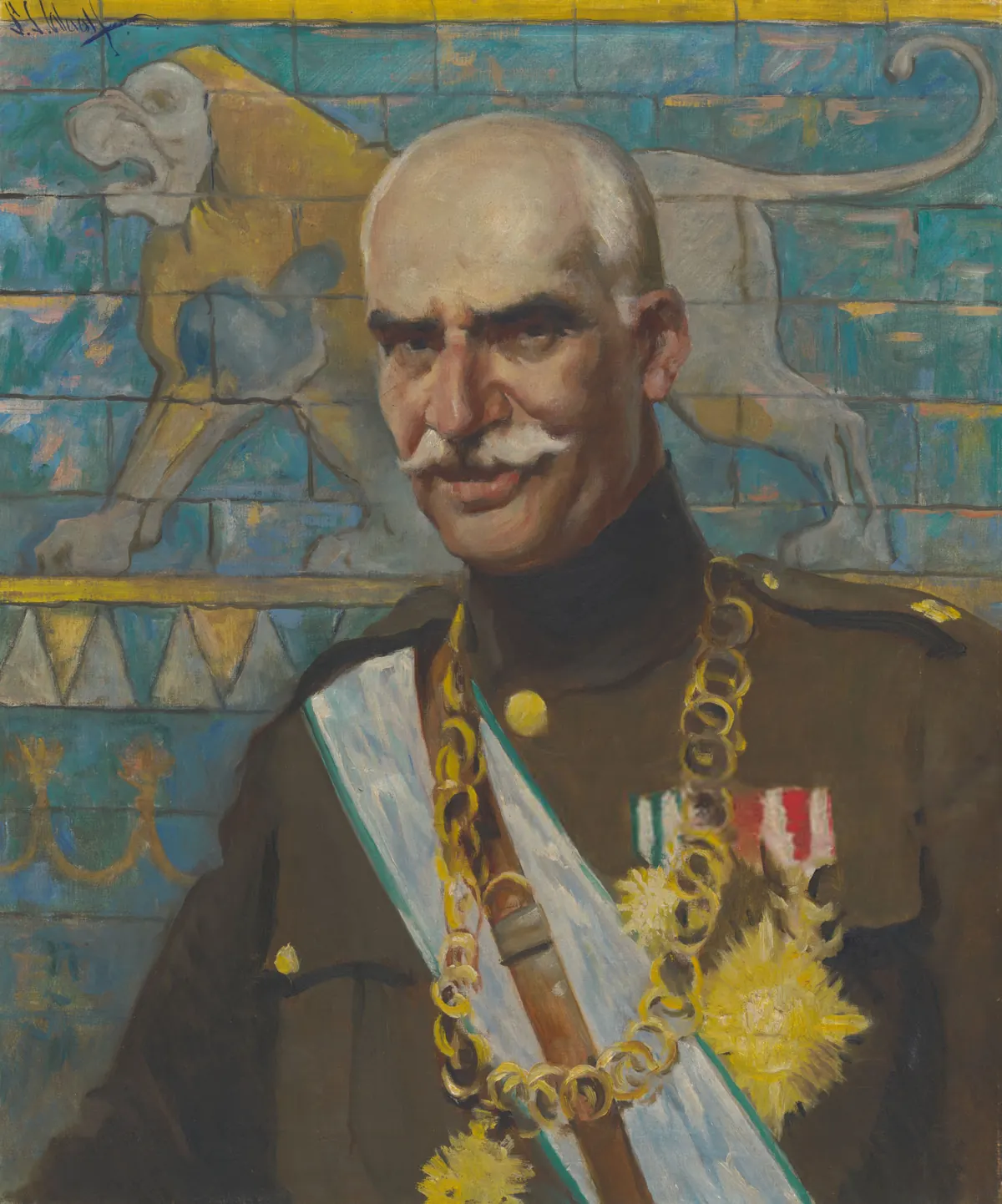
Reza Shah was a former army officer who had seized power in a 1921 coup and crowned himself king in 1925. He wanted to drag a country he considered medieval into the twentieth century, and he was willing to use force to get there. His model was Mustafa Kemal Atatürk's Turkey: a new legal code based on France's, the Trans-Iranian Railway connecting the Persian Gulf to the Caspian Sea, a national army, secular courts, and Tehran University, the country's first. In 1936 he banned the veil, ordering police to remove headscarves from women on the street.
The name change was part of the same project. On December 4, 1934, the Iranian foreign ministry sent a circular to all foreign embassies in Tehran. Effective March 1935, coinciding with Nowruz, the Iranian new year, they were to use "Iran" in all official correspondence. "Persia" was to disappear from diplomatic language.
The timing made the change look worse than its logic. The proposal reportedly came from Iran's ambassador to Germany, who had been influenced by German acquaintances. "Iran" means "land of the Aryans," and in 1935 the word "Aryan" carried a very specific political charge. Nazi Germany was building an ideology around Aryan racial purity, and Berlin was happy to welcome a country that put the word in its name. Reza Shah's government had growing trade ties with Germany and employed German engineers by the hundreds for the Trans-Iranian Railway.
Reza Shah did not borrow the name from the Nazis. "Arya" appears in the Avesta, the Zoroastrian scripture, centuries before the common era. But by making the demand at the moment he did, and through the channel he did, he made an old word look like a new political statement.
The reversal that didn't stick
In 1941, Britain and the Soviet Union invaded Iran to secure the railway Reza Shah had built as a supply route to the Soviet front. He was forced to abdicate. His son, Mohammad Reza Shah, inherited the throne at twenty-one.
In 1959, the younger Shah quietly announced that both names were acceptable again. Foreign governments could use "Iran" or "Persia" as they preferred. The British had long complained about "Iran," partly from habit and partly because the name was too easy to confuse with its neighbor Iraq in spoken English and telegrams. Ehsan Yarshater, the Columbia University scholar who later founded the Encyclopaedia Iranica, called the 1935 decree "a grievous error based on misdirected nationalism." He argued that "Persia" carried centuries of recognition: the Persian Empire, Persian carpets, Persian poetry, Persian cats. The new name carried none of that and came with an uncomfortable echo of 1930s racial thinking.
But the reversal came too late. Twenty-four years of diplomatic usage had already made "Iran" the default in newsrooms, atlases, and foreign ministries around the world. The old name survived in everyday phrases: "Persian Gulf," "Persian rug," "Persian cat." The country itself was Iran.
What the revolution kept
In 1979, the revolution that overthrew Mohammad Reza Shah dismantled nearly everything his father had built. The Islamic Republic replaced secular law with religious law, reimposed the veil, purged the universities, and reversed the country's foreign policy from a Western alliance to open hostility toward the United States. The Pahlavi name was stripped from streets, schools, and public buildings across the country.
The revolutionaries kept the name Iran. They had no reason to change it. "Iran" was not a Pahlavi invention. It was what Iranians had called their country for well over two thousand years, since long before Islam arrived.
What Reza Shah did in 1935 was not rename a country. He told the rest of the world to stop using the wrong name. That decision survived his forced abdication, his son's overthrow, a revolution, an eight-year war with Iraq, and the complete dismantling of the state he built. It is the one part of his legacy that every Iranian government since, including the one that destroyed the rest of it, has been content to keep.
Test what you learned
5 questions on this article. About two minutes, no signup.