
How the Iran-Iraq war created today's Middle East
The eight-year war killed half a million people and moved the border nowhere. Everything that has happened in the Middle East since traces back to it.
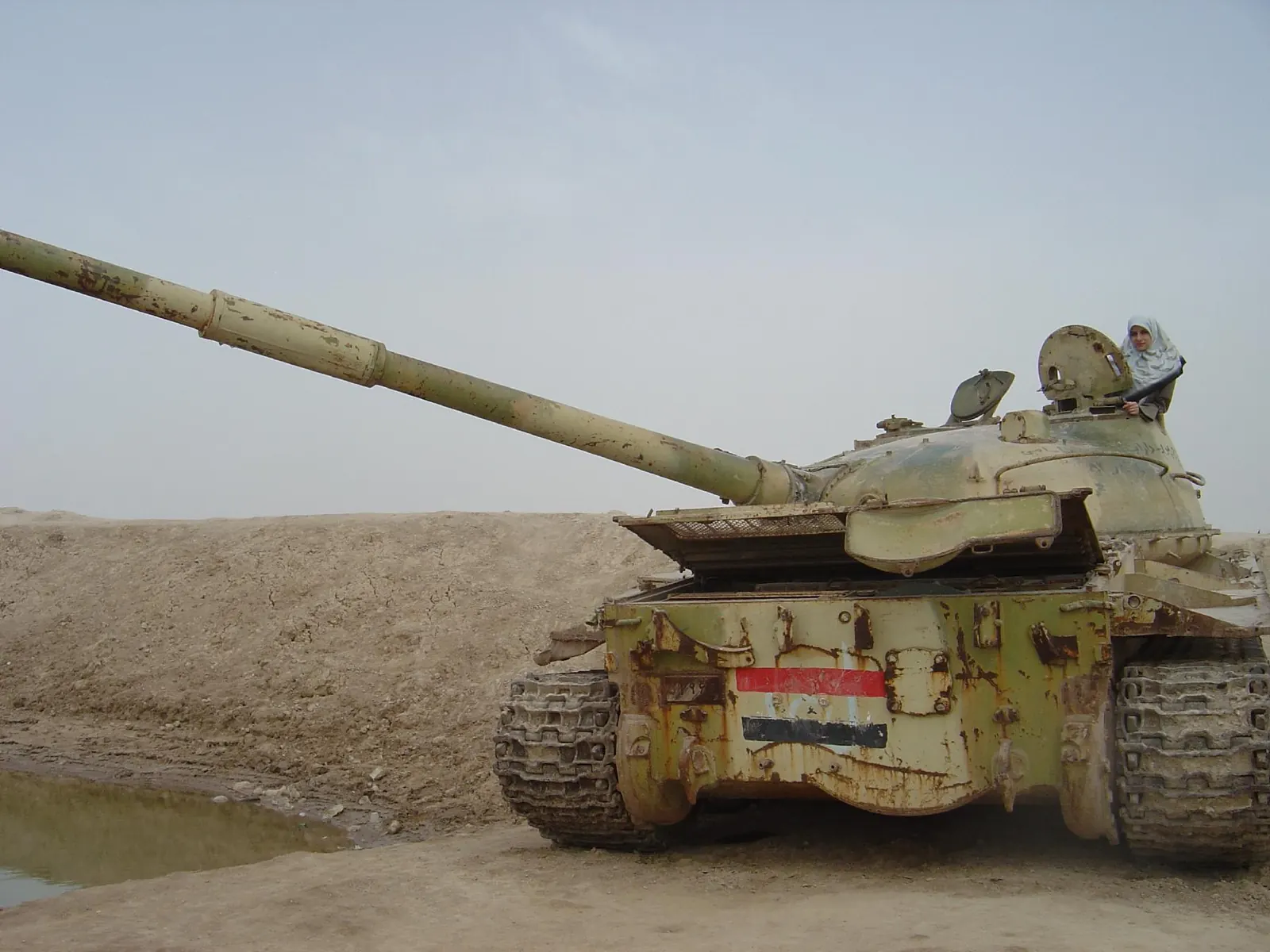
On August 20, 1988, the guns fell silent along the Iran-Iraq border. Eight years of war had killed roughly half a million people, possibly more. The border was almost exactly where it had been on September 22, 1980, the day Saddam Hussein sent his army into Iran. No territory changed hands. Both governments survived. Ayatollah Ruhollah Khomeini, Iran's supreme leader, compared accepting the ceasefire to drinking poison. He died less than a year later.
The war is the longest conventional conflict of the twentieth century, and in the West it is largely forgotten. But Iraq's invasion of Kuwait two years later, the Gulf War, the 2003 American invasion, Iran's proxy armies across four countries, its nuclear program, and its 2026 war with America and Israel all trace back to those eight years.
Why Saddam thought it would be easy
In 1979, two events reshaped the Middle East within months. In February, Iran's revolution overthrew the Shah and brought Khomeini to power. In July, Saddam Hussein became president of Iraq at 42, taking formal control of a country he had already run from behind the scenes for years.
Saddam had several reasons to invade. Khomeini, who had spent thirteen of his fourteen years of exile in Najaf, Iraq, was openly calling on Shia Muslims across the region to rise against their governments. Iraq's population was majority Shia. Saddam, a Sunni who ruled through the Baath Party, saw the revolution next door as a direct threat to his hold on power.
He also wanted the Shatt al-Arab, the waterway where the Tigris and Euphrates meet the Persian Gulf. Iraq's only route to the sea ran through it, and a 1975 agreement had given Iran shared control. Beyond the border dispute, Saddam wanted Khuzestan, an oil-rich Iranian province with a large Arab population. Taking it would give Iraq some of the biggest oil reserves in the region.
Iran looked like an easy target. The revolution had broken its army apart. Experienced officers had been executed or exiled. Western arms suppliers had cut the country off. Saddam expected a short war. His army advanced into Khuzestan in September 1980, captured the city of Khorramshahr after weeks of fierce house-to-house fighting, but stalled roughly 80 to 120 kilometers inside Iran by December. The short war was already over. The long one was about to begin.
Eight years of trenches, gas, and missiles
By 1982, Iran had pushed Iraqi forces back across the border. Rather than accept a ceasefire, Iran's supreme leader Khomeini chose to keep fighting until Saddam was overthrown. The front settled into a static line of trenches, minefields, and barbed wire that barely moved for the next six years.
Iran had far more people but far fewer weapons. It sent waves of Basij volunteers into attacks on dug-in Iraqi positions. Some of these volunteers were teenagers. Some were children as young as nine, walking through minefields ahead of regular troops. Iraq, armed and funded from outside, answered with chemical weapons. Starting in 1983, Iraqi forces used mustard gas against Iranian troops. In 1984, Iraq became the first country since World War I to use nerve agents in battle, deploying tabun and later sarin. Over the course of the war, Iraq launched more than 30 chemical attacks on Iranian soldiers and civilians. No major power punished it or even publicly condemned the attacks at the time.
The worst single attack came in March 1988, at Halabja, a Kurdish town in northern Iraq. After Kurdish fighters allied with Iran captured the town, Saddam's forces dropped a mixture of mustard gas, sarin, and VX nerve agent on it. Roughly 5,000 people died, most of them women, children, and the elderly who had not fled. The officer who ordered the attack, Ali Hassan al-Majid, became known as Chemical Ali. He was hanged in 2010.
Both sides also attacked oil tankers in the Persian Gulf, threatening the world's oil supply. Between them, they struck more than 450 ships. The United States sent warships to escort Kuwaiti tankers through the strait under American flags and clashed directly with Iranian forces. In April 1988, the US Navy sank two Iranian warships and crippled a third in a single day during Operation Praying Mantis, the largest American naval battle since World War II.
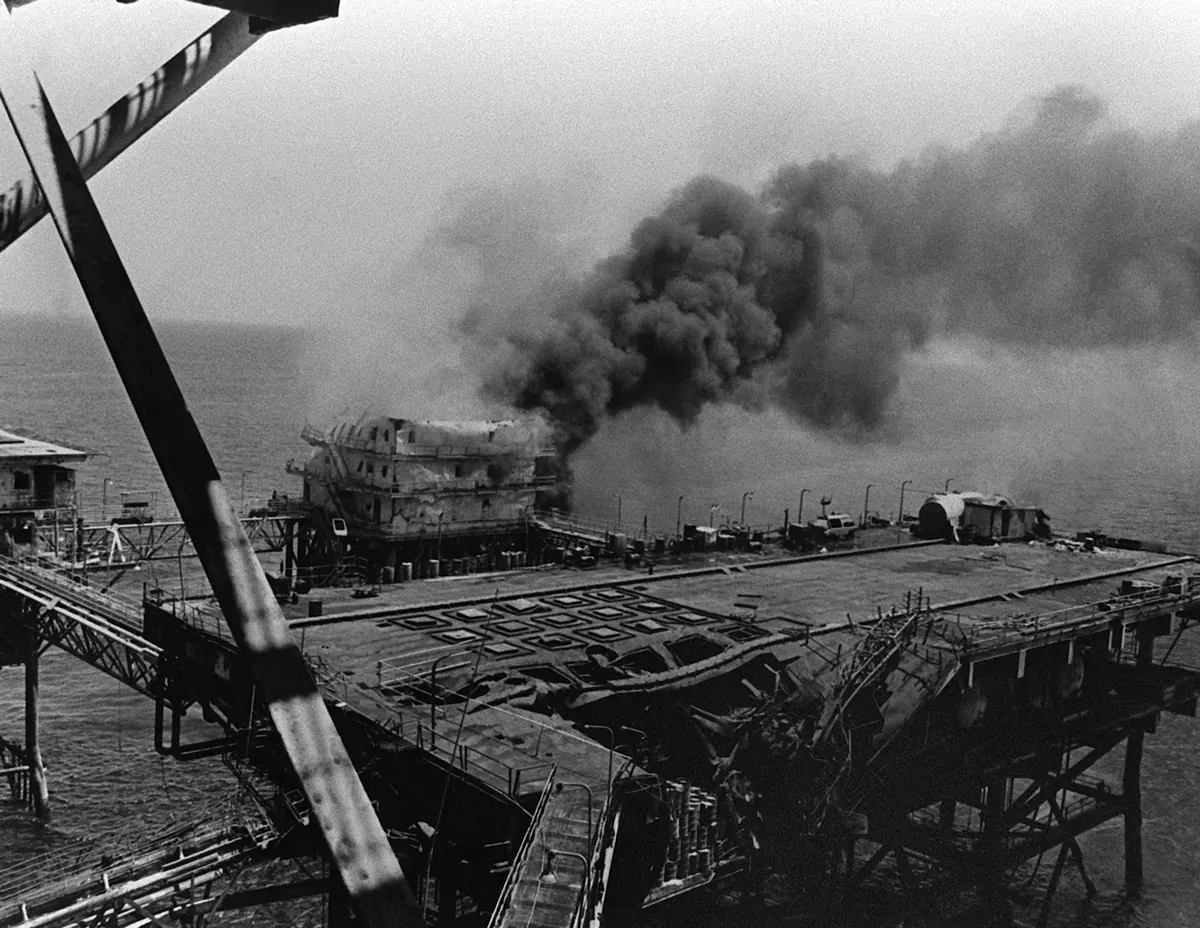
On July 3, 1988, the cruiser USS Vincennes shot down Iran Air Flight 655, an Iranian passenger plane on a scheduled flight from Bandar Abbas to Dubai. All 290 people on board were killed, including 66 children. The US Navy said its crew had mistaken the airliner for an F-14 fighter jet. The United States never formally apologized.
Weeks later, with its cities battered by Iraqi missile strikes and its economy wrecked, Khomeini accepted the UN ceasefire.
Who armed Iraq, and who armed both sides
France sold Saddam Mirage fighter jets and Exocet anti-ship missiles. The Soviet Union supplied tanks, artillery, and armored vehicles. Saudi Arabia and Kuwait lent Iraq roughly $30 to $40 billion to keep fighting, fearing that Khomeini's revolution would spread to their own Shia populations. The United States, which restored diplomatic relations with Iraq in 1984, shared satellite intelligence on Iranian troop movements with Saddam's government and did little to stop Iraq's use of chemical weapons.
At the same time, officials in the Reagan administration were secretly selling weapons to Iran, including anti-tank missiles, in exchange for the release of American hostages held by Hezbollah in Lebanon. The profits were funneled to the Contra rebels in Nicaragua. When the Iran-Contra affair became public in 1986, it revealed that the United States had been arming both sides of the same war.
Iran fought largely alone. The contrast between the support Iraq received and the isolation Iran endured became the defining experience of the Islamic Republic. Fifteen years later, the United States invaded Iraq over weapons of mass destruction that turned out not to exist. The chemical weapons Saddam had actually used against Iranians and Kurds in the 1980s, with Western knowledge, had never been enough to justify intervention.
What the war left behind
Iraq came out of the war owing tens of billions to its Gulf neighbors. Saddam Hussein demanded that Saudi Arabia and Kuwait forgive the debt, arguing that Iraq had fought the war on their behalf by containing Khomeini's revolution. Kuwait refused. Two years after the ceasefire, in August 1990, Saddam invaded Kuwait to seize its oil wealth and erase the debt. That invasion led to the Gulf War and to American troops stationed in Saudi Arabia. Their presence became Osama bin Laden's stated reason for attacking the United States, and it set the stage for the 2003 invasion that toppled Saddam and broke Iraq apart.
Iran's path led somewhere different. The war taught the Islamic Republic that the world would not protect it. No major power had punished Iraq for gassing Iranian soldiers and Kurdish civilians. The United States had armed both sides and then shot down an Iranian airliner. Instead of relying on outside allies, Iran built its own network of armed groups across the region: Hezbollah in Lebanon, militias in Iraq, the Houthis in Yemen. It built a ballistic missile program. It pursued a nuclear program. Every one of these projects was led by the Islamic Revolutionary Guard Corps. Khomeini had created the IRGC in 1979, and it had grown into the most powerful institution in Iran during the eight years of war.
By 2026, the IRGC controlled more than half of Iran's economy, ran its proxy forces in four countries, and organized the closure of the Strait of Hormuz using mines and drones that cost a fraction of the missiles fired to stop them. The Iran that fought the United States and Israel to a standstill in 2026 was built in the trenches of 1980 to 1988, by a generation that learned that when Iraq gassed their soldiers and their cities, the rest of the world looked away.
Test what you learned
5 questions on this article. About two minutes, no signup.