The Age of Oil
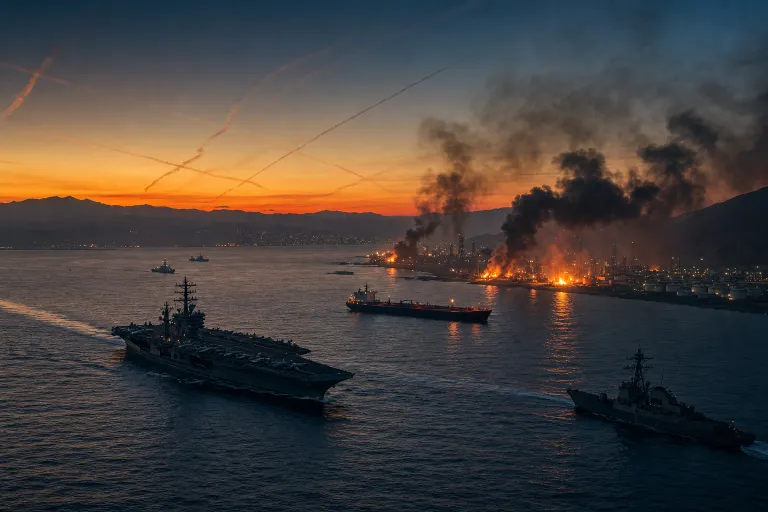
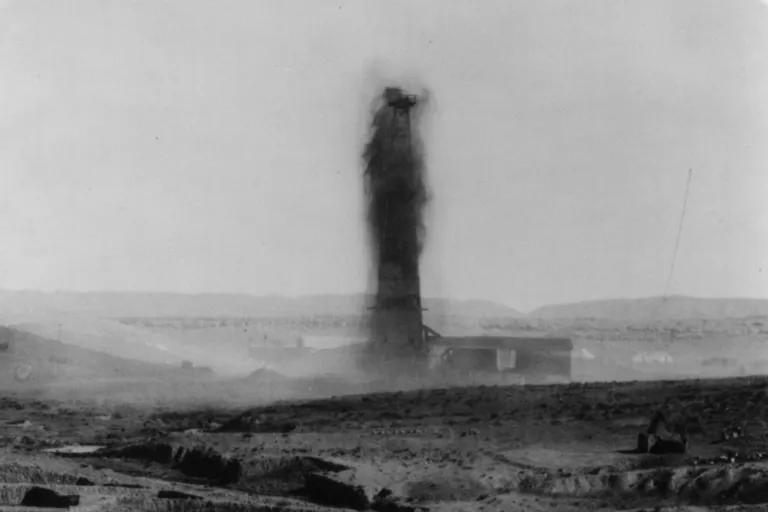
In 1859, Edwin Drake struck oil in Pennsylvania. Empires later fought over oil, and producing countries used it as a weapon. In 2026, war closed the Strait of Hormuz and the price of oil hit $100 within eight days.
1859 to 2026 · 6 parts · 22 lessons · about 2 hours
Free for 7 days, cancel anytime. iPhone and Android.
Questions this course answers
- How did Rockefeller build a monopoly over American oil?
- How did an American oil company win the Saudi Arabian concession?
- How did the 1973 oil embargo reshape the global energy order?
- How did falling oil prices help bring down the Soviet Union?
- How did fracking turn the United States into the world's largest oil producer?
- Why does oil still control the world in 2026?
Six parts, 22 lessons
 Part 1 · 1859 to 1914
Black Gold
How petroleum went from a nuisance in Pennsylvania streams to a monopoly, a global contest between empires, and a matter of national survival for Britain.
-
1
5 min
Rockefeller's Kingdom
John D. Rockefeller took control of oil refining and built Standard Oil, a monopoly so complete that the United States government broke it apart in 1911.
-
2
5 min
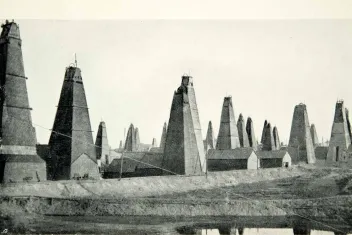
Baku: The First Oil Capital
Around 1901, Baku, on the Caspian Sea, pumped more oil than the entire United States. The Nobel and Rothschild families used it to break Rockefeller's grip.
-
3
6 min
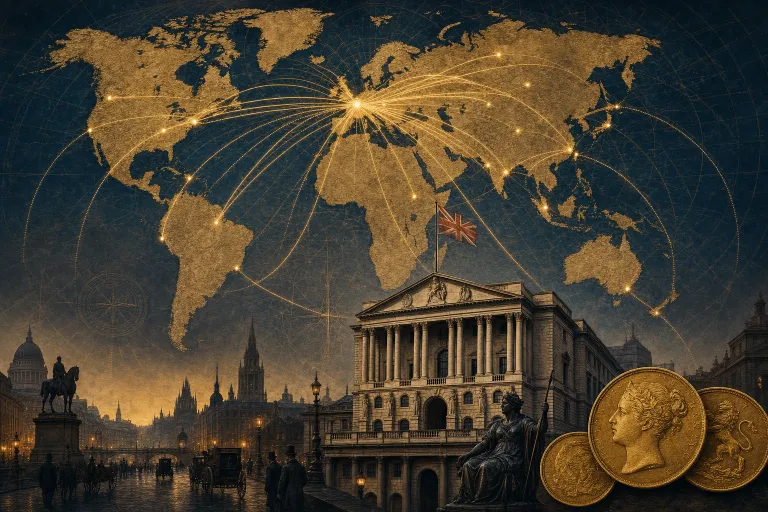
Churchill Bets the Navy on Persia
In 1914, Britain bought a controlling stake in an oil company because Winston Churchill had rebuilt the Royal Navy around a fuel Britain did not have.
 Part 2 · 1914 to 1945
Oil Goes to War
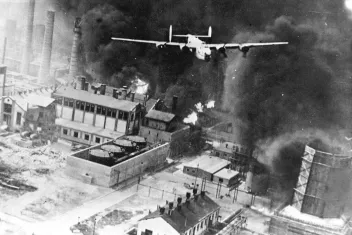
The scramble for oil beneath the Ottoman Empire, the concession that opened Saudi Arabia to America, and the fuel shortage that helped defeat Germany.
-
4
6 min
Mr Five Percent Carves Up the Middle East
An Armenian broker named Calouste Gulbenkian held together the deal that carved up Ottoman oil and took five percent of every barrel as his fee.
-
5
6 min
The King and the Wildcatters
Ibn Saud was nearly bankrupt when he sold an oil concession to Standard Oil of California in 1933. After five years of dry holes, drillers struck oil in 1938.
-
6
6 min
Hitler's Oil War
Germany fought the Second World War without enough fuel. Fuel made from coal, Romania's oil fields, and the drive for Soviet oil all failed to close the gap.
 Part 3 · 1951 to 1974
The Producers Strike Back
For decades, Western companies set the price of oil. Iran nationalized its oil, Egypt seized the Suez Canal, and OPEC finally learned how to fight back.
-
7
5 min
Mossadegh Takes the Oil
In 1951, Iran nationalized the Anglo-Iranian Oil Company. The CIA and MI6 overthrew Prime Minister Mossadegh two years later, creating a grievance that endures.
-
8
6 min
Suez 1956
Two-thirds of Europe's oil came through the Suez Canal. When Nasser nationalized the canal in 1956 and Britain and France invaded, Europe had to ration petrol.
-
9
6 min
OPEC and the Seven Sisters
Seven Western oil companies controlled the price of crude. Five producing countries created OPEC, spent a decade being ignored, and then learned to fight back.
-
10
6 min
The 1973 Embargo
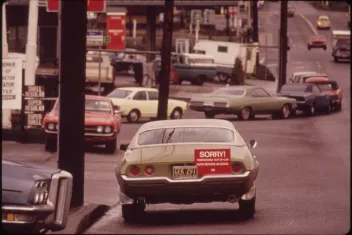
Arab producers embargoed America in 1973 and oil quadrupled from about $3 to $12. The reserves and standards built in response still govern energy security.
-
11
6 min
The Devil's Excrement
After 1973, Iran, Venezuela, and Nigeria spent wildly and were in trouble within a decade. Norway saved its windfall in a fund now worth about $2.3 trillion.
 Part 4 · 1979 to 2003
Oil Wars
The role of oil in the Iranian revolution, the Tanker War in the Gulf, the Soviet collapse, Iraq's invasion of Kuwait, and the 2003 invasion of Iraq.
-
12
5 min
1979: The Year the Gulf Exploded
Iran's revolution shut down the world's second-largest oil exporter. Carter vowed to defend the Gulf by military force. That commitment has never been withdrawn.
-
13
6 min
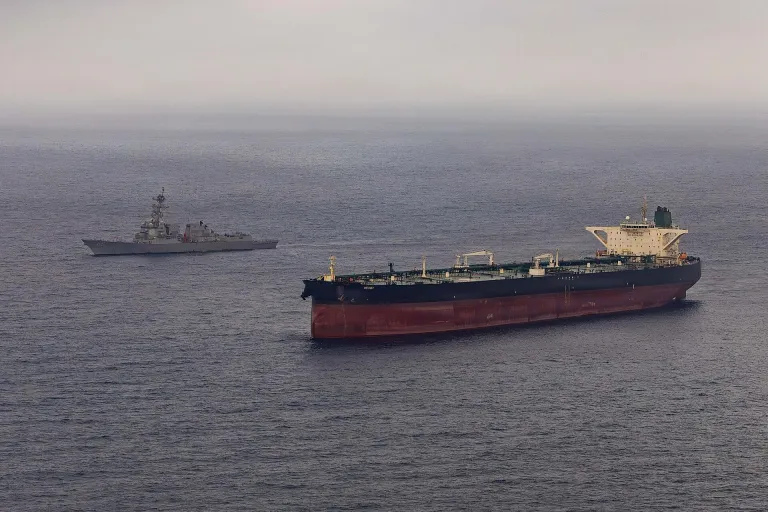
The Tanker War
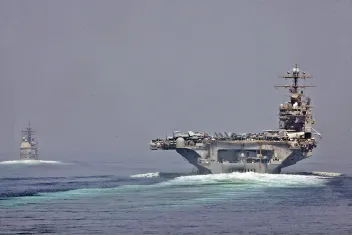
Iraq and Iran attacked over 400 ships in the Gulf between 1984 and 1988. The United States sent the Navy to escort Kuwaiti tankers through the Strait of Hormuz.
-
14
6 min
The Soviet Union's Oil Lifeline
Siberian oil let Moscow buy grain and arm its military without reform. In 1986 Saudi Arabia crashed the price, and within five years the Soviet Union was gone.
-
15
5 min
Saddam Takes Kuwait
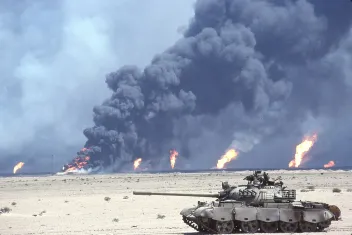
Iraq invaded Kuwait, desperate for oil revenue after its war with Iran. American troops left in Saudi Arabia afterward became a stated motive for September 11.
-
16
5 min
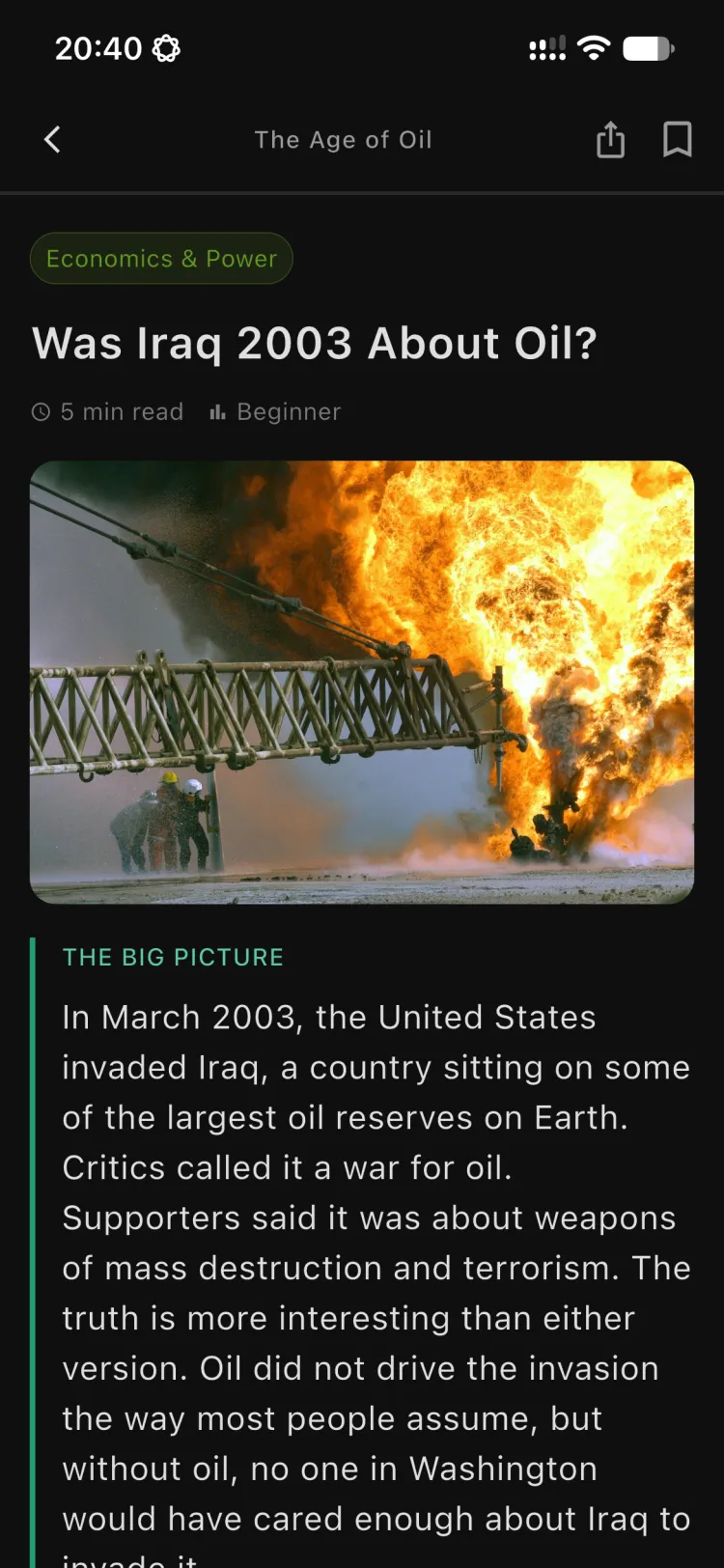
Was Iraq 2003 About Oil?
Without oil, the United States would not have cared enough to invade Iraq in 2003. But in 2009, Iraq's oil fields were split among companies from several countries.
 Part 5 · 2000 to 2020
The New Oil Map
Putin weaponized Russian gas and lost his best customer. Fracking broke OPEC's pricing power. Qatar bet on liquefied gas and became one of the richest countries.
-
17
6 min
Putin's Energy Weapon
Putin renationalized Russia's energy sector, turned Europe's gas dependence into a lever of power, and invaded Ukraine. Europe broke the dependency in two years.
-
18
7 min
The Fracking Revolution
George Mitchell spent seventeen years making hydraulic fracturing work. The technique turned the United States into the world's largest oil producer.
-
19
5 min
Qatar, the Gas Superpower
Qatar sat on the largest gas field on Earth for two decades. After 1995, a new emir bet on liquefied gas and made Qatar one of the richest countries.
 Part 6 · 2015 to 2026
Oil Power Now
Saudi Arabia races to build an economy without oil. China tries to escape its import dependency. In 2026, war closes the Strait of Hormuz.
-
20
6 min
Saudi Arabia After Oil
Drones knocked out half of Saudi Arabia's oil output in 2019. Saudi Arabia is diversifying faster than any petro-state and still needs $90 crude to pay for it.
-
21
6 min
China's Oil Problem
China imports about eleven million barrels a day, most of it through the Strait of Malacca. Its electric-car push is as much about that risk as about climate.
-
22
6 min
2026: Oil Still Rules
War closed the Strait of Hormuz in 2026 and oil hit $100. The same rule held as in 1914 and 1973: whoever controls the geography controls the world.
Lessons you can finish in one sitting.
Each lesson tells one part of the story and explains why it happened, with maps, images and quotes from the sources. A few questions at the end check that it stuck, and the key facts go into the course's flashcards.
- 5 to 7 minutes a lesson
- Three to four questions after each lesson
- 155 flashcards for this course