Sanctions: War Without Bullets
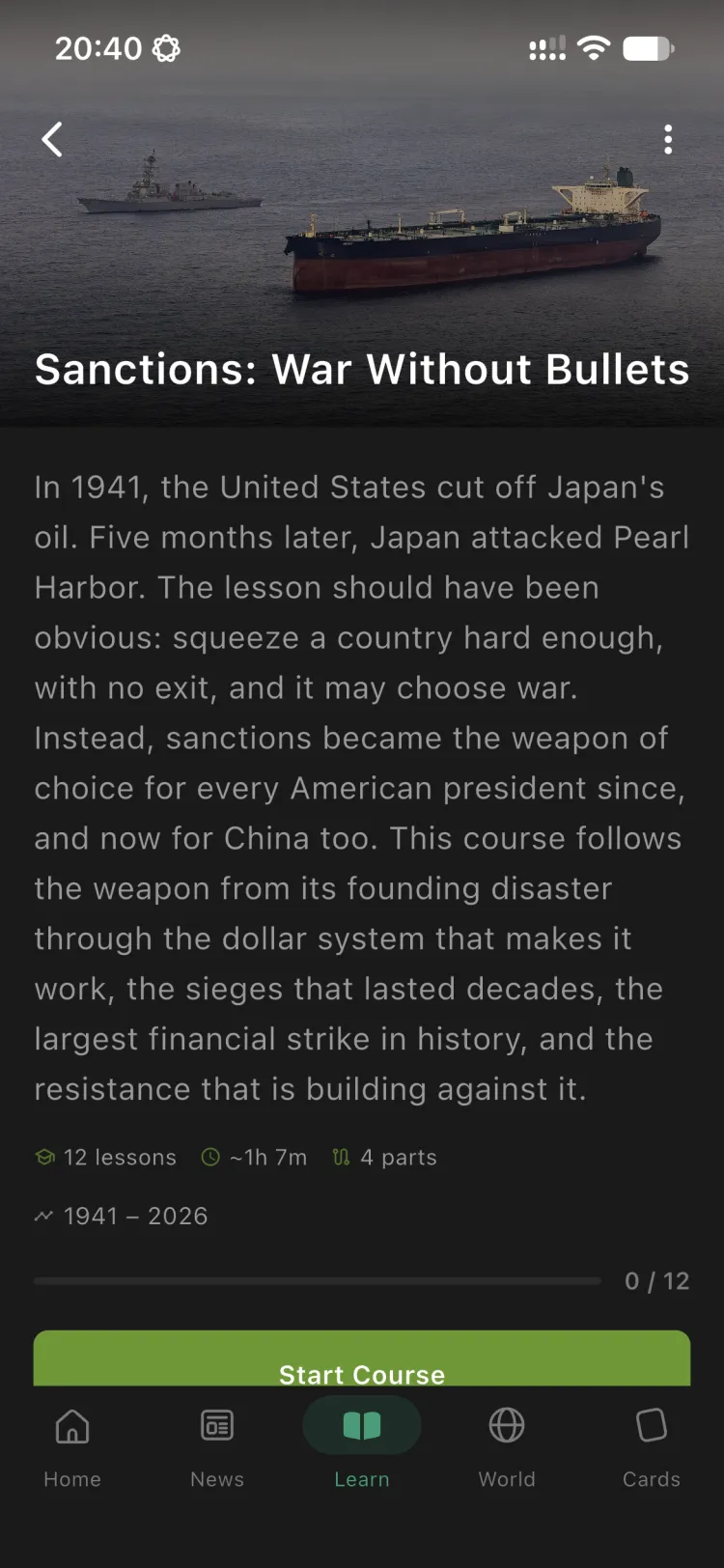
In 1941, the United States cut off Japan's oil, and Japan attacked Pearl Harbor. This course follows sanctions from there: how the dollar became a weapon, why Cuba's government outlasted sixty years of embargo, and how Russia's economy survived the largest asset freeze in history.
1941 to 2026 · 4 parts · 12 lessons · about 65 minutes
Free for 7 days, cancel anytime. iPhone and Android.
Questions this course answers
- Why did cutting off Japan's oil lead to the attack on Pearl Harbor?
- How does the United States use the dollar to shut countries out of the global financial system?
- Why do many people say sanctions worked against apartheid South Africa?
- How did Russia survive the heaviest financial sanctions in history?
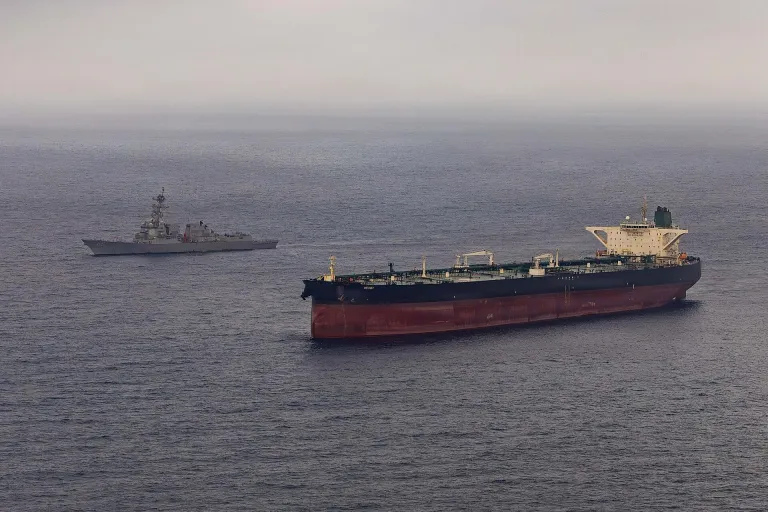
- What is the shadow fleet carrying Russian oil past Western sanctions?
- How is China building its own sanctions weapon against the West?
Four parts, 12 lessons
 Part 1 · 1941 to 2003
The Weapon
A US oil embargo pushed Japan to attack Pearl Harbor. The US Treasury learned to use the dollar as a weapon. The Iraq embargo led the world to targeted sanctions.
-
1
5 min
The Embargo That Led to Pearl Harbor
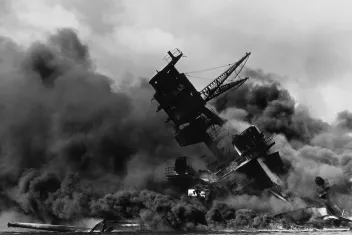
In 1941, the United States cut off Japan's oil, expecting retreat. Five months later, Japan attacked Pearl Harbor and seized the oil fields of Southeast Asia.
-
2
6 min
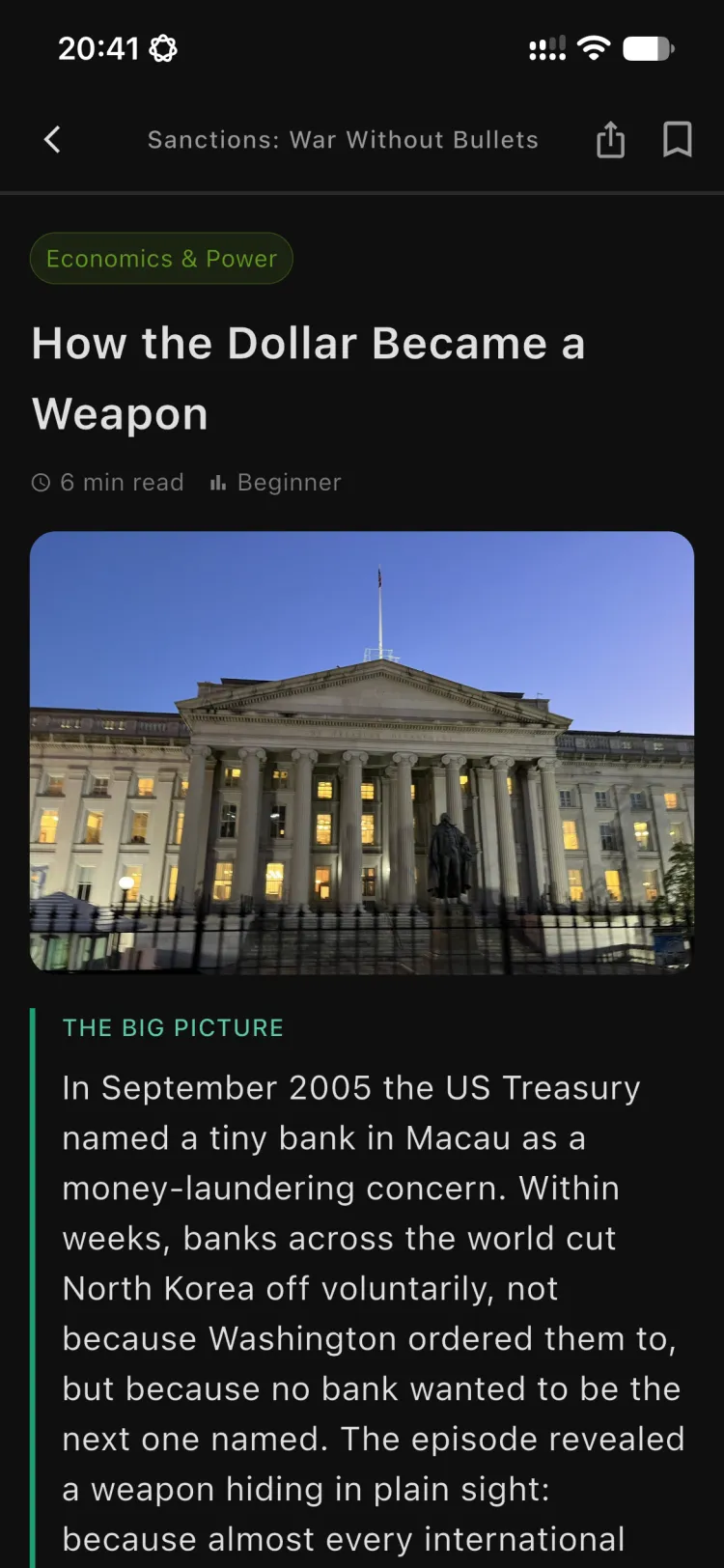
How the Dollar Became a Weapon
In 2005, the US Treasury named one bank in Macau, and banks worldwide cut off North Korea. Almost all international dollar payments pass through New York.
-
3
6 min
Iraq: The Sanctions That Killed?
In August 1990, the UN imposed the most complete trade embargo of modern times on Iraq. Hospitals ran out of medicine while Saddam Hussein built palaces.
 Part 2 · 1960 to 2026
The Long Sieges
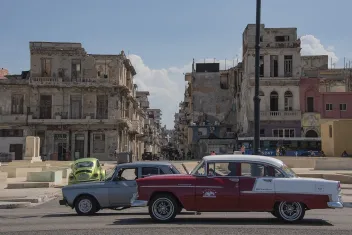
Cuba, South Africa, and Iran faced three of the longest sanctions campaigns in modern history. Sanctions arguably helped end apartheid. Cuba and Iran held out.
-
4
5 min
Cuba: Sixty Years of Embargo
The US embargo on Cuba, imposed in 1962 to topple Fidel Castro's revolution, has lasted more than sixty years. The Communist Party still rules Cuba.
-
5
6 min
South Africa: When Sanctions Worked
In 1985, banks refused to roll over South Africa's loans. Along with US sanctions in 1986, this helped push the white elite toward reform.
-
6
6 min
Iran: Cut Off
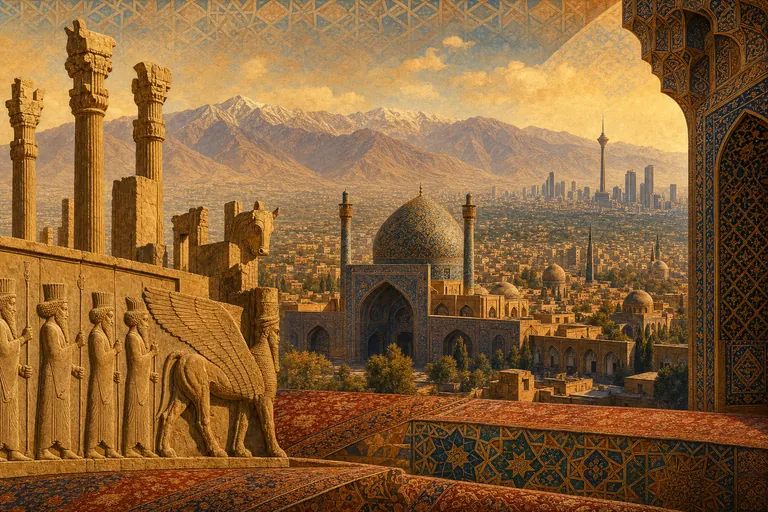
Bank by bank, the US Treasury cut Iran off. SWIFT disconnected Iran in 2012 and the rial collapsed. A nuclear deal followed in 2015. Trump withdrew in 2018.
 Part 3 · 2022 to 2026
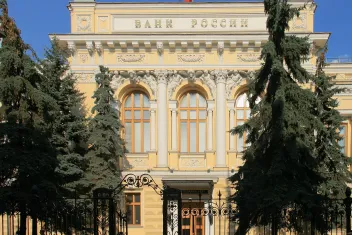
Russia: The Biggest Sanctions War
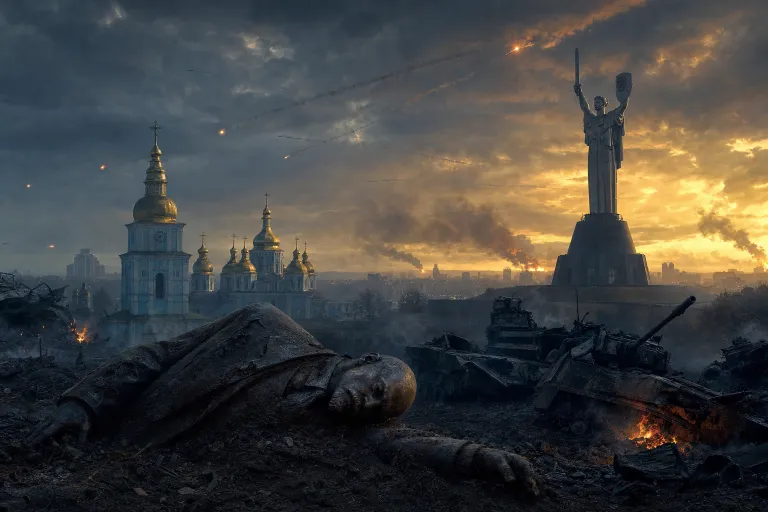
The West froze about $300 billion of Russia's reserves in one weekend. A shadow fleet carried oil past the price cap, and Russia's economy did not collapse.
-
7
5 min
The Weekend the West Froze $300 Billion
Russia spent eight years preparing for sanctions, but left its euros at a clearinghouse in Brussels. In one weekend, the West froze about $300 billion.
-
8
5 min
Chasing the Oligarchs' Yachts
Governments froze about $30 billion in oligarch assets and seized yachts from Fiji to Hamburg, hoping the billionaires would pressure Putin. None turned on him.
-
9
7 min
The Shadow Fleet
To dodge the G7 price cap, Russia bought hundreds of aging tankers flying foreign flags. By 2025, the shadow fleet carried most of Russia's seaborne crude.
-
10
5 min
Why Russia Didn't Collapse
India and China bought Russia's oil. Central Asian middlemen supplied the chips. Military spending drove GDP growth while the civilian economy shrank.
 Part 4 · 2014 to 2026
Endgames
Venezuela shows what happens when sanctions fail and Washington turns to force. China has built its own sanctions tools, and central banks are buying gold.
-
11
6 min
Venezuela: From Sanctions to Seizure
Eight years of US sanctions helped drive seven million people from Venezuela but did not topple Maduro. In 2026, American forces captured Maduro in Caracas.
-
12
5 min
The Weapon Turned Around
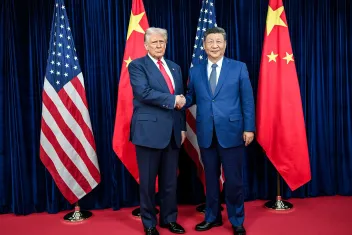
China has blocking rules, rare-earth controls, and a fast-growing payment system. Central banks are buying gold at record rates to hedge against the dollar.
Lessons you can finish in one sitting.
Each lesson tells one part of the story and explains why it happened, with maps, images and quotes from the sources. A few questions at the end check that it stuck, and the key facts go into the course's flashcards.
- 5 to 7 minutes a lesson
- Three to four questions after each lesson
- 86 flashcards for this course