Alliance · Oil producers
OPEC
Organization of the Petroleum Exporting Countries
OPEC is a group of 11 oil-exporting countries that agree how much crude each will pump, to steer the price. Iran, Iraq, Kuwait, Saudi Arabia and Venezuela founded it in Baghdad in September 1960. Its members pumped 31% of the world's crude oil in 2025. The United Arab Emirates, its third-largest producer, left on May 1, 2026, after 59 years.
- Members
- 11
- The UAE left in May 2026
- Founded
- 1960
- In Baghdad, by 5 countries
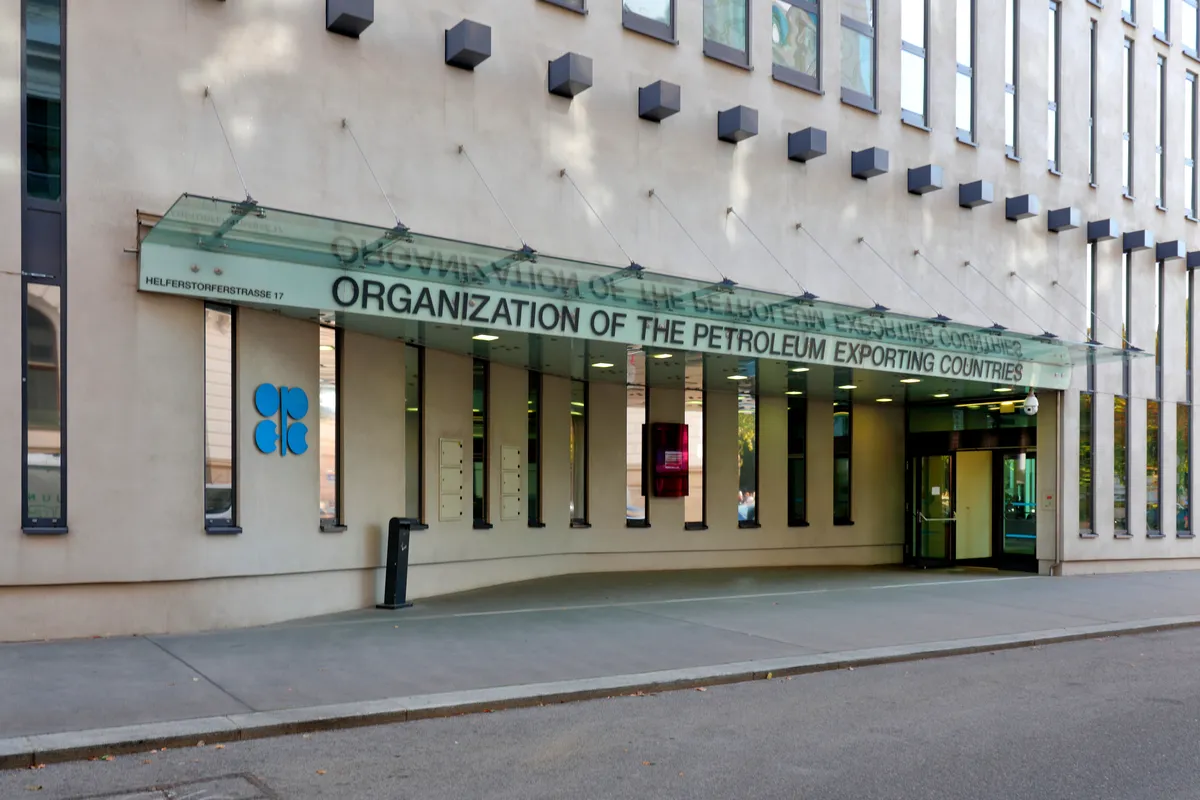
- Headquarters
- Vienna
- Austria, since 1965
- Share of world oil
- 31%
- 26.2 million barrels a day, 2025
- OPEC+
- 21 countries
- OPEC plus Russia and 9 others
Which countries are in OPEC?
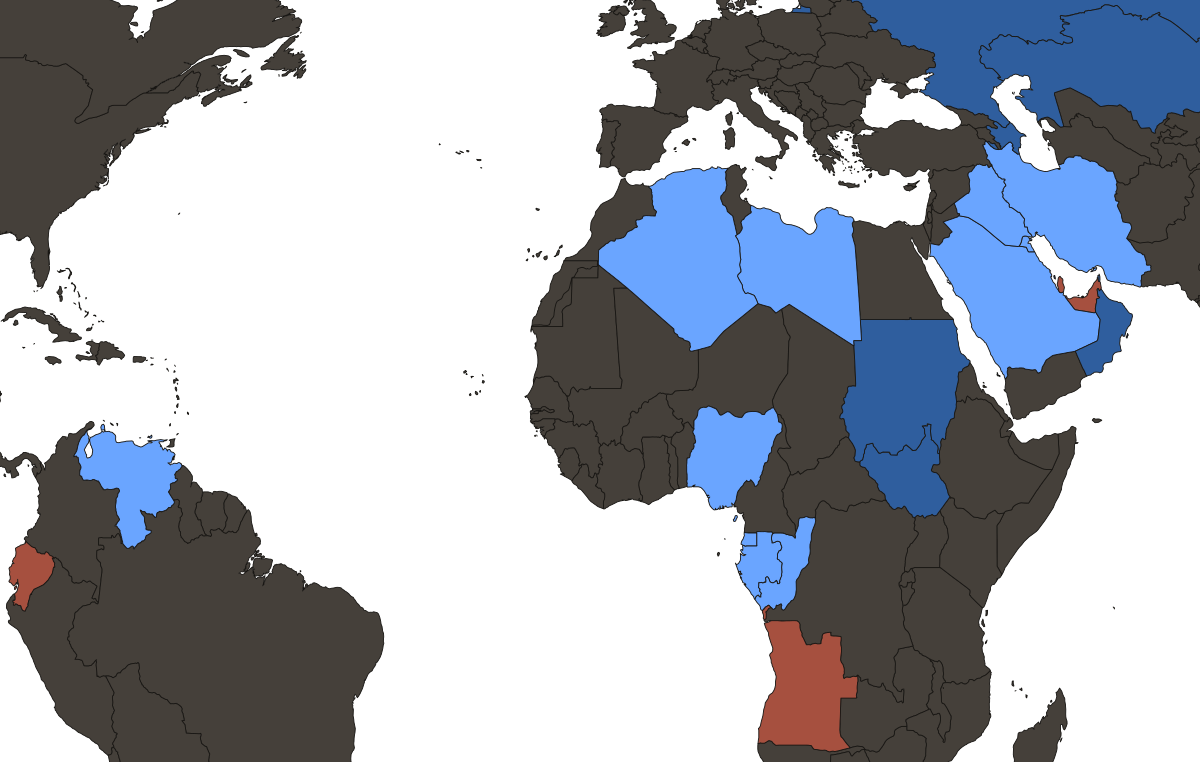
Eleven: Algeria, the Republic of the Congo, Equatorial Guinea, Gabon, Iran, Iraq, Kuwait, Libya, Nigeria, Saudi Arabia and Venezuela. The big Western oil companies cut the price they paid producers twice, in February 1959 and August 1960. Five producers answered at a conference in Baghdad in September 1960. The idea came from two oil ministers, Juan Pablo Pérez Alfonzo of Venezuela and Abdullah Tariki of Saudi Arabia, who had met privately in Cairo in April 1959.
Gabon joined in 1975, left in 1995 and came back in 2016. Equatorial Guinea (2017) and the Republic of the Congo (2018) joined last. Each member has one vote, and decisions other than procedural ones need every member's agreement.
- Member
- OPEC+ only
- Left OPEC
- Not a member
How OPEC grew
Countries that joined in each year, and the total after


 19605 founders
 19616
19616
 19628
19628 19679
19679 196910
 197111
 197312
 200713
 201613
 201714
 201815
- 201914
- 202013
- 202412
- 202611
All 11 members and the year each joined
- Algeria1969
- Equatorial Guinea2017
- Gabon2016
- Iran1960
- Iraq1960
- Kuwait1960
- Libya1962
- Nigeria1971
- Republic of the Congo2018
- Saudi Arabia1960
- Venezuela1960
Who has left OPEC?
Five members have left or stepped back since 2016. Qatar left on January 1, 2019, to focus on natural gas. Ecuador left a year later, saying it needed to cut public spending. Angola left on January 1, 2024, after a dispute over its quota. The United Arab Emirates left on May 1, 2026, after 59 years. Its government cited its "evolving energy profile," and it aims to be able to pump 5 million barrels a day by 2027.
Others have talked about leaving. Iraq said on June 25, 2026, that it would decide whether to stay if it did not get a higher quota. Bloomberg reported on August 28, 2026, that Venezuela is weighing an exit. Neither has announced a decision.
-
United Arab EmiratesLeft 2026
Joined in 1967 as Abu Dhabi, four years before the UAE existed. It left on May 1, 2026, to be free to pump more than its quota.
-
AngolaLeft 2024
Joined in 2007 and left on January 1, 2024. Its oil minister said OPEC no longer served Angola's interests after a fight over its quota.
-
EcuadorLeft 2020
Joined in 1973, stepped out from 1992 to 2007 and left on January 1, 2020, citing the need to cut public spending.
-
QatarLeft 2019
Joined in 1961, the first country after the five founders. It left on January 1, 2019, to focus on exporting liquefied natural gas.
-
IndonesiaSuspended
Joined in 1962. Now a net oil importer, it suspended its membership in November 2016 rather than cut output. It has not withdrawn.
How much oil does OPEC produce?
OPEC's 11 members pumped 26.2 million barrels a day of crude in 2025, 31% of the world's 84.4 million, by the US Energy Information Administration's count. The 21 countries of OPEC+ pumped half. The United States, the largest producer, belongs to neither. In 1973 OPEC pumped 53% of the world's crude.
The Iran war has cut OPEC's output far more than any quota. After the Strait of Hormuz closed on February 28, 2026, crude output from OPEC's 12 members at the time fell from 29.6 million barrels a day in February to 20.2 million in April, by the International Energy Agency's count. Kuwait pumped only 570,000 barrels a day in April and exported none. In August 2026 Saudi Arabia's output was its lowest in more than three decades, by both the IEA's and OPEC's counts.
The largest oil producers, 2025
Full ranking → United States13.6
 Russia9.9
- Saudi Arabia9.6
 Canada5.0
- Iraq4.4
 China4.3
- Iran4.1
- United Arab Emirates3.8
 Brazil3.8
- Kuwait2.6
 Kazakhstan2.0
 Norway1.9
 Mexico1.7
- Nigeria1.6
- Libya1.4
- OPEC
- OPEC+ only
- Left OPEC
- Neither
What is OPEC+?
OPEC plus 10 other oil producers, led by Russia. Oil prices fell from about $110 a barrel in mid-2014 to $29 in January 2016, as US shale output surged and OPEC kept pumping. On December 10, 2016, OPEC and 11 other producers signed a Declaration of Cooperation in Vienna and cut output together from January 2017. Equatorial Guinea later joined OPEC itself, and the UAE left both groups in 2026, which leaves 21 countries.
OPEC+ sets an output target for each country. In April 2020 it agreed the largest cut in history, 9.7 million barrels a day. Some members pump above their targets: Kazakhstan produced 1.79 million barrels a day in March 2025 against a target of 1.47 million. From April to September 2026 the group raised its targets every month, but the war kept actual output far below them.
OPEC
11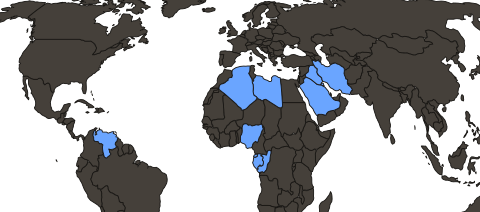
OPEC+
21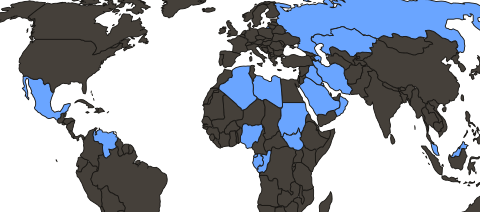
What did OPEC do in 1973?
It raised oil prices and backed an embargo. On October 16, 1973, ten days into the Yom Kippur war, OPEC's six Gulf members raised the posted price of their oil by 70%, to $5.12 a barrel. The next day the Arab oil producers, meeting as a separate group called OAPEC, agreed to cut output by 5% a month. Saudi Arabia stopped oil shipments to the United States on October 20, after President Nixon asked Congress for $2.2 billion in aid to Israel. The embargo also hit the Netherlands. Iran did not take part.
From January 1, 1974, the Gulf members set the price at $11.65 a barrel, about four times the level before the crisis. The Arab producers lifted the embargo on the United States in March 1974, but the higher prices stayed.
OPEC's history
- 1960Five countries found OPEC in Baghdad
- 1965Moves from Geneva to Vienna, after Switzerland refused it diplomatic status
- 1973Gulf members raise prices 70%; Arab producers stop oil sales to the US
- 1974The oil price reaches $11.65 a barrel, four times higher
- 1975Carlos the Jackal's gang storms an OPEC meeting in Vienna and takes 11 oil ministers hostage
- 2016OPEC and 11 other producers led by Russia agree to cut output together
- 2026The United Arab Emirates leaves after 59 years
Is it in OPEC?
Short answers for the countries people ask about most.
Is the UAE in OPEC?
NoIt left on May 1, 2026, after 59 years, to be free to pump more than its OPEC+ quota allowed. It left OPEC+ too.
Is Saudi Arabia in OPEC?
YesA founder in 1960 and OPEC's largest producer, 9.56 million barrels a day in 2025. The war cut its output to a three-decade low in August 2026.
Is Russia in OPEC?
OPEC+Not a member, but it leads the 10 producers outside OPEC that set output with it in OPEC+. It is OPEC+'s largest producer.
Is the United States in OPEC?
NoIt is the world's largest oil producer, 13.6 million barrels a day in 2025, 16% of the world's crude. It is not in OPEC+ either.
Is Venezuela in OPEC?
YesA founder in 1960, with the world's largest proved reserves. Bloomberg reported in August 2026 that it is weighing an exit.
Is Qatar in OPEC?
NoIt joined in 1961, the first country after the founders, and left in January 2019 to focus on natural gas.
Is Nigeria in OPEC?
YesA member since 1971 and OPEC's largest producer in Africa, 1.6 million barrels a day in 2025, ahead of Libya and Algeria.
Is Angola in OPEC?
NoIt left in January 2024, 16 years after joining, after a dispute over its quota.
Is Kazakhstan in OPEC?
OPEC+It is in OPEC+ only, and has pumped well above its target: 1.79 million barrels a day in March 2025 against 1.47 million.
Is Brazil in OPEC?
NoIn February 2025 Brazil approved joining the OPEC+ Charter of Cooperation, a forum for talks with no output quotas.