
Country profile · Central Europe
 Hungary
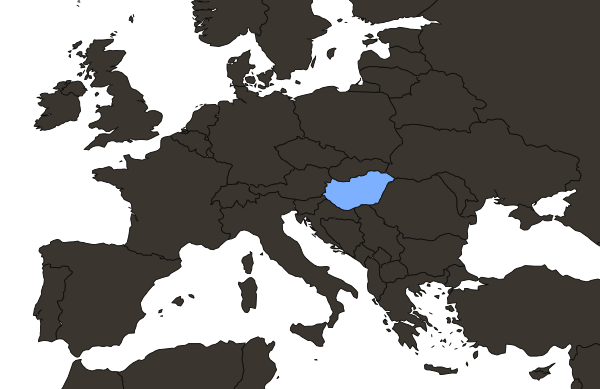
Hungary has about 9.5 million people (KSH, 2026). Prime Minister Péter Magyar has led the country since May 2026, after his Tisza party ended Viktor Orbán's 16 years in power. Hungary got 90.7% of its imported crude oil from Russia in 2025, more than any other country. Germany buys about a quarter of its exports.
Where Hungary ranks
All rankings →Which alliances is Hungary in?
All alliances →Who runs Hungary?
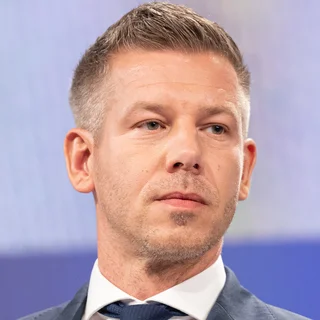
Prime Minister Péter Magyar has led Hungary since May 9, 2026. He was born in Budapest on March 16, 1981. Former President Ferenc Mádl was his great-uncle and godfather. Magyar worked for Viktor Orbán's government for years, including at Hungary's mission to the EU in Brussels. His former wife, Judit Varga, was Orbán's justice minister. In February 2024 she resigned over a presidential pardon for a man convicted of helping cover up child abuse at a children's home. Magyar then broke with Orbán's party, Fidesz, and took over the small Tisza party. On April 12, 2026, Tisza won 141 of the 199 seats in parliament (chart), more than the two-thirds needed to change the constitution. The new parliament limited prime ministers to eight years in office in total, so Orbán cannot return. It also ended President Tamás Sulyok's term early, and András Baka became president in August. The next election is due in spring 2030.
- Tisza 141
- Fidesz-KDNP 52
- Mi Hazánk (Our Homeland) 6
Photo (May 2026): Xavier Lejeune, European Commission, Wikimedia Commons, CC BY 4.0 (cropped)
Who are Hungary's allies and rivals?
Hungary joined NATO in 1999 and the EU in 2004. Under Viktor Orbán, the EU froze about €19 billion meant for Hungary over corruption and the rule of law. In May 2026, Prime Minister Péter Magyar agreed reforms with the European Commission to unlock €16.4 billion. Hungary joined the EU's public prosecutor's office in August, and the EU freed the first €4.2 billion on October 13, 2026. Relations with Ukraine are more difficult. About 100,000 to 150,000 ethnic Hungarians live in Ukraine's Transcarpathia region. Orbán blocked Ukraine's EU membership talks over their rights. Magyar lifted the veto in June 2026 after a deal on minority rights, but Hungary still sends Ukraine no weapons. On Russia, Magyar has said that "no one can change geography." In September 2026 Hungary expelled 10 Russian diplomats, its largest expulsion ever. Magyar's first trip abroad as prime minister was to Poland.
Allies and partners
- European UnionAgreed in May 2026 to unlock €16.4 billion
- NATOMember since 1999; last to approve Sweden
 GermanyBuys a quarter of exports; Audi, BMW, Mercedes
 PolandMagyar's first trip abroad, May 2026
 AustriaTop destination of Hungarian emigrants


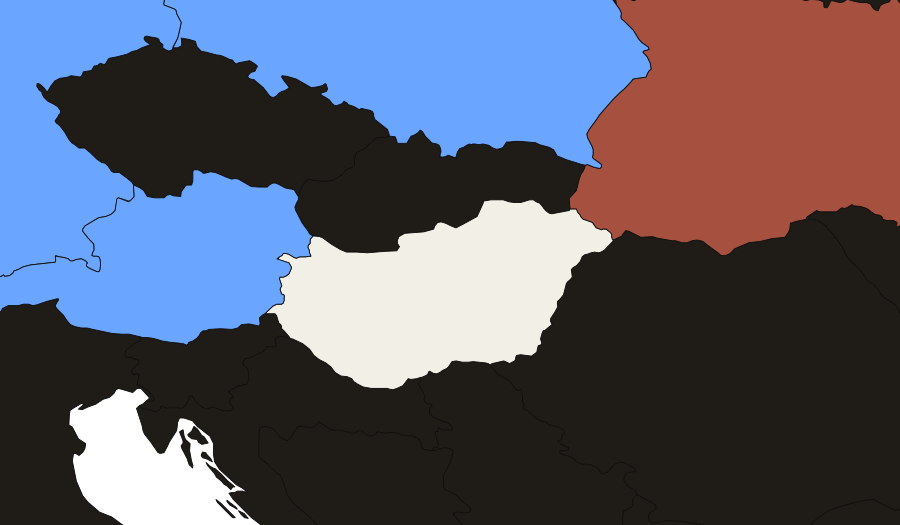
- Pápa air base Air base of a fleet of three C-17 transport planes shared by 12 countries.
- Paks Russian-built nuclear plant that makes nearly half of Hungary's electricity. Russia's Rosatom is building two more reactors here.
- Debrecen BMW builds electric cars here. China's CATL began test production at its battery plant in September 2026.
- Transcarpathia Ukrainian region where about 100,000 to 150,000 ethnic Hungarians live.
- Hungary
- Partner
- Tensions
Who does Hungary trade with?
Germany buys the most from Hungary (chart). It took 24.8% of Hungary's goods exports in 2025, more than Romania, Poland and Italy together. Germany also sold Hungary the most, 22.0% of its imports, followed by China. Hungary sold $165.8 billion of goods in 2025 and bought $154.7 billion (UN Comtrade). Machinery and vehicles make up more than half of its exports. Audi calls its plant in Győr the largest engine factory in the world. It built 1.59 million engines and electric motors in 2025. Mercedes-Benz builds cars in Kecskemét, and BMW has built electric cars in Debrecen since October 2025. Chinese companies are building factories too. BYD began test production of cars in Szeged in early 2026. CATL began test production of batteries in Debrecen in September 2026. China buys only about 1% of Hungary's exports, but it supplied 9.2% of Hungary's imports from January to August 2026 (KSH).
 Romania
 Slovakia
Why did Viktor Orbán lose?
Viktor Orbán was prime minister from 1998 to 2002 and again from 2010 to 2026. His party, Fidesz, won two-thirds of parliament four times in a row from 2010 and wrote a new constitution in 2011. Several things hurt Fidesz before the 2026 election. Inflation reached 25.7% in January 2023. The economy grew by less than 1% in both 2024 and 2025. The pardon scandal of February 2024 forced President Katalin Novák to resign. About €19 billion of EU money stayed frozen over corruption. US President Donald Trump endorsed Orbán. Turnout was about 79%, the highest since 1990. Tisza won 53% of the party vote, and Fidesz won 39%. Orbán gave up his seat in parliament but still leads Fidesz. In September 2026 parliament lifted the immunity of two of his former ministers in corruption cases. Polls in October 2026 put Fidesz at about a quarter of decided voters.
Why does Hungary still buy Russian oil and gas?
Hungary got 90.7% of its imported crude oil from Russia in 2025, a higher share than any other country (chart). Hungary has no coast. The Druzhba pipeline brings Russian oil through Belarus and Ukraine to MOL's refinery near Budapest. When the EU banned Russian oil in 2022, it let Hungary and Slovakia keep buying by pipeline. Russian crude cost about 20% less than other crude in 2024 (CREA). The pipeline stopped for almost three months in early 2026 after a Russian drone strike in Ukraine. The only other oil pipeline comes from Croatia. Croatia says it can carry 14 to 15 million tonnes a year, but MOL says it has never carried more than about 2 million. Russia also supplies about three-quarters of Hungary's imported gas, through Serbia. The EU will ban long-term Russian pipeline gas contracts from September 30, 2027. Energy Minister István Kapitány says Hungary can stop buying Russian gas by then.
Share of crude oil imports from Russia, 2025
Full ranking → Azerbaijan

 Czechia
UN Comtrade Database