
Part of the Kingdom of the Netherlands · Caribbean
Aruba
Self-governingUpdated November 11, 2026
Aruba is a constituent country of the Kingdom of the Netherlands in the southern Caribbean, about 30 km off the coast of Venezuela. The Dutch West India Company took it from Spain in 1636. Aruba left the Netherlands Antilles on January 1, 1986, and got its own constitution, parliament, government and currency. The Kingdom of the Netherlands handles defense, foreign policy and citizenship. Arubans hold Dutch passports. Tourism receipts equal about 70% of GDP. In 2025, Aruba received 1,515,102 stay-over visitors, about 73% of them from the United States.
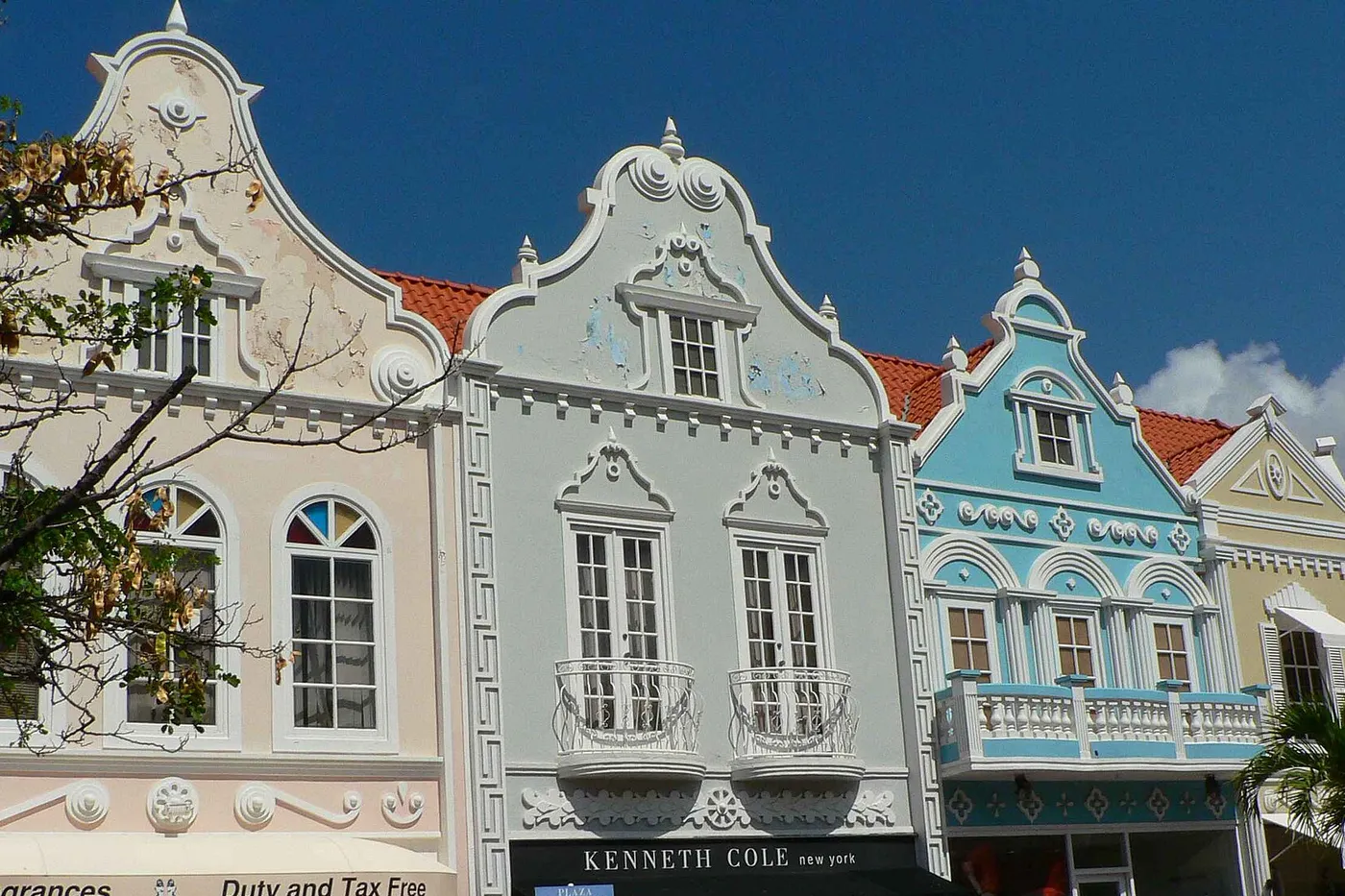
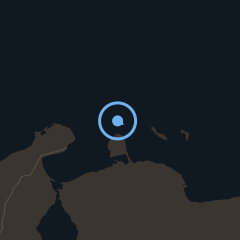
- Capital
- Oranjestad
- about 12°31′N, 70°02′W
- GDP per person
- US$39,800
- 2024, IMF estimate
- Visitors (2025)
- 1,515,102
- stay-over arrivals, +6.6%
- Unemployment
- 4.3%
- 2024 Labour Force Survey
- From Amsterdam
- 7,900 km
- as the crow flies
 Netherlands
Aruba in 30 seconds
- Aruba is one of four constituent countries in the Kingdom of the Netherlands, alongside the Netherlands, Curaçao and Sint Maarten. It has its own constitution, parliament, currency and central bank. The Kingdom handles defense, foreign policy and citizenship.
- Tourism receipts equal about 70% of GDP. About 73% of stay-over visitors come from the United States. On November 11, 2025, the government officially ended the oil era at the old Lago refinery site.
- In a 1977 referendum, 95% of valid votes backed leaving the Netherlands Antilles. Aruba got its separate status in 1986, but a planned independence date of 1996 was dropped between 1990 and 1994. No party in parliament campaigns for independence today.
- Prime Minister Mike Eman is leaving office on January 1, 2027. His coalition with FUTURO holds just 11 of 21 seats after an MP quit the ruling party on November 6, 2026.
Is Aruba a country?
Aruba is a constituent country of the Kingdom of the Netherlands. It is not a sovereign state. Article 1 of the Charter for the Kingdom lists four constituent countries: the Netherlands, Aruba, Curaçao and Sint Maarten. Aruba has held this status since January 1, 1986.
Aruba has its own constitution, parliament, government, currency and central bank. It controls taxes, immigration, police, education, health and tourism. The Kingdom handles defense, foreign policy, citizenship, extradition and the courts of final appeal. Judges are appointed through the Kingdom, and the Supreme Court in The Hague is the highest court.
Arubans are Dutch nationals and carry Dutch passports. They can vote in European Parliament elections. But Aruba is not part of the European Union. It is listed as an Overseas Country and Territory in the EU treaty, so EU law largely does not apply there.
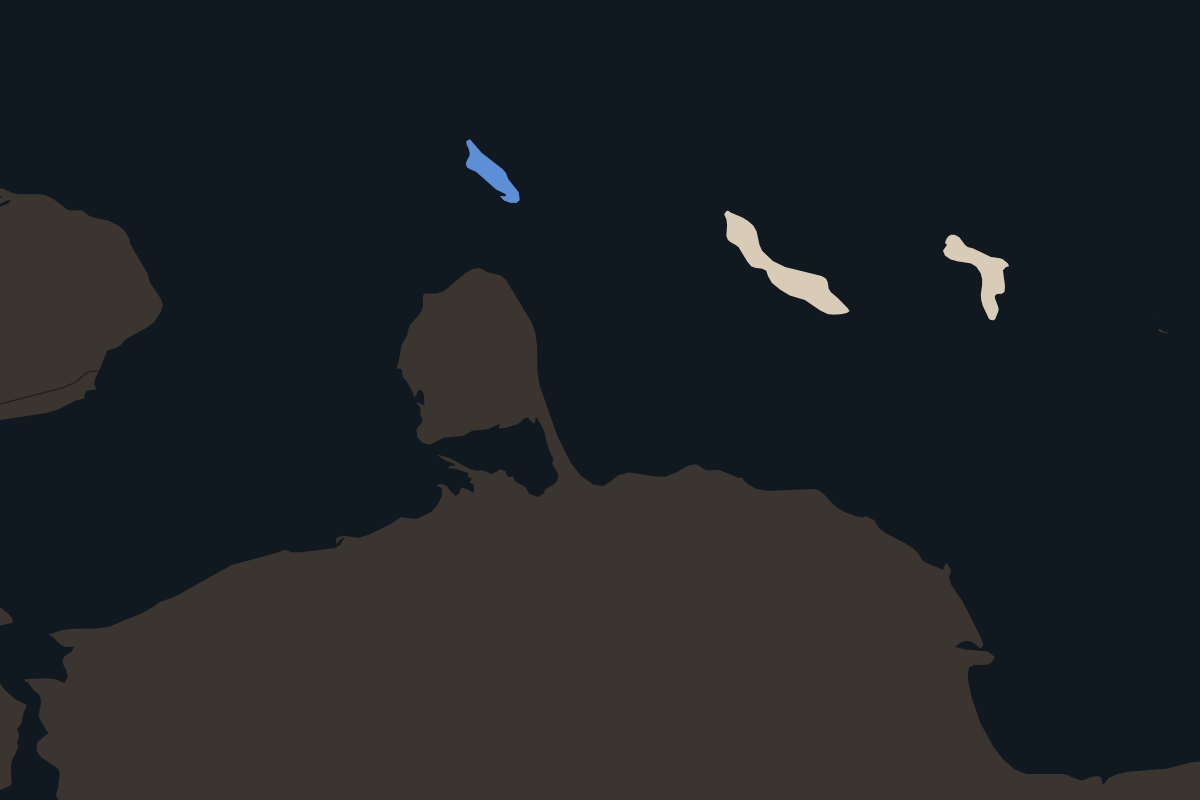 Aruba
Oranjestad
Curaçao
Bonaire
VENEZUELA
Paraguaná Peninsula
COLOMBIA
Caribbean Sea
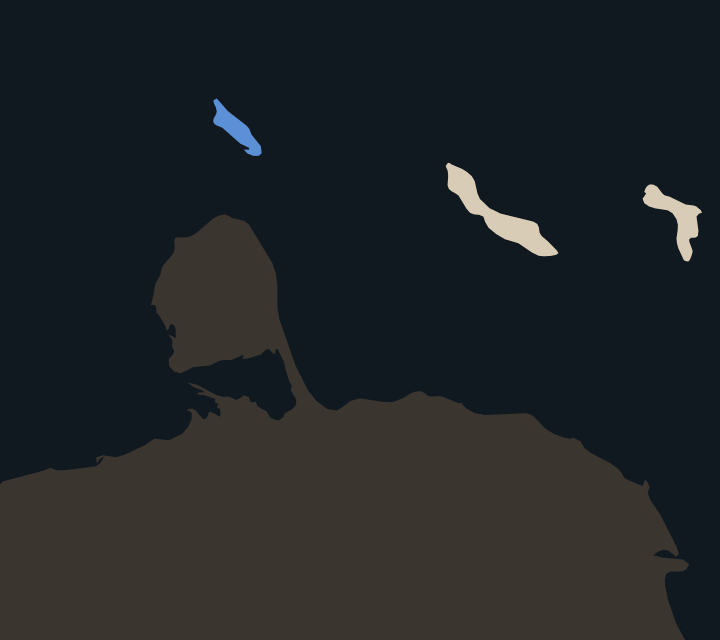 Aruba
Oranjestad
Curaçao
VENEZUELA
Paraguaná
Caribbean Sea
Why did Aruba not become independent?
Aruba chose to keep its link with the Kingdom after the 1985 closure of the Lago refinery showed how exposed its small economy was. The planned 1996 independence date was dropped. The island's grievance was being governed from Curaçao inside the Netherlands Antilles. Betico Croes, founder of the MEP party, turned that into a mass movement. On March 25, 1977, a referendum asked voters whether to leave the Antilles. 95% of valid votes said yes, on a turnout of about 70%.
In 1983, the Netherlands agreed to grant Aruba separate status on January 1, 1986, on condition that full independence would follow on January 1, 1996. On the eve of separation, December 31, 1985, Croes was badly injured in a car crash. He died on November 26, 1986. Henny Eman became the first prime minister.
The Lago refinery had closed in March 1985, causing an economic shock. Aruba and the Netherlands agreed in 1990 to drop the 1996 independence date, and a 1994 act removed it from the Charter. No party in the current parliament campaigns for independence. The MAS, a party that campaigns for sovereignty, lost its seats in the 2024 election with 3.1% of the vote.
From colony to constituent country
- 1636The Dutch West India Company takes Aruba from Spain
- 1942A German submarine attacks tankers off San Nicolas and tries to shell the Lago refinery
- 1954The Charter for the Kingdom takes effect; Aruba is part of the Netherlands Antilles
- 1976Aruba adopts its own flag and anthem under Betico Croes
- 1977Independence referendum: 95% of valid votes for leaving the Antilles
- 1983The Hague deal: separate status in 1986, independence in 1996
- 1986Status aparte takes effect on January 1; Croes dies on November 26
- 1994The 1996 independence date is removed from the Charter
- 2010The Netherlands Antilles is dissolved; Curaçao and Sint Maarten get the same status
- 2025The government officially ends the oil era on November 11
Who runs Aruba?
Prime Minister Mike Eman of the Aruban People’s Party (AVP) has led Aruba since March 28, 2025. He is a lawyer from Oranjestad, the youngest of eight children. His brother Henny Eman was Aruba’s first prime minister in 1986. Mike Eman also served as prime minister from 2009 to 2017. He was one of two Arubans whose lawsuit won Arubans the right to vote in European Parliament elections.
Prime Minister Eman announced on June 16, 2026, that he would leave office on January 1, 2027. He said leadership "also means making room in time for new leaders." On October 4, 2026, Wendrick Cicilia, 30, the minister of tourism, became the new AVP leader. As of early November 2026, no successor as prime minister had been named.
Eman leads a coalition of the AVP and FUTURO. Deputy Prime Minister Gerlien Croes leads FUTURO. On November 6, 2026, AVP member Mike de Meza quit the party over a dispute about the minimum wage. The coalition now holds 11 of 21 seats in the Estates of Aruba, the smallest possible majority.
Seats in the Estates of Aruba in November 2026
How does Aruba make money?
Tourism dominates. Tourism receipts equal about 70% of GDP, the second-highest share in the world after Macao. In 2025, Aruba received 1,515,102 stay-over visitors, up 6.6% from the year before. About 73% came from the United States. GDP per person was US$39,800 in 2024.
The Lago oil refinery, once one of the world’s largest, opened in the 1920s and closed in 1985. Later operators, including Valero and CITGO, tried to restart it. The CITGO deal ended in 2019 because of US sanctions on Venezuela’s state oil company PDVSA. On November 11, 2025, the Eman government officially ended the oil era. The refinery site will be repurposed, with 110 million Aruban florins in Dutch aid for cleanup.
Aruba took COVID-era loans from the Netherlands, consolidated into a 20-year loan of 915.5 million Aruban florins. A proposed Kingdom law called HOFA would set budget rules and give Aruba access to loans at Dutch interest rates. Finance Minister Geoffrey Wever says it would cut the rate on the COVID loan to about 3.5%. Opponents, including unions and the MEP, say it limits Aruba's autonomy. The IMF put public debt at 68.6% of GDP in 2024. The Dutch Council of State put it at about 61% at the end of March 2026.
Tourism receipts
About 70%
Tourism receipts as a share of GDP
Aruba received 1,515,102 stay-over visitors in 2025. About 73% came from the United States. Canada, the Netherlands, Argentina and Colombia are other major markets.
How does Venezuela affect Aruba?
Venezuela is about 30 km away. The proximity shapes Aruba’s security, migration and transport. Venezuela cut air and sea links with Aruba in February 2019 during a dispute over US aid being channeled through Curaçao. Sea traffic resumed in May 2023. Aruba reopened its air border on August 1, 2026, for commercial flights only. The first flight, from Falcón state, landed in early September 2026.
The R4V refugee platform estimated that 11,470 Venezuelans lived on Aruba in 2024. Other estimates are as high as 17,000. The United States operates an airfield at Queen Beatrix airport for counter-drug surveillance flights. On January 3, 2026, US forces raided Venezuela and captured Nicolás Maduro. Caribbean airspace shut temporarily, and 91 flights at Aruba’s airport were canceled that day. The Dutch government said the Aruba and Curaçao airfields were not used for strikes. In early January 2026, Dutch Defense Minister Ruben Brekelmans announced the Netherlands would stop joining independent US drug operations in international waters.
Why does Aruba matter?
Tourism
Tourism receipts equal about 70% of GDP. Aruba received 1,515,102 stay-over visitors in 2025, about 73% of them American. The economy depends heavily on travelers from the United States.
Next to Venezuela
Aruba is about 30 km from Venezuela. The United States operates a counter-drug airfield at the airport. Dutch marines are based at Savaneta. In January 2026, a US operation against Venezuela briefly shut Caribbean airspace and led to 91 canceled flights at Aruba’s airport.
Oil, then and now
The Lago refinery made Aruba an oil hub from the 1920s to 1985. Later restart attempts all failed. The government ended the oil era on November 11, 2025. The site will be repurposed with Dutch aid.
Questions about Aruba
Do Arubans have Dutch passports?
Yes. Arubans are Dutch nationals. Nationality is a Kingdom matter under the Charter. They carry ordinary Dutch passports and are EU citizens, even though Aruba itself is outside the EU.
What currency does Aruba use?
The Aruban florin, introduced in 1986. It is pegged to the US dollar at a fixed rate of 1.79 florins per dollar. The US dollar is widely accepted on the island.
Is Aruba in the EU?
No. Aruba is listed as an Overseas Country and Territory in the EU treaty, so EU law largely does not apply there. But Arubans are EU citizens through their Dutch nationality and can vote in European Parliament elections.
What language do people speak in Aruba?
Papiamento and Dutch are both official languages. Papiamento became official in 2003. Dutch dominates in law and schools. Papiamento is the main language of daily life. English and Spanish are widely spoken.
How many people live in Aruba?
About 108,400, according to Statistics Netherlands (end-of-2024 figure). The 2020 census counted 108,166 on October 1, 2020.
Is Aruba covered by NATO?
Not for collective defense. Article 6 of the NATO treaty limits the mutual defense clause to territory north of the Tropic of Cancer. Aruba is at about 12 degrees north, well south of that line. But the Kingdom of the Netherlands is a NATO member, and Dutch forces are stationed on the island.
Other territories of the Netherlands
All territories → CuraçaoIn 2025 it became the smallest country by population ever to qualify for a men's FIFA World Cup.Self-governing
 Sint MaartenShares an 87 km² island with French Saint-Martin. The island has been split between the two countries since 1648.Self-governing
 Caribbean NetherlandsIts three islands are Dutch municipalities, but they use the US dollar, not the euro.Part of the country