
Constituent country of the Kingdom of the Netherlands · Southern Caribbean
Curaçao
Self-governingUpdated November 11, 2026
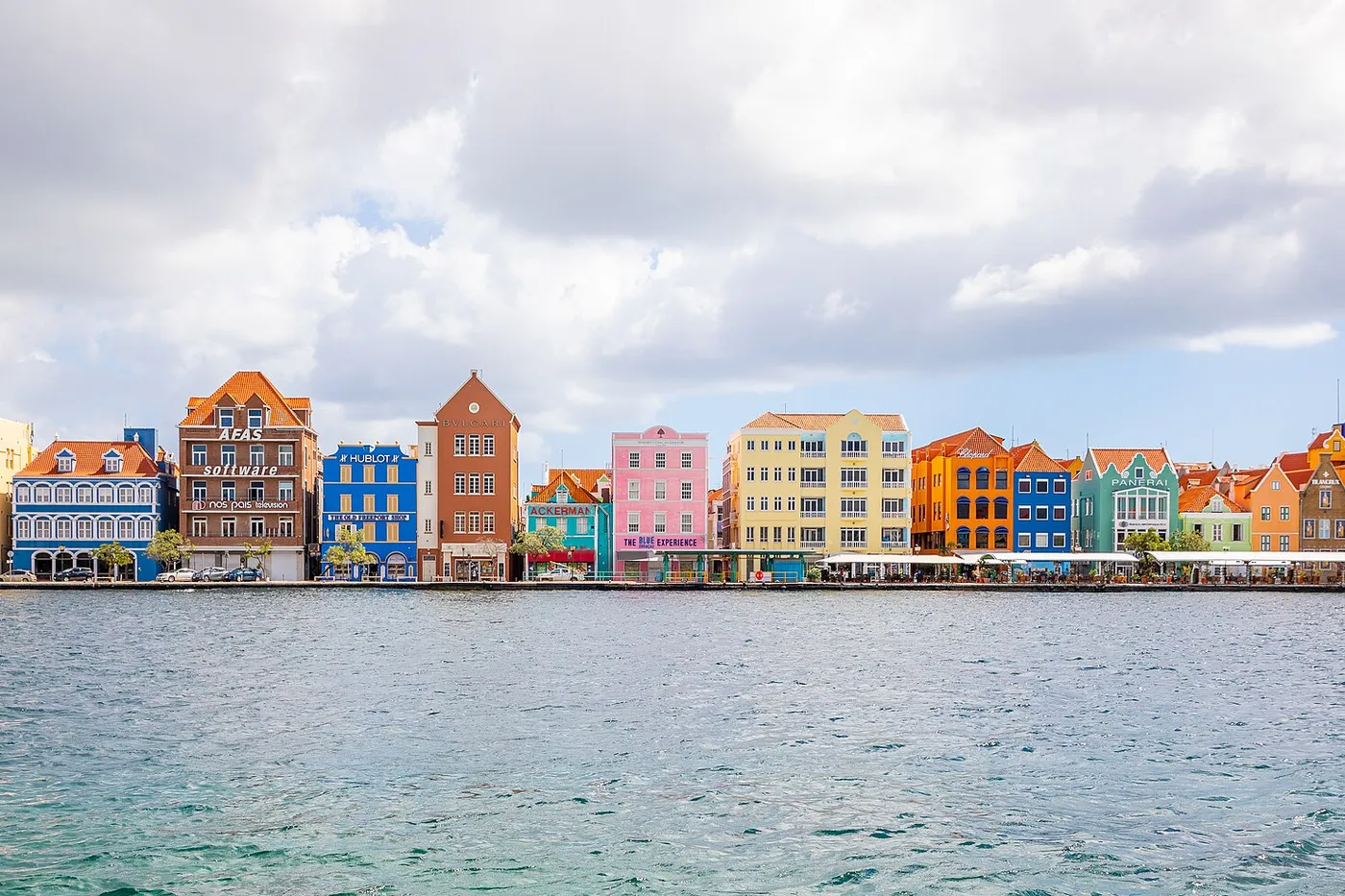
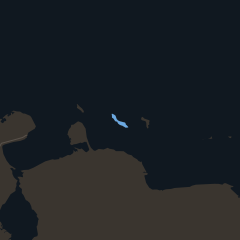
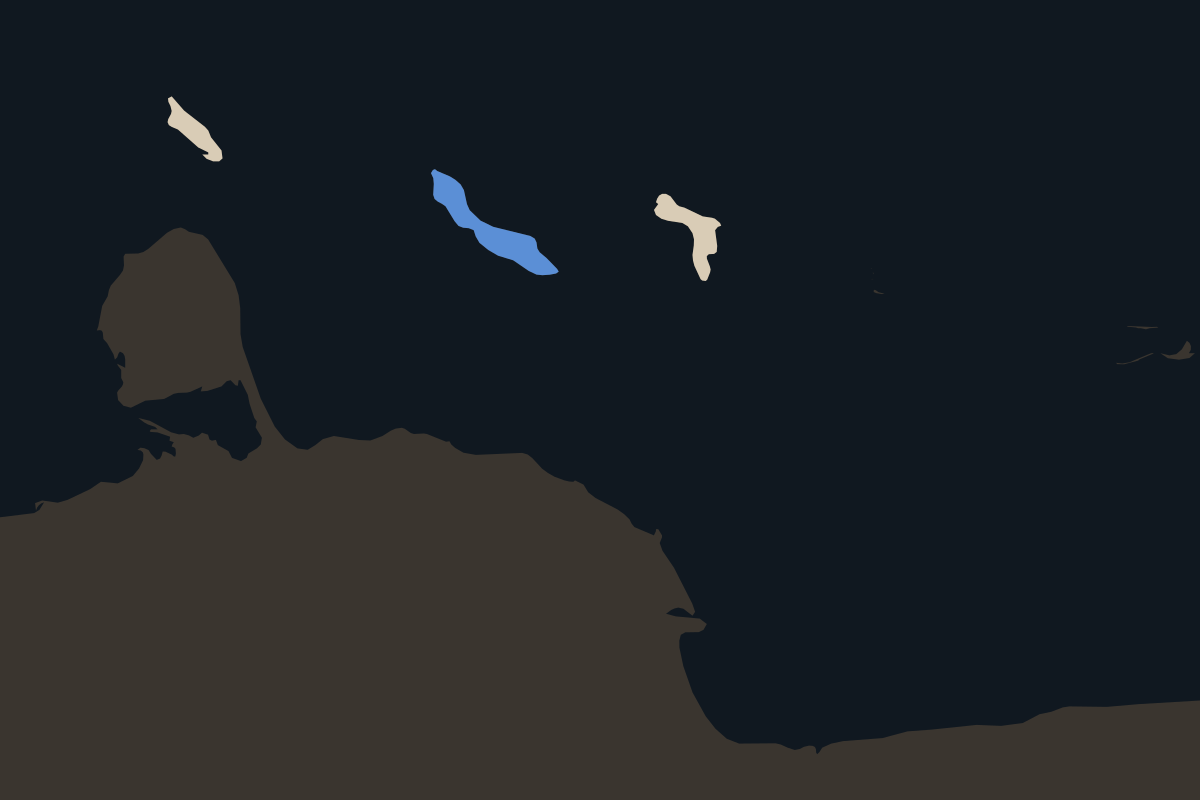
Curaçao is a constituent country of the Kingdom of the Netherlands in the southern Caribbean, about 65 km north of Venezuela. The Dutch West India Company took it from Spain in 1634. On October 10, 2010, the Netherlands Antilles was dissolved and Curaçao became a separate country within the Kingdom. The Kingdom of the Netherlands handles defense, foreign policy and nationality. Curaçaoans are Dutch citizens and hold Dutch passports. In 2025, the MFK party won the first single-party majority in Curaçao's history. On November 18, 2025, Curaçao qualified for the FIFA World Cup, the smallest nation ever to do so.
- Capital
- Willemstad
- UNESCO World Heritage Site
- GDP per person
- US$22,900
- 2024
- Stayover visitors
- 788,427
- 2025, a record
- Unemployment
- 5.1%
- 2025
- From Amsterdam
- 7,800 km
- as the crow flies
 Netherlands
Curaçao in 30 seconds
- Curaçao has been a constituent country of the Kingdom of the Netherlands since October 10, 2010. The Kingdom of the Netherlands handles defense, foreign policy and nationality. Curaçaoans are Dutch citizens.
- Prime Minister Gilmar Pisas leads an all-MFK government sworn in on June 11, 2025. The MFK won 13 of 21 seats in the March 2025 election, the first single-party absolute majority in Curaçao's history.
- The Isla oil refinery, with a capacity of 335,000 barrels per day, has been idle since 2019. Tourism set a record of 788,427 stayover visitors in 2025.
- Curaçao lies about 65 km from Venezuela. The United States operates a counter-drug surveillance site at Hato airport. In January 2026, US strikes and the capture of Nicolás Maduro briefly disrupted Curaçao's airspace.
Is Curaçao a country?
Curaçao is a constituent country of the Kingdom of the Netherlands, but it is not a sovereign state. It gained this status on October 10, 2010, when the Netherlands Antilles was dissolved. The Charter for the Kingdom of the Netherlands defines the arrangement. The Charter gives the Kingdom a closed list of affairs, mainly defense, foreign relations and Dutch nationality. Curaçao runs everything else, including its budget, taxes, police, education and health. Under Article 43 of the Charter, the Kingdom also guarantees human rights, legal certainty and good governance in each country. A Kingdom body, the Board of Financial Supervision, reviews Curaçao's budget.
Curaçaoans are Dutch citizens. They hold Dutch passports. As Dutch citizens, they are also EU citizens. Curaçao itself is not part of the European Union. It is an Overseas Country and Territory associated with the EU. It is also not covered by NATO's mutual defense clause, which applies only to territory north of the Tropic of Cancer.
Curaçao has no seats in the Dutch parliament. Its Minister Plenipotentiary, Sidney Justiana, sits in the Kingdom Council of Ministers when Kingdom affairs are decided.
 Curaçao
Willemstad
Aruba
Bonaire
VENEZUELA
Caracas
Caribbean Sea
 Curaçao
Willemstad
Aruba
Bonaire
VENEZUELA
Caribbean Sea
How did Curaçao get its status?
Spanish explorers arrived in 1499. By 1515, Spain had enslaved almost all of the Indigenous Caquetío people and taken them to Hispaniola. The Dutch West India Company took Curaçao from Spain in 1634. For about 200 years, the island was a major hub of the Caribbean slave trade. On August 17, 1795, an enslaved man named Tula led a revolt at the Knip plantation with up to about 2,000 participants. He was betrayed and publicly tortured to death on October 3, 1795. The date of the revolt is commemorated today.
Slavery was abolished in 1863, when 5,498 people were still enslaved. In 1918, Shell opened the Isla refinery to process Venezuelan crude, tying Curaçao's economy to oil for a century. On May 30, 1969, a strike over unequal pay at the Shell refinery became an uprising known as Trinta di Mei. Much of central Willemstad burned and 2 people died. Antillean officials called in Dutch marines stationed on the island to end the unrest. The Antillean government then resigned, and the strike leaders won seats in parliament that September.
In a 2005 referendum, 67.83% voted for separate country status within the Kingdom. In 2009, voters narrowly approved the deal with the Netherlands, 51.99% to 48.01%. Under the deal, the Netherlands took over much of Curaçao's debt. In return, Curaçao accepted supervision of its budget by a Kingdom board. On December 19, 2022, Dutch Prime Minister Mark Rutte apologized for slavery on behalf of the state. King Willem-Alexander apologized personally on July 1, 2023.
From colonial depot to constituent country
- 1634The Dutch West India Company takes Curaçao from Spain
- 1795Tula leads a slave revolt at the Knip plantation; executed on October 3
- 1863Slavery is abolished; 5,498 people were still enslaved
- 1918Shell opens the Isla refinery to process Venezuelan crude
- 1954The Kingdom Charter takes effect; the Netherlands Antilles becomes autonomous
- 1969Trinta di Mei: a refinery strike becomes an uprising; 2 people die
- 200567.83% vote for separate country status within the Kingdom
- 2010The Netherlands Antilles is dissolved; Curaçao becomes a constituent country
- 2022Dutch Prime Minister Rutte apologizes for slavery on behalf of the state
- 2023King Willem-Alexander apologizes personally on July 1
Who runs Curaçao?
Prime Minister Gilmar Pisas has led Curaçao since June 14, 2021. He is the leader of the MFK (Movementu Futuro Korsou). He was a police officer before entering politics. His current cabinet, Pisas III, was sworn in on June 11, 2025. It is the first government in Curaçao's history backed by a single party's own majority. All ministers are from the MFK.
In the March 21, 2025 election, the MFK won 13 of 21 seats with 55.22% of the vote. Turnout was 68.74%. The PNP took 4 seats, the PAR took 2 and the MAN-PIN alliance took 2. Fergino Brownbill, 29, became the youngest Speaker of parliament.
Governor Mauritsz de Kort has served since November 4, 2025. He was appointed by the Kingdom Council of Ministers for 6 years. Before his appointment, he was president of the Joint Court of Justice. He represents the King and is formally head of the Curaçao government. The next general election is expected around March 2029.
Seats in parliament after the March 2025 election
How does Curaçao make money?
Tourism is one of Curaçao's main industries. Curaçao received a record 788,427 stayover visitors in 2025, up 13% from 2024. Cruise passengers added another 881,665. The economy grew by 5.1% in 2025, according to a preliminary estimate by CBS Curaçao, the statistics office. The central bank estimates 3.9%.
In 1985, Shell sold the Isla oil refinery to the island government for a symbolic 1 guilder and was released from liability for environmental damage. PDVSA then leased it. The refinery, with a capacity of 335,000 barrels per day, has been idle since 2019 when the PDVSA lease ended. In January 2026, the US Treasury issued General License 46, opening the way to store and refine Venezuelan oil. In April 2026, Prime Minister Pisas confirmed early talks on PDVSA returning to the refinery. He said: “We are not in a hurry.” No restart date has been set.
The Caribbean guilder became legal tender on March 31, 2025, replacing the Netherlands Antillean guilder. It is shared with Sint Maarten and pegged at 1.79 to the US dollar. Curaçao also has an offshore financial services sector that is adapting to the OECD global minimum tax.
Stayover visitors in 2025
788,427
A record year for tourism
Up 13% from 2024, plus 881,665 cruise passengers. GDP per person was about US$22,900 in 2024. The economy grew 5.1% in 2025 according to CBS Curaçao.
How does Venezuela affect Curaçao?
Curaçao lies about 65 km north of Venezuela. The United States operates a counter-drug surveillance site at Hato airport under a treaty in force since 2000. The site is limited to unarmed flights. The Kingdom Council of Ministers extended the treaty to November 2, 2031. It applied the extension provisionally from November 2, 2026, before the Dutch and Curaçao parliaments had approved it.
In August 2025, as the United States built up naval forces in the region, Prime Minister Pisas declared that Curaçao “is and will remain neutral.” He also said the island was being “dragged along” because of its role as a logistical base for US operations. He advised residents and fishermen not to travel to Venezuela. From September 2025, US strikes on alleged drug boats killed at least 87 people by December. In December 2025, Dutch Defense Minister Ruben Brekelmans said the facilities on Curaçao and Bonaire had not been used for the strikes. Near-misses between airliners and US military aircraft led Curaçao's parliament to ask the Netherlands for help.
On January 3, 2026, the United States captured Venezuelan leader Nicolás Maduro. Curaçao's airspace was briefly disrupted and about 150 Venezuelan visitors were stranded. The R4V platform counted 6,903 Venezuelan refugees and migrants in Curaçao in August 2025.
Curaçao and Venezuela: key facts
- DistanceAbout 65 km from the Venezuelan coast
- Hato siteUS counter-drug surveillance flights since 2000; treaty extended provisionally to 2031
- Dutch forcesAbout 1,000 Dutch troops across the 6 Caribbean islands; naval HQ at Parera
- Venezuelan migrants6,903 refugees and migrants counted in August 2025 (R4V)
- Airspace disruptionNear-misses between airliners and US military aircraft in December 2025; flights disrupted briefly in January 2026
Why does Curaçao matter?
Next to Venezuela
Curaçao lies about 65 km from Venezuela. The United States operates a counter-drug surveillance site at Hato airport. The Dutch Navy's Caribbean headquarters is at Parera naval base on the island. US military action against Venezuela disrupted flights to and from Curaçao in December 2025 and January 2026.
The Isla refinery
The Isla refinery has a capacity of 335,000 barrels per day. It has been idle since 2019. In January 2026, a US Treasury license opened the way to process Venezuelan crude again. In April 2026, Prime Minister Pisas confirmed early talks on PDVSA returning. No restart date has been set.
Tourism and football
Tourism set a record of 788,427 stayover visitors in 2025. On November 18, 2025, Curaçao qualified for the FIFA World Cup, the smallest nation ever to do so. Coach Dick Advocaat, who returned in May 2026, became the oldest head coach in World Cup history at the opener against Germany.
Questions about Curaçao
Do Curaçaoans have Dutch passports?
Yes. Curaçaoans are Dutch citizens because nationality is a Kingdom affair. They hold ordinary Dutch passports. That also makes them EU citizens, even though Curaçao itself is not part of the European Union.
What currency does Curaçao use?
The Caribbean guilder, introduced on March 31, 2025. It replaced the Netherlands Antillean guilder and is shared with Sint Maarten. The peg is 1.79 to the US dollar. The old guilder stopped being legal tender on July 1, 2025.
Is Curaçao in the EU?
No. Curaçao is an Overseas Country and Territory associated with the EU. It is not part of the EU. It is also outside the Schengen area. However, Curaçaoans hold Dutch passports and are EU citizens.
What language do people speak in Curaçao?
Papiamentu is the main language. In the 2023 census, 78% of residents named it as the language they speak most often. Dutch and English are also official languages. Spanish came second at 8.4%.
Did Curaçao play in the World Cup?
Yes. Curaçao qualified on November 18, 2025, by drawing 0-0 in Jamaica. It was the smallest nation ever to reach a World Cup. In the 2026 tournament, Curaçao drew 0-0 with Ecuador but lost to Germany 1-7 and to Ivory Coast 0-2, finishing with 1 point.
How many people live in Curaçao?
About 158,000 people live in Curaçao. CBS Curaçao estimated 158,006 on January 1, 2026. The 2023 census counted 155,826. Migration is the only source of population growth. In 2025, 5,902 people immigrated and 3,487 emigrated, while deaths outnumbered births.
Other territories of the Netherlands
All territories → ArubaVoted for independence in 1977 but took separate status in 1986 and dropped the plan for full independence in 1994.Self-governing
 Sint MaartenShares an 87 km² island with French Saint-Martin. The island has been split between the two countries since 1648.Self-governing
 Caribbean NetherlandsIts three islands are Dutch municipalities, but they use the US dollar, not the euro.Part of the country