
Territory of the United Kingdom · Caribbean
Cayman Islands
Self-governingUpdated November 11, 2026
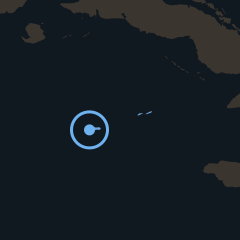
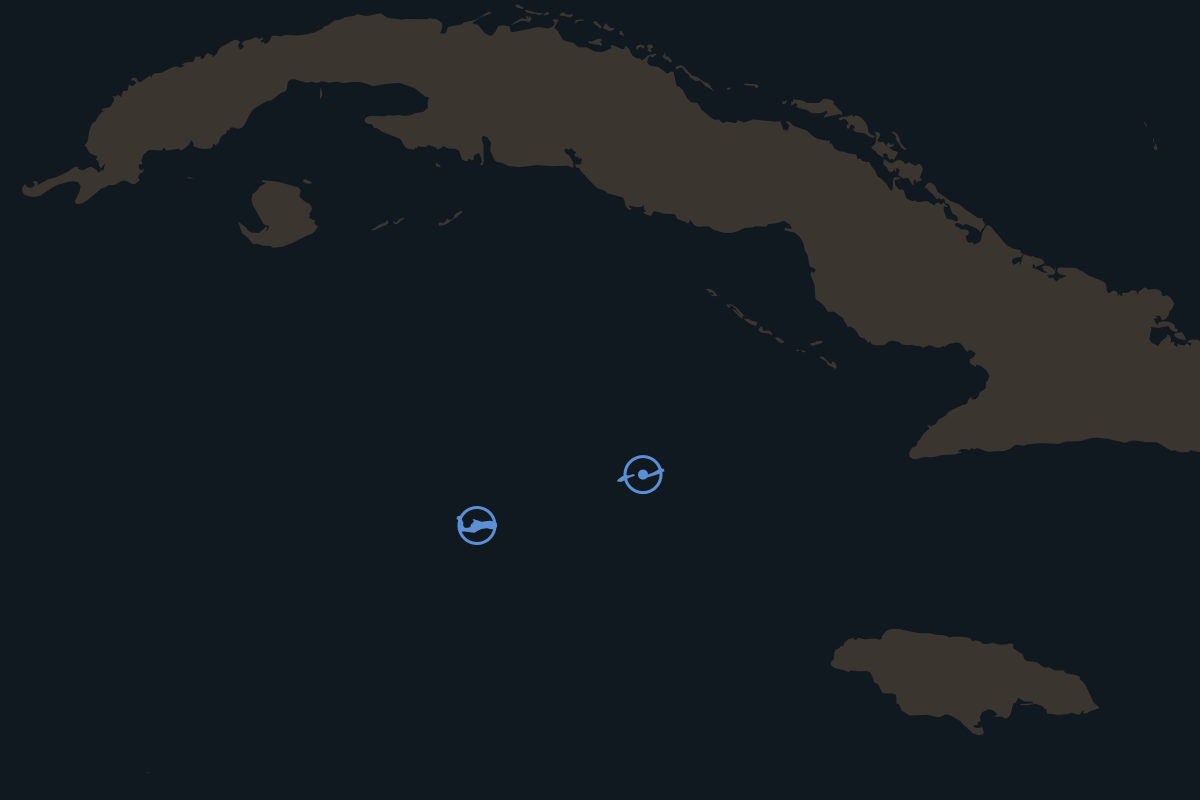
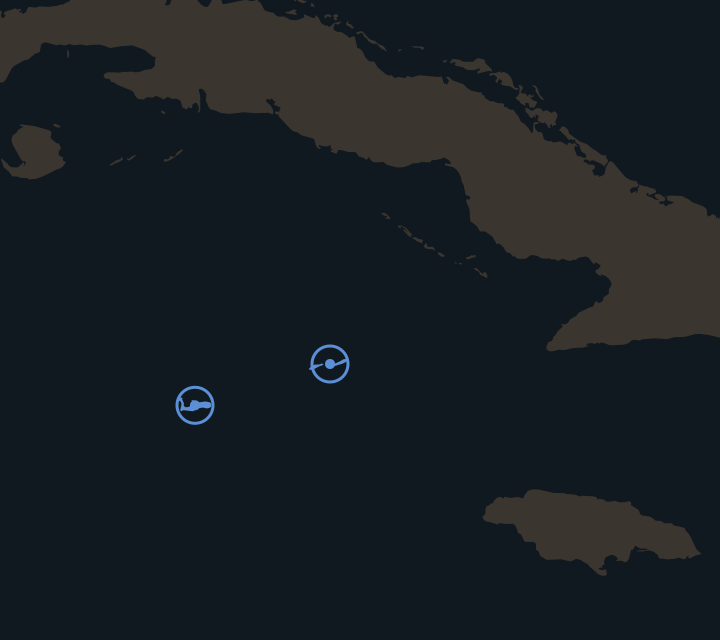
The Cayman Islands are a self-governing British Overseas Territory of about 264 km² in the western Caribbean, between Cuba and Jamaica. Britain has held them since 1670. About 90,577 people live there. The islands have no income, corporate or capital-gains tax. More than 31,000 investment funds are registered there. At the end of 2024, Cayman funds held about US$16 trillion in gross assets. In May 2025 a new government took office under Premier André Ebanks, a former investment-funds lawyer.
- Registered funds
- 31,145
- Q2 2026
- GDP per person
- ~US$88,400
- 2024 estimate
- Capital
- George Town
- on Grand Cayman
- Unemployment
- 2.6%
- December 2025
- From London
- 7,700 km
- as the crow flies
 United Kingdom
Cayman Islands in 30 seconds
- The Cayman Islands have been British since 1670. When Jamaica became independent in 1962, the Cayman Assembly voted unanimously to stay with Britain.
- The islands have no income, corporate or capital-gains tax. More than 31,000 investment funds and 123,530 companies are registered there.
- Britain has pressed for a public register of who owns companies in the Cayman Islands. Premier André Ebanks says the islands will not open the register further.
- About 45% of residents hold Caymanian status. Numbeo’s 2026 index ranks them the 2nd most expensive place to live in the world.
Is the Cayman Islands a country?
No. The Cayman Islands are a British Overseas Territory. The United Kingdom holds sovereignty over them. They have their own constitution, premier, parliament, currency and flag, but the United Kingdom is responsible for defense and foreign affairs.
The current constitution took effect in 2009. It created the post of premier and included a bill of rights. The governor, appointed by the King, holds four areas: defense, foreign affairs, internal security and the civil service. Under section 81, the governor can also enact a law on one of these four areas if the local parliament will not pass it. This needs the approval of a British government minister. But the constitution gives the elected government control over taxation and financial regulation.
The islands became British through Jamaica in 1670. For most of their history they were governed as a dependency of Jamaica. When Jamaica became independent in August 1962, the Cayman Assembly voted unanimously to stay British. The Sister Islands, Cayman Brac and Little Cayman, had threatened to split off as a separate colony if Grand Cayman chose Jamaica.
 Grand Cayman
Cayman Brac and Little Cayman
George Town
CUBA
JAMAICA
Havana
Kingston
Caribbean Sea
 Grand Cayman
George Town
CUBA
JAMAICA
Caribbean Sea
Why is the Cayman Islands called a tax haven?
The Cayman Islands charge no income tax, no corporate tax and no capital-gains tax. The government pays for itself through import duties, fees and work permits. This has made the islands one of the world’s largest offshore financial centers.
The offshore sector began with landmark banking legislation in 1966. As of mid-2026, 31,145 investment funds were registered there. At the end of 2024, Cayman funds held about US$16 trillion in gross assets. About 54% of United States hedge-fund assets are domiciled in the Cayman Islands. There are 123,530 companies on the register and 43,056 partnerships. More than 95% of the roughly 116 SPAC listings worldwide in 2025 used Cayman-incorporated companies.
Chinese companies also use the islands. Many Chinese companies listed on United States stock exchanges, including Alibaba and JD.com, use a Cayman holding company as their parent company. The Tax Justice Network ranked the Cayman Islands 2nd on its 2024 Corporate Tax Haven Index. The Cayman government and Cayman Finance have called the network’s indices “flawed, inaccurate and misleading.”
Regulated investment funds
31,145
Registered in the Cayman Islands as of Q2 2026
18,132 are private funds and 13,013 are mutual funds. Hedge funds are typically registered as mutual funds. Cayman funds held about US$16 trillion in gross assets at the end of 2024.
What do Britain and the EU want the Cayman Islands to change?
Britain has pressed the Cayman Islands to make their register of company owners public. The European Union has pressed the islands on tax rules. The register exists, but access requires a “legitimate interest” and a fee. Only about 9 to 12 applications were made in its first 14 months.
The EU put the Cayman Islands on its tax blacklist in February 2020 after the islands were late enacting a law on private funds. The islands were removed in October 2020. The Financial Action Task Force placed them on its grey list in February 2021 and removed them in October 2023.
In January 2026 the United Kingdom said it still expects fully public registers. Premier André Ebanks says the islands will not open the register further. He argues a public register would breach constitutional privacy rights, citing a 2022 EU Court of Justice ruling. In March 2026 Parliament raised the search fee from CI$30 to CI$75 and added a CI$250 annual fee.
Pressure on the Cayman Islands
- Feb 2020EU puts the Cayman Islands on its tax blacklist
- Oct 2020EU removes the Cayman Islands from the blacklist
- Feb 2021The FATF places the islands on its grey list
- Oct 2023The FATF removes the islands from the grey list
- Feb 2025Legitimate-interest access to the ownership register begins
- Jun 2025Premier Ebanks meets the UK minister; joint statement issued
- Nov 2025The Cayman Islands and four other territories agree to more technical talks on register access
- Jan 2026The UK restates its push for fully public registers
- Mar 2026Parliament raises access fees and Premier Ebanks rules out a public register
Who runs the Cayman Islands?
Premier André Ebanks leads the elected government. He took office on May 6, 2025, after the April 30 election produced a hung parliament. His party, the Caymanian Community Party, won 4 of 19 seats. He built a coalition of 11 seats with the Cayman Islands National Party and 3 independents.
Ebanks is a former investment-funds lawyer who worked at the law firms Appleby and Walkers. He later became a civil servant and served as the Cayman Islands’ official representative in London and Europe from 2019 to 2021. He won his seat in West Bay South with 76.13% of the vote, the highest share of any winner.
Governor Jane Owen represents the King. She was sworn in on April 21, 2023. She is a career diplomat who served as the United Kingdom’s ambassador to Norway and to Switzerland. The opposition is led by Joey Hew of the People’s Progressive Movement, which holds 7 seats.
Who lives in the Cayman Islands?
The islands had 90,577 people in December 2025. Only about 45% hold Caymanian status. Non-Caymanians make up about 45% and permanent residents about 10%. More than 37,000 people hold work permits. The largest groups of work-permit holders by nationality are Jamaicans (37.2%), Filipinos (18.7%) and Indians (6.0%).
The Cayman Islands are expensive. Numbeo’s 2026 index ranked them the 2nd most expensive place to live in the world, with rents above Singapore and Hong Kong. GDP per person is about CI$73,647, or roughly US$88,400. But Caymanian unemployment (4.1%) is higher than the overall rate of 2.6%. Financial and insurance services make up 30% of the economy.
Who lives in the Cayman Islands (December 2025)
Why do the Cayman Islands matter?
Offshore money
More than 31,000 investment funds are registered there. At the end of 2024, Cayman funds held about US$16 trillion in gross assets. About 54% of United States hedge-fund assets are domiciled there. Chinese companies use Cayman holding companies to list on American stock exchanges. The islands froze more than US$9 billion in Russia-linked assets under United Kingdom sanctions.
Britain’s responsibility
The United Kingdom controls defense and foreign affairs. It has pressed for a public register of company owners. The UN lists the Cayman Islands as a non-self-governing territory. There is no significant independence movement.
Tourism
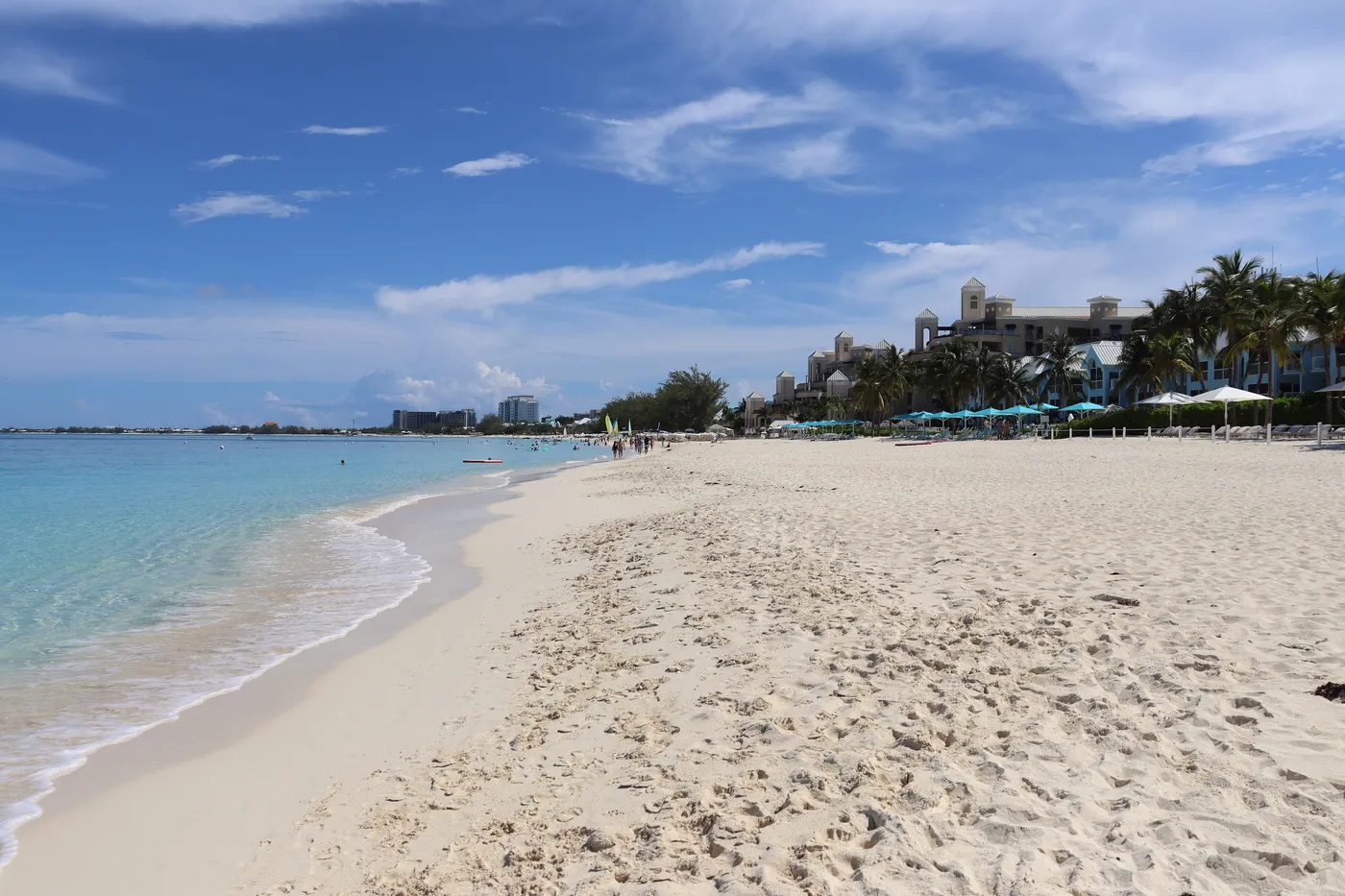
Hotels and restaurants make up 4% of GDP. Stayover arrivals in September 2026 were up 18.4% on the year before. Seven Mile Beach on Grand Cayman is the islands’ best-known attraction.
Questions about the Cayman Islands
Are Cayman Islanders British citizens?
Yes. Under the British Overseas Territories Act 2002, people who are British Overseas Territories Citizens through the Cayman Islands are also full British citizens with the right to live in the United Kingdom. Caymanian status is a separate local status that gives the right to live and work in the islands.
What currency does the Cayman Islands use?
The Cayman Islands dollar, introduced in 1972. It is pegged to the United States dollar.
Is the Cayman Islands in the EU?
No. The Cayman Islands were never an EU member. Before Brexit they were an EU Overseas Country and Territory. The EU briefly placed the islands on its tax blacklist from February to October 2020, but they are not on it now.
How many people live in the Cayman Islands?
About 90,577 as of December 2025, according to the Economics and Statistics Office. Only about 45% hold Caymanian status. The rest are non-Caymanians, many of them on work permits, and permanent residents.
Does the Cayman Islands have an army?
No regular army, but the islands created the Cayman Islands Regiment in 2020, a local reserve home defense unit. The United Kingdom is responsible for defense. The Royal Navy sends a patrol ship to the Caribbean each hurricane season for disaster relief and security. In 2026 that ship was HMS Trent.
Why is the Cayman Islands so expensive?
The islands import most goods and charge import duties instead of income tax. Numbeo’s 2026 index ranked them the 2nd most expensive place to live in the world. Rents are above Singapore and Hong Kong, and groceries are the 3rd highest globally.
Other territories of the United Kingdom
All territories → AnguillaIts .ai internet domain, popular with AI firms, now brings in a large share of government revenue.Self-governing
 BermudaIts parliament first met in 1620, making it one of the oldest legislatures in the world.Self-governing
 British Indian Ocean Territory (Chagos Islands)No permanent people; about 2,500 US and UK military personnel and contractors live on the Diego Garcia base.Run by an administrator
 British Virgin IslandsHundreds of thousands of offshore companies are registered here, many times its 39,000 residents.Self-governing
 Falkland IslandsArgentina invaded in 1982; the 74-day war killed 649 Argentine and 255 British personnel.Self-governing
 GibraltarA 2026 UK-EU treaty ended border checks with Spain; Schengen checks now happen at its port and airport.Self-governing
 MontserratVolcanic eruptions from 1995 buried the capital Plymouth, and about two-thirds of the people left.Self-governing
 Pitcairn IslandsAbout 35 people live there, most descended from the HMS Bounty mutineers and the Polynesians who landed in 1790.Self-governing