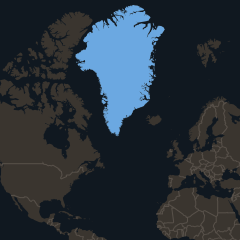
Part of the Kingdom of Denmark · North Atlantic
Faroe Islands
Self-governingUpdated November 11, 2026
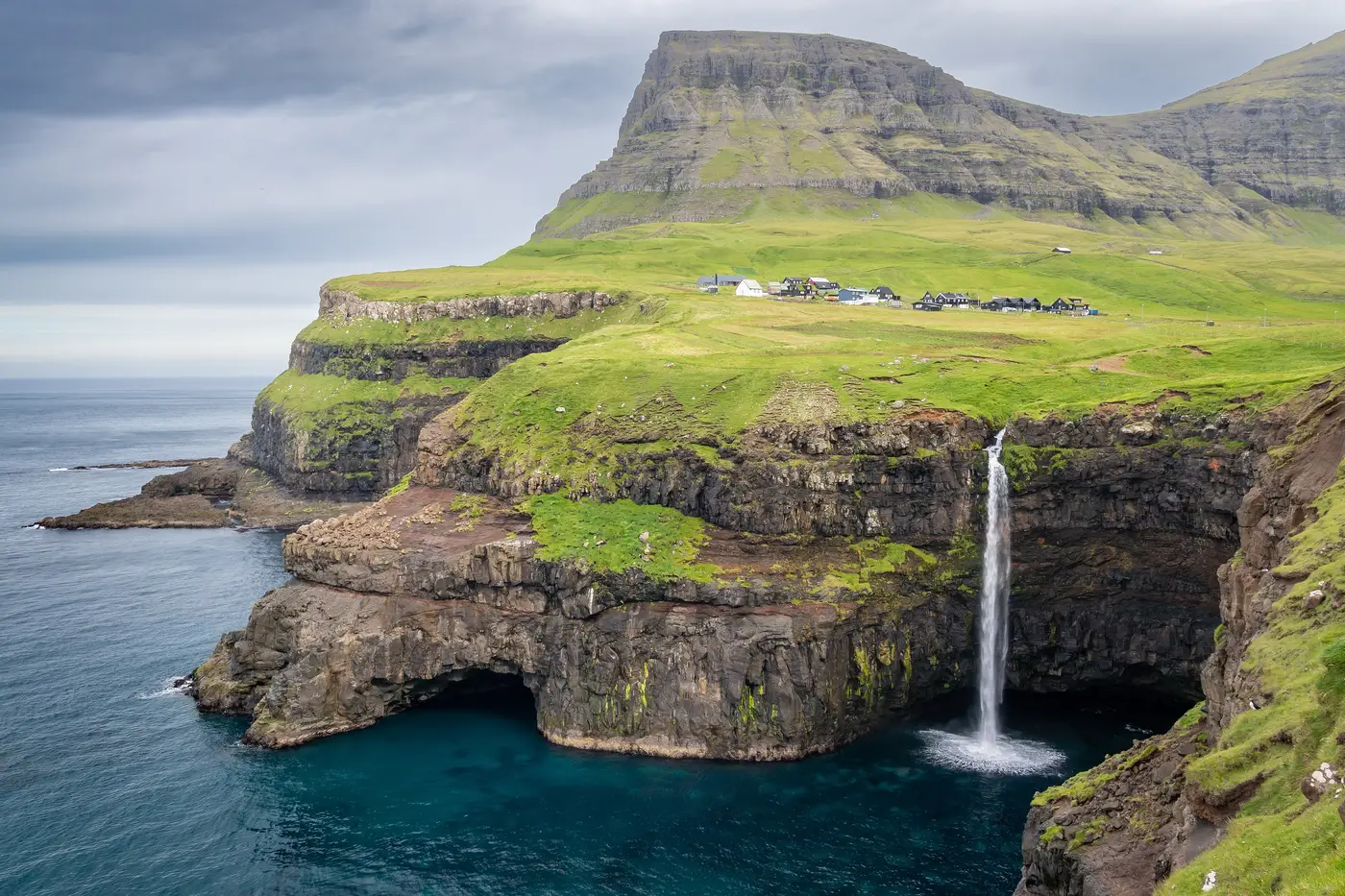
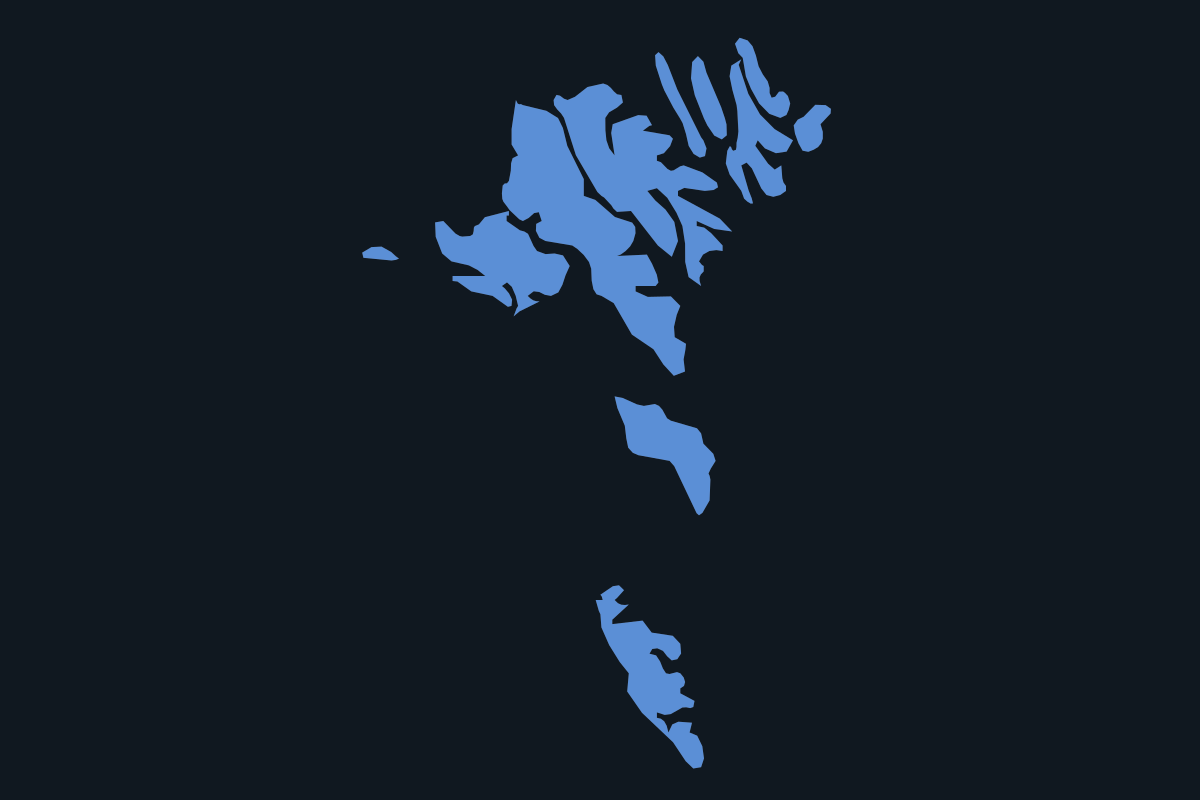
The Faroe Islands are a self-governing part of the Kingdom of Denmark in the North Atlantic, between Iceland, Norway and Scotland. The 18 islands have their own parliament, government and flag, but Denmark handles defense, foreign policy and the courts. Fish makes up 93% of goods exports. In April 2026, Beinir Johannesen became prime minister at 29, the youngest in Faroese history. He replaced his uncle, Aksel V. Johannesen, who now serves as his finance minister.
- Area
- 1,399 km²
- 18 islands, 17 inhabited
- Sea zone
- 274,000 km²
- the basis of the fishing economy
- GDP per person
- $74,175
- 2024
- Unemployment
- 0.9%
- August 2026, lowest in Europe
- From Copenhagen
- 1,300 km
- as the crow flies
 Denmark
Faroe Islands in 30 seconds
- The Faroe Islands have governed themselves since the Home Rule Act of 1948. Denmark keeps control of defense, foreign policy, the courts and currency.
- Fish accounts for 93% of goods exports. Salmon alone is about half. The Faroe Islands still keep a fishing deal with Russia, though they sanctioned two Russian fishing firms in December 2025.
- In a 1946 referendum, 50.7% voted to leave Denmark. Denmark did not recognize the result, and the islands chose home rule instead.
- Prime Minister Beinir Johannesen, 29, leads a coalition of the People’s Party, the Union Party and the Social Democrats, holding 22 of 33 seats in parliament.
Is the Faroe Islands a country?
No. The Faroe Islands are a self-governing part of the Kingdom of Denmark. They are not a sovereign state. The Home Rule Act of 1948 defines them as “a self-governing community within the Danish Kingdom.” They are not on the UN list of non-self-governing territories.
The Faroese parliament, the Løgting, and the Faroese government run most domestic affairs, including fisheries, taxes, health, education and energy. Under the 2005 Takeover Act, the Løgting can take over most remaining policy areas on its own initiative. Denmark keeps control of the constitution, the Supreme Court, defense, foreign policy, currency and citizenship.
The Faroe Islands have their own flag, their own banknotes and their own sports teams. They send 2 members to Denmark’s parliament, the Folketing. Faroese people are Danish citizens.
 Tórshavn
Klaksvík
Streymoy
Eysturoy
Vágar
Suðuroy
Sandoy
Atlantic Ocean
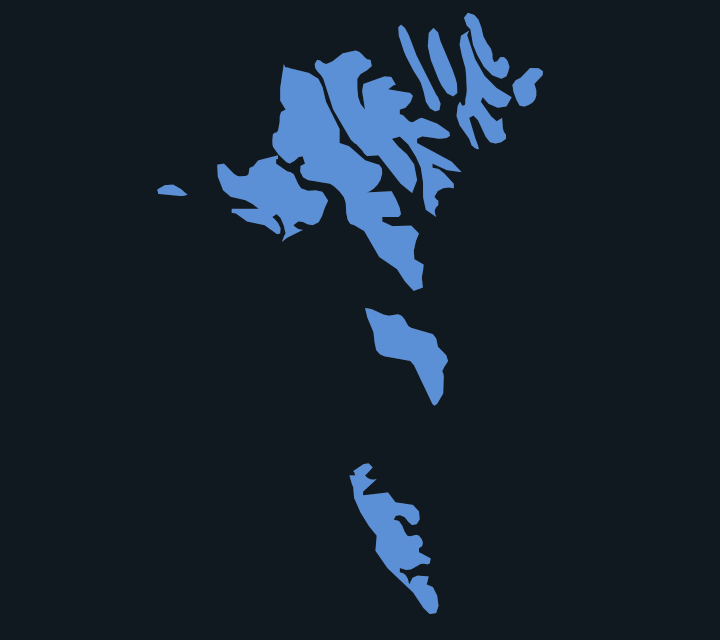 Tórshavn
Klaksvík
Streymoy
Vágar
Suðuroy
Atlantic Ocean
Do the Faroese want independence?
Opinion is divided. A narrow majority voted for independence in 1946, but no independence vote has been held since. On September 14, 1946, 50.7% of voters chose to leave Denmark in a referendum, with 49.3% against. Turnout was about 67.6%. The margin was about 161 votes, smaller than the 481 invalid ballots. Denmark did not recognize the result. The Løgting speaker declared independence on September 18, but the King dissolved the Løgting. Pro-union parties won the election that followed in November 1946. The islands chose home rule instead.
A draft Faroese constitution was prepared in 2017 with a clause allowing a simple-majority independence referendum. A vote was set for April 25, 2018, but it was never held. Today most parties support independence in principle. The People’s Party, Republic, Progress, the Centre Party and Self-Government together hold 20 of 33 seats. But the coalition government, which includes the unionist Union Party, is not pursuing independence. Its goal is a formal Danish recognition of the Faroese right to self-determination.
The 1946 independence referendum
Why are the Faroe Islands not in the EU?
The Faroe Islands stayed out when Denmark joined the European Community in 1973. The reason was fishing. The Faroese government says “the overriding reason for this was the EU Common Fisheries Policy,” which would have given other European fleets access to Faroese waters. Fish and fish products make up 93% of goods exports.
Trade with the EU runs through a free trade agreement in force since 1997. The EU takes about 48% of Faroese exports. But the deal is limited. It allows only a 400-tonne duty-free quota for preserved salmon. In September 2026, Prime Minister Beinir Johannesen met European Commission President Ursula von der Leyen to push for full liberalization of seafood trade. He made no immediate progress.
The Faroe Islands are also outside the Schengen area, though they are part of the Nordic Passport Union. Faroese people hold Danish citizenship, but those living in the Faroe Islands are not EU citizens.
Goods exports
93%
Fish and fish products as a share of exports
Salmon alone makes up about half of all goods exports. The Faroe Islands exported about 13 billion Danish kroner in goods in 2025. The EU is the largest market, taking 48% of exports.
Why do the Faroe Islands have a fishing deal with Russia?
The deal swaps fishing rights and keeps a large export market open. It dates from 1977, when the Faroe Islands signed a fisheries agreement with the Soviet Union. The two sides now agree quotas under it each year. Under it, Faroese boats fish for cod and other species in Russian waters, and Russian boats fish for blue whiting, mackerel and herring in Faroese waters.
The trade is large. Faroese exports of herring and mackerel were worth about 2.5 billion Danish kroner from November 2024 to October 2025, and most went to Russia.
The EU and Norway pressed the Faroe Islands to act against two Russian firms. In December 2025, the Løgting sanctioned two Russian fishing firms, Norebo and Murman Seafood, accused by the EU and Norway of espionage against undersea infrastructure. The bans took effect on January 1, 2026. Russia’s Foreign Ministry spokeswoman Maria Zakharova called them “new unfriendly actions” and said Russia was considering “retaliatory measures.” The Faroese government renewed the broader fishing deal for 2026 on December 30, 2025.
The Russia fishing relationship
- 1977The Faroe Islands sign a fisheries agreement with the Soviet Union
- 1991Russia inherits the agreement after the Soviet collapse
- May 2025The EU sanctions Norebo and Murman Seafood over alleged espionage
- Dec 2025The Løgting sanctions the two Russian firms; Russia threatens retaliation
- Dec 2025The Faroe Islands and Russia renew the broader deal for 2026
- Jan 2026The bans on the two firms take effect
Who runs the Faroe Islands?
Prime Minister Beinir Johannesen has led the Faroe Islands since April 13, 2026. He is the leader of the People’s Party, a conservative pro-independence party. Born on February 12, 1997, he is the youngest prime minister in Faroese history. He entered parliament at 22. He is the nephew of the man he replaced, Aksel V. Johannesen, who now serves under him as finance minister.
Prime Minister Johannesen leads a coalition of three parties: the People’s Party (9 seats), the Union Party (7 seats) and the Social Democrats (6 seats). Together they hold 22 of 33 seats in the Løgting. The snap election on March 26, 2026, was triggered by a split in the previous coalition over a 24-kilometer undersea tunnel to the island of Suðuroy and a bill to raise the pension age from 67 to 69. Turnout was 89.5%.
Løgting seats after the March 2026 election
What is the grindadráp?
The grindadráp is the Faroese practice of driving pilot whales and white-sided dolphins into shallow bays and killing them for meat. It has been carried out for centuries. Pilot whale meat and blubber are a traditional food source.
The Faroese government says the hunt is sustainable. The International Union for Conservation of Nature estimates the regional pilot whale population at about 100,000. Official figures show an average of about 700 pilot whales killed per year in recent years. In September 2021, 1,423 white-sided dolphins were killed in a single drive at Skálabotnur. That led to a provisional quota of 500 dolphins a year.
Campaign groups, including Sea Shepherd, want the practice ended. Sea Shepherd says the hunts involve “prolonged animal cruelty.” On May 26, 2026, the Løgting voted 28 to 0 to remove whale and dolphin hunting from the Animal Welfare Act, after charges had been brought over a 2024 hunt. The next day, over 700 animals were killed in drives across the islands.
Pilot whales killed per year
About 700
Average annual catch in recent years
Official figures: 1,203 in 2017, 624 in 2018, 682 in 2019, 530 in 2020, 666 in 2021, 527 in 2022, 897 in 2023, 598 in 2024, 868 in 2025. Totals do not include white-sided dolphins.
Why do the Faroe Islands matter?
Fish
The Faroe Islands control a 274,000 km² sea zone. Fish makes up 93% of goods exports and is the basis of the economy. The islands negotiate their own fishing deals with the EU, Norway, Iceland, the United Kingdom and Russia.
The North Atlantic gap
The islands sit in the Greenland-Iceland-UK gap, a strategically important corridor for submarines and aircraft. Denmark and the Faroese government agreed in June 2022 to place a new air-surveillance radar at Sornfelli on Streymoy. Denmark’s 27.4 billion Danish kroner Arctic defense package from 2025 makes the radar a priority. In October 2026, Denmark ordered a temporary radar for the site. In August 2026, Denmark and the Faroe Islands agreed to increase Danish military activity, including F-35 patrols and frigate deployments.
The Danish block grant
Denmark pays the Faroe Islands 541.8 million Danish kroner a year, about 2% of GDP and about 7% of government revenue. The 2026 coalition agreement froze the grant at that level. Høgni Hoydal of the pro-independence Republic party has said: “It’s the Danish money that is the obstacle to independence.” The grant was cut by 100 million Danish kroner from 2023, while the Faroese economy grew.
Questions about the Faroe Islands
Do Faroese people have Danish passports?
Yes. Faroese people are Danish citizens. They can carry an ordinary Danish passport or a special Faroese-Danish passport. However, Faroese residents are not EU citizens, even though Denmark is in the EU. EU free-movement rules do not apply to them.
What currency do the Faroe Islands use?
The Faroe Islands use the Danish krone. Faroese banknotes, called the króna, are issued by Denmark’s central bank with Faroese designs at a 1-to-1 rate. They are not a separate currency. Faroese notes are not legal tender in Denmark, though Danish notes are widely accepted in the Faroe Islands.
Are the Faroe Islands in NATO?
Yes, through Denmark. The Faroe Islands are part of the Kingdom of Denmark, which is a NATO member. The 2026 coalition agreement says the Faroe Islands “shall continue to be a self-evident part of NATO” and that all defense decisions concerning the islands must be approved by Faroese authorities.
How many people live in the Faroe Islands?
The population passed 55,000 for the first time on July 1, 2025, reaching 55,042. Tórshavn, the capital, is the largest town. The islands have the lowest unemployment rate in Europe, at 0.9% in August 2026, and a labor force participation rate of 85%.
Is whale hunting legal in the Faroe Islands?
Yes. The grindadráp, the traditional drive hunt of pilot whales and dolphins, is legal. In May 2026, the Løgting voted 28 to 0 to remove the hunt from the Animal Welfare Act entirely. The Faroese government says the practice is sustainable and provides a traditional food source.
Can you drive between the Faroe Islands?
Yes, between many of them. Undersea tunnels and bridges link the main islands, and ferries serve the others. A tunnel with the world’s first undersea roundabout opened between Streymoy and Eysturoy in December 2020. A tunnel to Sandoy opened in late 2023. In February 2026, the Løgting approved a 24-kilometer tunnel to Suðuroy, which would be the longest in the Faroe Islands. It is expected to open in 2036 at the earliest.