Territory of Denmark · Arctic
Greenland
Self-governingUpdated November 11, 2026
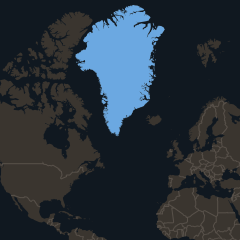
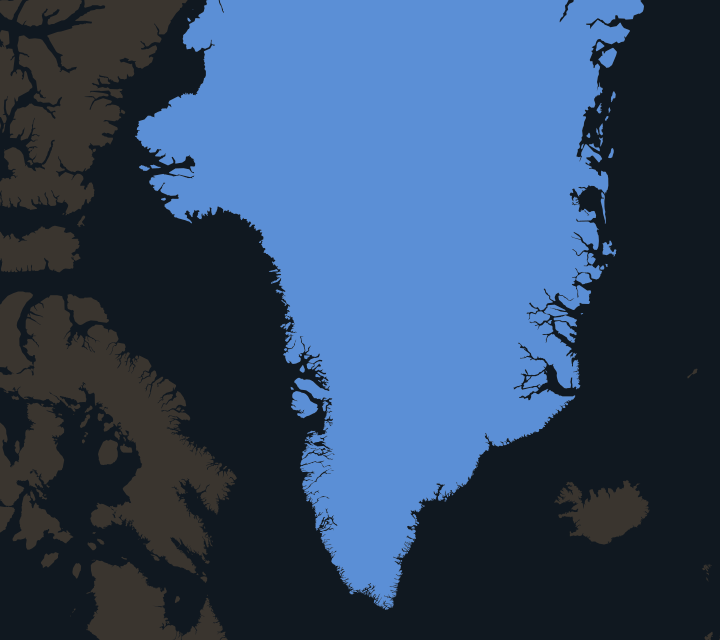
Greenland, the world's largest island, is a self-governing part of the Kingdom of Denmark with about 56,700 people. Denmark has held it since 1721. The 2009 Self-Government Act recognizes Greenlanders' right to independence. In 2025 and 2026, President Trump pressured Denmark to hand Greenland over. On September 22, 2026, the United States, Denmark and Greenland signed a security agreement that would expand American military access and keep Danish sovereignty. Greenland's parliament approved it 16 to 0, with 7 abstentions, on November 3, 2026. Denmark's parliament is scheduled to vote on it on November 19, 2026.
- Capital
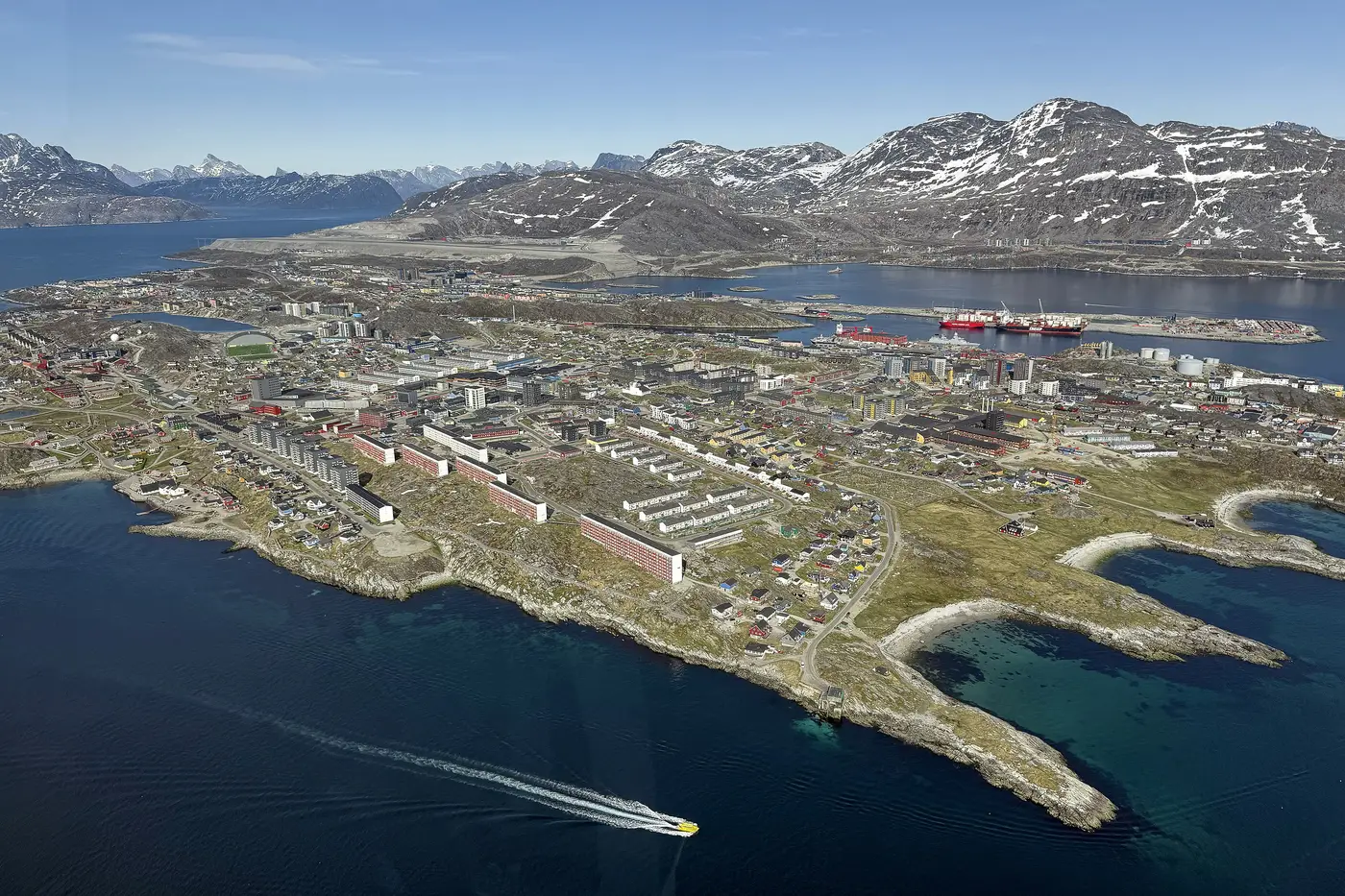
- Nuuk
- 20,298 people on January 1, 2026
- Area
- 2,166,086 km²
- about 81% covered by ice
- GDP per person
- About $62,000
- 2024, UNdata
- Currency
- Danish krone
- DKK
- From Copenhagen
- 3,500 km
- as the crow flies
 Denmark
Greenland in 30 seconds
- Greenland is not a sovereign state. It is a self-governing part of the Kingdom of Denmark. The 2009 Self-Government Act recognizes Greenlanders' right to self-determination and sets out a legal path to independence.
- President Trump pushed to acquire Greenland from early 2025 through January 2026, threatening tariffs on eight European allies. Premier Jens-Frederik Nielsen said in January 2026: “We choose Denmark.”
- On September 22, 2026, the United States, Denmark and Greenland signed a security agreement giving the United States expanded military access, including two new defense areas. The deal keeps Danish sovereignty. It takes effect only after Denmark's parliament approves it, with a vote scheduled for November 19, 2026.
- Fishing makes up over 90% of exports. Denmark's annual block grant of about 4.5 billion kroner covers over half of Greenland's government revenue.
Is Greenland a country?
Greenland is not a sovereign state. It is a self-governing part of the Kingdom of Denmark, alongside the Faroe Islands. Greenland's government controls mineral resources, fisheries, taxes, health and education. It took over mineral resources under the 2009 Self-Government Act. Denmark keeps the constitution, citizenship, the Supreme Court, defense, foreign policy and monetary policy.
The Act's preamble recognizes that Greenlanders are "entitled to self-determination by international law." If Greenlanders vote for independence, their government negotiates the terms with Denmark. The agreement then needs approval from Greenland's parliament, a referendum in Greenland and consent from the Danish parliament. Greenland would take over full sovereignty.
Greenland elects 2 of the 179 seats in Denmark's parliament. Greenlanders are Danish citizens and carry Danish passports. Greenland left the European Communities in 1985 after a 1982 referendum, mainly over fishing rules.
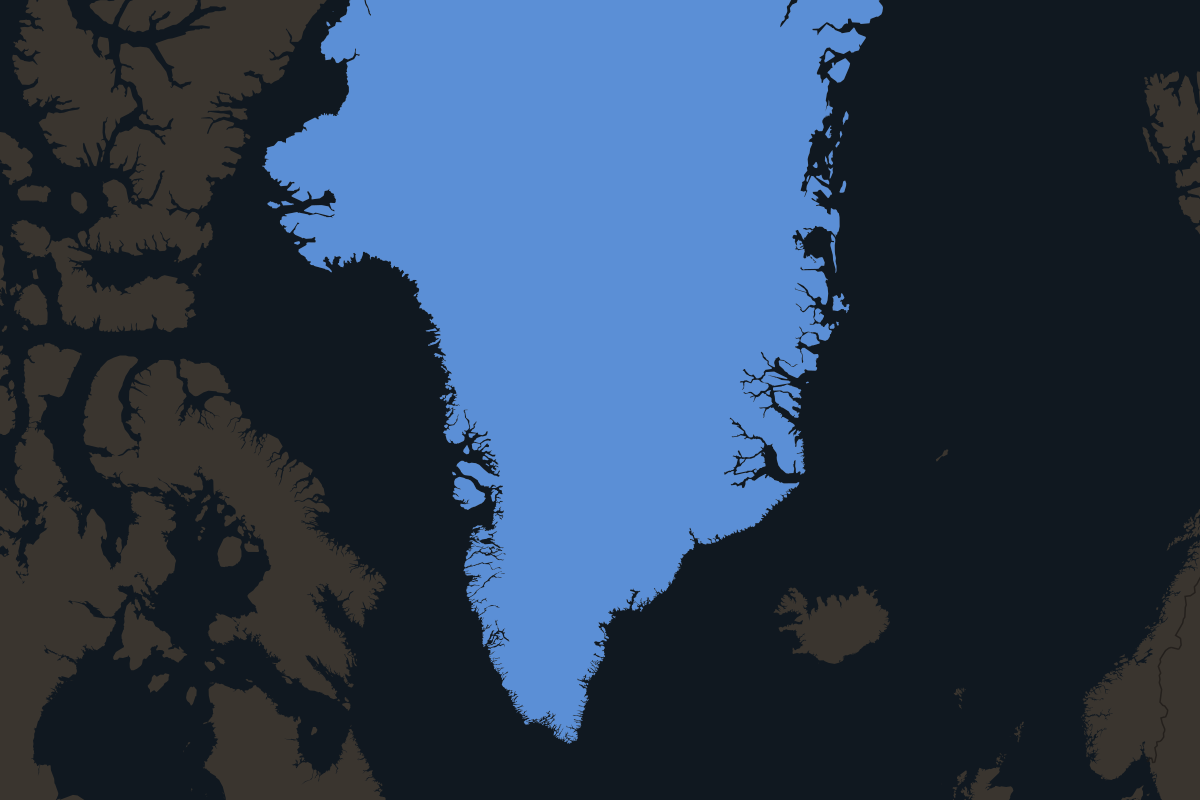 GREENLAND
Nuuk
Pituffik Space Base
Kvanefjeld and Tanbreez
Ilulissat
CANADA
ICELAND
Baffin Bay
Atlantic Ocean
Greenland Sea
 GREENLAND
Nuuk
Pituffik Space Base
Kvanefjeld and Tanbreez
CANADA
Baffin Bay
Atlantic Ocean
Why does the United States want Greenland?
The United States has run Pituffik Space Base, formerly Thule Air Base, in northwest Greenland since 1951. President Trump said the United States needs Greenland for missile defense, Arctic security against Russia and China, and minerals. In January 2025, as president-elect, he refused to rule out military or economic force.
In January 2026 the pressure peaked. Trump said the United States would take Greenland "one way or the other." On January 13, Premier Jens-Frederik Nielsen stood beside Danish Prime Minister Mette Frederiksen in Copenhagen and said: “We choose Denmark.” On January 17, Trump threatened tariffs of 10% to 25% on eight European allies that would last until "the Complete and Total purchase of Greenland." Four days later, at Davos, he said he would not use force and dropped the tariffs.
A working group negotiated from January to August 2026. On September 22, Trump, Frederiksen and Nielsen signed a security agreement at the United Nations in New York. It would expand American military access. The text states that it respects Danish sovereignty. Trump said it gives the United States "permanent control over security and all other needs." Greenland's parliament approved it on November 3. Denmark's parliament is scheduled to vote on November 19.
The US push for Greenland, 2019 to 2026
- Aug 2019Trump proposes buying Greenland; Denmark refuses
- Jan 2025Trump refuses to rule out military or economic force
- Mar 2025Vice President Vance visits Pituffik Space Base
- Aug 2025Denmark summons US diplomat over reported influence operations
- Jan 2026Trump threatens tariffs on 8 allies over Greenland
- Jan 2026Nielsen: “We choose Denmark”
- Jan 2026At Davos, Trump drops tariffs and says he won't use force
- Sep 2026Trilateral security agreement signed at the UN
- Nov 2026Greenland's parliament approves the deal 16-0
Who runs Greenland?
Premier Jens-Frederik Nielsen of the Demokraatit party has led Greenland since April 7, 2025. He is 35, the youngest head of government Greenland has had. He is a former national badminton player who won a gold medal at the 2023 Island Games. He studied social science at the University of Greenland.
Nielsen leads a coalition of Demokraatit, Inuit Ataqatigiit and Atassut, which holds 19 of 31 seats in Greenland's parliament, the Inatsisartut. Siumut left the coalition on March 13, 2026. It objected that two ministers ran for the Danish parliament without taking leave. The foreign minister is Múte B. Egede of Inuit Ataqatigiit, who was premier from 2021 to 2025.
Denmark is represented by a High Commissioner. Denmark handles defense and foreign policy, though in practice Greenland's premier co-signs security agreements, as Nielsen did in September 2026.
Seats in the Inatsisartut after the March 2025 election
Does Greenland want independence?
Greenlanders are divided. A January 2025 poll found that 56% would vote for independence. But a January 2026 poll found that only 25% wanted independence now, while 62% said no. Support drops sharply if independence means a lower living standard.
The parties split along similar lines. Naleraq, with 8 seats, is the most strongly pro-independence. Inuit Ataqatigiit and Siumut treat independence as a long-term goal. Demokraatit, the largest party with 10 seats, is described as Denmark-friendly and favors a gradual approach to independence. A constitutional commission presented a draft constitution for an independent Greenland in 2023. No independence referendum has ever been held.
In the January 2026 poll, 76% said joining the United States would not be an advantage. Only 5% preferred the United States over the EU as a partner.
Denmark's annual block grant
DKK 4.5 billion
Over half of Greenland's government revenue
The block grant was about 4.52 billion kroner (roughly $690 million) in 2026. It makes up over half the treasury's revenue and about a fifth of GDP. Under the 2009 Act, the grant falls by half of any mineral revenue above 75 million kroner a year.
What minerals does Greenland have?
Greenland has large deposits of rare earths, graphite, molybdenum and gold, but mining is still small. Two mines operate today. The Nalunaq gold mine, run by Amaroq, produced 8,985 ounces in the first half of 2026. White Mountain has produced anorthosite since 2019.
Tanbreez is a rare-earth project in south Greenland. Greenland approved mining plans through 2050 in September 2026. The developer, Critical Metals Corp, targets first ore in late 2028 or early 2029. The US Export-Import Bank issued a $120 million letter of interest.
Kvanefjeld, another rare-earth deposit, is blocked by a 2021 law banning mining where uranium content is at or above 100 parts per million. China's Shenghe Resources holds about 10% of the developer. An investment-screening bill would bar investors from outside NATO, NATO partner countries and the EU from controlling sensitive sectors.
Main mineral projects
- Tanbreez (rare earths)Mining plans approved to 2050. First ore targeted for late 2028 or early 2029.
- Kvanefjeld (rare earths)Blocked by the 2021 uranium law. China's Shenghe Resources holds about 10%.
- Nalunaq (gold)Operating. Produced 8,985 ounces in the first half of 2026.
- Amitsoq (graphite)EU Strategic Project. Received a 30-year mining license in December 2025.
- Malmbjerg (molybdenum)Backed by the EU under its critical minerals partnership.
How did Denmark get Greenland?
Norse settlers arrived around 986 under Erik the Red. Their colonies disappeared in the 1400s. In 1721, a Danish-Norwegian missionary named Hans Egede re-established a presence, and colonization began. When Norway separated from Denmark in the Treaty of Kiel of January 14, 1814, Greenland stayed with Denmark.
In 1953, a new Danish constitution ended Greenland's colonial status and made it a Danish county with seats in parliament. Denmark told the United Nations that Greenland was now self-governing, and the UN ended its oversight in 1954. In 1979, Greenlanders voted 70.1% for home rule. In 2008, 75.5% voted for self-government. The Self-Government Act took effect on June 21, 2009.
In September 2025, Denmark's prime minister apologized in Nuuk for a campaign in which about 4,500 women and girls were fitted with IUDs or given other contraception without consent between 1960 and 1991. Denmark offered 300,000 kroner per woman in compensation.
From colony to self-government
- 1721Hans Egede's mission begins Danish-Norwegian colonization
- 1814The Treaty of Kiel leaves Greenland with Denmark
- 1953A new constitution ends colonial status; Greenland becomes a county
- 1954The UN ends its oversight of Greenland
- 1979Home Rule begins after a 70.1% yes vote
- 1985Greenland leaves the European Communities
- 2009The Self-Government Act takes effect on June 21
- 2025Denmark apologizes for forced contraception of about 4,500 women and girls
Why does Greenland matter?
Missile defense and Arctic security
Pituffik Space Base, about 1,524 km from the North Pole, runs missile warning radars and satellite tracking for the United States Space Force. Once in force, the 2026 agreement would add two new defense areas, at Narsarsuaq and Mestersvig, and allow the United States to modernize and expand Pituffik.
Critical minerals
Greenland has large rare-earth deposits. The Tanbreez project aims to produce first ore in late 2028 or early 2029. An investment-screening bill would bar investors from outside NATO, NATO partner countries and the EU from controlling sensitive sectors. China's Shenghe Resources holds a stake in the blocked Kvanefjeld project.
Fishing
Fishing makes up over 90% of Greenland's exports. Shrimp, Greenland halibut and cod account for about 90% of seafood export value. Total exports were $1.58 billion in 2024.
The ice sheet and Arctic routes
Greenland's ice sheet covers about 81% of the island. As Arctic ice melts, new shipping routes and resources may open. Denmark committed about 42 billion kroner in two Arctic defense packages in 2025 to strengthen its position.
Questions about Greenland
Is Greenland a country?
No, not as a sovereign state. Greenland is a self-governing part of the Kingdom of Denmark. It runs most of its own affairs, but Denmark handles defense, foreign policy and citizenship. The 2009 Self-Government Act sets out a path to full independence if Greenlanders vote for it.
Do Greenlanders have Danish passports?
Yes. Greenlanders are Danish citizens and carry Danish passports. Greenland elects 2 of the 179 seats in Denmark's parliament.
Is Greenland in the EU or NATO?
Greenland is not in the EU. It left the European Communities in 1985 after a 1982 referendum, mainly over fishing rules. It is covered by NATO as part of the Kingdom of Denmark. Under the 2026 security agreement, which still awaits a vote in Denmark's parliament, Denmark and Greenland must keep an independent Greenland in NATO, applying for membership if needed.
What currency does Greenland use?
The Danish krone. Greenland does not have its own currency. Monetary policy is set by Denmark's central bank.
How many people live in Greenland?
Greenland had 56,740 people on January 1, 2026. About 36% live in Nuuk, the capital. Greenlandic Inuit make up about 89% of the population. The official language is Greenlandic.
Could Greenland survive without Denmark's money?
Not on today's budget without new income or deep cuts. Denmark's block grant of about 4.5 billion kroner covers over half of Greenland's government revenue. In a January 2026 poll, only 24% said they would support independence if it meant a lower living standard. Mineral development and fishing may eventually close the gap, but no timeline is clear.