Territory of China · Pearl River Delta
Hong Kong
Self-governingUpdated November 11, 2026
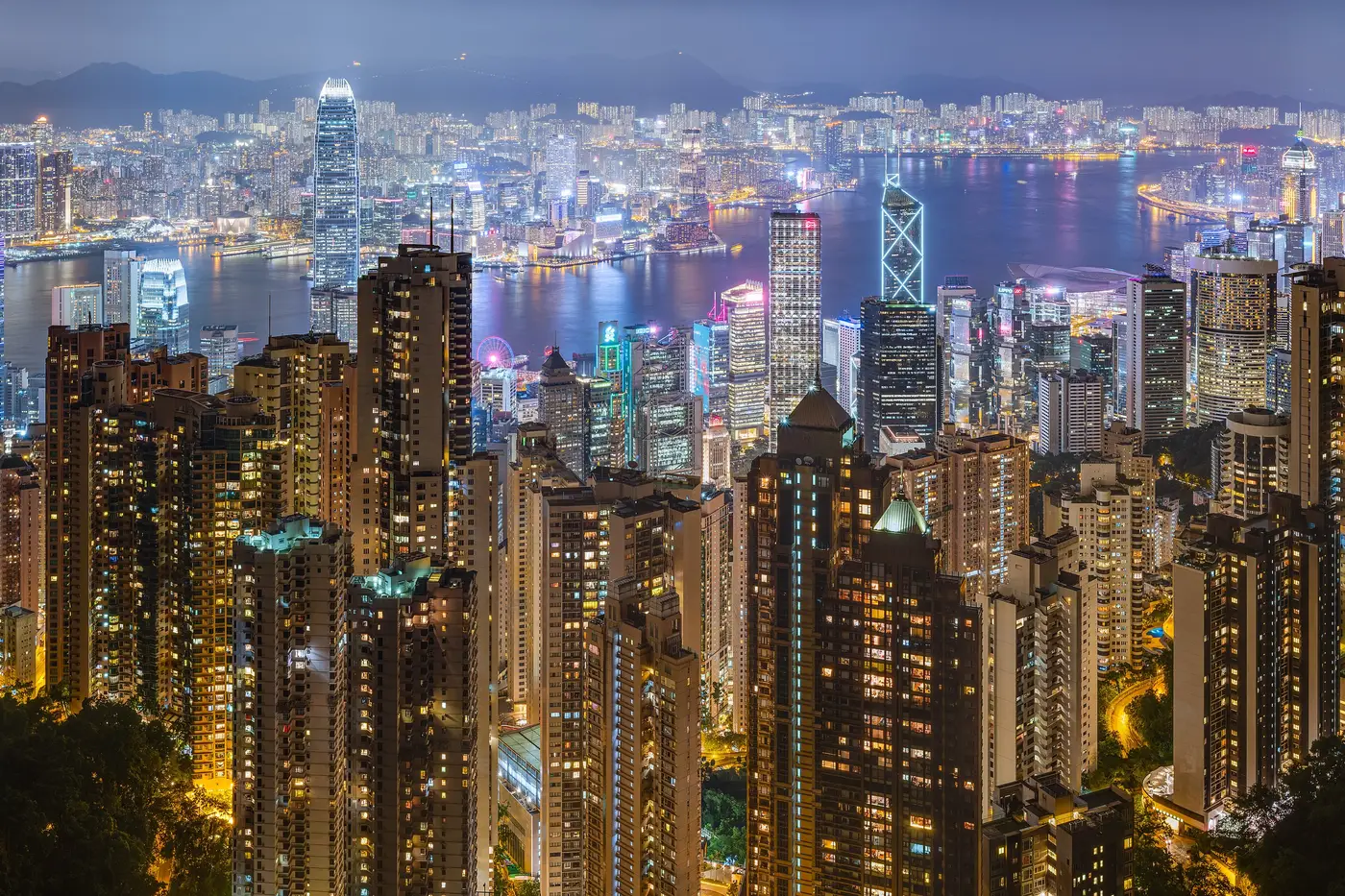
Hong Kong is not a country. It is a special administrative region of China. Britain handed it back on July 1, 1997, under a deal that promised Hong Kong could keep its own legal system, currency and freedoms for 50 years. Hong Kong has its own passport, its own seat in the World Trade Organization and its own Olympic team. After mass protests in 2019, the Chinese government imposed a national security law in 2020 and rewrote the election rules. The city remains the world’s third-ranked financial center.
- GDP per person
- About US$57,000
- 2025
- Currency
- HK dollar
- pegged to the US$ since 1983
- Financial center rank
- #3 in the world
- GFCI, September 2026
- Passport strength
- 178 destinations
- visa-free or on arrival, July 2026
- From Beijing
- 2,000 km
- as the crow flies
 China
Hong Kong in 30 seconds
- Hong Kong is not a country. It is a special administrative region of China. It has its own currency, passport, legal system and customs border.
- Britain took Hong Kong Island in 1842 after the First Opium War, Kowloon in 1860 and leased the New Territories in 1898 for 99 years. China says Britain occupied Chinese territory. China took it all back on July 1, 1997.
- After mass protests in 2019, the Chinese government imposed a national security law in 2020 and rewrote the election rules. The Chinese government says this restored stability. Britain says China is breaking the 1984 deal. Pro-democracy parties have dissolved. Media tycoon Jimmy Lai was sentenced to 20 years in February 2026 for colluding with foreign forces and sedition.
- Hong Kong is the world’s third-ranked financial center and China’s main channel to global money. Mainland firms took 98.5% of its IPO proceeds in the first half of 2026.
Is Hong Kong a country?
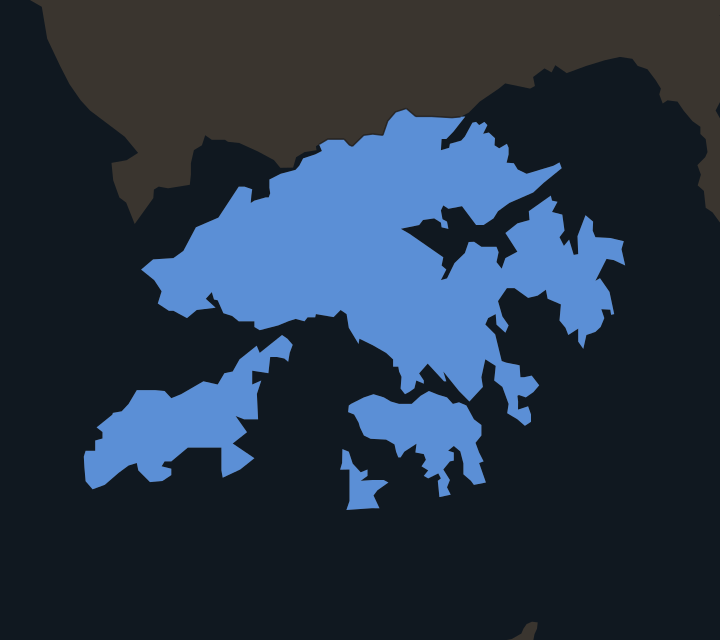
No. Hong Kong is a special administrative region of China. It has been part of China since July 1, 1997, when Britain handed it back after more than 150 years of British rule. The Basic Law, Hong Kong’s mini-constitution, calls it “an inalienable part of the People’s Republic of China.” In 1972, at China’s request, the UN removed Hong Kong from its list of non-self-governing territories. China said Hong Kong was Chinese territory occupied by Britain, not an ordinary colony. Some pro-democracy activists say this denied Hong Kong people a right to self-determination. Hong Kong people did not vote on the 1984 handover deal.
Hong Kong looks like a country in many ways. It has its own currency, the Hong Kong dollar, pegged to the US dollar since 1983. It runs its own customs and immigration, including its border with mainland China. It holds a separate seat in the World Trade Organization as “Hong Kong, China.” It sends its own team to the Olympics. At the 2024 Paris Games, Hong Kong won 2 gold medals and 2 bronze medals.
China controls defense and foreign affairs. The People’s Liberation Army has a garrison in the city. The Standing Committee of China’s National People’s Congress has the final power to interpret the Basic Law.
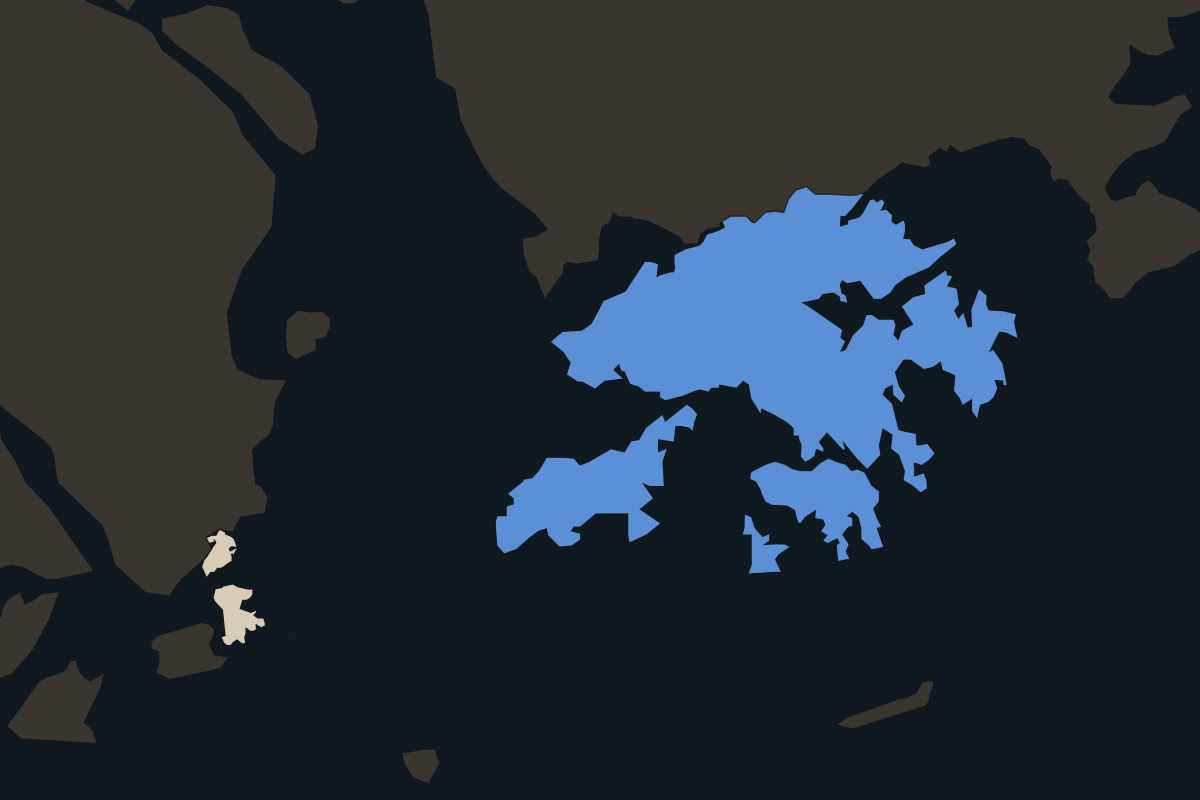 Hong Kong
 Island
Kowloon
Lantau
Shenzhen
Macau
CHINA
Pearl River Estuary
South China Sea
 Hong Kong
 Island
Kowloon
Lantau
Shenzhen
Macau
CHINA
What does “one country, two systems” mean?
It means Hong Kong is part of China but keeps a separate economic and legal system. Britain and China signed the Sino-British Joint Declaration in Beijing on December 19, 1984. China promised that Hong Kong’s capitalist system, common law and freedoms would stay unchanged for 50 years after the 1997 handover.
The Basic Law, adopted by China’s National People’s Congress in 1990 and in force since July 1, 1997, puts this into law. Article 5 says the socialist system shall not be practiced in Hong Kong. Hong Kong keeps its own revenue and pays no tax to the central government. Its courts run on common law, with a Court of Final Appeal headed by Chief Justice Andrew Cheung.
The promise covers 50 years, until 2047. Neither the Joint Declaration nor the Basic Law says what happens after that date.
What Hong Kong runs separately from the mainland
- CurrencyThe Hong Kong dollar, pegged to the US dollar at 7.75 to 7.85
- Legal systemCommon law with its own Court of Final Appeal
- ImmigrationSeparate border controls, including with mainland China
- TradeIts own WTO membership as “Hong Kong, China” since 1995
- TaxesHong Kong keeps all its revenue and pays nothing to the central government
- PassportThe HKSAR passport reaches 178 destinations visa-free or on arrival
What changed in Hong Kong after 2019?
Since 2019, the Chinese government has imposed a national security law and rewritten Hong Kong’s election rules. Large protests broke out in June 2019 over a bill that would have allowed extraditions to mainland China. The government withdrew the bill in October 2019, but the protests continued. Some protests turned violent. By December 2019, protesters had thrown at least 350 petrol bombs and police had fired over 10,000 tear gas canisters. Police arrested 10,279 people between June 2019 and October 2022. In the November 2019 local elections, turnout hit a record 71.2% and pro-democracy candidates won about 388 of 452 seats.
The Chinese government responded directly. On June 30, 2020, the Standing Committee of the National People’s Congress imposed the National Security Law, which criminalizes secession, subversion, terrorism and collusion with foreign forces. In March 2021, the National People’s Congress rewrote the election rules. The Legislative Council grew from 70 to 90 seats. Directly elected seats fell from 35 to 20. All candidates must now be vetted. Article 23 of the Basic Law requires Hong Kong to pass its own security law. On March 19, 2024, the Legislative Council passed this Article 23 law by 89 to 0, adding more security offenses. By April 2026, the Hong Kong Security Bureau said 389 people had been arrested under the two security laws and 179 convicted.
The Chinese and Hong Kong governments say these laws restored stability and ensure only “patriots” govern Hong Kong. The United Kingdom says China is in “ongoing non-compliance” with the Joint Declaration. Pro-democracy parties have dissolved. The Democratic Party, once Hong Kong’s largest pro-democracy party, voted to disband on December 14, 2025. Senior members told Reuters that Chinese officials or intermediaries had warned them to disband. Media tycoon Jimmy Lai was sentenced to 20 years on February 9, 2026, for colluding with foreign forces and sedition. Activist Joshua Wong was sentenced to 10 years on November 5, 2026, after pleading guilty to conspiring to collude with foreign forces.
Hong Kong since the handover
- 1997Britain hands Hong Kong back to China on July 1
- 2003Mass march against a security bill, which is shelved
- 2014The Umbrella Movement occupies streets over electoral reform
- 2019Anti-extradition-bill protests. Record 71.2% turnout in local elections
- 2020China imposes the National Security Law
- 2021The NPC rewrites election rules. Directly elected seats cut to 20 of 90
- 2024The Legislative Council passes the Article 23 security law, 89 to 0
- Dec 2025Legislative Council election: 31.9% turnout in directly elected seats. Democratic Party disbands
- Feb 2026Jimmy Lai sentenced to 20 years
- Nov 2026Joshua Wong sentenced to 10 years
Who runs Hong Kong?
The chief executive is John Lee. He was the only candidate when the 1,500-member Election Committee voted on May 8, 2022. He won over 99% of the votes cast. He took office on July 1, 2022. Chief Executive Lee joined the Royal Hong Kong Police in 1977 at 19 as a probationary inspector and spent 35 years in the force. He later served as Secretary for Security and then Chief Secretary before becoming chief executive. The United States sanctioned him in 2020 and moved him to a lighter sanctions list in July 2026. In July 2026, it moved him to a lighter sanctions list.
His term ends on June 30, 2027. He has not said whether he will seek a second term. The Election Committee that will choose the next chief executive holds its subsector elections on November 22, 2026. The new committee takes office on February 1, 2027. The chief executive election is expected in March 2027.
The Legislative Council has 90 seats, but only 20 are directly elected. In the December 7, 2025, election, geographical constituency turnout was 31.9%. No pro-democracy candidates stood. All 89 sitting members belong to the pro-Beijing camp.
December 2025 Legislative Council election
31.9%
Turnout in geographical constituencies
1,317,682 voters cast ballots in the directly elected seats on December 7, 2025. Turnout was slightly above the record low of 30.2% in 2021. No pro-democracy candidates stood. The largest party, the DAB, won 20 of 90 seats.
What happens to Hong Kong in 2047?
Nobody knows for certain. The Sino-British Joint Declaration says China’s policies for Hong Kong “will remain unchanged for 50 years.” The Basic Law says the capitalist system shall remain unchanged for 50 years. Fifty years after the 1997 handover is 2047.
Neither document says what happens after that date. They do not say the system expires or that Hong Kong merges fully into mainland China. Hong Kong is already part of China. The question is whether it keeps its separate legal system, currency and freedoms.
The British government, pro-democracy activists and human rights groups say the national security law and the new election rules have already changed the system well before 2047. The Chinese and Hong Kong governments say these measures are consistent with the Basic Law and protect stability.
Why does Hong Kong still matter to China’s economy?
Hong Kong is China’s main channel to the world’s money. It ranked third in the world as a financial center in September 2026, behind New York and London and ahead of Singapore. It has held first place in Asia for 4 straight years. Mainland firms took 98.5% of Hong Kong’s IPO proceeds in the first half of 2026. Hong Kong was the world’s second-largest IPO venue in that period, behind Nasdaq.
The Stock Connect and Bond Connect systems link Hong Kong’s markets to mainland exchanges. The Hong Kong Monetary Authority held US$440.5 billion in foreign currency reserves at the end of October 2026, more than 5 times the currency in circulation.
The United States ended Hong Kong’s special trade status in 2020. In July 2026, the United States lifted sanctions on 9 Hong Kong officials. On July 24, 2026, the United States applied a 12.5% tariff to Hong Kong goods as part of new tariffs on 60 economies. The United Kingdom opened the BN(O) visa route on January 31, 2021. The same day, China and Hong Kong stopped recognizing the BN(O) passport as a travel document. By June 2026, the United Kingdom had granted 187,552 BN(O) visas to applicants outside the country.
Hong Kong’s foreign reserves
US$440.5 billion
More than 5 times the currency in circulation
The Hong Kong Monetary Authority backs the Hong Kong dollar’s peg to the US dollar with large reserves. The peg has held since October 17, 1983, through the handover, the Asian financial crisis and the 2019 protests.
Why does Hong Kong matter?
China’s financial gateway
Hong Kong is the world’s third-ranked financial center and China’s main link to global capital markets. Mainland firms took 98.5% of its IPO proceeds in the first half of 2026. The Stock Connect and Bond Connect systems link Hong Kong’s markets to mainland exchanges.
People leaving and arriving
Hong Kong lost a net 113,200 residents from mid-2021 to mid-2022, the largest outflow on record. Since then, the population has recovered to 7.52 million through talent and labor import programs. By June 2026, the United Kingdom had granted 187,552 BN(O) visas to applicants outside the country.
The port and trade
Hong Kong sits at the mouth of the Pearl River Delta, next to Shenzhen and the factories of southern China. It is a separate customs territory and a member of the World Trade Organization in its own right.
The US and British response
The United States ended Hong Kong’s special trade status in 2020 and imposed sanctions on officials. The United Kingdom opened a visa route for holders of British National (Overseas) passports. The UK government says China is in “ongoing non-compliance” with the Joint Declaration. In July 2026, the United States lifted sanctions on 9 Hong Kong officials. China and the Hong Kong government call this interference in China’s internal affairs.
Questions about Hong Kong
Do Hong Kong residents have Chinese passports?
Ethnic Chinese permanent residents carry a Chinese passport issued by Hong Kong, called the HKSAR passport. They are citizens of the People’s Republic of China. They do not use the mainland Chinese passport. The HKSAR passport gives visa-free or visa-on-arrival access to 178 countries and territories. Hong Kong also runs its own immigration controls, including its border with mainland China.
What currency does Hong Kong use?
The Hong Kong dollar. It has been pegged to the US dollar since October 17, 1983. Since 2005, it has traded in a band of 7.75 to 7.85. The Hong Kong Monetary Authority held US$440.5 billion in foreign currency reserves at the end of October 2026 to back the peg.
What language do people speak in Hong Kong?
The official languages are Chinese and English. Cantonese is the main spoken language. Government business, courts and street signs use both Chinese and English.
Who is Jimmy Lai?
Jimmy Lai is a 78-year-old media tycoon who founded the Apple Daily newspaper. He was convicted on December 15, 2025, of conspiracy to collude with foreign forces and conspiracy to publish seditious publications. He was sentenced to 20 years in prison on February 9, 2026. Three government-vetted judges heard the case without a jury. China’s foreign ministry called him a major planner and participant in anti-China destabilizing activities. British Foreign Secretary Yvette Cooper called the prosecution “politically motivated.” He did not appeal. His family is seeking a political resolution. President Trump raised his case with President Xi Jinping at a summit in Beijing in May 2026.
What is Hong Kong’s population?
7,518,300 as of mid-2026. The population fell sharply after 2020 as residents left, but it has since recovered through talent and labor import programs. About 91.6% of the population is ethnically Chinese, according to the 2021 census.
Is Hong Kong in NATO or the EU?
No. Hong Kong is part of China and belongs to neither. It is not a member of any military alliance. It is a separate member of the World Trade Organization and takes part in APEC as a separate economy.