External Territory of Australia · South Pacific
Norfolk Island
Run by an administratorUpdated November 16, 2026
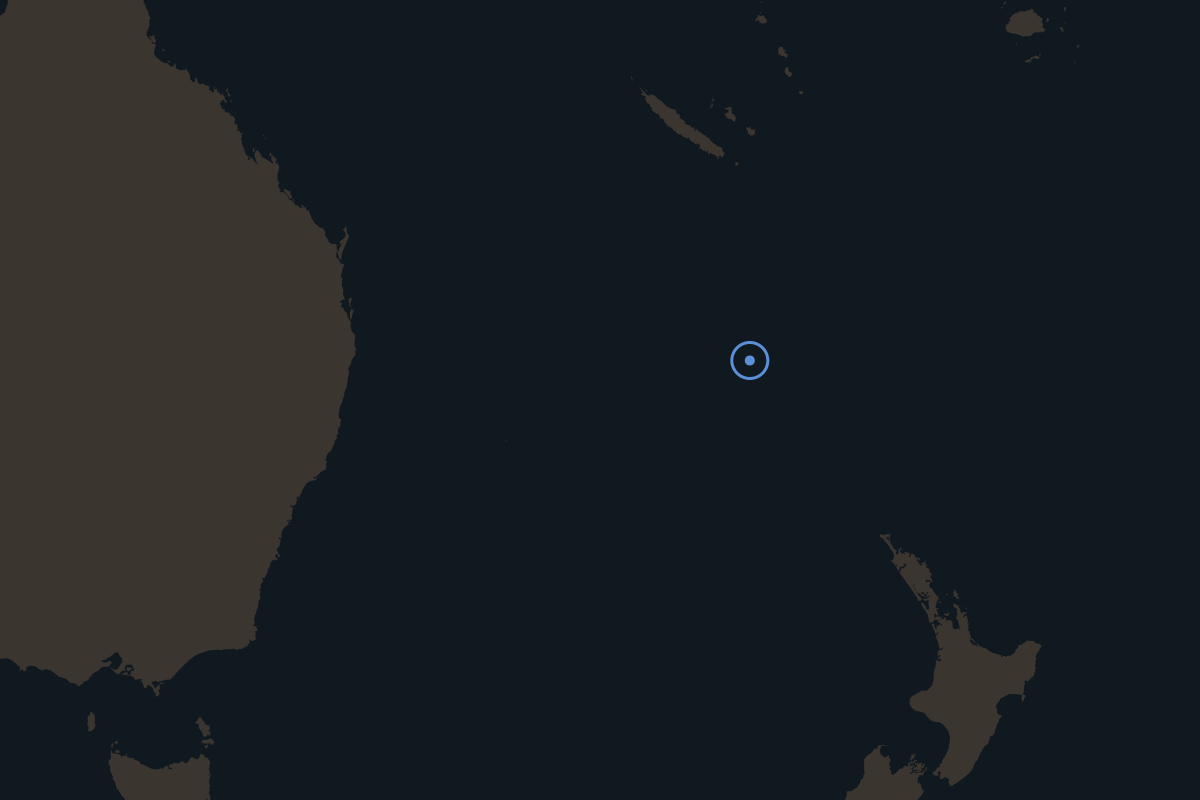
Norfolk Island is an external territory of Australia in the South Pacific, about 1,670 km from Sydney. Britain used it as a penal colony from 1788. In 1856, 194 descendants of the Bounty mutineers arrived from Pitcairn Island. Australia took control in 1914. The Australian government abolished the island's parliament in 2015. The Regional Council that replaced it was dismissed in 2021. There is no elected local body. The Australian government has promised an election for a Transition Assembly before the end of 2026.
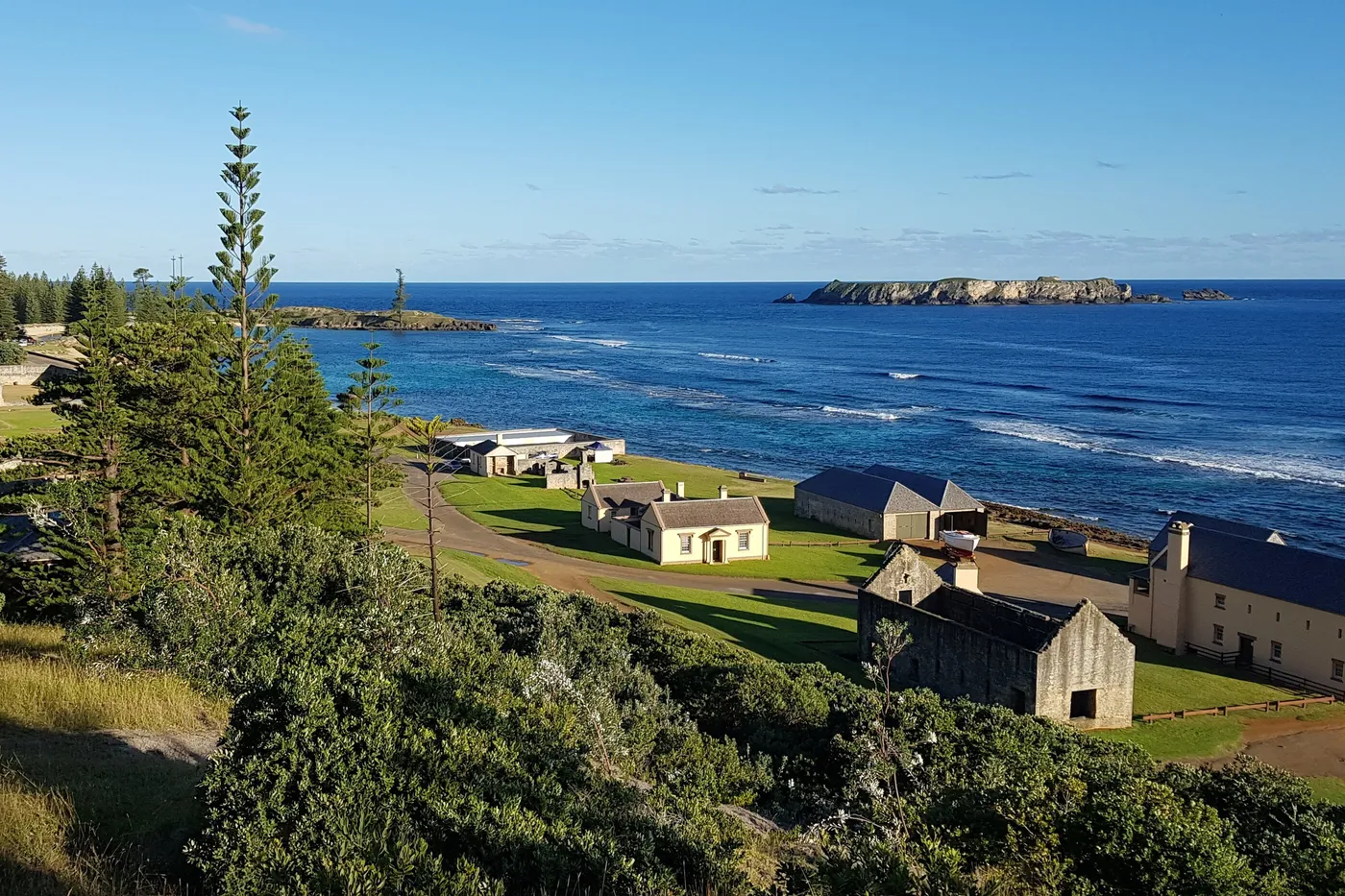

- Capital
- Kingston
- historic center; Burnt Pine is the main town
- GTP per person
- $62,959
- FY2024, about 64% of the Australian mainland figure
- Visitors (FY2024)
- 30,629
- air arrivals, down from 32,232 in FY2023
- EEZ
- 428,618 km²
- more than 12,000 times the land area
- From Canberra
- 1,900 km
- as the crow flies
 Australia
Norfolk Island in 30 seconds
- Norfolk Island is an external territory of Australia with 2,188 people (2021 census). It lies about 1,670 km from Sydney and 1,070 km from Auckland. There is no elected local body.
- The island ran deficits after 2008 and took Commonwealth funding. Australia abolished the island's elected parliament in 2015. Six days before the Australian parliament passed the law, 68% had voted for self-determination in a non-binding referendum. The Regional Council that replaced it was dismissed in 2021. The island has been run by appointed administrators since then.
- About 25% of residents report Pitcairn ancestry. The 194 Pitcairn Islanders who arrived in 1856 were descendants of the Bounty mutineers and Tahitian women. Bounty Day on June 8 is the island's main holiday.
- The Australian government announced in August 2026 that a new Norfolk Island Assembly will be created by an Act of Parliament. The first step is an elected five-member Transition Assembly with an advisory role. An election was promised before the end of 2026, but no date has been set.
Is Norfolk Island part of Australia?
Yes. Norfolk Island is an external territory of Australia. It has been Australian since July 1, 1914, but it sits outside any state. Its people are Australian citizens. They carry Australian passports, pay Australian income tax and receive Medicare and Centrelink payments. They vote in the ACT seat of Bean for the House of Representatives and for ACT senators.
Norfolk Island People for Democracy and the Council of Elders argue that the island should be listed as a non-self-governing territory under Article 73 of the UN Charter. They filed a complaint with the UN Human Rights Committee in 2018 and petition the UN Special Committee on Decolonization. Australia told the UN it "has not at any time relinquished its sovereignty over Norfolk Island." The Australian government says there are no indigenous peoples of Norfolk Island.
At the May 3, 2025, federal election, independent candidate Jessie Price topped the Norfolk Island polling booth with 44.6% of first preferences. Labor's David Smith held the seat of Bean by 350 votes after preferences.
 Norfolk Island
AUSTRALIA
Sydney
Brisbane
Lord Howe Island
New Caledonia
NEW ZEALAND
Auckland
Tasman Sea
Coral Sea
 Norfolk Island
AUSTRALIA
Sydney
Brisbane
Lord Howe Island
New Caledonia
NEW
ZEALAND Auckland Tasman Sea Coral Sea
Why did Australia end Norfolk Island's self-government?
The island ran deficits of about $3 million a year after the 2008 global financial crisis. From December 2010, the Norfolk Island government accepted Commonwealth funding tied to reforms under a Road Map agreed with the Australian government. The Road Map planned to bring the island into Australian tax and welfare, but it kept the Legislative Assembly. In March 2015, the Australian government announced it would replace the Assembly with a local council. Assistant Minister Jamie Briggs said the island was effectively bankrupt and that the change would keep it viable. From 2010, the Australian government spent $48.2 million on assistance, and the Australian National Audit Office found the total reform budget rose to $99.5 million for 2015-16 to 2018-19.
The Australian parliament passed the Norfolk Island Legislation Amendment Act 2015 on May 14, 2015. The nine-member Legislative Assembly was abolished on June 17, 2015. On May 8, six days before the act passed, a non-binding referendum had returned 68% in favor of self-determination. Chief Minister Lisle Snell said the result "blow[s] a hole" in the Australian government's claim of local support.
Since July 1, 2016, residents have paid Australian income tax and received Medicare, the Pharmaceutical Benefits Scheme, the Age Pension and Centrelink payments. A five-member Regional Council replaced the Assembly, but it was suspended in February 2021 and dismissed in December 2021 after a public inquiry found poor financial and asset management.
From penal colony to appointed administration
- 1788Britain establishes the first penal settlement, six weeks after Sydney
- 1856194 Pitcairn Islanders arrive on the Morayshire on June 8
- 1914Norfolk Island becomes an Australian territory on July 1
- 1979The Norfolk Island Act creates a nine-member Legislative Assembly
- 2010The Norfolk Island government accepts Commonwealth funding tied to reforms, after running deficits
- 2015The Legislative Assembly is abolished on June 17, despite a 68% referendum vote for self-determination
- 2016A five-member Regional Council starts; Australian tax, Medicare and welfare apply
- 2021The Regional Council is suspended in February and dismissed in December
- 2026The Australian government plans an Assembly created by Act of Parliament, starting with an elected Transition Assembly
Who runs Norfolk Island now?
There is no elected local body. The Norfolk Island Regional Council has been run by appointed administrators since February 2021. Scott Mason serves as Lead Administrator and Gary Mottau as Financial Administrator. They took over on December 6, 2024, and their appointments have been extended to December 31, 2026.
The Australian government's representative on the island is the Administrator, Fiona McKergow. She took office on June 1, 2026, for a three-year term. McKergow spent more than 30 years in the public service, mostly in foreign policy and trade. She served as High Commissioner to Cyprus from 2022 to 2026. She is the first woman to hold the post.
The responsible minister in Canberra is Kristy McBain, Minister for Regional Development, Local Government and Territories. On August 3, 2026, McBain announced that a future Norfolk Island Assembly will be created by an Act of Parliament. In 2024, the plan had been to create it by ordinance. Islander groups objected to that plan. In November 2024, Governance Committee member Alma Davidson resigned, saying the Australian government "has no intention of listening." The first step is an elected five-member Transition Assembly. It will have no power to make laws and will advise the Australian government for two years. McBain said the government "listened to the community's strong preference for primary legislation." An election was promised before the end of 2026, but no date has been announced.
Who governs what on Norfolk Island
- The Australian government (Canberra)Defense, foreign affairs, immigration, territory law-making, tax, Medicare, Centrelink
- QueenslandEducation, health and aged care under an agreement since January 1, 2022
- Norfolk Island Regional CouncilLocal services, airport, port, telecom and power, run by appointed administrators
- Administrator Fiona McKergowThe Australian government's representative on the island since June 1, 2026
Why are Norfolk Islanders descended from the Bounty mutineers?
Many Norfolk Islanders descend from Pitcairn Islanders who moved to Norfolk Island in 1856. Those settlers were descendants of the Bounty mutineers. In 1789, crew members of HMS Bounty mutinied against Lieutenant William Bligh, the ship's commander. The mutineers settled on Pitcairn Island in the South Pacific with Tahitian men and women. By the 1850s, the small island was overcrowded. Queen Victoria's government offered Norfolk Island, which had been emptied of convicts in 1855.
On June 8, 1856, 194 Pitcairn Islanders arrived on Norfolk Island aboard the Morayshire. They were the descendants of the Bounty mutineers and their Tahitian partners. That date is now Bounty Day, the island's main holiday. Some families later returned to Pitcairn.
At the 2021 census, 25.1% of Norfolk Island residents (550 people) reported Pitcairn ancestry. The Norf'k language, a mix of 18th-century English and Tahitian, is co-official with English. In 2021, 667 people (30.5%) spoke Norf'k at home, down from 709 in 2016. UNESCO classifies it as definitely endangered. Some islanders of Pitcairn descent say Queen Victoria gave them the island, and they argue that Australia's rule lacks legitimacy. Australia rejects that claim.
2021 Census
25.1%
Residents reporting Pitcairn ancestry
550 of 2,188 people reported Pitcairn ancestry at the 2021 census. 16.5% reported Norfolk Islander ancestry. 62.2% of Norf'k speakers have Pitcairn ancestry.
What was the Norfolk Island penal colony?
Britain used Norfolk Island as a penal colony twice. The first settlement began on March 6, 1788, when Lieutenant Philip Gidley King landed with 15 convicts and 7 free men. This was only six weeks after the First Fleet reached Sydney. The settlement was abandoned in February 1814.
The second settlement began on June 6, 1825, when 104 people arrived. It was a punishment station for repeat offenders from the Australian colonies. The last convicts were removed on May 5, 1855. The Georgian buildings from this era still stand at Kingston, the island's historic center.
The Kingston and Arthur's Vale Historic Area covers 225 hectares. It was inscribed on the UNESCO World Heritage List on July 31, 2010, as one of 11 Australian Convict Sites. It is also on Australia's National Heritage List. The site includes convict-era buildings, a cemetery and the remains of the settlement's infrastructure.
The two penal settlements
- 1788First settlement: Lt Philip Gidley King lands with 15 convicts and 7 free men on March 6
- 1814First settlement abandoned in February; the island is left empty
- 1825Second settlement: 104 people land on June 6; it becomes a punishment station for repeat offenders
- 1855Last convicts removed on May 5
- 1856194 Pitcairn Islanders arrive on June 8
- 2010Kingston and Arthur's Vale inscribed as a UNESCO World Heritage Site on July 31
How does Norfolk Island make money?
Tourism is the main industry. Tourism income was $48.8 million in FY2024, or 35.1% of the territory's output. That was down from $53.5 million (37.7%) in FY2023. Visitors typically stay 7 nights and spend about $224 per person per day. Air arrivals fell from 32,232 in FY2023 to 30,629 in FY2024.
Qantas is the only scheduled airline. It flies from Sydney and Brisbane under a Commonwealth contract extended to March 2028, with about 2,000 seats a week. Air Chathams ended the only Auckland service after April 2025. There is no scheduled flight to New Zealand.
Government spending is the other main source of income. Government demand was about 20% of the territory's output in FY2024. The gross territorial product was $139.4 million in FY2024, or $62,959 per person, about 64% of the mainland figure. Median household income was $1,184 a week at the 2021 census, compared with $1,746 for Australia as a whole. The median age was 50, against 38 for Australia.
Air visitor arrivals by financial year
Why does Norfolk Island matter?
A vast marine zone
Norfolk Island's exclusive economic zone covers about 428,618 km², more than 12,000 times the land area. A July 2026 proposal would expand the marine park to the full EEZ, with most of it as a no-take zone. Environment Minister Murray Watt plans to use it to help Australia reach its 30% ocean protection target.
A test of self-determination
Norfolk Island People for Democracy and the Council of Elders petition the UN to list Norfolk as a non-self-governing territory. The Council of Elders held a poll on January 1, 2026, in which 648 people voted, and declared its own government. A rival group, the Norf'k Ailen Government, held its own poll the same day. The Australian government says such groups "have no basis in law."
The Bounty descendants
About 25% of residents trace their ancestry to the Bounty mutineers who settled Pitcairn Island. The Norf'k language, a mix of 18th-century English and Tahitian, is co-official but UNESCO classifies it as definitely endangered.
Convict heritage
The Kingston and Arthur's Vale Historic Area is a UNESCO World Heritage Site. Britain used Norfolk Island as a penal colony in two periods between 1788 and 1855. The 225-hectare site preserves Georgian buildings from the convict era.
Questions about Norfolk Island
Do Norfolk Islanders have Australian citizenship?
Yes. Norfolk Islanders are Australian citizens and carry Australian passports. Since July 1, 2016, they have paid Australian income tax and received Medicare, the Age Pension and Centrelink payments.
Can Norfolk Island vote in Australian elections?
Yes. About 1,300 residents are enrolled. They vote in the ACT seat of Bean for the House of Representatives and for ACT senators. At the 2025 federal election, independent Jessie Price topped the Norfolk booth with 44.6%.
What language do people speak on Norfolk Island?
English and Norf'k are both official. Norf'k is a mix of 18th-century English and Tahitian, brought by the Pitcairn settlers in 1856. In 2021, 667 people (30.5%) spoke it at home. UNESCO classifies it as definitely endangered.
How do you get to Norfolk Island?
Qantas flies from Sydney and Brisbane under a government contract, with about 2,000 seats a week. The flight takes about two and a half hours from Sydney and two hours from Brisbane. Air Chathams ended the only Auckland service after April 2025. There is no scheduled flight from New Zealand.
What currency does Norfolk Island use?
The Australian dollar. Norfolk Island uses the same currency as the rest of Australia. There is no GST on the island.
How many people live on Norfolk Island?
The 2021 census counted 2,188 people. A consultant's estimate for June 2024 puts the figure at 2,214. The median age is 50, well above Australia's 38. The 2026 census was held on August 11, 2026, with results due in June 2027.