
How the Meiji Restoration made Japan a world power
In 1853 Japan had no railways, no telegraph, and no modern army. Within one generation it defeated both China and Russia and became the first non-Western industrial power.
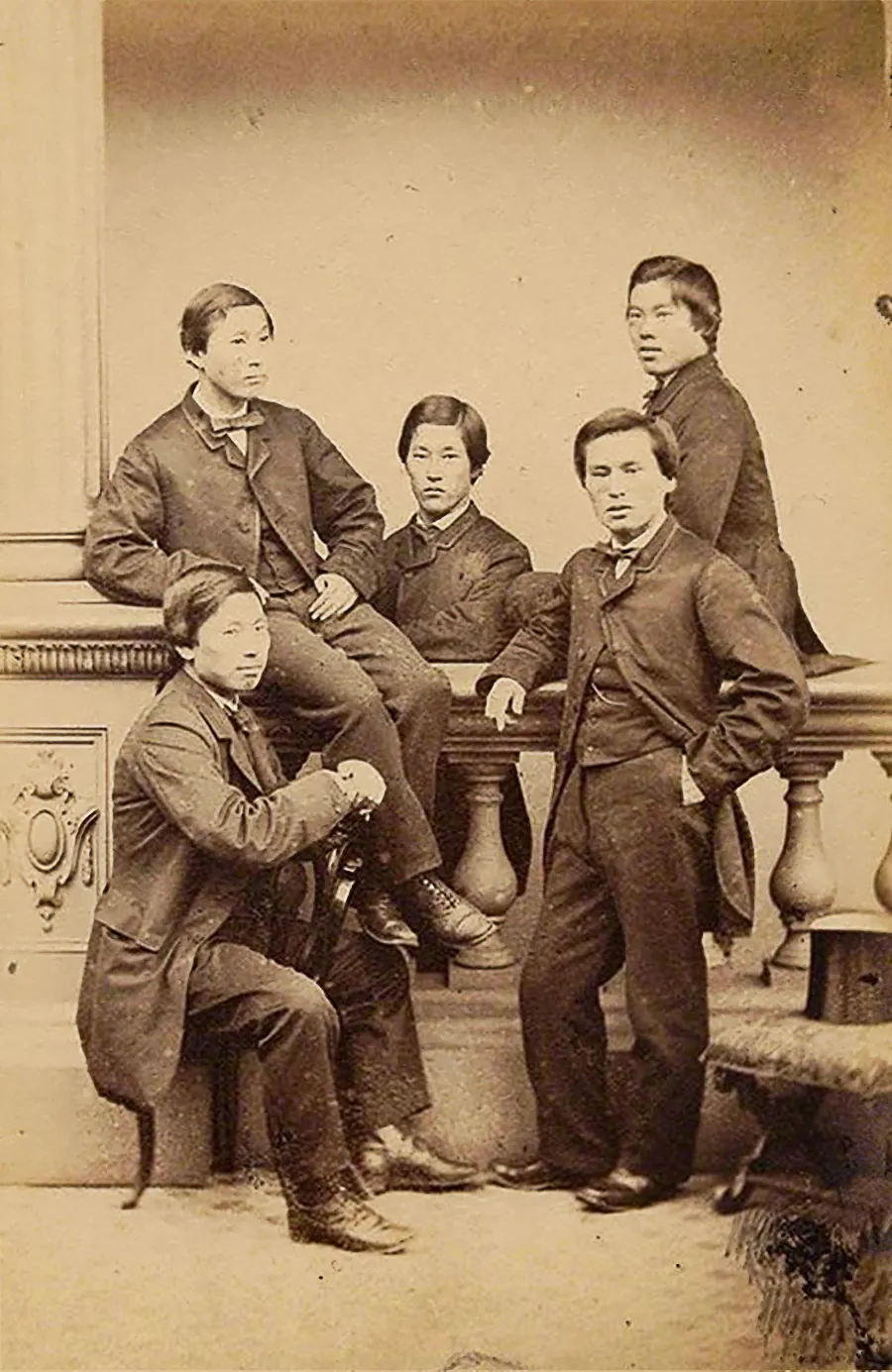
Itō Hirobumi was born in 1841, the son of a farmer in the domain of Chōshū on the western tip of Japan's main island. His father was adopted into a low-ranking samurai family, which gave the boy a name but almost no income. As a teenager, Itō studied under Yoshida Shōin, a scholar who ran a small academy where students debated how to defend Japan against the Western powers. The Tokugawa shogunate executed Yoshida in 1859 for plotting against it. Four years later, the domain of Chōshū smuggled Itō and four other young men out of the country on a British ship. Foreign travel was punishable by death. Itō spent months at University College London, the only university in Britain that accepted students regardless of race. A chemistry professor named Alexander Williamson housed the five of them in his own home. Itō arrived speaking no English. When he returned to Japan, he was convinced that the country had to transform itself or be carved up the way China was being carved up after the Opium Wars.
Twenty-two years later, Itō became Japan's first prime minister. He wrote the country's constitution and helped turn a feudal society of 35 million into an industrial state. The country that could not build a locomotive in 1863 destroyed most of the Russian navy in 1905.
Why a few dozen samurai overthrew their own government
On July 8, 1853, four American warships under Commodore Matthew Perry anchored in Edo Bay. They were painted black and powered by steam, and nothing in Japan's navy could match them. Perry delivered a letter from the American president demanding trade access and left. He returned eight months later with eight ships. The shogunate signed.
The treaties that followed were humiliating. Foreign merchants could trade in Japanese ports. Japan could not set its own tariffs. Westerners living in Japan were exempt from Japanese law. These were nearly identical to the terms Britain had forced on China after the Opium Wars, and Japan's educated samurai understood what had happened to China afterward: more wars, more territory lost, and a country slowly taken apart by foreign powers.
In January 1868, samurai from a handful of domains in the south and west overthrew the shogun and seized power in the name of the fifteen-year-old Emperor Meiji. The emperor was the symbol. The government was a few dozen men, mostly mid-ranking samurai in their twenties and thirties: Ōkubo Toshimichi, Kido Takayoshi, Saigō Takamori, and Itō Hirobumi. None of them had a claim to rule beyond having won. They issued a Charter Oath in the emperor's name. One of its five articles read: "Knowledge shall be sought throughout the world so as to strengthen the foundation of imperial rule." That sentence became the program.
The country they built from imported parts
The new government moved fast. In 1869 it persuaded the feudal lords to hand their domains back to the emperor. In August 1871 it abolished all 261 remaining domains and replaced them with prefectures run by officials from Tokyo. Centuries of hereditary rule ended in a single summer, because the terms were generous: the lords kept a tenth of their old tax revenue, and the central government absorbed their debts.
That same December, the government sent roughly half its senior leadership abroad. The Iwakura Mission, named after the ambassador Iwakura Tomomi, included 48 officials and 60 students. They spent 631 days touring the United States, Britain, France, Germany, Russia, and seven other countries, visiting factories, shipyards, banks, schools, and parliaments. The notes became policy.
The approach was deliberate. Japan studied each Western country's strongest institution and copied it. The navy was modeled on Britain's. The army was rebuilt on the Prussian model, with a German-style general staff. The legal code came from France, so that Western governments could no longer claim Japan was too uncivilized for equal treaties. The school system was modeled on America's. Japan's first railway, built by British engineers, opened between Tokyo and Yokohama on October 14, 1872, with Emperor Meiji riding the inaugural train. Compulsory primary education was introduced the same year. Universal conscription followed in 1873, taking the army away from the samurai and handing it to farmers' sons. A constitution, written largely by Itō after months studying in Berlin and Vienna, was proclaimed in 1889.
The money came from farmers. The land tax of 1873 required every landowner to pay the government three percent of the assessed value of their land, in cash, every year, regardless of the harvest. Through the 1870s and early 1880s, the land tax supplied roughly 80 percent of all government revenue. The government used it to build shipyards, mines, and model factories, then sold most of them off cheaply in the 1880s to the merchant families that became the zaibatsu: Mitsui, Mitsubishi, Sumitomo, Yasuda. These conglomerates dominated the Japanese economy for the next sixty years.
The class that abolished itself
The samurai were the largest item in the national budget. Their hereditary stipends, paid in rice for generations to men who no longer fought, consumed most of the government's income. In 1876 the government converted every remaining stipend into a government bond by law. Roughly 313,000 households received bonds and lost their income. The same year, samurai were forbidden to carry swords in public. Conscription had already handed the army to farmers' sons. A class that had defined Japan for centuries was being dismantled by men who belonged to it.
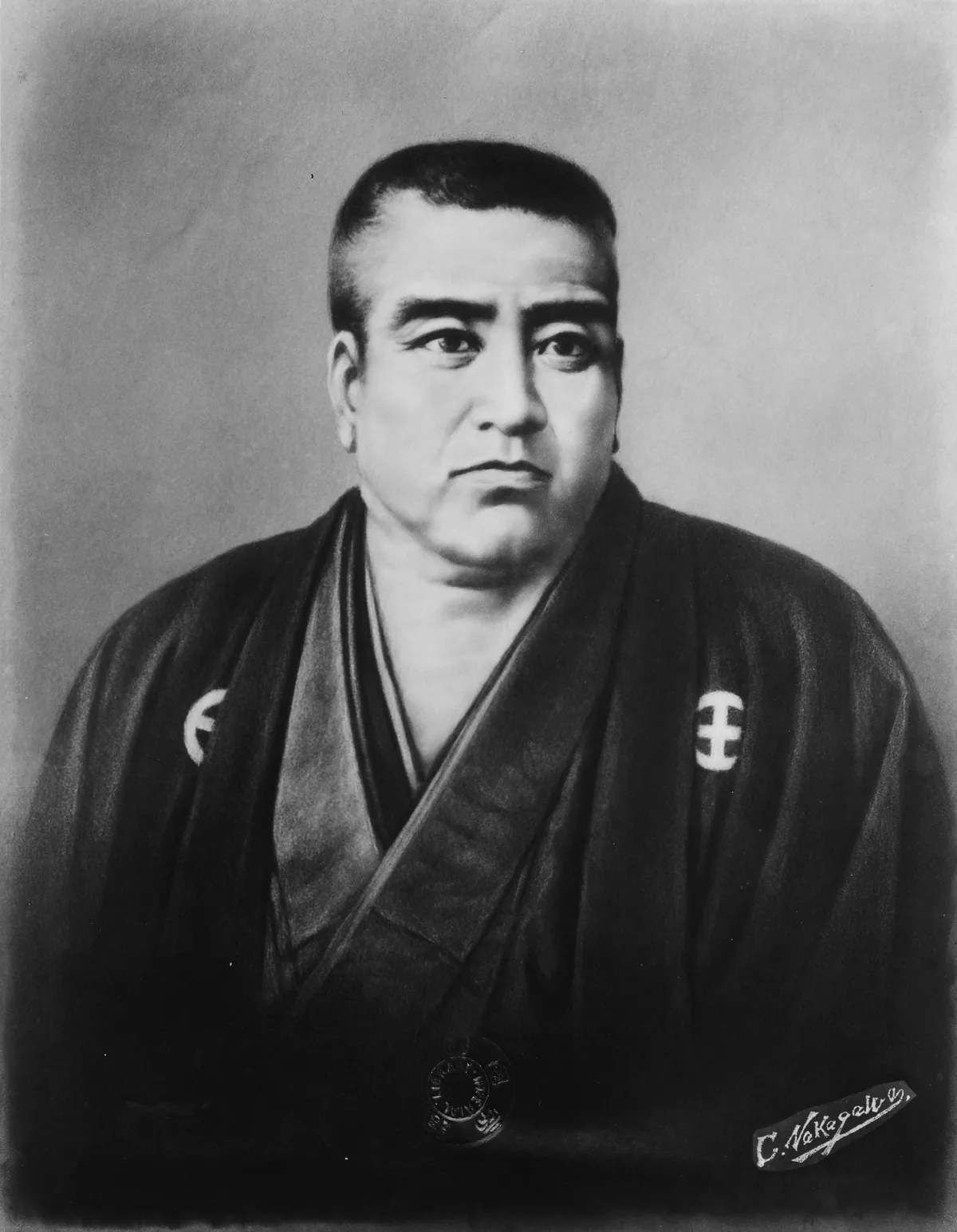
Saigō Takamori was the most popular of the Restoration's leaders. He stood six feet tall and weighed roughly 200 pounds in a country where the average man was closer to five foot three. He had commanded the imperial armies during the overthrow of the shogunate and then served in the new government. In 1873 he lost an argument about invading Korea, resigned, and returned to Kagoshima, where he opened military academies for young samurai. In February 1877, roughly twelve thousand of them marched north in the Satsuma Rebellion. The government sent more than sixty thousand conscripted farmers armed with modern rifles and artillery. By September the rebels were reduced to a few hundred. Saigō died on the hillside at Shiroyama on September 24, 1877.
The government spent roughly ¥42 million crushing the rebellion and paid for it by printing money. The resulting inflation ate into the value of the bonds the samurai had just received. The revolt that was meant to reverse their dispossession helped finish it. Saigō himself was pardoned in 1889, shortly after the constitution was proclaimed. In 1898 a bronze statue of him went up in Ueno Park in Tokyo, paid for by public subscription and by the emperor whose government had killed him.
What the Meiji Restoration set in motion
Within one generation the results were clear. In 1894 Japan went to war with Qing China, the country that had dominated East Asia for centuries, and won in eight months. Ten years later, at the Battle of Tsushima, it destroyed most of Russia's navy in a single afternoon. No Asian country had ever defeated a European great power in modern war.
The Meiji formula became a template. Park Chung-hee's South Korea in the 1960s, Lee Kuan Yew's Singapore, and Deng Xiaoping's China after 1978 all ran versions of it: concentrate power, import foreign knowledge, invest heavily in education and industry, and promise the population that growth will justify the sacrifice.
But the formula had a second act. A modern military built for self-defense required iron, coal, and markets Japan did not have at home. It took them the way European empires had. Japan annexed Korea in 1910, invaded Manchuria in 1931, and invaded China in 1937. The transformation that saved Japan from colonization in the 1870s made it a colonizer by 1895. The empire built on Meiji foundations lasted until 1945. China's transformation since 1978 runs a version of the same formula, with the same tension between building strength for defense and using it beyond the border. Whether it follows the same arc is the largest strategic question in Asia today.
Test what you learned
5 questions on this article. About two minutes, no signup.