
Operation Barbarossa: could Germany have beaten the Soviet Union?
Hitler sent nearly four million soldiers into Russia expecting victory in weeks. His strategy failed, and the alternatives would not have worked either.
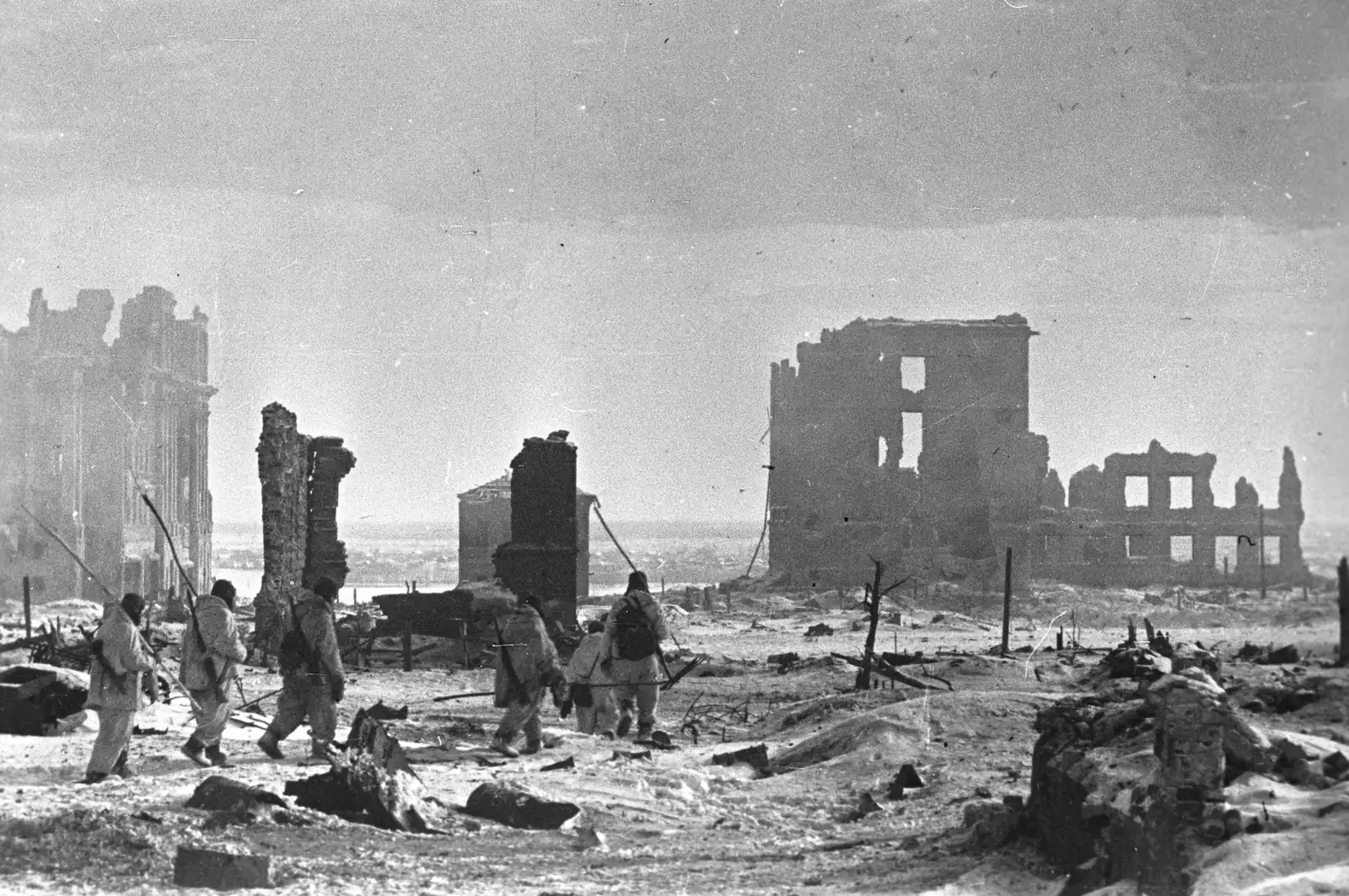
On June 22, 1941, roughly 3.8 million Axis soldiers crossed the Soviet border along a front stretching over 1,800 miles. It was the largest military invasion in history. Hitler called it Operation Barbarossa, after the medieval German emperor Frederick Barbarossa, and he expected it to be over in eight to ten weeks. The Wehrmacht would destroy the Red Army in a series of rapid encirclements, the Soviet state would collapse, and Germany would control everything from the English Channel to the Ural Mountains. None of that happened. Within six months the invasion had stalled outside Moscow. Within eighteen months the German Sixth Army had surrendered at Stalingrad. By 1945, Soviet soldiers were in Berlin and Hitler was dead in a bunker. The Eastern Front killed roughly four out of every five German soldiers who died in the war.
The question people still ask is whether it had to end that way, or whether different decisions could have given Germany a chance. The answer is probably no, but the reasons are worth understanding, because they say something about how wars between large states actually work.
The plan and why Hitler believed it
The strategy behind Barbarossa rested on two assumptions. The first was military: blitzkrieg, the fast-moving combination of tanks, aircraft, and motorized infantry that had crushed Poland in five weeks and France in six, would work just as well in Russia. The second was political: Hitler believed the Soviet Union was, in his words, "a rotten structure" that would "come crashing down" once the door was kicked in. He expected the regime to fracture under military pressure the way France had, with ethnic minorities rebelling and the communist system falling apart.
The first assumption was half right. In the opening months, blitzkrieg worked exactly as designed. German panzer groups encircled entire Soviet armies. At Kiev alone, the Wehrmacht captured over 660,000 Soviet soldiers in September 1941, the largest encirclement in military history. By October, Germany held most of Ukraine, had besieged Leningrad, and was within 200 miles of Moscow.
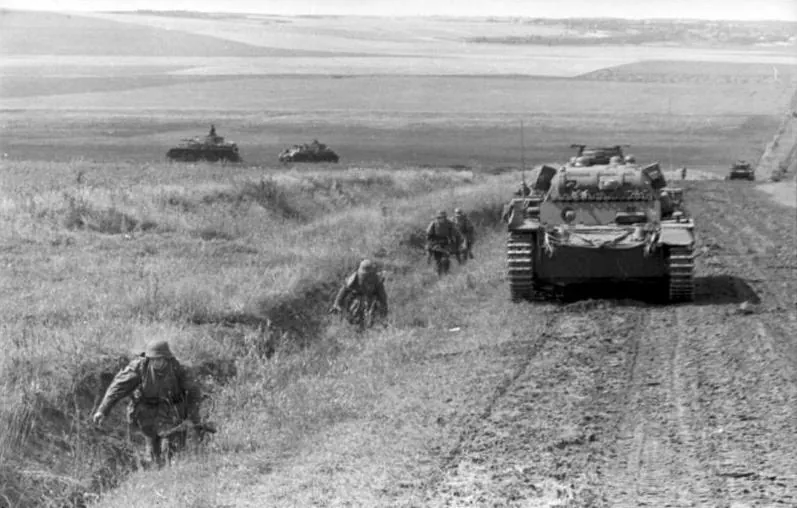
The second assumption was completely wrong. Stalin's regime did not collapse. It deported suspected traitors, shot retreating officers, and relocated over 1,500 factories east of the Ural Mountains, beyond the reach of German bombers. By late 1942, those factories were outproducing Germany in tanks, aircraft, and artillery. The Soviet system was brutal and wasteful, but it held.
The mistakes that decided it
Hitler made three decisions that turned a difficult campaign into an unwinnable one.
The first came in August 1941. Army Group Center, the strongest of the three German forces, had punched through to Smolensk and was pointed at Moscow. Hitler's own generals, including the chief of the army general staff Franz Halder, urged him to keep going. Moscow was the Soviet Union's rail hub; taking it would cripple the movement of troops and supplies across the entire front. Instead, Hitler diverted the panzer groups south to help take Ukraine and its grain and industry. By the time they turned back toward Moscow in October, five weeks had been lost. The autumn rains, called the rasputitsa, turned the roads to mud. Then came the coldest winter in decades. The offensive stalled 19 miles from the Kremlin.
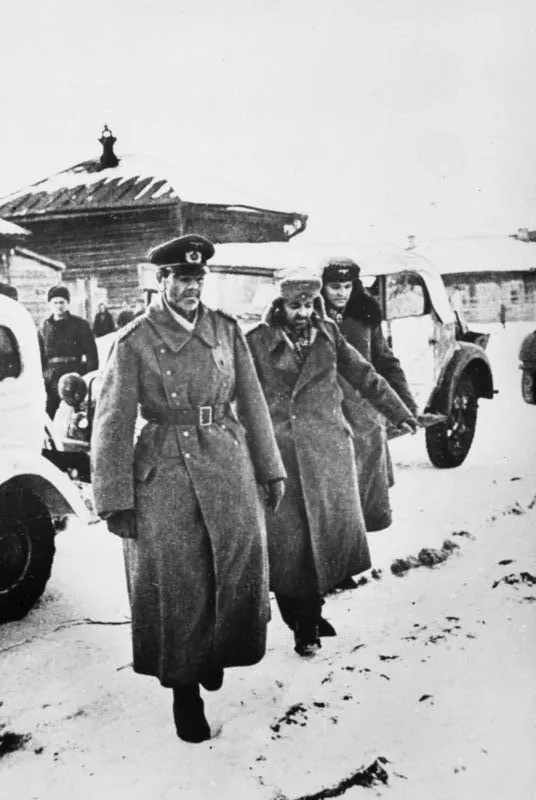
The second mistake was splitting his forces again in 1942. Instead of concentrating on one objective, Hitler sent Army Group South toward two targets at once: the oil fields of the Caucasus and the city of Stalingrad on the Volga. The force that reached Stalingrad was too weak to take it quickly and too exposed to defend itself. In November 1942, the Soviets launched Operation Uranus and encircled the entire German Sixth Army. Hitler forbade a breakout. On January 30, 1943, he promoted the Sixth Army's commander, Friedrich Paulus, to field marshal, a pointed gesture: no German field marshal had ever surrendered. The hint was that Paulus should kill himself. The next day, Paulus surrendered. Over 90,000 German soldiers walked into Soviet captivity with him. Only about 6,000 of them ever returned home.
The third mistake was not a single decision but a pattern: Hitler refused to let his generals retreat, ever. He believed willpower could substitute for ammunition and reserves. It could not. The no-retreat orders burned through divisions that could have been saved, fought again, and held shorter, defensible lines.
Could Germany have won?
Military historians have debated this for eighty years, and most of them converge on the same answer: almost certainly not.
The counterfactual people reach for first is tactical. What if Germany had driven straight for Moscow in 1941 instead of diverting south? The Wehrmacht might have taken the city before winter. But Napoleon took Moscow too, in 1812, and it did not end the war. The Soviet government had already prepared to relocate to Kuibyshev, 500 miles to the east. Capturing Moscow would have been a blow to Soviet morale and logistics, but the factories were already moving east, and the Red Army still had millions of men in reserve.
The second counterfactual is about timing. The Balkans campaign in spring 1941, when Germany invaded Yugoslavia and Greece, pushed the start date from mid-May to late June. An earlier start might have given the Wehrmacht more time before winter. But an unusually wet spring in eastern Europe would have slowed any earlier invasion just as effectively, and the core problem was not the calendar. It was distance and supply.
The deeper problem was arithmetic. Germany had a population of about 80 million (around 110 million counting annexed territories). The Soviet Union had roughly 195 million. Soviet territory stretched 6,000 miles east to west. Germany's supply lines ran on horses and narrow-gauge rail; only about 20 percent of the Wehrmacht's transport was motorized. Every mile the army advanced, it moved further from its supplies and closer to the enemy's. Lend-Lease from the United States and Britain added roughly 400,000 trucks, 13,000 tanks, and millions of tons of food and fuel. By 1943, every third truck in the Red Army was American-made.
The strongest counterfactual is not military at all. Millions of Ukrainians, Balts, and other Soviet citizens initially welcomed the Germans as liberators from Stalinist rule. If Germany had treated them as allies instead of slaves, it might have turned a significant part of the Soviet population against Moscow. But Nazi ideology made that impossible. The invasion was driven by a worldview that classified Slavic peoples as subhuman and planned to starve, deport, or enslave tens of millions of them. The Hunger Plan, drafted before the invasion, anticipated the death of 30 million Soviet civilians to feed the German army and resettle the conquered land with Germans. An army fighting for those goals could not win hearts. The war could not have ended differently because it was fought for the reasons it was fought for.
Why the question still matters
The Eastern Front decided World War II. It consumed more soldiers, more civilians, and more material than every other theater of the war combined. Roughly 27 million Soviet citizens died, a number so large it reshaped the country's demographics for generations and still shapes Russia's national identity decades after the Soviet Union itself collapsed. Germany lost over four million soldiers on the Eastern Front alone.
The failure of Barbarossa is now a standard case study in military overreach: the danger of underestimating an opponent, of confusing early victories with final ones, and of believing that willpower can replace logistics. When American planners debated the invasion of Iraq in 2003, critics cited the Eastern Front as a warning about what happens when a military built for speed meets a country too large and too hostile to occupy. The lesson from 1941 is not complicated. A country with fewer people, fewer resources, and longer supply lines invaded a country with more of all three, and bet everything on a quick collapse that never came. The bet failed because the numbers were always against it.
Test what you learned
6 quick questions on this article. No signup, just you against the text.