Chokepoint · North Atlantic
GIUK gap
OpenUpdated November 1, 2026
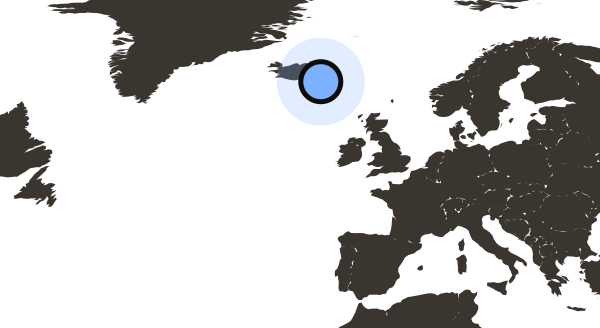
The GIUK gap is the stretch of the North Atlantic between Greenland, Iceland and the United Kingdom. Russia's Northern Fleet submarines, based on the Kola Peninsula, must cross it to reach the open Atlantic. An undersea ridge runs beneath the gap from Greenland to Scotland. NATO has watched it since the Cold War with underwater microphones, patrol planes and warships.
- Denmark Strait width
- 290 km
- Greenland to Iceland at the narrowest
- Deepest passage over the ridge
- About 840 m
- the Faroe Bank Channel
- Planned anti-submarine frigates
- 13
- 8 British and 5 Norwegian Type 26s
- Shores
 Greenland (Denmark)
 Iceland
 United Kingdom
Where is the GIUK gap?
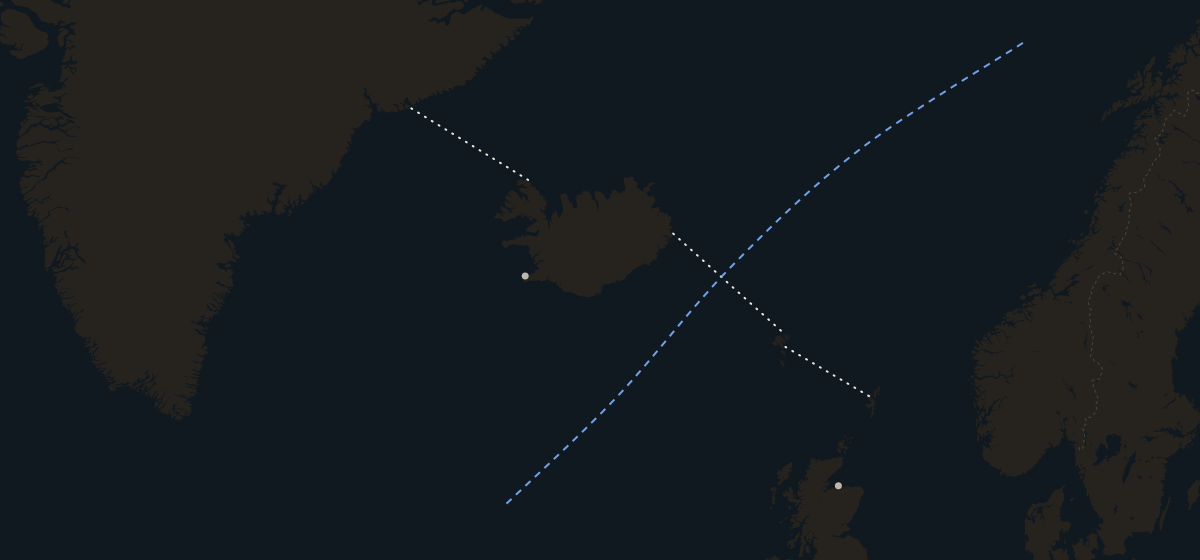
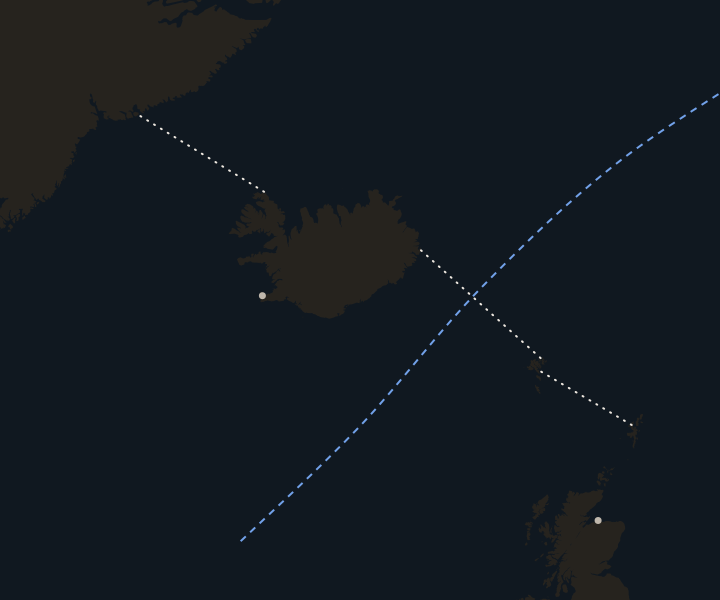
The gap has three parts. The Denmark Strait runs between Greenland and Iceland. It is about 290 km wide at its narrowest and about 480 km long. South of Iceland, the Iceland-Faroe gap separates Iceland from the Faroe Islands. The Faroe-Shetland Channel, up to about 1,900 m deep, runs between the Faroes and Scotland's Shetland Islands.
An undersea ridge runs from Greenland to Scotland beneath the gap. Under the Denmark Strait, the top of the ridge lies about 600 to 650 m below the surface. The Faroe Bank Channel, at about 840 m, is the deepest passage over the ridge. The Denmark Strait also holds the world's largest known waterfall, under the sea: cold, dense water from the north spills over the ridge and flows down the seafloor, according to the US ocean agency NOAA.
Russia's Northern Fleet submarines are based on the Kola Peninsula. They must cross the Norwegian Sea and the GIUK gap to reach the Atlantic. Further north, the Bear Gap between Norway and Svalbard is part of Russia's defensive zone for its missile submarines.
 GREENLAND
ICELAND
FAROE
ISLANDS UNITED
KINGDOM NORWAY Denmark Strait North Atlantic Norwegian Sea Keflavík Lossiemouth
 GREENLAND
ICELAND
FAROE
ISLANDS UNITED
KINGDOM Denmark Strait North Atlantic Keflavík Lossiemouth
Why did the GIUK gap matter in the Cold War?
NATO's plan was to stop Soviet submarines from reaching the Atlantic convoy routes between North America and Europe. From the 1960s the United States laid lines of underwater microphones, called SOSUS, on the seabed in the gap. Their listening station at Keflavik in Iceland opened on March 1, 1966, with cables running toward the Faroe Islands and Greenland. The United States operated a major base at Keflavik under the US-Iceland Defense Agreement of May 5, 1951.
By 1989 the Soviet Navy had nearly 200 nuclear submarines in operation, most of them with the Northern Fleet. The largest Soviet submarine operations through the gap were Aport in 1985 and Atrina in 1987. Tom Clancy's novels The Hunt for Red October (1984) and Red Storm Rising (1986) brought the gap to a mass audience. In Red Storm Rising, Soviet forces seize Iceland and take control of the gap. The last US forces left Keflavik on September 30, 2006.
Watching the gap in the Cold War
 May 5, 1951The US-Iceland Defense Agreement is signed. US troops arrive two days later.
- July 6, 1962First SOSUS report of a Soviet nuclear submarine entering the Atlantic through the gap.
- March 1, 1966The US listening station at Keflavik opens, with cables to microphones on the seabed.
- 1985 and 1987Operations Aport and Atrina, the largest Soviet submarine operations through the gap.
- September 30, 2006The last US forces leave Keflavik after 55 years.
Are Russian submarines back in the GIUK gap?
Norway's intelligence service said in February 2025 that Russian submarine building is "faster and larger than at any time since the 1980s." In October 2019 ten Northern Fleet submarines held the largest drill since the 1980s. On November 19, 2025, the Russian spy ship Yantar pointed lasers at RAF pilots north of Scotland. Defence Secretary John Healey said the UK had military options ready.
On April 9, 2026, Healey said UK forces had tracked three Russian submarines north of the UK for about a month: an Akula-class attack submarine and two deep-sea GUGI submarines. The GUGI boats spent time over undersea infrastructure, but Healey said no damage was found. On September 2, 2026, NATO warned publicly about the submarine build-up.
In December 2025 Britain announced Atlantic Bastion, a plan to track Russian submarines and protect undersea cables with warships, patrol planes, uncrewed craft and underwater sensors. In September 2026 its defense investment plan set aside an indicative £1.5 billion over four years for it. On December 4, 2025, Britain and Norway signed the Lunna House agreement, named after the Shetland base of the World War II "Shetland Bus." It commits at least 13 Type 26 anti-submarine frigates to patrol the gap. Several undersea cables cross the area, including FARICE-1, DANICE, IRIS and Greenland Connect. No sabotage of these cables has been confirmed.
The gap since 2016
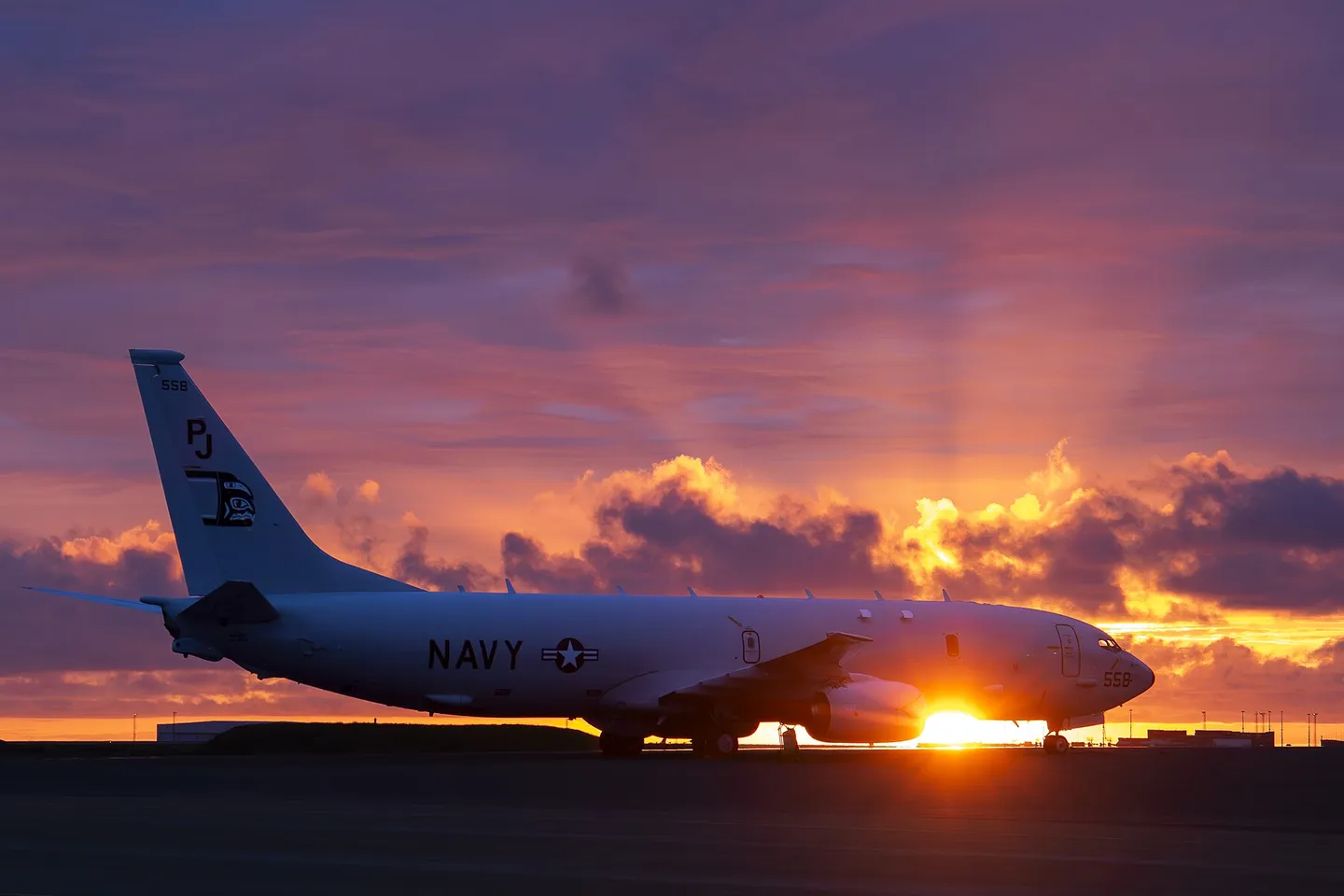
- 2016US Navy P-8 patrol planes return to Keflavik on rotation for the first time since 2006.
 October 2019Ten Northern Fleet submarines in the largest drill since the 1980s.
- November 19, 2025The Russian spy ship Yantar points lasers at RAF pilots north of Scotland.
- December 4, 2025Britain and Norway sign the Lunna House agreement for at least 13 anti-submarine frigates.
- April 9, 2026The UK says it tracked three Russian submarines for about a month.
What does the Greenland deal change in the GIUK gap?
In December 2024, Donald Trump, then president-elect, called US control of Greenland a national-security necessity. On January 21, 2026, at Davos, Trump ruled out military force and announced a framework with NATO Secretary General Mark Rutte. On May 21, 2026, a new US consulate opened in central Nuuk amid protests. Greenland's Prime Minister Jens-Frederik Nielsen boycotted the ceremony.
On September 22, 2026, Trump, Danish Prime Minister Mette Frederiksen and Nielsen signed a defense agreement in New York. It amends the 1951 deal and lets the United States expand Pituffik Space Base, where about 200 US troops are stationed. It adds US defense areas at Narsarsuaq and Mestersvig, a site on Greenland's east coast that Defense News says "overlooks the GIUK gap." US ships and submarines gain access to Greenland's waters. Non-NATO states may not have military bases. The agreement includes no mining or drilling rights. It needs approval by Greenland's Inatsisartut and Denmark's Folketing, with a final Danish vote set for November 19.
Iceland, the only NATO member without an army, held a referendum on resuming EU accession talks on August 29, 2026. Voters rejected it, 52.8% to 47.2%. On the Faroe Islands, Denmark is building a radar at Sornfelli to close a gap in air surveillance between the Faroes, Norway, Iceland and Britain. The French company Thales won the contract on October 7, 2026.
Greenland and the US in 2026
- January 21, 2026Trump rules out force and announces a framework at Davos. Tariff threats are withdrawn.
- May 21, 2026A new US consulate opens in central Nuuk amid protests by hundreds.
- September 22, 2026The US, Denmark and Greenland sign a defense agreement in New York.
- November 2026Votes in Greenland's and Denmark's parliaments. Folketing final vote November 19.
The gap over the years
- May 1940Britain occupies Iceland on May 10, 1940, landing 746 Royal Marines to keep the island out of German hands.
- May 1941HMS Hood is sunk by the Bismarck in the Battle of the Denmark Strait on May 24, 1941. Of the crew of 1,418, three men survive.
- Apr 1949Iceland signs the North Atlantic Treaty on April 4, 1949, as a founding NATO member. It has no army.
- 1958–1976Iceland and Britain fight the Cod Wars, three disputes over fishing rights that end with Iceland extending its waters to 200 nautical miles.
- Oct 1986President Reagan and Soviet leader Gorbachev meet at Höfði House in Reykjavík on October 11 to 12. The two leaders come close to a deal to scrap their nuclear missiles but break down over missile defense.
- Sep 2026The United States, Denmark and Greenland sign a defense agreement on September 22, giving the US new military sites on Greenland's east coast overlooking the gap.