
Country profile · Northern Europe
 Iceland
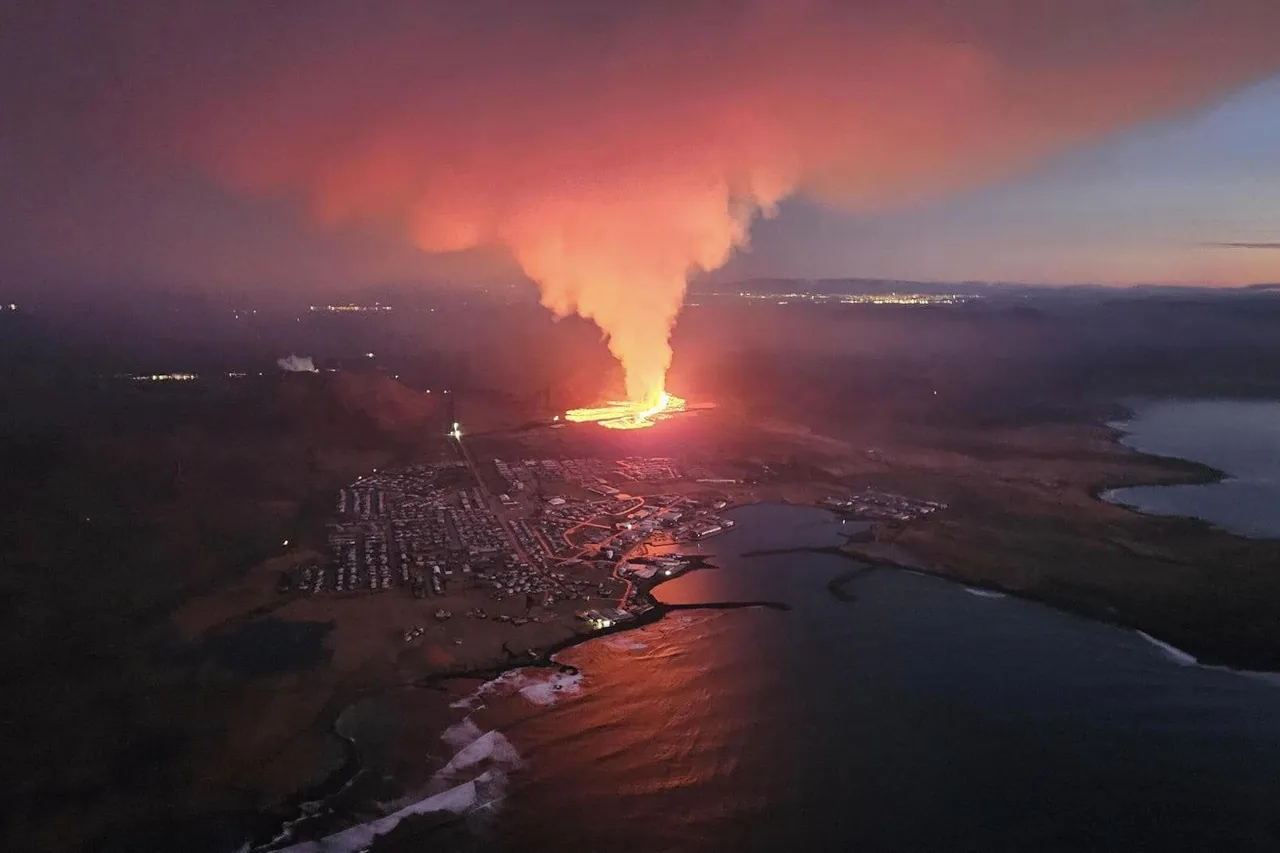
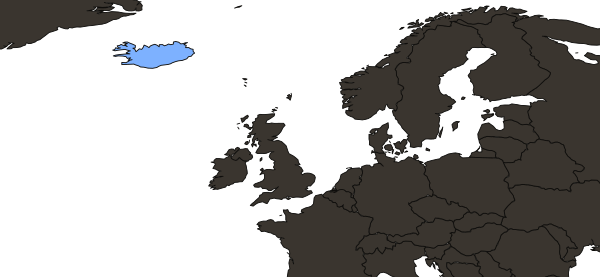
 is a North Atlantic island of about 397,000 people. It was a founding member of NATO in 1949 but has no armed forces. Prime Minister Kristrún Frostadóttir has led a three-party government since December 2024. On August 29, 2026, voters rejected restarting EU membership talks, 52.8% to 47.2%. Fish and aluminum earn most of its export income.
Where Iceland ranks
All rankings →Which alliances is Iceland in?
All alliances →Who runs Iceland?
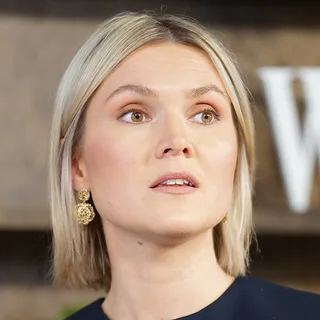
Prime Minister Kristrún Frostadóttir was born in Reykjavík on May 12, 1988. She studied economics at Boston University and at Yale. She worked as an analyst at Morgan Stanley in New York and London, then as chief economist of Kvika bank. She entered parliament in 2021 and became leader of the Social Democratic Alliance in 2022. After the snap election of November 30, 2024, she formed a government with the Liberal Reform Party and the People's Party (chart). She took office on December 21, 2024, at 36, the youngest prime minister in Iceland's history. That day, for the first time, women led all three governing parties, the government and the presidency. President Halla Tómasdóttir, a businesswoman, took office in August 2024 as the second woman to hold the job. Two MPs have left their party groups since then, but both still back the government. A Gallup poll in September 2026 put the Social Democrats first with 30.8%. The next parliamentary election is due by December 2028.
- Social Democrats (Kristrún) 15
- Liberal Reform 11
- People's Party 10
- Independence Party 14
- Centre Party 8
- Progressive Party 5
Photo (September 2026): Xuthoria, Wikimedia Commons, CC BY-SA 4.0 (cropped)
Who are Iceland's allies and rivals?
Iceland was one of NATO's 12 founding members in 1949. It is the only member with no armed forces. Iceland relies on NATO and on a defense agreement with the United States signed on May 5, 1951. US forces left the Keflavík base in 2006, but US Navy submarine-hunting planes have flown from there again since 2016. In January 2026 the US ambassador-designate joked that Iceland would become the 52nd US state. On September 7, 2026, Trump posted a map showing Iceland under the US flag. Iceland summoned the ambassador, and Prime Minister Kristrún Frostadóttir called it "an insult to Icelanders." On October 6, 2026, Secretary of State Marco Rubio visited Reykjavík and said the United States would not act in Iceland without its consent. Iceland signed a security and defense partnership with the EU in March 2026. On August 1, 2023, it became the first country to suspend its embassy in Moscow.
Allies and partners
 United StatesDefense agreement since 1951; aircraft at Keflavík
 NorwayNordic partner; shares the mackerel deal
 DenmarkFormer ruler; Nordic and Arctic partner
 European UnionSingle market through the EEA; defense partnership 2026
Rivals
 RussiaEmbassy in Moscow suspended since 2023
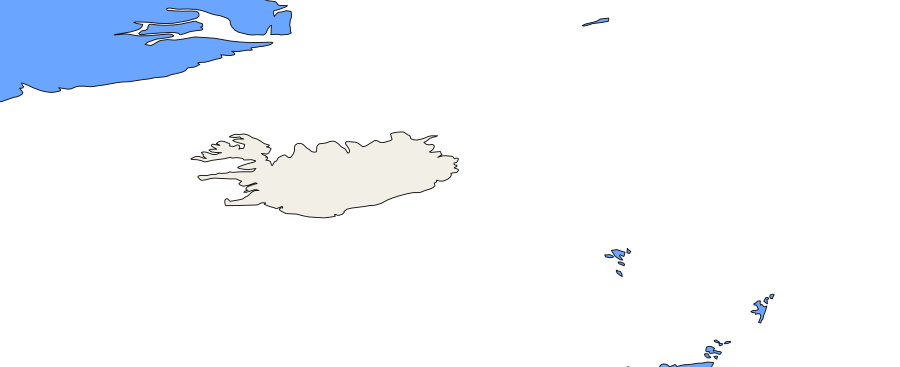
- Keflavík Former US base and main airport. US Navy patrol planes that hunt submarines fly from here again.
- Jan Mayen Norwegian island. A 1981 agreement gives Iceland and Norway each a 25% share of any oil found in a joint area.
- Faroe Islands Danish self-governing islands with a common market with Iceland since 2006. Both signed the 2025 mackerel deal.
- Iceland
- Partner
Who does Iceland trade with?
In 2025 Iceland exported $7.18 billion of goods and imported $10.95 billion (UN Comtrade). The Netherlands bought 34.4% of exports (chart), because aluminum and fish go to Rotterdam and are sent on from there. Fish and other sea products were 38.9% of goods exports and aluminum 34.5% (Statistics Iceland). Three foreign-owned smelters use most of Iceland's electricity, which almost all comes from hydropower and geothermal plants. China supplied 11.8% of imports but bought less than 3% of exports. Tourism is the largest export of services. About 2.25 million foreign visitors came in 2025, and Iceland earned more from travel than from fish. The United States put a 15% tariff on Icelandic goods in August 2025. The US Supreme Court struck down those tariffs in February 2026, and Iceland was not on the new US tariff list of July 2026.
Sells to
Share of Iceland's exports
 Netherlands34.4%
 United Kingdom9.9%
- United States9.3%
 France7.3%
 Spain5.2%
Buys from
Share of Iceland's imports
 China11.8%
- Norway9.8%
 Germany8.6%
- United States6.9%
- Denmark5.9%
Goods, 2025. UN Comtrade (Iceland's own figures).
Why did Iceland vote against joining the EU?
Iceland applied to join the EU in 2009, after its banks collapsed. Talks stopped in 2013. In 2015 the government told the EU that Iceland no longer saw itself as a candidate. Iceland already belongs to the EU single market through the European Economic Area, which it joined in 1994, and to the Schengen area since 2001. The current government promised a vote on restarting the talks. On August 29, 2026, 52.8% voted No and 47.2% voted Yes, with 82.6% turnout. Reykjavík voted Yes, and every rural area voted No. The No side's main arguments were control over fishing and national sovereignty. Iceland fought three Cod Wars with Britain between 1958 and 1976 to push its fishing zone out to 200 nautical miles. Its sea zone is about seven times the size of its land. The vote was advisory, but Prime Minister Kristrún Frostadóttir said the government would not restart talks before the next election.
How did Iceland recover from its 2008 banking crash?
Iceland's three big banks, Kaupthing, Landsbanki and Glitnir, collapsed in October 2008. Their assets were about ten times the country's GDP. On October 8, 2008, Britain used an anti-terrorism law to freeze Landsbanki's assets in Britain, where savers had money in its Icesave accounts. Protests outside parliament brought down the government on January 26, 2009. Iceland put controls on moving money abroad from November 2008 until March 2017. Icelanders twice voted against repaying Britain and the Netherlands for Icesave, and in 2013 the EFTA Court ruled in Iceland's favor. Courts jailed 36 bankers. McDonald's left Iceland in 2009 when the króna collapsed. Iceland is now one of the richest countries in the world, with GDP per person of about $99,000 in 2025 (chart). Fish, aluminum and tourism drive the economy. Inflation was 5.9% in September 2026, and the central bank's key interest rate is 8%.
GDP per person in Europe, 2025
Full ranking → Luxembourg$148,247
 Ireland$130,652
 Switzerland$115,620
- Iceland$99,071
- Norway$94,468
- Denmark$77,046
- Netherlands$73,833
- Germany$60,439
- United Kingdom$57,608
IMF World Economic Outlook (April 2026)