
Country profile · Baltic states
 Estonia
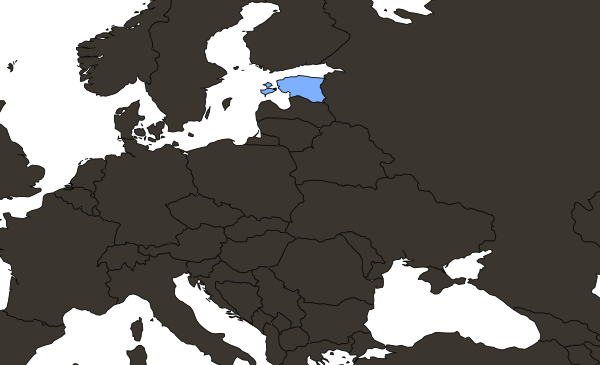
 is a Baltic country of about 1.36 million people on the Gulf of Finland, next to Russia. It joined NATO and the EU in 2004 and adopted the euro in 2011. Prime Minister Kristen Michal leads a minority government before the election of March 7, 2027. Estonia plans to spend 5.4% of its GDP on defense in 2026.
Where Estonia ranks
All rankings →Which alliances is Estonia in?
All alliances →Who runs Estonia?
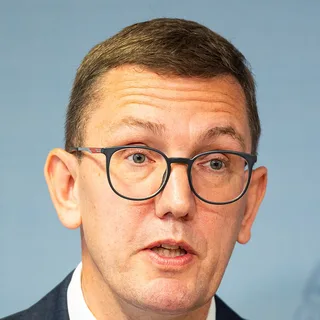
Prime Minister Kristen Michal was born in Tallinn on July 12, 1975. He was secretary general of the Reform Party from 2003 to 2011 and served as minister of justice, of the economy and of climate. He has three sons. Michal became prime minister on July 23, 2024, when Kaja Kallas left to become the EU's foreign policy chief. In March 2025 he expelled the Social Democrats from his coalition. Two MPs left the coalition in August 2026, so Reform and Eesti 200 now hold 50 of the 101 seats in the Riigikogu, the parliament (chart). A no-confidence vote failed on October 19, 2026, because the Social Democrats did not back it. Reform polled only 10% to 12.5% in October 2026, behind Isamaa and the Centre Party. The next election is on March 7, 2027. The Riigikogu chose Ülle Madise, a lawyer and former Chancellor of Justice, as president on September 2, 2026. She took office on October 12.
- Reform and Eesti 200 (Michal) 50
- Others 51
Photo (August 2024): Lauri Heikkinen, Finnish Government, Wikimedia Commons, CC BY 2.0 (cropped)
Who are Estonia's allies and rivals?
Estonia joined NATO on March 29, 2004, and the EU on May 1, 2004. The United Kingdom leads a NATO battlegroup of about 800 to 900 troops at Tapa, and France has nearly 300 soldiers in it. A UK deal signed in July 2026 adds about 300 more from April 2027. A US agreement foresaw 500 to 700 American troops, but fewer than 100 were left in July 2026 after the Pentagon paused new deployments. Finland is linked to Estonia by the Estlink power cables. The tanker Eagle S damaged Estlink 2 with its anchor on December 25, 2024, and a Finnish appeals court revived the case on August 27, 2026. Russia put Kaja Kallas on its wanted list in 2024. On September 19, 2025, three Russian MiG-31 fighters entered Estonian airspace for nearly 12 minutes, and Estonia asked for NATO consultations. Estonia gives Ukraine at least 0.25% of its GDP in military aid each year.
Allies and partners
 FinlandLargest export market; linked by Estlink power cables
 LatviaBaltic neighbor; building a defense line together
 United KingdomLeads the NATO battlegroup at Tapa
 FranceNearly 300 troops in the Tapa battlegroup
 UkraineGets at least 0.25% of GDP in aid
Rivals
 RussiaAirspace violations; put Kallas on its wanted list
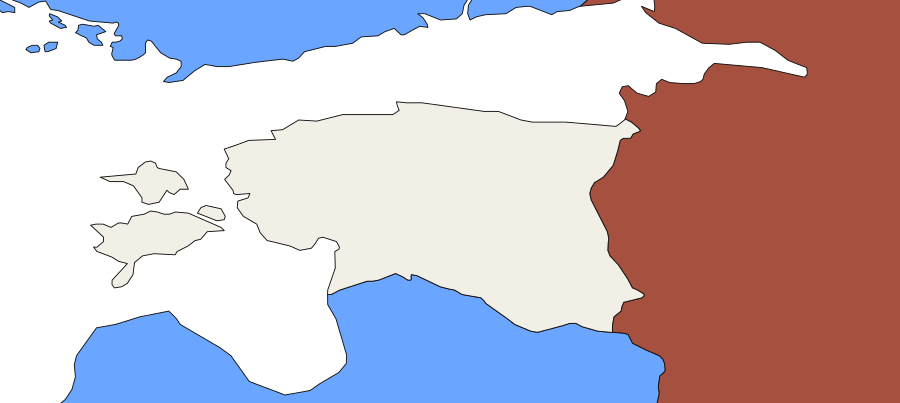
- Narva Border city where about 95% of people speak Russian as their first language.
- Tapa Base of the UK-led NATO battlegroup, with French troops too.
- Vaindloo Island near where three Russian MiG-31s entered Estonian airspace for nearly 12 minutes in September 2025.
- Saatse Boot A short road that passes through Russian territory. Estonia closed it permanently in October 2025.
- Estonia
- Partner
- Rival
Who does Estonia trade with?
Estonia exported $21.48 billion of goods in 2025 and imported $25.69 billion (UN Comtrade). Finland bought 14.7% of exports (chart), Latvia 10.9%, and Sweden and Lithuania 8.5% each. Counted by where goods were made, China supplied 10.9% of imports and Germany 9.8%. Statistics Estonia counts imports by the country that sent them, and on that count Finland, Latvia and Germany lead and China is only eighth. Electrical equipment made up 15% of exports, farm and food products 13% and wood 11% (Statistics Estonia). In 2021 Russia was Estonia's largest source of imports, at 11.5%. By 2025 it was only 30th. A revision in August 2026 showed that the economy shrank 2.9% in 2023, was flat in 2024 and grew 1.3% in 2025. Prices rose 4.8% in 2025, the most in the euro area, after VAT went up to 24%. Government debt was 24.0% of GDP in 2025, the lowest in the EU (Eurostat).


How is Estonia preparing to defend itself against Russia?
Estonia spent 3.4% of its GDP on its military in 2025 (chart). The 2026 budget raises defense spending to €2.4 billion, or 5.4% of GDP, and the government plans at least 5% a year from 2027 to 2029. With Latvia it is building the Baltic Defence Line of up to 600 concrete bunkers along the Russian border. The work is about a year behind schedule and is due to finish at the end of 2027. Estonia has six HIMARS rocket launchers, with three more due in 2027, and ordered nine Chunmoo launchers from South Korea. Parliament voted in June 2025 to leave the treaty that bans anti-personnel landmines. In October 2026 a brigade headquarters moved from Tapa to Jõhvi, about 50 km from the border. Defense Minister Hanno Pevkur resigned on September 2, 2026, over a €70 million advance payment for artillery shells for Ukraine that never arrived. Martin Herem, a former head of the armed forces, replaced him.


How did Estonia become a digital state?
The Soviet Union occupied it in June 1940, and in March 1949 it deported more than 20,000 Estonians. On August 23, 1989, about 2 million people joined hands across the three Baltic states in the Baltic Way. Estonia restored its independence on August 20, 1991, and had to build a state almost from scratch. It launched the X-Road data exchange in 2001 and digital ID cards in 2002. In 2005 it held the world's first nationwide binding vote over the internet, and in 2023 more than half of all votes were cast online. In April 2007, after Estonia moved a Soviet war memorial in Tallinn, cyberattacks hit banks, media and ministries for about three weeks. They are often called the first cyberattack on a whole country, and NATO set up its cyber defense center in Tallinn in 2008. By September 2026 more than 144,000 foreigners had become e-residents. Estonian programmers wrote the software for Skype, which Microsoft shut down in May 2025.