Free association with New Zealand · South Pacific
Cook Islands
Free associationUpdated November 11, 2026
The Cook Islands are a self-governing state in free association with New Zealand. They run their own affairs, including foreign policy, but their people are New Zealand citizens and travel on New Zealand passports. The islands are not a United Nations member. In 2025, a partnership deal with China angered New Zealand, which froze about NZ$29.8 million in budget support. A defense pact in April 2026 eased the rift. The seabed holds an estimated 6.7 billion wet tonnes of mineral nodules.

- Belongs to
 New Zealand
- Free association with New Zealand, part of New Zealand from 1901, free association since 1965
- Capital
- Avarua
- on Rarotonga
- People
- About 15,000
- 2021 census
- Sea zone (EEZ)
- About 1.97 million km²
- the Marae Moana marine park
- Seabed nodules
- 6.7 billion wet tonnes
- cobalt, nickel, copper, manganese
- From Wellington
- 3,300 km
- as the crow flies
Cook Islands in 30 seconds
- The Cook Islands became a self-governing state in free association with New Zealand on August 4, 1965. They control all internal affairs and run their own foreign policy, but their people hold New Zealand citizenship.
- In February 2025, Prime Minister Mark Brown signed a partnership deal with China. New Zealand said it had not been consulted first. New Zealand froze about NZ$29.8 million in budget support. A defense and security declaration in April 2026 restored the relationship.
- The seabed holds an estimated 6.7 billion wet tonnes of polymetallic nodules. Three exploration licenses expire in February 2027, and any mining decision has been pushed to 2032 or later.
- More than 94,000 Cook Islands Maori live in New Zealand, over six times the home population of about 15,000. Tourism brought a record 187,018 visitors in 2025 and makes up about 37% of GDP.
Are the Cook Islands a country?
Not exactly. The Cook Islands are a self-governing state in free association with New Zealand. They are not a territory or a dependency.
The Cook Islands run their internal affairs, including their budget, courts and immigration. They also conduct their own foreign policy. They have diplomatic relations with more than 50 countries. The United States recognized them in September 2023, and China in 1997. The United Nations recognizes their full treaty-making capacity. But they are not a United Nations member. In January 2025, Prime Minister Mark Brown said the Cook Islands did "not qualify" for membership. New Zealand links United Nations membership to full independence.
Cook Islanders are New Zealand citizens and travel on New Zealand passports. New Zealand keeps legal responsibility for defense and external affairs, to be carried out "after consultation" with the Cook Islands government. The Cook Islands have no armed forces.
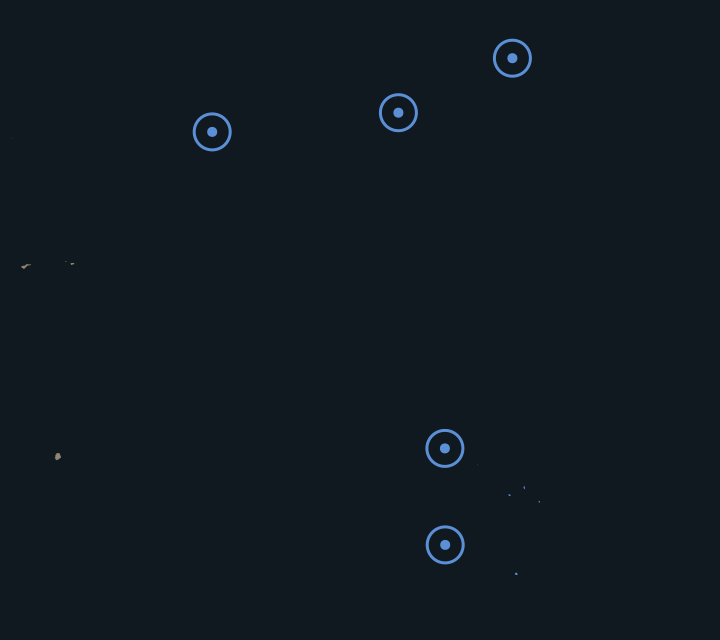
 Rarotonga
Aitutaki
Penrhyn
Manihiki
Pukapuka
Southern group
Northern group
Samoa
Niue
Tonga
Pacific Ocean
 Rarotonga
Aitutaki
Penrhyn
Manihiki
Northern group
Niue
Pacific Ocean
Why did the Cook Islands' deals with China anger New Zealand?
New Zealand said the Cook Islands government did not consult it before signing a partnership deal with China. New Zealand said this broke a longstanding duty to consult on foreign affairs.
In February 2025, Prime Minister Brown visited China and signed a Comprehensive Strategic Partnership Action Plan for 2025 to 2030. It covers trade, infrastructure, agriculture, climate and seabed minerals. New Zealand said "consultation would only be meaningful if it happened before an agreement was reached." The Cook Islands government blamed "a breakdown and difference in the interpretation of the consultation requirements."
New Zealand froze NZ$18.2 million in direct budget support in June 2025 and extended the pause to about NZ$29.8 million in November 2025. The Cook Islands passed an early supplementary budget to cover the gap. On April 1, 2026, New Zealand and the Cook Islands signed a Declaration on Defence and Security in Rarotonga. The Cook Islands named New Zealand its "partner of choice" on defense and agreed to turn to New Zealand "in the first instance" for support. New Zealand said the frozen money would resume. By May 28, 2026, NZ$20 million had been released.
The China deal and its fallout
- Feb 2025Brown signs the China partnership, and New Zealand says it was not consulted
- Feb 2025More than 400 people protest in Avarua
- Feb 2025A no-confidence motion fails 13 to 9
- Jun 2025New Zealand freezes NZ$18.2m in budget support
- Nov 2025The pause is extended to about NZ$29.8m
- Dec 2025The Cook Islands pass a supplementary budget
- Apr 2026Declaration on Defence and Security signed; funding to resume
- May 2026New Zealand releases NZ$20m of the paused funding
- Aug 2026First Realm Leaders' Meeting held in Auckland
What is in the Cook Islands' seabed?
An estimated 6.7 billion wet tonnes of polymetallic nodules sit on the ocean floor. The nodules contain cobalt, nickel, copper and manganese.
Three exploration licenses were issued in February 2022. The holders include a subsidiary of the United States-based Ocean Minerals, a Cook Islands government company partnered with Belgium's GSR, and Cook Islands Cobalt. No commercial mining has been approved. In November 2025, the government said it would extend exploration by 5 years. This pushes any mining decision to 2032 or later.
The debate is sharp. Te Ipukarea Society, an environmental group, wants at least 10 more years of research. John Parianos of the Seabed Minerals Authority said "we don't know enough to make a decision." A Greenpeace-commissioned study in December 2025 called the nodules' economic potential "overstated." The Cook Islands government rejected that finding. Both the United States and China have signed cooperation agreements with the Cook Islands on seabed minerals.
Seabed nodules
6.7 billion
Wet tonnes of polymetallic nodules on the ocean floor
The nodules contain cobalt, nickel, copper and manganese. Three companies hold exploration licenses, but no mining has been approved. The government says any decision will come in 2032 or later.
Who runs the Cook Islands?
Prime Minister Mark Brown runs the government. He has been in office since October 1, 2020. His party won the general election on August 12, 2026. His Cook Islands Party took 13 of 24 seats with 45.3% of the vote, a historic fifth consecutive term for the party. With allies, the government holds 19 of 24 seats.
Brown was born in 1963 and grew up on Rarotonga. He went to school on Rarotonga and in New Zealand, and holds an MBA from the University of the South Pacific. He is a former property developer and was president of the Cook Islands Touch Association. He also serves as Minister for Seabed Minerals.
Brown faced a turbulent stretch. In February 2025, more than 400 people protested outside Parliament against the China deal. United Party leader Teariki Heather filed a no-confidence motion. It failed 13 to 9 with 2 abstentions. Brown called it "built on misinformation." At the August 2026 election, the Democratic Party lost all 5 of its seats. Three election petitions are still before the High Court, and Parliament has not yet sat.
Why do most Cook Islanders live abroad?
Jobs and wages in New Zealand and Australia pull people away from the islands. The home population peaked in 1971 and has fallen about 38% since then.
The 2021 census counted about 15,000 residents. The New Zealand 2023 census counted 94,176 Cook Islands Maori in New Zealand, more than 6 times the home population. In 2018, about 85% of Cook Islands Maori in New Zealand were born there. Australia's 2021 census counted 27,494 people with Cook Islander ancestry. Cook Islanders are New Zealand citizens, so they can move freely to New Zealand. As New Zealand citizens, they can also live in Australia.
Prime Minister Brown floated the idea of a separate Cook Islands passport in October 2024, held alongside New Zealand citizenship. New Zealand rejected the idea, saying it would imply separate citizenship and a step toward full independence. Brown dropped the plan on February 6, 2025. Tourism is the largest industry, making up about 37% of GDP. A record 187,018 visitors came in 2025.
Cook Islanders at home and abroad
- New Zealand94,176
 Australia27,494
 Cook Islands~15,000
Why do the Cook Islands matter?
Seabed minerals
The ocean floor holds an estimated 6.7 billion wet tonnes of polymetallic nodules containing cobalt, nickel, copper and manganese. Both the United States and China have signed mineral cooperation deals with the Cook Islands. No mining has been approved yet.
A contest in the Pacific
China signed a strategic partnership with the Cook Islands in February 2025. New Zealand said it had not been consulted and froze budget support. The United States recognized the Cook Islands in 2023 and is co-funding a port upgrade on Penrhyn with New Zealand.
A huge sea zone
The Cook Islands' exclusive economic zone covers about 1.97 million km² of the South Pacific. The entire zone became the Marae Moana marine park in 2017. New Zealand's defense forces have guaranteed access to it under the April 2026 declaration.
Questions about the Cook Islands
Are Cook Islanders New Zealand citizens?
Yes. Under the Cook Islands Constitution Act 1964, Cook Islanders are New Zealand citizens. They hold New Zealand passports and can live and work freely in New Zealand. There is no separate Cook Islands citizenship or passport.
What currency do the Cook Islands use?
The New Zealand dollar. The Cook Islands also issue their own dollar notes and coins, which circulate at par alongside the New Zealand dollar. The Cook Islands dollar is not a separate freely traded currency.
How many people live in the Cook Islands?
The 2021 census counted about 15,000 residents, most of them on Rarotonga. The population has fallen about 38% since its 1971 peak, as Cook Islanders move to New Zealand and Australia. A new census is due in December 2026.
Are the Cook Islands in the United Nations?
No. The Cook Islands are not a United Nations member. New Zealand links United Nations membership to full independence. But the Cook Islands belong to several United Nations agencies, including the WHO and UNESCO, and the United Nations recognizes their full treaty-making capacity.
What is the Marae Moana?
The Marae Moana is a multi-use marine park covering the Cook Islands' entire exclusive economic zone of about 1.97 million km². It was declared on July 12, 2017. It does not ban all activity. Three companies hold exploration licenses for seabed minerals within it.
What language do they speak in the Cook Islands?
The official languages are English, Cook Islands Maori and Pukapukan. Cook Islands Maori is a Polynesian language. English is widely used in government and business.