
Country profile · Oceania
 New Zealand
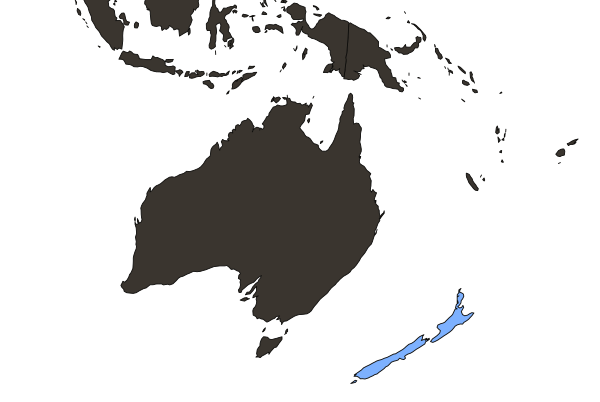
 is an island country of about 5.36 million people in the southwest Pacific. China buys about a quarter of its goods exports, mostly dairy, but New Zealand is a close ally of Australia and shares intelligence with the United States. Prime Minister Christopher Luxon faces an election on November 7, 2026, with the polls tied.
Where New Zealand ranks
All rankings →Who runs New Zealand?
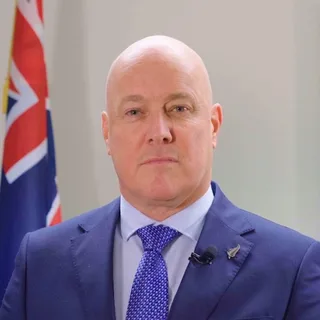
New Zealand is a parliamentary democracy with King Charles III as head of state. Prime Minister Christopher Luxon, born in Christchurch in 1970, ran Air New Zealand from 2013 to 2019 and became leader of the center-right National Party in 2021. He has been prime minister since November 27, 2023, leading a coalition with two smaller right-wing parties, ACT and New Zealand First. Winston Peters, the leader of New Zealand First, is foreign minister. Luxon survived two challenges from his own party's MPs in 2026, in April and in August. Parliament was dissolved on October 1, 2026 (chart). The next election is on November 7, and advance voting starts on October 26. Polls in October showed National and Labour, led by Chris Hipkins, tied at about 28% each. The Opportunity Party, polling 5% to 8%, could decide who governs. In 2025 parliament rejected an ACT bill to redefine the Treaty of Waitangi, signed with Māori chiefs in 1840, by 112 votes to 11.
- National 49
- Labour 34
- Greens 15
- ACT 11
- New Zealand First 8
- Te Pāti Māori 4
- Independents 2
Photo (2024): New Zealand Government, Wikimedia Commons, CC BY 4.0 (cropped)
Who are New Zealand's allies and rivals?
Australia is New Zealand's closest ally. In March 2026 their defense ministers signed a framework for their forces to operate together seamlessly by 2035. New Zealand is one of the Five Eyes, with the United States, the United Kingdom, Canada and Australia, which share intelligence. It joined the ANZUS alliance with the United States and Australia in 1951. In 1985 New Zealand refused a visit by a US warship that might carry nuclear weapons. In August 1986 the United States suspended its ANZUS commitments to New Zealand. A 1987 law bans nuclear-armed and nuclear-powered ships. Since July 2026 the United States has charged a 12.5% tariff on most New Zealand goods. China has been the biggest trading partner since 2017. In February 2025 Chinese warships held live-fire drills in the Tasman Sea. In August 2026 New Zealand's intelligence service said China is the only country spying in New Zealand at scale. New Zealand spends about 1.2% of GDP on defense and plans to reach 2% by the early 2030s.
Allies and partners
 AustraliaClosest ally; citizens can live and work in each other's country
 United StatesFive Eyes partner; ANZUS commitments suspended since 1986
 United KingdomFive Eyes partner; free trade deal in force since 2023
 JapanJapan's Mogami is one of two frigates on New Zealand's shortlist
Tensions
 ChinaBiggest trading partner; its warships held live-fire drills in the Tasman Sea in 2025
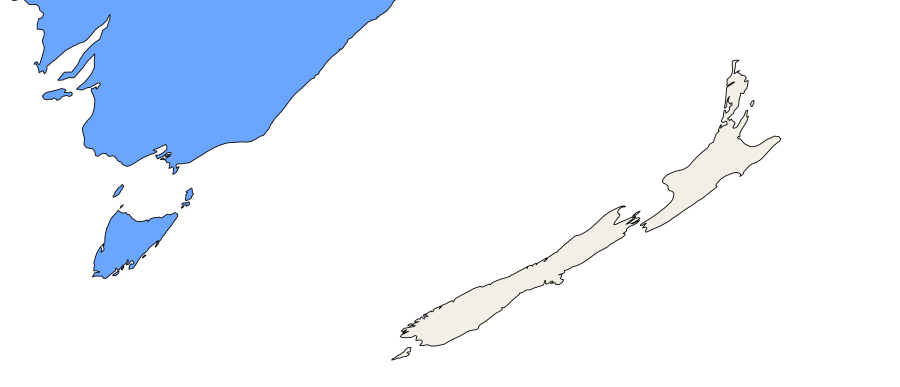
- Tasman Sea drills Chinese warships held live-fire drills here in February 2025. New Zealand said it received no notice.
- Waihopai Satellite station of the GCSB, New Zealand's signals intelligence agency and its link to the Five Eyes.
- Māhia Rocket Lab's launch site. 17 rockets flew from here in 2025, tied with Russia for third most of any country.
- Devonport Main navy base. Five US-built MH-60R helicopters were ordered in October 2026 for the navy's ships.
- New Zealand
- Partner
Who does New Zealand trade with?
New Zealand exported NZ$80.7 billion of goods in 2025, the first year above NZ$80 billion, and imported NZ$82.9 billion (Stats NZ). China bought about a quarter of exports, Australia and the United States about an eighth each (chart). Dairy products earned NZ$24.3 billion, 30% of goods exports. New Zealand is the world's largest dairy exporter after the European Union taken as a bloc. It supplies 56% of the world's exports of whole milk powder. Dairy makes up about 40% of sales to China, ahead of wood and meat. Kiwifruit, wine and tourism also earn a lot. About 3.7 million overseas visitors came in the year to June 2026. A free trade deal with India takes effect on October 20, 2026. The economy shrank in 2024 and grew 0.2% in 2025. Unemployment was 5.6% in mid-2026, the highest since about 2015. Fuel prices rose after the war with Iran disrupted shipping through the Strait of Hormuz, and inflation reached 4.1%. The central bank raised interest rates in July and September 2026.
Sells to
Share of New Zealand's exports
- China24.8%
- Australia12.6%
- United States11.6%
- Japan5.0%
 South Korea3.3%
Buys from
Share of New Zealand's imports
- China22.4%
- Australia10.8%
- United States10.4%
- South Korea6.8%
- Japan5.3%
Goods, 2025, as reported by New Zealand. UN Comtrade.
Why do so many New Zealanders move to Australia?
Since 1973 New Zealanders have been free to live and work in Australia. Since 2023 those living there have had a direct path to Australian citizenship. About 638,000 people born in New Zealand lived in Australia in mid-2025 (Australian Bureau of Statistics). Departures of New Zealand citizens hit a record in 2024 and 2025, during the recession. About 6 in 10 went to Australia. In the year to August 2026, 38,200 more citizens left than returned. More foreigners arrived than left, so the population still grew. 28% of people in New Zealand were born abroad in 2024 (UN), one of the highest shares in the world (chart). Māori make up about 18% of the population and Pacific peoples about 9%.
Share of people born abroad, large rich countries, 2024
Full ranking →- Australia30.4%
- New Zealand28.2%
 Canada22.2%
- United Kingdom17.1%
- United States15.2%
 France13.8%
UN DESA, International Migrant Stock 2024, 2024
What is New Zealand's role in the Pacific?
The Cook Islands and Niue govern themselves in free association with New Zealand, and their people are New Zealand citizens. About 94,000 people in New Zealand identify as Cook Islands Māori, compared with about 15,000 living in the Cook Islands. In February 2025 the Cook Islands signed a partnership with China, including cooperation on seabed minerals. New Zealand said it had not been consulted and paused NZ$29.8 million of aid. In April 2026 the two signed a defense and security declaration, and the aid resumed. In September 2026 New Zealand and the United States agreed to pay for a new port on the Cook Islands atoll of Penrhyn. New Zealand ruled Samoa from 1914 to 1962. About 60% of its aid goes to the Pacific. Its exclusive economic zone, the sea area where it controls fishing and minerals, is about 15 times its land area and one of the largest in the world (chart). New Zealand also claims part of Antarctica, the Ross Dependency, where it has run Scott Base since 1957.
Largest exclusive economic zones
Full ranking →- United States11,733,355
- France9,529,864
- Australia8,993,463
 Russia7,730,566
 Indonesia6,019,205
- Canada5,740,658
- New Zealand4,425,099
- United Kingdom4,085,524
Marine Regions, EEZ version 12