
Crown Dependency of the British Crown · English Channel
Guernsey
Self-governingUpdated November 16, 2026
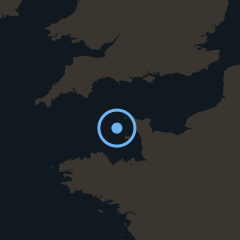
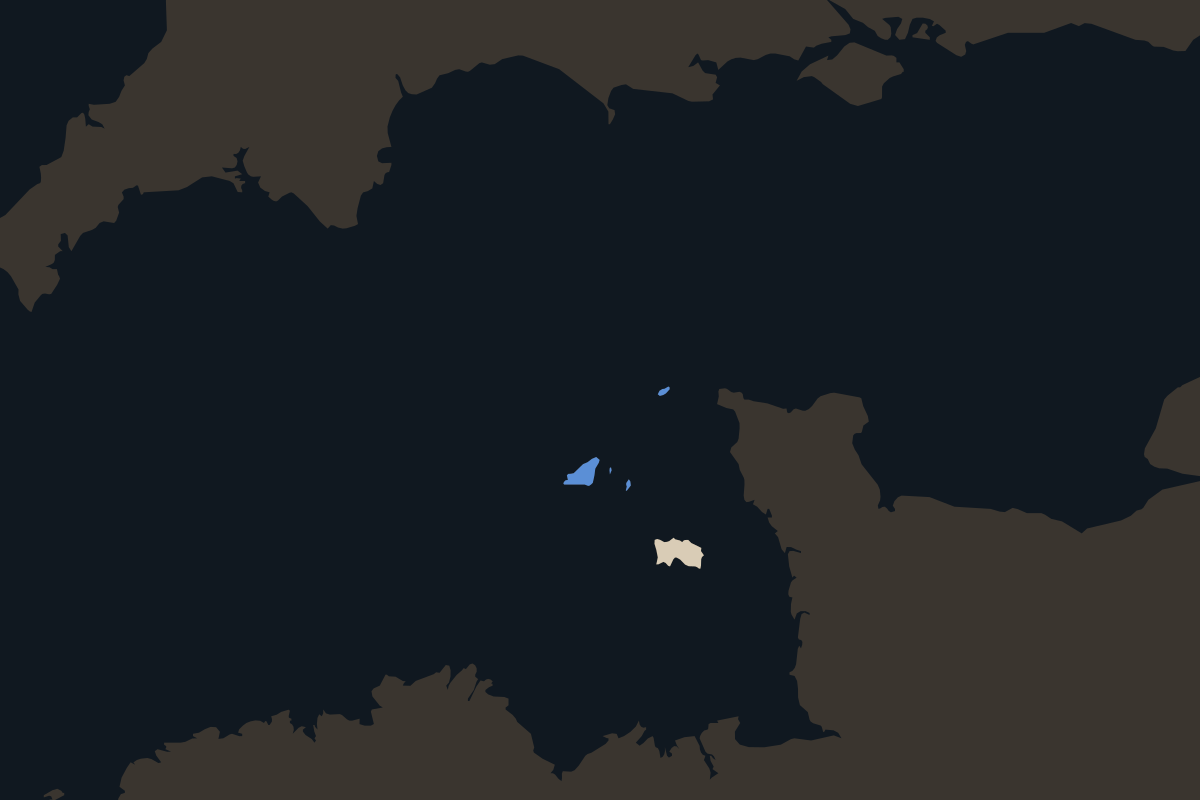
Guernsey is a Crown Dependency in the English Channel, about 48 km from the nearest French coast. It is not part of the United Kingdom. The islands have governed themselves since 1204, when they stayed loyal to the English Crown after France took mainland Normandy. Finance and insurance made up 37% of GDP in 2023. In October 2026, the States of Guernsey approved a 3% goods and services tax, the island's first. Germany occupied Guernsey from 1940 to 1945. Liberation Day, May 9, is a public holiday.
- Capital
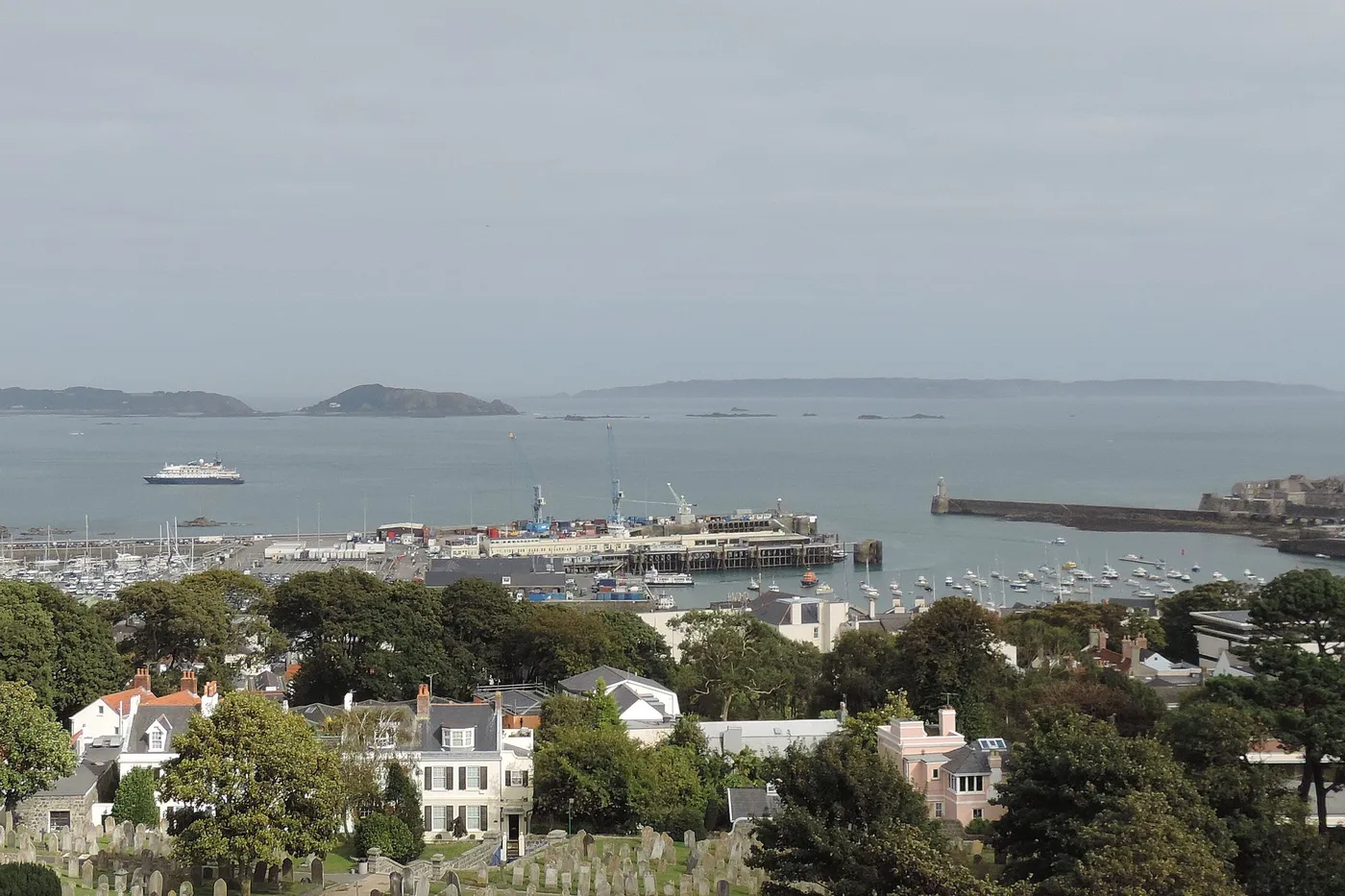
- Saint Peter Port
- the Bailiwick's main town and port
- GDP per head
- £54,400
- 2023, the latest official year
- Guernsey fund assets
- £270.0 billion
- net asset value, Q2 2026
- Visitors (2025)
- 282,028
- spending about £151 million
- From London
- 280 km
- as the crow flies
 United Kingdom
Guernsey in 30 seconds
- Guernsey is a Crown Dependency of the British Crown. It is not part of the United Kingdom and has never been a colony. It runs its own laws, taxes and courts.
- The Bailiwick of Guernsey includes the islands of Guernsey, Alderney, Sark and Herm. Alderney and Sark each have their own parliament.
- Finance is the largest industry. Guernsey-domiciled funds hold about £270 billion in net assets. The standard company tax rate is 0%.
- On October 2, 2026, the States approved a 3% goods and services tax with a target start in early 2029. It is the island's first broad consumption tax. A petition with 9,000 signatures opposed it.
Is Guernsey part of the United Kingdom?
Guernsey is not part of the United Kingdom. It is a Crown Dependency, a self-governing possession of the British Crown. The UK government describes Crown Dependencies as "not part of the UK but are self-governing dependencies of the Crown." They are not colonies and not British Overseas Territories.
Guernsey's status dates from 1204. When France took mainland Normandy, the Channel Islands stayed loyal to the English Crown. In return, the islands kept their own laws, courts and institutions. That arrangement has continued for more than 800 years.
The British government handles Guernsey's defense and international representation. Guernsey controls its own taxes, budget, courts, immigration and domestic law. Island laws need Royal Assent through the Privy Council. Guernsey pays nothing into the UK budget and receives no UK aid. Islanders are British citizens but have no seats at Westminster and cannot vote in UK general elections from the island. Guernsey was never an EU member. Before Brexit, it was inside the EU customs area for goods only. That ended on December 31, 2020.
 Guernsey
Saint Peter Port
Alderney
Sark
Jersey
FRANCE
ENGLAND
Cherbourg
Saint-Malo
English Channel
 Guernsey
Alderney
Sark
Jersey
FRANCE
ENGLAND
Cherbourg
Saint-Malo
Channel
What is the Bailiwick of Guernsey?
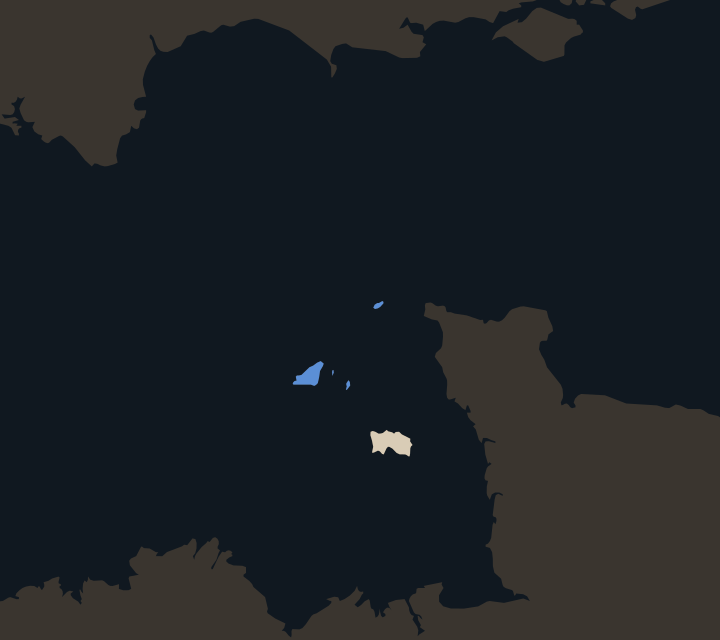
The Bailiwick of Guernsey is the group of islands that fall under Guernsey's jurisdiction. "Bailiwick" means the area under a bailiff's authority. It contains three separate jurisdictions: Guernsey (with Herm, Jethou and Lihou), Alderney, and Sark (with Brecqhou). Each of the three has its own legislature and laws.
Guernsey is the largest island and seat of government. Alderney, about 37 km to the northeast, has its own parliament but shares key public services with Guernsey under a 1948 agreement. Sark held its first democratic election in 2008. Before that, it was governed by a feudal system dating from 1565. Herm is owned by the States of Guernsey and leased to a private tenant. Jethou is Crown property. Both are governed directly by Guernsey.
The islands of the Bailiwick
- GuernseyGoverned by the States of Deliberation, 38 elected deputies. The main island, about 65 km².
 AlderneyStates of Alderney: a president and 10 members. Guernsey runs police, health and education under the 1948 Agreement.
- SarkChief Pleas, with elected conseillers since 2008. The Seigneur keeps a non-voting seat. No cars on the island.
- HermLeased from the States of Guernsey. Governed directly by Guernsey. A popular day-trip destination.
Who runs Guernsey?
Deputy Lindsay de Sausmarez leads Guernsey as President of the Policy and Resources Committee. She was elected on July 1, 2025, with 22 votes in the first round, becoming the first woman in the post. She was born in 1977 and has been a deputy since 2016.
The States of Deliberation has 38 deputies elected island-wide, plus 2 Alderney representatives. In the general election of June 18, 2025, turnout was 72.13%. De Sausmarez topped the poll with 10,721 votes. Only about 52% of eligible people had registered to vote, the lowest figure since 2000. Forward Guernsey, the only party to win seats, took 3 of the 38. The other 35 deputies are independents. 11 women were elected.
On September 24, 2026, Jessica Roland was sworn in as Bailiff, the first woman in the office's roughly 750-year history. The Bailiff serves as speaker of the States, civic head and chief judge. King Charles III is head of state, known by island tradition as the "Duke of Normandy."
General election, June 18, 2025
72.13%
Turnout among registered voters
82 candidates ran for 38 seats. Lindsay de Sausmarez topped the poll with 10,721 votes. Only about 52% of eligible people registered, the lowest since 2000.
Why is Guernsey arguing about a new tax?
Guernsey is arguing about a new tax because the States approved the island's first goods and services tax (GST) in 2026. The island has never had a broad consumption tax. The Policy and Resources Committee cited a structural deficit of about £50 million and proposed the GST to help close it. On October 2, 2026, after three days of debate, the States of Deliberation approved a 3% GST by 22 votes to 17. The target start date is early 2029. The tax still needs its own law.
The GST is expected to raise about £36 million a year. An amendment by Gavin St Pier of Forward Guernsey sets a path to raise the rate to 4% and then 5%, with each step requiring a review by the Fiscal Policy Panel. The rate cannot exceed 5%. A move to raise income tax instead was defeated. Opponents handed in a petition with 9,000 signatures. Protest organizer Dominic Naermont called GST "a regressive tax." The Policy and Resources Committee said higher tax allowances would protect lower earners. An earlier motion to hold a referendum on the tax was rejected 25 to 14 on July 16, 2026.
Guernsey's personal income tax stays at a flat 20%. The standard company tax rate is 0%, with 10% for some financial activities. The Pillar Two global minimum tax took effect on January 1, 2025. The 2027 budget estimates about £79 million in revenue from it.
GST votes in the States of Deliberation
What happened to Guernsey in World War II?
Germany occupied Guernsey on June 30, 1940. The Channel Islands were the only part of the British Isles to fall under German control. Before the occupation, about 17,000 people left the islands. On June 21, 1940, about 5,000 schoolchildren and 500 teachers were evacuated to England.
The occupation lasted nearly five years. In September 1942, UK-born islanders were deported to internment camps at Biberach, Wurzach and Liebenau in Germany. On Alderney, the Germans built forced labor camps. A 2024 review by Lord Pickles found that at least 7,608 to 7,812 forced laborers were sent to Alderney. It found that between 641 and 1,027 most likely died there. The official count in 1945 was 389.
Liberation came on May 9, 1945, when the German surrender was signed aboard HMS Bulldog off Saint Peter Port. Sark was freed on May 10 and Alderney on May 16. Liberation Day is Guernsey's main public holiday. On the 80th anniversary in 2025, Guernsey and the German town of Biberach signed a "Framework of Friendship."
From Normandy to Liberation
- 1204Channel Islands stay with the English Crown after France takes mainland Normandy
- 1565Elizabeth I grants Sark to Helier de Carteret, beginning its feudal system
- 1856Victor Hugo buys Hauteville House in Saint Peter Port, where he later finishes Les Misérables
- 1940Germany occupies Guernsey on June 30 after the evacuation of 17,000 people
- 1942UK-born islanders deported to camps in Germany
- 1945Liberation on May 9; German surrender signed aboard HMS Bulldog
- 1948Alderney Agreement: Guernsey takes over Alderney's main public services
- 2008Sark holds its first democratic election, ending its feudal system
- 2019Territorial sea extended from 3 to 12 nautical miles
What is happening on Alderney?
Alderney is preparing to rebuild its runway and to elect half of its parliament. The island has about 2,000 residents and its own parliament, the States of Alderney. Under the 1948 Agreement, Guernsey provides Alderney's police, customs, airport, health and education. In return, Alderney's income tax goes to Guernsey. Some Alderney politicians have called the arrangement unfair and have raised the idea of ties with Jersey instead. Guernsey's government has said Alderney "is living beyond its means," because the services cost more than Alderney's taxes bring in.
The biggest current issue is the runway. On February 25, 2026, Guernsey's States approved up to £24 million for the Alderney runway rehabilitation, by 32 votes to 3. The aim is to finish before the 2027 summer season. The Guernsey government also pays a £1.5 million annual subsidy for Alderney's air link. A request for an extra £364,000 in the 2027 budget was rejected 10 to 23.
Alderney's President, William Tate, has led the island since 2019. He was re-elected in November 2024. In August 2026, he confirmed he will stand down in summer 2027. An election for 5 of the 10 States seats is scheduled for November 21, 2026.
Alderney forced-labor deaths: revised estimates (2024)
Why does Guernsey matter?
Offshore finance hub
Guernsey-domiciled funds hold about £270 billion in net assets. A Frontier Economics report estimated that Guernsey funds channel about £58 billion into UK assets. The standard company tax rate is 0%. Critics call it a tax haven. The government points to its anti-money-laundering ratings and adoption of the Pillar Two global minimum tax.
Post-Brexit fishing
After Brexit, Guernsey issued licenses to 44 EU vessels, mostly French, under the UK-EU Trade and Cooperation Agreement. Guernsey saw no protest flotilla like the one French boats staged off Jersey in 2021.
Last remnant of Normandy
Guernsey and Jersey are what remains of the Duchy of Normandy under the English Crown. Their legal systems still carry Norman customary law. The local loyal toast is "The King, our Duke."
Wartime memory
The Channel Islands were the only part of the British Isles occupied by Germany. Alderney held the only Nazi concentration camps in the British Isles. A 2024 review found that between 641 and 1,027 people most likely died there.
Questions about Guernsey
Do Guernsey residents have British passports?
Yes. Islanders are British citizens. Passports are issued by the Guernsey Passport Office and say "British Islands, Bailiwick of Guernsey" on the cover.
What currency does Guernsey use?
The Guernsey pound, which is pegged at par to the British pound. Guernsey issues its own banknotes and coins. Bank of England notes also circulate on the island. Guernsey notes are not legal tender in the UK.
How many people live in Guernsey?
The last official count was 64,781 at the end of 2023, the highest figure on record. In July 2025, the States said past emigration had been under-recorded and the true figure may be up to 3% lower. No updated figure had been published as of September 2026.
Does Guernsey have income tax?
Yes. Personal income tax is a flat 20%. The standard company tax rate is 0%, with 10% for some financial activities. A 3% goods and services tax was approved in October 2026 and is due to start in early 2029.
What language do people speak in Guernsey?
English is the main language. Guernsey also has a Norman-French dialect called Guernesiais, still spoken in some country parishes. French was historically the language of law and government.
Can you drive a car on Sark?
No. Sark does not allow cars. Transport is by foot, bicycle, horse-drawn carriage or tractor. Sark is also a designated Dark Sky island.
Other territories of the United Kingdom
All territories → AnguillaIts .ai internet domain, popular with AI firms, now brings in a large share of government revenue.Self-governing
 BermudaIts parliament first met in 1620, making it one of the oldest legislatures in the world.Self-governing
 British Indian Ocean Territory (Chagos Islands)No permanent people; about 2,500 US and UK military personnel and contractors live on the Diego Garcia base.Run by an administrator
 British Virgin IslandsHundreds of thousands of offshore companies are registered here, many times its 39,000 residents.Self-governing
 Cayman IslandsThere is no income, company or capital-gains tax; it is a leading home for hedge funds and offshore firms.Self-governing
 Falkland IslandsArgentina invaded in 1982; the 74-day war killed 649 Argentine and 255 British personnel.Self-governing
 GibraltarA 2026 UK-EU treaty ended border checks with Spain; Schengen checks now happen at its port and airport.Self-governing
 MontserratVolcanic eruptions from 1995 buried the capital Plymouth, and about two-thirds of the people left.Self-governing