
Crown Dependency of the British Crown · Irish Sea
Isle of Man
Self-governingUpdated November 11, 2026
The Isle of Man is a self-governing Crown dependency in the Irish Sea, between England, Ireland and Scotland. It is not part of the United Kingdom. The British Crown bought the lordship in 1765, and King Charles III holds the title Lord of Mann. The island runs its own taxes, courts and domestic laws. Its parliament, Tynwald, claims a tradition dating to 979. In September 2026, voters elected 15 newcomers to the 24-seat House of Keys. Chris Thomas became Chief Minister on October 13, 2026.
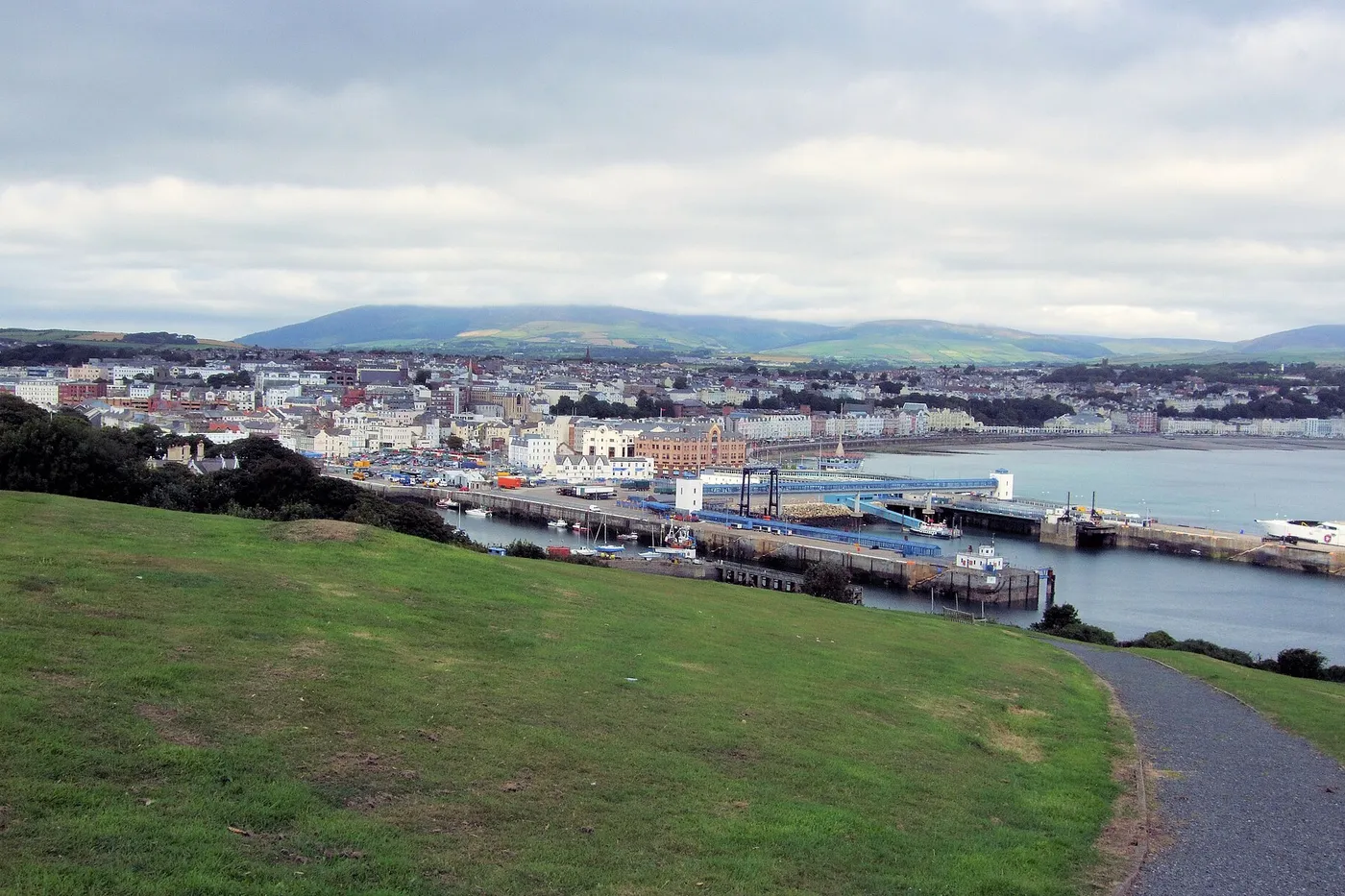
- Capital
- Douglas
- city status granted 2022
- GDP per person
- About £69,094
- 2023/24, roughly US$92,173
- Unemployment
- 0.7%
- 315 people, July 2026
- Reserves
- £1.95 billion
- 2026/27 budget
- From London
- 410 km
- as the crow flies
 United Kingdom
Isle of Man in 30 seconds
- The Isle of Man is a Crown dependency of the British Crown. It is not part of the United Kingdom, not an overseas territory and has never been in the European Union.
- Tynwald, the island's parliament, claims a tradition dating to 979. The House of Keys has 24 elected members. In the September 2026 election, 22 of 24 seats went to independents and 15 of 24 members are newcomers.
- Most companies pay 0% corporate tax. The top personal income tax rate is 21%. Total income tax is capped at £220,000 a year. Insurance, e-gaming and professional services are the largest sectors.
- The Assisted Dying Act received Royal Assent on October 16, 2026. Tynwald was the first parliament in the British Isles to pass an assisted dying bill, in March 2025. Jersey's law received Royal Assent first, in July 2026. It is not yet in force.
Is the Isle of Man part of the UK?
No. The Isle of Man is a Crown dependency. It is not part of the United Kingdom. The United Kingdom government says the island is "not part of the UK" but a "self-governing dependency of the Crown." It is not an overseas territory and has never been a colony. It is not on the UN list of non-self-governing territories.
The King holds the title Lord of Mann. The Crown, acting through the Privy Council, is responsible for "good government." The United Kingdom handles defense and international relations. UK sanctions apply automatically. The island and the United Kingdom share a customs and VAT territory under the 1979 Customs and Excise Agreement.
The island runs its own taxes, budget, courts, health system, education, immigration rules and financial regulation. It has its own flag, the Three Legs of Man on red. There is no separate Manx citizenship. Islanders are British citizens. The Isle of Man has no members of the UK parliament.
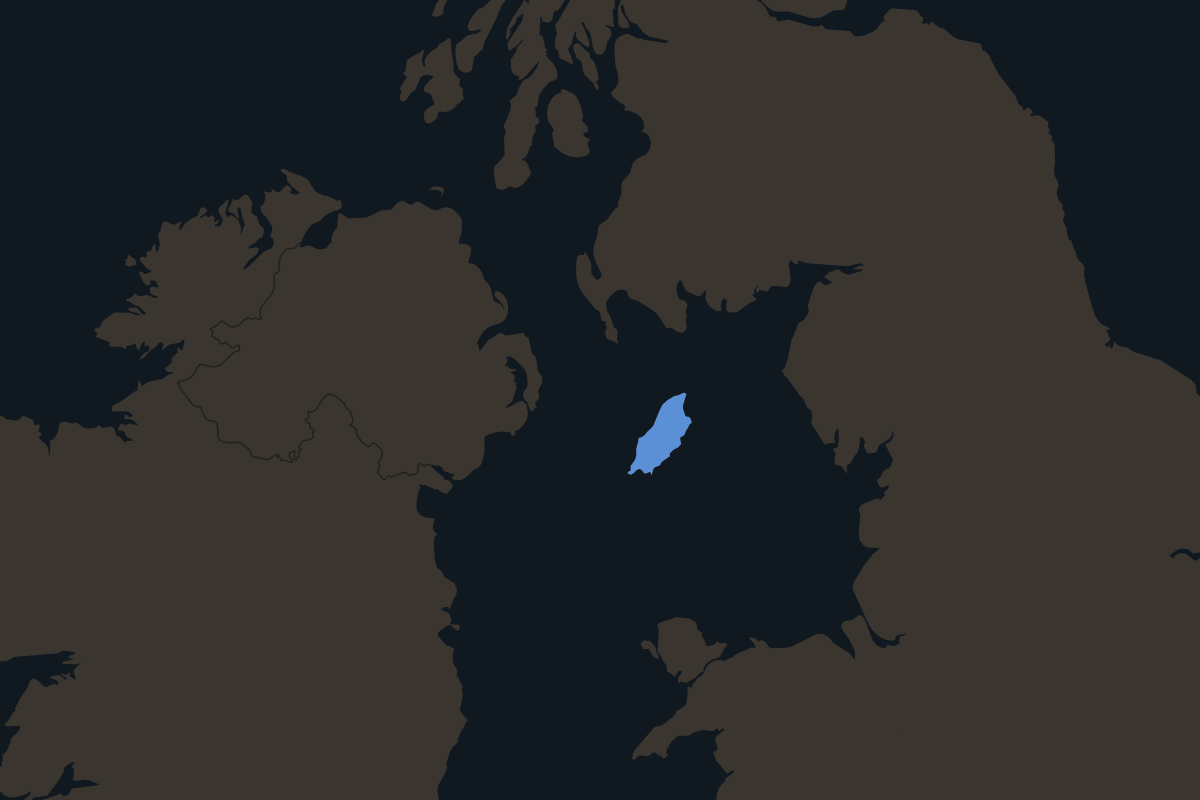 Isle of Man
Douglas
ENGLAND
SCOTLAND
NORTHERN IRELAND
IRELAND
WALES
Liverpool
Belfast
Dublin
Irish Sea
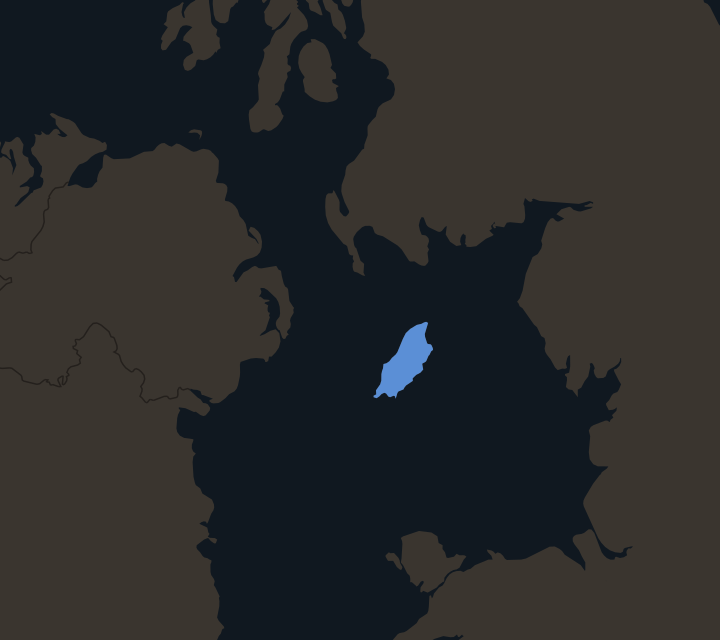 Isle of Man
Douglas
ENGLAND
SCOTLAND
IRELAND
WALES
Liverpool
Belfast
Dublin
Irish Sea
What is Tynwald?
Tynwald is the parliament of the Isle of Man. It claims a tradition dating to 979, though records begin only in the 13th century. It is often called the oldest continuous parliament in the world.
Tynwald has two chambers. The House of Keys has 24 members elected in 12 two-seat constituencies. The Legislative Council has 11 members, 8 of them elected by the Keys, plus the Bishop of Sodor and Man, the Attorney General and the President of Tynwald. The Isle of Man Constitution Act 2026 removes the Bishop's vote but keeps his seat. The vote ends when the current bishop leaves office or 5 years after Royal Assent, whichever comes first.
On Tynwald Day, usually July 5, parliament meets in the open air at Tynwald Hill in St John's. Any Act not promulgated there within 18 months becomes void. In 2026, Tynwald Day fell on July 6, and 7 Acts were promulgated.
Key dates in Tynwald's history
- 979Traditional founding date of Tynwald (records begin in the 13th century)
- 1266Treaty of Perth: Norway cedes Mann to Scotland
- 1765The Crown buys the lordship from the Duke of Atholl (Revestment)
- 1866The House of Keys becomes a popularly elected body
- 1881Some women get the vote, a first for a national parliament
- 1919Universal adult suffrage; women can stand for the Keys
- 2021General election: turnout 50.80%, a record 10 women elected
- Sep 2026General election: 15 newcomers, turnout 48.52%
Who runs the Isle of Man?
Chief Minister Chris Thomas has led the Isle of Man government since October 13, 2026. He is an independent member of the House of Keys for Douglas Central. He won the vote 16 to 6 over Kirrie Jenkins. He succeeded Alfred Cannan, who had served since October 2021.
Thomas was born in 1963 in Crawley, England. He studied philosophy, politics and economics at Balliol College, Oxford. He moved to the island in 2001 to run a financial regulation master's program. He is a former Chairman of Culture Vannin and plays the double bass. He uses the Manx title Ard-Shirveishagh for his post. He told Isle of Man Today: "I’m first among equals. Good government. It’s not one person pretending to have all the answers."
Lieutenant General Sir John Lorimer is the Lieutenant Governor, the Crown's representative. He was sworn in on September 30, 2021. His term was extended and now ends no later than August 27, 2027.
September 2026 general election
22 of 24
House of Keys seats held by independents
15 of the 24 members are newcomers. Manx Labour won 2 seats. Turnout was 48.52%. Seven incumbents lost their seats, including three ministers. Daniel Davison, aged 18, became the youngest member ever elected.
Why is the Isle of Man a low-tax place?
The Isle of Man sets its own taxes and has kept them low. The Isle of Man Act 1958 gave the island control of its own finances. Low taxes then became the basis of its finance economy. Most companies pay 0% corporate tax. Banking income is taxed at 10%, as are retail profits over £500,000. Income from Isle of Man land and property is taxed at 20%. A 15% Domestic Top-up Tax on large multinationals under the OECD Pillar 2 rules was budgeted at £31 million for 2026/27.
The top personal income tax rate is 21%, with a personal allowance of £17,000. A tax cap limits the most anyone pays to £220,000 a year, or £440,000 for couples. That cap draws wealthy individuals to the island.
The largest sectors of the economy by share of national income in 2023/24 were insurance at 16.9%, e-gaming at 14.2%, professional services at 13.8%, other finance and business services at 10.2% and banking at 8.6%. Bank deposits total £42.3 billion. GDP per person is about £69,094. The island receives no subsidy from the United Kingdom. It pays the United Kingdom an annual contribution under the 1994 Contribution Agreement. The payment was about £3.2 million in 2020/21 and rises each year with UK inflation.
Largest sectors by share of national income, 2023/24
What changed after Brexit and what is the assisted dying law?
After Brexit, the Isle of Man's limited link to the European Union ended. Before Brexit, the island was linked to the European Union only through Protocol 3 of the United Kingdom's 1972 EU Accession Treaty. Protocol 3 covered trade in goods and agriculture. It ended at the end of the Brexit transition period in December 2020. On December 29, 2020, a UK-Crown Dependencies customs union replaced it. The island remains in a single customs and VAT territory with the United Kingdom under the 1979 Customs and Excise Agreement. A new revenue-sharing deal under that arrangement was signed on April 11, 2025.
The Assisted Dying Act received Royal Assent on October 16, 2026. It allows assisted dying for adults aged 18 and over who have been resident for at least 5 years and are terminally ill with 12 months or less to live. The law is not yet in force. No start date has been set. The United Kingdom Ministry of Justice initially said in April 2026 that it was "unable to recommend" Royal Assent, citing concerns about safeguards. Tynwald approved amendments in June 2026, and assent followed in October. The House of Keys passed the bill 16 to 8 in July 2024. The Legislative Council passed it 7 to 1. The Isle of Man Medical Society says 74% of island doctors oppose the law.
Why does the Isle of Man matter?
Offshore finance and e-gaming
The Isle of Man charges most companies 0% corporate tax and caps personal income tax at £220,000 a year. Bank deposits total £42.3 billion. Insurance, e-gaming and professional services make up the largest shares of the economy. Online gambling licenses fell from a peak of 99 to 63 by October 2025.
The oldest parliament claim
Tynwald claims a tradition dating to 979, making it one of the oldest parliaments in the world. It has its own laws, its own courts and its own tax system. It is not part of the United Kingdom and has never been.
Its people and language
About 84,975 people live on the Isle of Man. The island has its own language, Manx Gaelic. The last native speaker died in 1974. In the 2021 census, 2,023 people, or 2.41% of residents, said they could speak Manx. The year 2026 is Blein ny Gaelgey, the Year of the Manx Language.
Questions about the Isle of Man
Do Isle of Man residents have British passports?
Yes. There is no separate Manx citizenship. Islanders are British citizens and carry an Isle of Man-variant British passport. This passport is issued by the Isle of Man government and cannot be issued to British citizens elsewhere.
What currency does the Isle of Man use?
The Isle of Man uses the Manx pound, which is pegged at par with the pound sterling. Sterling also circulates freely on the island. Manx notes and coins are not legal tender in the United Kingdom.
Is the Isle of Man in the EU?
No. The Isle of Man has never been a member of the European Union. Before Brexit, it was linked to the EU only through Protocol 3, which covered goods and agriculture. That ended in 2020.
What is the Isle of Man TT?
The TT is a motorcycle race held on public roads each year in late May and early June. In 2026, Michael Dunlop brought his win total to 36. The Senior TT was stopped after one lap, and Dean Harrison won. The event carries serious risks. Debutant Daniel Ingham, 33, was killed in qualifying on May 27, 2026.
How many people live on the Isle of Man?
The 2021 census counted 84,069 people. The latest estimate from Statistics Isle of Man puts the population at 84,975 at the end of the first quarter of 2025, a record high.
Can Isle of Man residents vote in UK elections?
Only some can. The Isle of Man has no members of the UK parliament. However, British citizens living on the island who previously lived or were registered to vote in the United Kingdom can vote as overseas electors in their last UK constituency.
Other territories of the United Kingdom
All territories → AnguillaIts .ai internet domain, popular with AI firms, now brings in a large share of government revenue.Self-governing
 BermudaIts parliament first met in 1620, making it one of the oldest legislatures in the world.Self-governing
 British Indian Ocean Territory (Chagos Islands)No permanent people; about 2,500 US and UK military personnel and contractors live on the Diego Garcia base.Run by an administrator
 British Virgin IslandsHundreds of thousands of offshore companies are registered here, many times its 39,000 residents.Self-governing
 Cayman IslandsThere is no income, company or capital-gains tax; it is a leading home for hedge funds and offshore firms.Self-governing
 Falkland IslandsArgentina invaded in 1982; the 74-day war killed 649 Argentine and 255 British personnel.Self-governing
 GibraltarA 2026 UK-EU treaty ended border checks with Spain; Schengen checks now happen at its port and airport.Self-governing
 MontserratVolcanic eruptions from 1995 buried the capital Plymouth, and about two-thirds of the people left.Self-governing