IMF vs World Bank: what's the difference?
Both were born at the same 1944 conference and sit two blocks apart in Washington. One lends to countries in crisis, the other builds roads and dams.
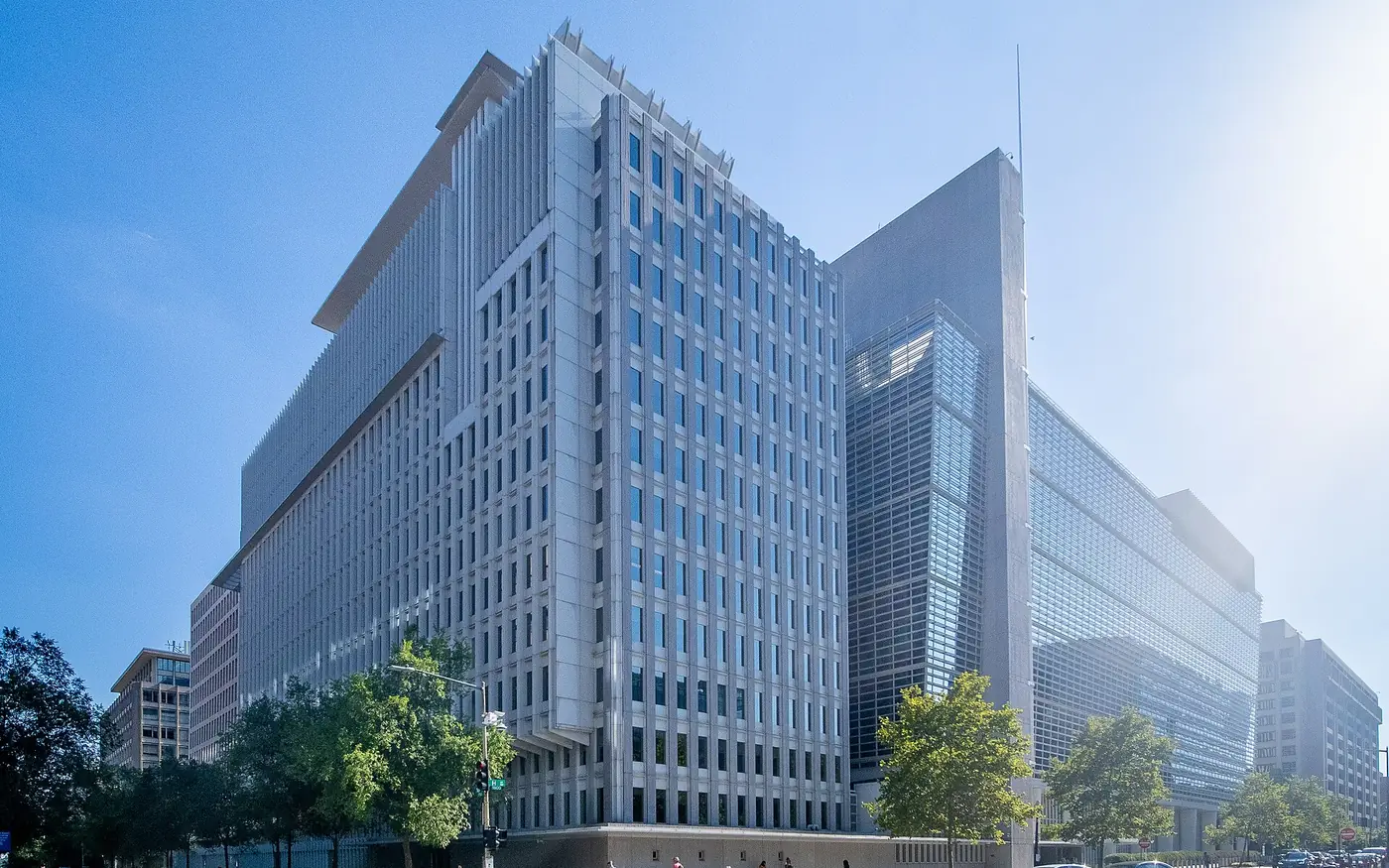
The International Monetary Fund and the World Bank were created on the same day, at the same conference, in the same hotel in New Hampshire. They are both headquartered in Washington, DC, two blocks apart. They both lend money to governments. They both have 191 member countries. An American has led the World Bank since the day it opened, and a European has led the IMF for all but two of its 82 years. Even the people who work at the two institutions sometimes joke that outsiders cannot tell them apart.
The difference is simple. The IMF is the emergency room. The World Bank is the construction company. One lends to countries that are running out of money right now. The other lends to countries that want to build something over the next ten or twenty years.
Where they came from
In July 1944, delegates from 44 countries met at the Mount Washington Hotel in Bretton Woods, New Hampshire. The Second World War was still being fought. The Allies were winning and they wanted to build a financial system that would prevent another global depression.
The conference created two institutions. The IMF would keep the new monetary system stable: countries pegged their currencies to the dollar, the dollar was pegged to gold, and the IMF would lend short-term funds to any government that ran into trouble maintaining its peg. The World Bank, originally called the International Bank for Reconstruction and Development, would finance the physical rebuilding of Europe. Its very first loan, $250 million to France in May 1947, paid for equipment and materials to reconstruct French railways, ports, and coal mines. France had asked for $500 million. The Bank gave it half.
Both institutions were designed by an American Treasury official named Harry Dexter White, who beat out the British delegation's plan for a neutral international currency. The United States had the gold and the factories. The American plan won. The Bretton Woods system it created lasted until 1971, when President Nixon ended the dollar's convertibility to gold.
What the IMF actually does
The IMF's core job is crisis lending. When a government is about to run out of foreign currency, cannot make payments on its debts, or is watching its exchange rate collapse, the IMF is usually the lender of last resort. It currently lends about $151 billion across roughly 100 countries, and more than 50 of those borrowers have active loan programs.
The money is not free. IMF loans come with conditions, almost always some combination of spending cuts, tax increases, and economic reforms. The Fund calls these "structural adjustment programs," and they are the main reason the IMF is controversial. The logic is straightforward: a country got into trouble because it was spending more than it earned, so the loan comes with a plan to close the gap. The problem is that closing the gap usually means cutting public-sector wages, reducing subsidies on fuel and food, and raising the cost of basic services, all of which hit the poorest citizens hardest.
The pattern has played out dozens of times. Argentina has been through more than 20 IMF programs since the 1950s. Greece's 2010 bailout, roughly 110 billion euros from the IMF and the European Union, came with austerity so severe that pensions were cut by about 40 percent and unemployment reached 28 percent. Sri Lanka defaulted in 2022 and secured an IMF package only after doubling its value-added tax rate. In each case, the IMF argues it is treating the disease, and critics argue the medicine is worse than the symptoms.
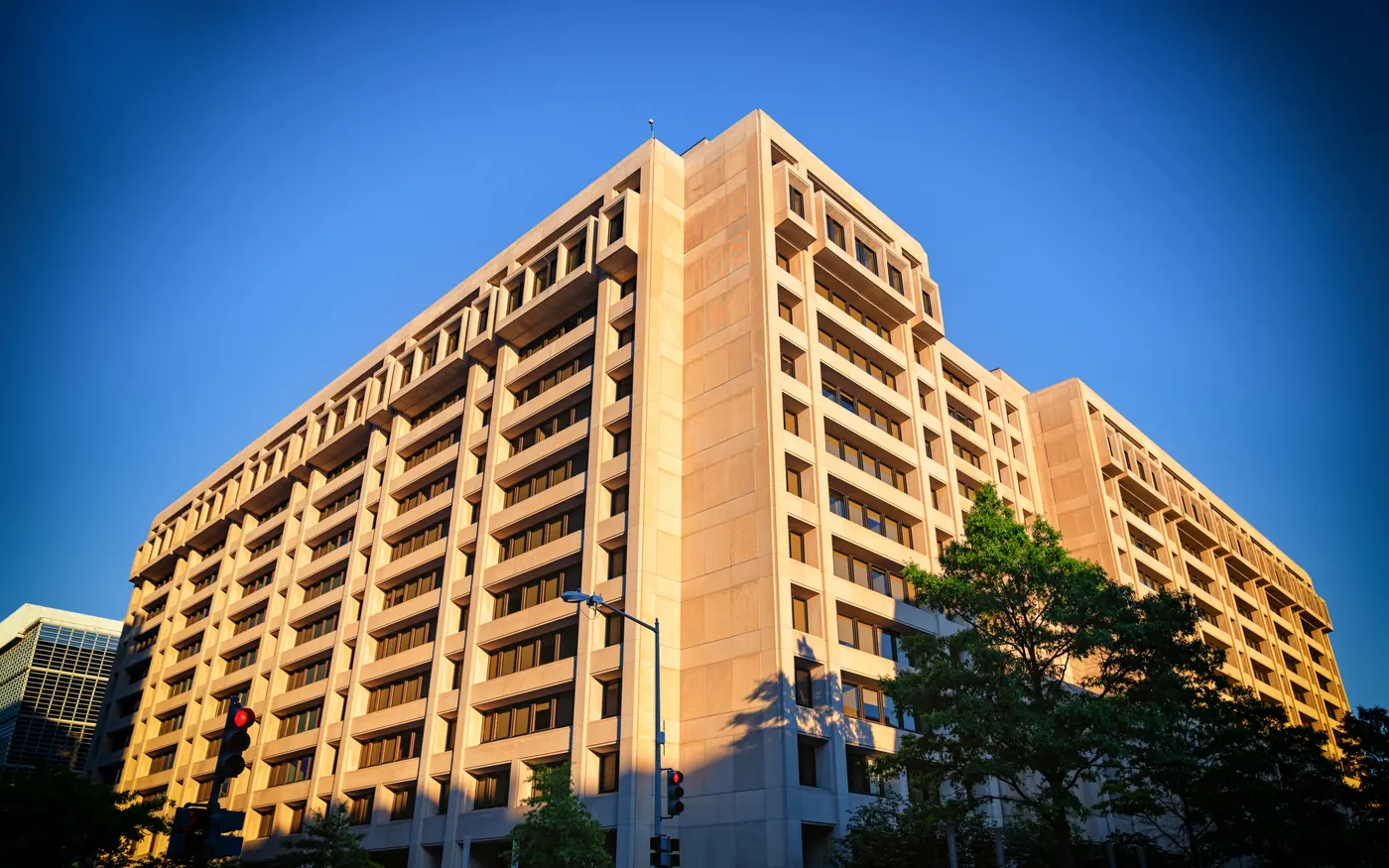
The IMF also does things that have nothing to do with lending. It publishes the World Economic Outlook, one of the most widely cited forecasts of global growth. It monitors exchange rates. It manages the Special Drawing Rights system, an international reserve asset that supplements member countries' reserves. And it provides technical assistance, sending economists to help governments redesign their tax systems or manage their central banks. But the lending is what makes headlines, and it is what most people mean when they say "the IMF."
What the World Bank actually does
The World Bank's job is long-term development. It lends to governments and sometimes to the private sector for specific projects: a highway in Nigeria, a power grid in Bangladesh, a school system in Peru, a dam in Tajikistan. Its annual lending runs in the range of $60 to $70 billion a year across the two main arms, the IBRD for middle-income countries and the International Development Association for the poorest.
The Bank borrows on international capital markets at low rates, because it has the backing of the world's richest governments, and re-lends to countries that could not borrow that cheaply on their own. Some of that lending, through IDA, comes at zero interest with repayment periods of 30 to 40 years. The idea is to finance the kind of infrastructure that makes an economy grow: the roads that let farmers get crops to market, the power plants that keep factories running, the schools that produce the workforce for the next generation.
The World Bank has its own history of controversy. In the 1960s and 1970s, it financed massive dam projects across Africa and Asia that displaced millions of people and flooded vast areas of farmland. The Narmada Dam in India and the Arun III hydropower project in Nepal both drew large-scale protests. The Bank's own review in the 1990s acknowledged that many of these projects caused social harm. It pulled back from large dams for years, though it has returned to them more recently, approving a $6.3 billion investment in the Rogun Dam in Tajikistan, which will be the world's tallest.
The other long-running criticism is that the Bank's development advice looked a lot like the IMF's crisis conditions. Through the 1980s and 1990s, both institutions pushed what became known as the Washington Consensus: privatize state enterprises, deregulate markets, cut government spending, open borders to trade. For countries in sub-Saharan Africa and Latin America, this advice often came as a package deal, with an IMF loan to stop the immediate crisis and a World Bank loan to restructure the economy along free-market lines. Whether this helped or hurt remains one of the most contested questions in development economics.
Who controls them
Both institutions are controlled by their member governments, but not equally. Voting power is based on how much money a country contributes, which means the largest economies have the most influence. The United States holds about 16.5 percent of the votes at the IMF and a similar share at the World Bank. That matters because major decisions at both institutions require an 85 percent majority. The United States is the only country that can block a major decision on its own.
This veto has shaped both institutions from the start. When American voting power once threatened to drop below the threshold, the required majority was raised from 80 to 85 percent to preserve it.
An unwritten arrangement divides the leadership. The World Bank president has been an American in every case since 1946. The IMF managing director has been a European in every case but two. The current leaders follow the pattern: Ajay Banga, an Indian-American businessman, runs the World Bank, and Kristalina Georgieva, a Bulgarian economist, runs the IMF.
Critics, especially from developing countries, have pushed to change this. China and India together account for more than a third of the world's population and a growing share of its economic output, but their combined voting power at the IMF is about 10 percent. A quota reform now under negotiation could shift the balance, but approval requires 85 percent of the vote, which means the United States can block it.
How to tell them apart
The simplest way to remember the difference: if a country is in a financial crisis and needs money fast, it calls the IMF. If a country wants to build a dam, a road, or a school system, it applies to the World Bank.
The IMF lends to governments for short periods, usually a few years, and demands policy changes in return. The World Bank lends for decades, often at near-zero interest for the poorest borrowers, and ties the money to a specific project or program.
Both institutions have been accused of imposing Western economic ideas on countries that did not ask for them. Both have been accused of serving the interests of the United States and Europe at the expense of the countries they are supposed to help. And both have changed, at least partly, in response to those criticisms, with the IMF now lending more to low-income countries without its harshest conditions and the World Bank investing more in climate and health alongside traditional infrastructure.
What has not changed is the basic architecture. Two institutions, born on the same day in 1944, sitting two blocks apart in Washington, funded and controlled by the same governments, doing two different jobs. One keeps countries from going bankrupt. The other tries to make them richer. The confusion is understandable. The difference is real.
Test what you learned
6 questions on this article. About two minutes, no signup.
Orbis has a full course on this
Bretton Woods and the Petrodollar. 18 lessons, each ending with a quiz like this one.