Why did the Byzantine Empire fall?
The Byzantine Empire fell in stages over four centuries. A lost battle, Crusaders who sacked the capital, and civil wars did more damage than the Ottomans.
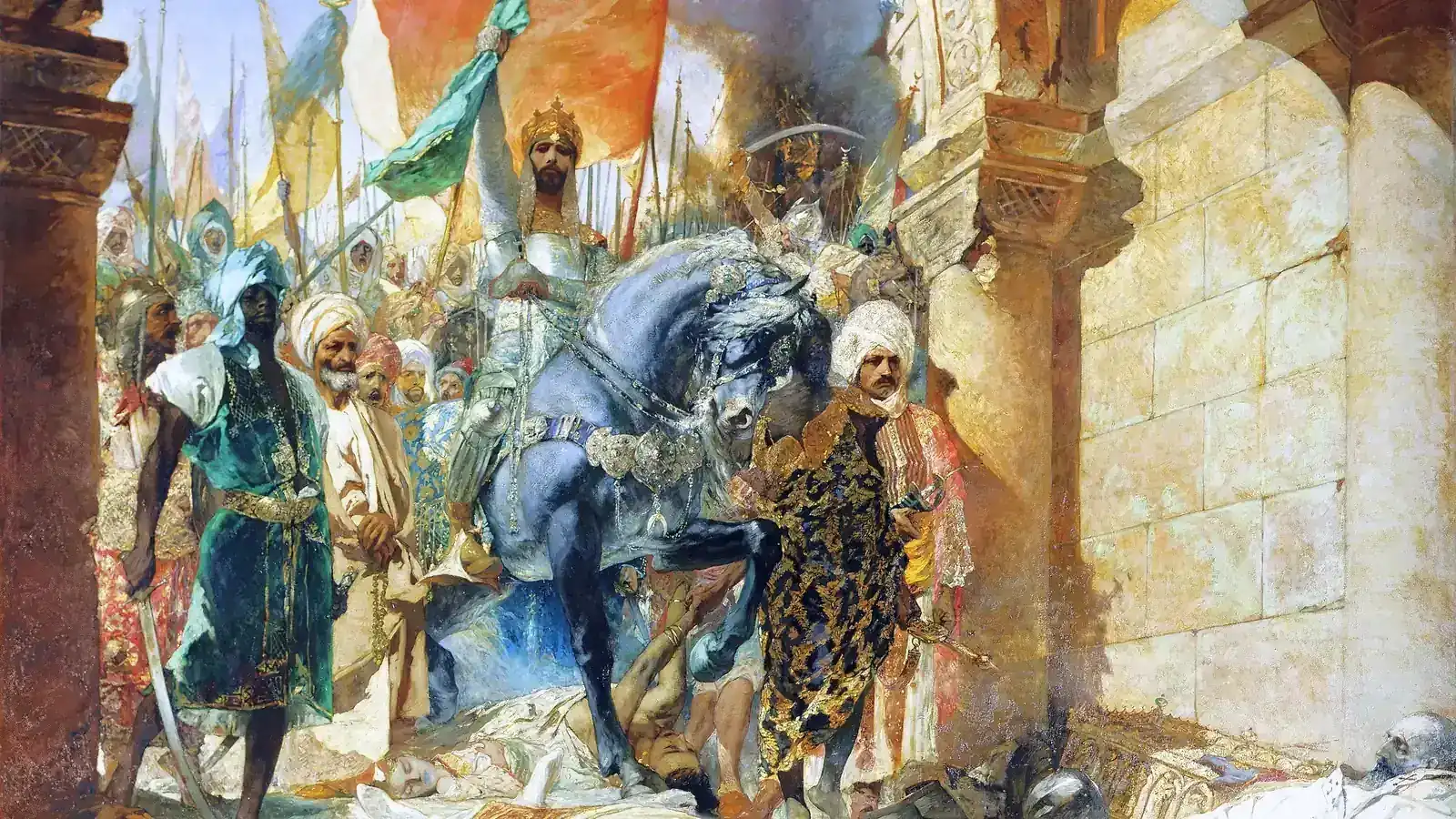
The Byzantine Empire outlasted Rome by a thousand years. At its peak under Justinian in the sixth century, it held the eastern Mediterranean from Italy to Egypt and was the largest and wealthiest state in the Christian world. It survived Arab sieges, Bulgar invasions, plagues, and palace coups. It adapted its army, its economy, and its diplomacy through crises that destroyed other states. When the Ottoman sultan Mehmed II took Constantinople on May 29, 1453, the city he captured had been dying for centuries. Its population had shrunk from several hundred thousand to roughly 50,000. The emperor had fewer than 7,000 soldiers. The Ottoman siege ended the story, but the real damage was done in the four centuries before it, in three stages that each took something the empire could not replace.
The battle that lost Anatolia
For centuries, Anatolia, the peninsula that makes up most of modern Turkey, was the empire's heartland. Byzantine military strength depended on the theme system, where soldier-farmers held land in exchange for military service. Most of these soldiers came from Anatolia. Most of the grain that fed Constantinople grew there.
In August 1071, Emperor Romanos IV Diogenes marched east with roughly 40,000 soldiers to push back the Seljuk Turks, who had been raiding across the frontier for years. Romanos was a career soldier from Cappadocia who had married the widowed empress to claim the throne. He was the first military emperor in decades, and his march east was an attempt to reverse years of neglect by civilian emperors who had cut army pay and let the theme system decay. Near the town of Manzikert, close to Lake Van in eastern Turkey, he met the Seljuk sultan Alp Arslan. The battle was going well for the Byzantines until a general named Andronikos Doukas, commanding the rear guard, pulled his troops off the field. The sources disagree on whether Doukas was acting out of cowardice or political rivalry. The result was the same. The Byzantine line collapsed, and Romanos IV was captured alive, the first Roman emperor taken prisoner since Valerian fell to the Persians in 260, more than 800 years earlier.
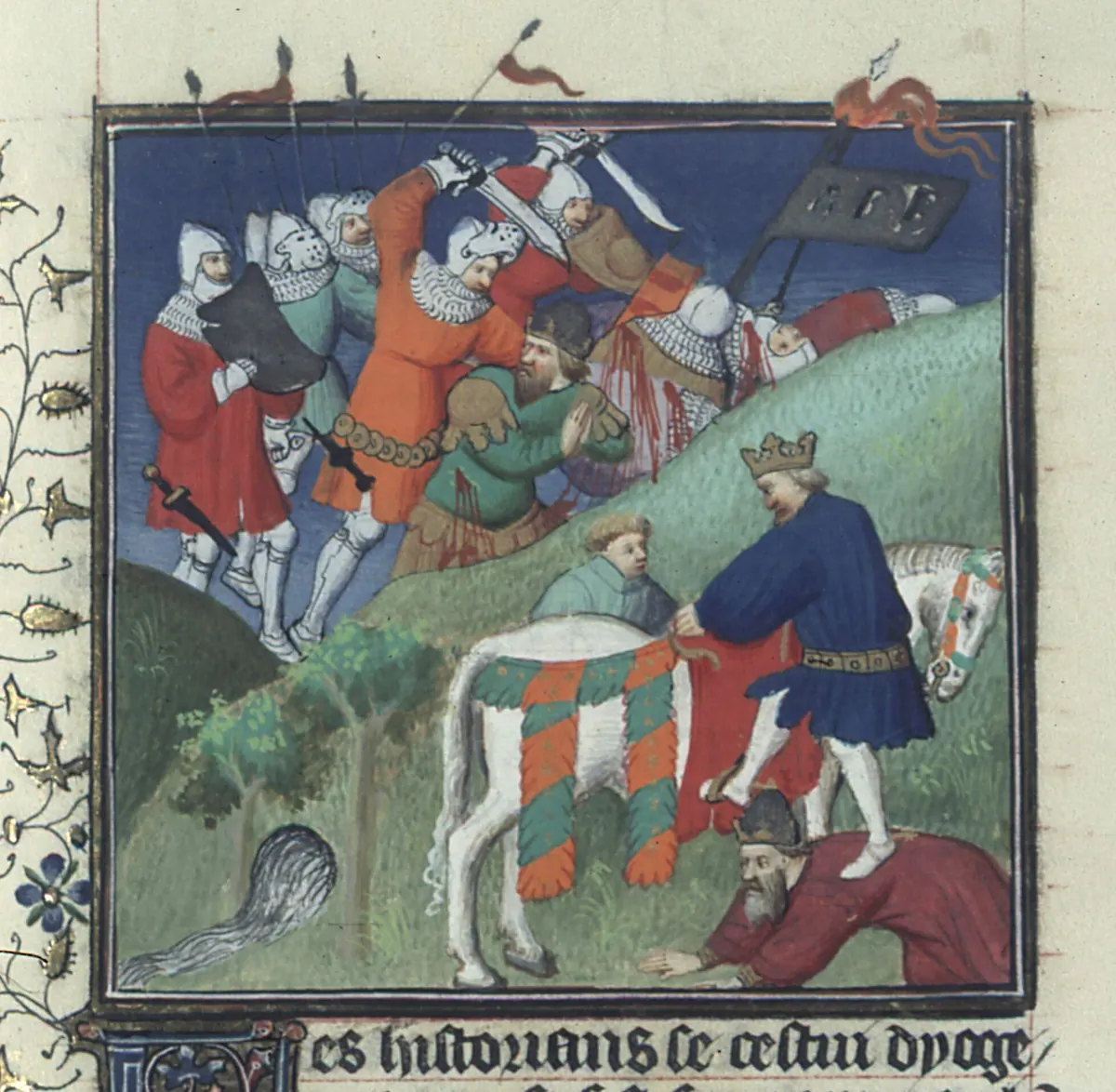
Alp Arslan treated Romanos generously. He signed a peace treaty, collected a ransom, and sent the emperor home. It did not help. Romanos's rivals in Constantinople had already seized power. When he returned, they had him blinded with hot irons. He died of the infection within months.
The treaty died with him. The new rulers in Constantinople refused to honor it, and the Seljuks no longer had a reason to hold back. Over the next twenty years, while Byzantine generals fought each other for the throne, Turkmen nomads filtered into Anatolia and settled on land no one was defending. By 1100, the empire had lost roughly three quarters of Asia Minor. The land that had produced its soldiers and its food was gone.
The crusade that destroyed the wealth
The loss of Anatolia forced the empire into a dangerous dependency on western help. In 1095, Emperor Alexios I Komnenos asked Pope Urban II for western mercenaries to fight the Seljuks. The Pope sent something larger and less controllable: the First Crusade. The Crusade recovered some coastal territory, but Alexios paid for Venetian naval support by giving Venice sweeping trade privileges inside Constantinople: lower customs duties than Byzantine merchants paid, a quarter of their own in the city, and access to the empire's ports. Within a generation, Italian merchants dominated Constantinople's trade. The profits that had once filled the imperial treasury flowed to Venice and Genoa instead.
A century later, the arrangement turned lethal. The Fourth Crusade, organized to attack Egypt, was redirected to Constantinople by the Venetian doge Enrico Dandolo, who was over 80 and blind. He had a commercial rivalry to settle. The Crusaders breached the sea walls on April 12, 1204, and sacked the city for three days. They stripped churches, burned libraries, and melted down bronze statues for coin.
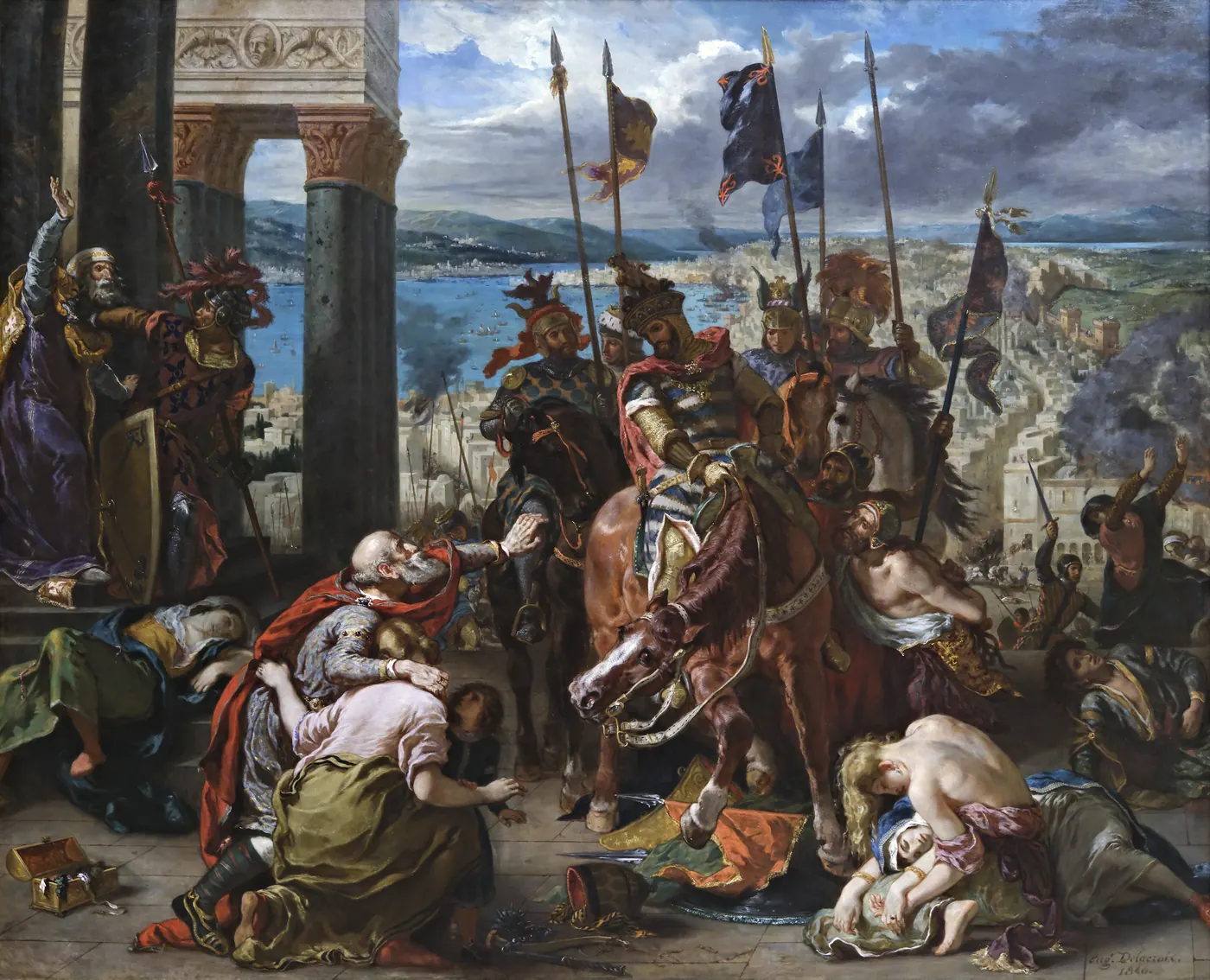
A Byzantine successor state based in Nicaea retook Constantinople in 1261. The city they recovered had roughly 35,000 people, down from several hundred thousand. The gold solidus, the trusted currency of Mediterranean commerce for seven centuries, had been debased beyond recognition during the decades of exile. The empire that came back was a small state, surrounded by enemies it could no longer afford to fight.
How the empire invited the Ottomans in
The restored empire spent most of its last two centuries tearing itself apart. The civil war of 1321 to 1328 pitted Emperor Andronikos II against his own grandson. The civil war of 1341 to 1347 was worse: a nobleman named John Kantakouzenos seized the throne from the young heir John V Palaiologos. Both sides did the same thing. They hired Ottoman Turkish soldiers to fight their rivals.
Kantakouzenos went furthest. He married his daughter Theodora to the Ottoman sultan Orhan in 1346 and brought Ottoman troops into Thrace. In 1354, an earthquake destroyed the walls of Gallipoli, and the Ottomans occupied the ruined fortress, gaining their first permanent base in Europe. They never left. Within a few decades, Ottoman armies had conquered most of the Balkans. Constantinople was a Christian island surrounded on every side by Ottoman territory.
A western Crusade marched into the Balkans in 1396 to relieve the pressure. The Ottoman sultan Bayezid I destroyed it at the Battle of Nicopolis. Emperor Manuel II Palaiologos then traveled to western Europe in person, spending 1399 to 1403 visiting the courts of Italy, France, and England. He spent Christmas 1400 as a guest of King Henry IV at Eltham Palace outside London. He was received with courtesy everywhere and returned with almost nothing. Catholic Europe was not going to fight a major war for an Orthodox emperor who refused to accept the Pope's authority.
By 1400, the Byzantine "Empire" was Constantinople, a narrow coastal strip, and a few towns in southern Greece. Fields inside the city walls had gone back to farmland. Orchards grew where neighborhoods once stood.
The end
By 1453, the empire was a name attached to a single city. Emperor Constantine XI had fewer than 7,000 defenders for 19 kilometers of walls. Mehmed II brought roughly 80,000 troops and a cannon so large it needed 60 oxen to drag into position. The siege lasted 53 days. On the morning of May 29, Ottoman soldiers broke through near the Gate of St. Romanus. Constantine XI reportedly tore off his imperial insignia and charged into the fighting. His body was never identified.
The Byzantine Empire did not fall because a single enemy overwhelmed it. It lasted longer than any state in European history. It fell because four centuries of lost territory, looted wealth, and civil war drained it until it could not pay for its own survival. The cannon that broke Constantinople's walls had been offered to the Byzantine emperor first. He could not afford to hire the man who built it. The sultan could. The empire that had adapted its way through a thousand years of crises finally ran out of the resources to adapt with.
Test what you learned
5 questions on this article. About two minutes, no signup.
Orbis has a full course on this
World History: 12,000 Years of Civilization. 41 lessons, each ending with a quiz like this one.