Why did the Spanish Armada fail?
In 1588, Spain sent 130 warships to invade England. The plan depended on a rendezvous that could never happen, and the weather finished the job.
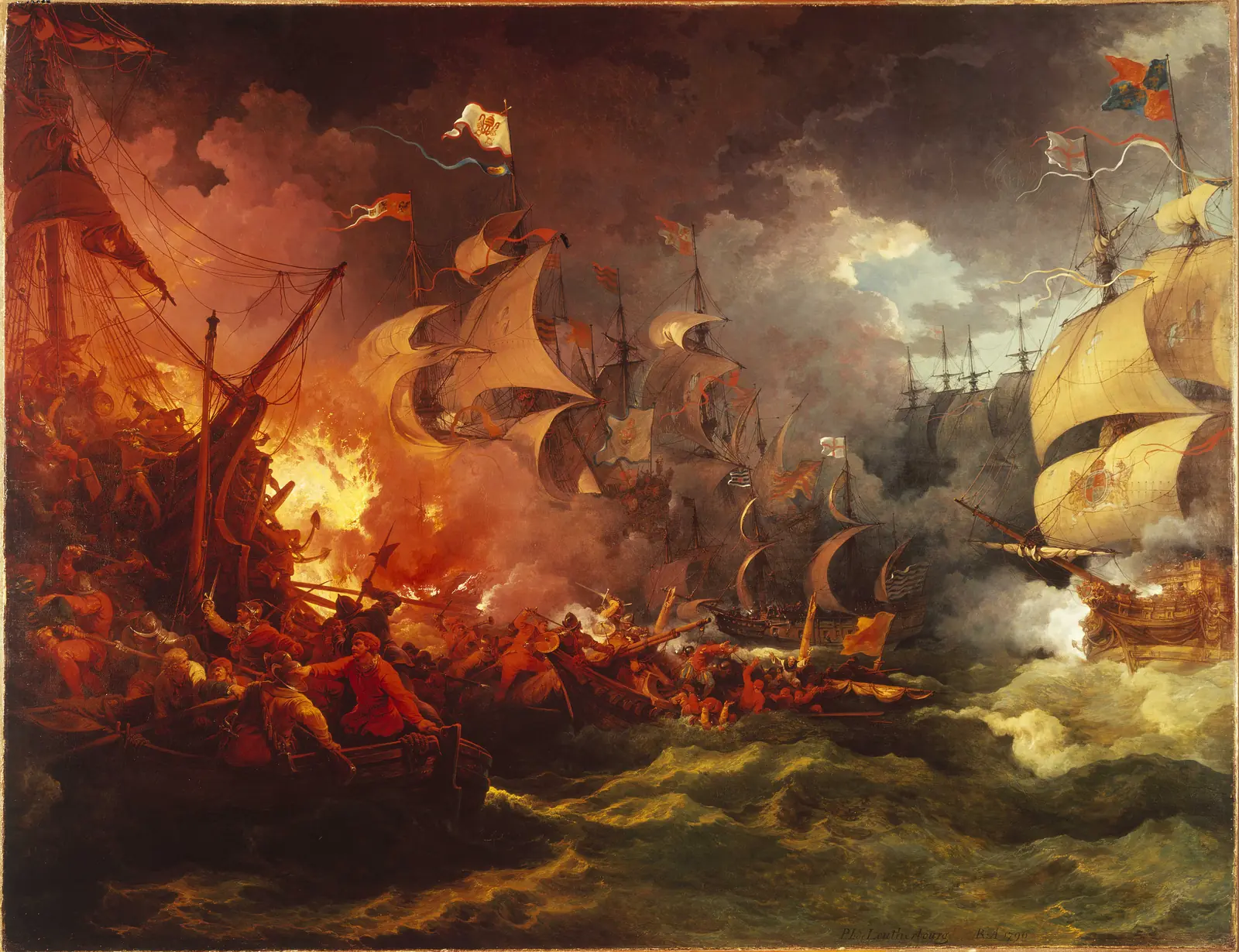
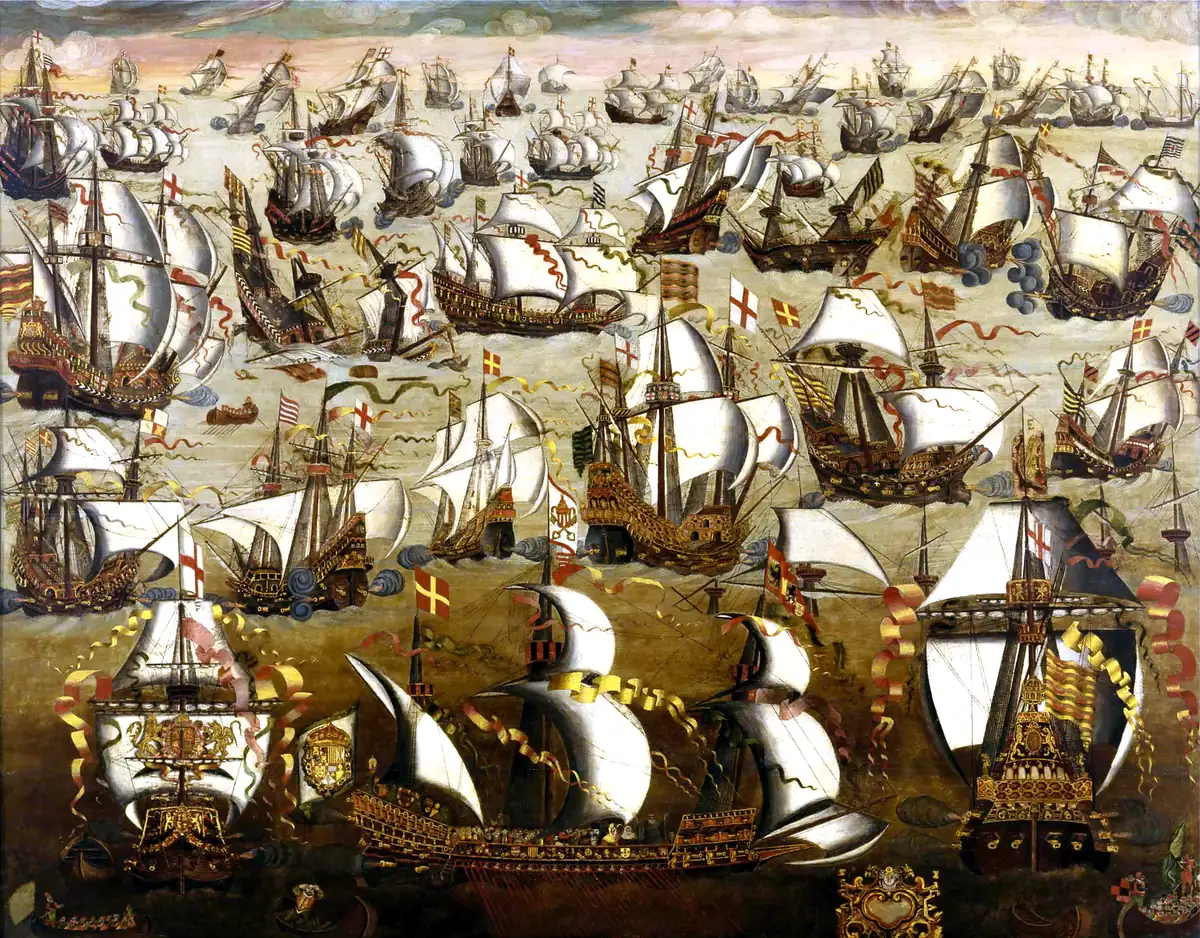
In the summer of 1588, the largest fleet Europe had ever assembled sailed out of Lisbon and turned north toward the English Channel. It carried roughly 130 ships, 8,000 sailors, and 18,000 soldiers. The Spanish called it La Armada Invencible, the Invincible Fleet. Its mission was to pick up a second army in the Netherlands, cross the Channel, and conquer England.
About half the fleet came home. The other half was scattered, wrecked, or sunk, and roughly 15,000 men died, most of them not in battle but in storms off the coasts of Scotland and Ireland. The defeat is one of the most famous in military history, usually told as a story of plucky English seamanship against Spanish arrogance. The real story is more about a plan that had a fatal flaw built into it from the start.
Why Philip II wanted to invade England
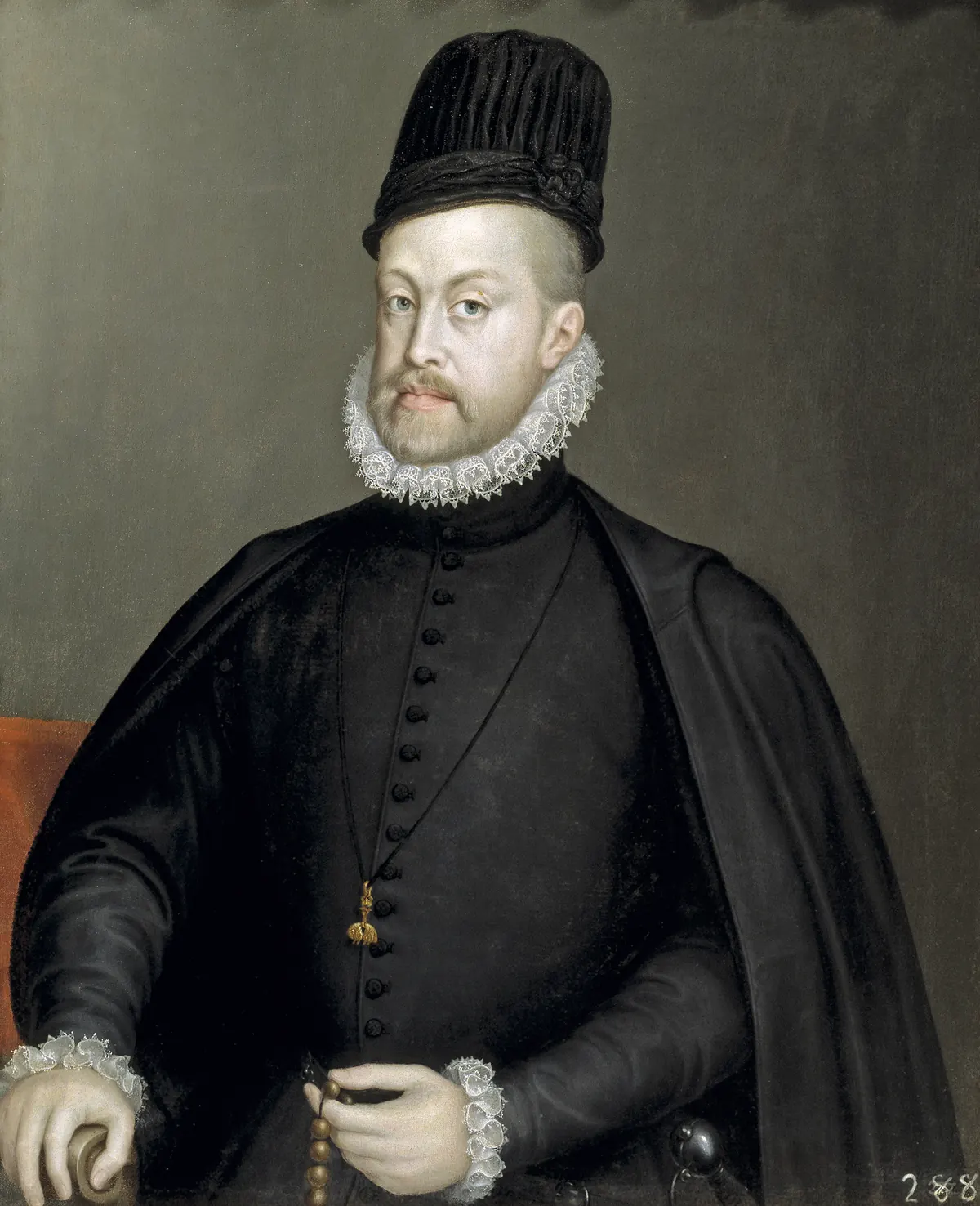
Philip II of Spain had three reasons to invade England, and all three arrived at the same time.
The first was religion. England had broken with Rome under Henry VIII in the 1530s, and by 1588, under Elizabeth I, it was a Protestant country openly supporting Protestant rebels in the Spanish Netherlands. Philip, the most powerful Catholic monarch in Europe, saw himself as the defender of the faith. The Reformation had split Europe in two, and England was on the wrong side.
The second was money. English privateers, most famously Francis Drake, had been raiding Spanish treasure ships in the Caribbean for years. Drake's 1577 to 1580 circumnavigation of the globe was partly an act of piracy: he captured Spanish silver worth roughly £600,000, half of which went to Elizabeth's treasury. Spain's entire economy ran on silver from its American mines, and England was stealing it in transit.
The third was politics. In 1587, Elizabeth executed Mary Queen of Scots, a Catholic with a claim to the English throne. Philip had spent years plotting to put Mary on the throne and return England to Catholicism. Her execution removed the political solution and left invasion as the only option.
A plan that needed a meeting that could not happen
Philip's plan was straightforward on paper. The Armada, commanded by the Duke of Medina Sidonia, would sail up the English Channel to the coast of Flanders. There it would rendezvous with the Duke of Parma, who had 30,000 Spanish soldiers in the Netherlands. Parma's men would board flat-bottomed barges, the Armada would escort them across the Channel, and the combined force would land in Kent and march on London.
The problem was the rendezvous. Spain held no deep-water port on the Flemish coast. Parma's barges sat in shallow harbors and canals around Dunkirk and Nieuport, and Dutch rebel ships under Justin of Nassau patrolled those waters constantly. The Armada's warships drew too much water to sail close enough to shore to break the Dutch blockade. Parma's barges could not venture into open water without the Armada's protection, but the Armada could not reach the barges to protect them.
On top of that, communication between the two forces was almost nonexistent. Medina Sidonia received only a single message from Parma before the fleet sailed, and that message said Parma's army was not yet ready. Moving the barges through the canal network to Gravelines would take up to two weeks even under ideal conditions. The plan required two forces to arrive at the same place at the same time with no way to coordinate, on a coast with no suitable harbor.
English ships and English guns
England's other advantage was its navy. The Royal Navy under Elizabeth had been rebuilt around a new type of warship: lower, faster, and designed to fight with cannons at range rather than by pulling alongside an enemy ship and boarding it. Spanish warships were built as floating platforms for soldiers. English warships were built as gun platforms.
The English fleet, commanded by Lord Howard of Effingham with Drake as his second, had roughly 200 ships (though many were small). They harassed the Armada as it sailed up the Channel over the course of a week, firing from a distance the Spanish could not close. The Spanish formation held, but the constant English attacks used up ammunition and kept the Armada from anchoring safely.
Fire ships at Calais and the battle of Gravelines
On the night of July 28, the Armada anchored in the open roads off Calais. Calais harbor was too small for the fleet, so the ships sat exposed in the roadstead while Medina Sidonia sent urgent messages to Parma. Parma's forces were still days away.
The English saw their chance. Around midnight, they sent eight fire ships, old vessels packed with pitch, gunpowder, and tar, burning fiercely, straight into the anchored fleet. Fire ships were a known tactic, but that did not make them less terrifying. The Spanish captains cut their anchor cables and scattered into the dark.
The fire ships burned no Spanish vessels. But they did something more important: they broke the Armada's tight defensive formation, which was the only thing that had kept it safe during a week of running fights. By morning, the Spanish ships were strung out along the Flemish coast with no way to reform.
The English attacked at Gravelines on July 29. For the first time, they closed to short range and pounded the scattered Spanish ships for hours. The Spanish lost five ships in the battle and suffered roughly 2,000 casualties. English losses were light: no ships sunk and fewer than a hundred killed. The Armada was battered, low on ammunition, and now had no hope of meeting Parma.
The storms that killed more men than the English did
The wind saved what was left of the Armada from total destruction at Gravelines by pushing the fleet northward into the North Sea. But that same wind made it impossible to sail back through the Channel. Medina Sidonia had only one option: sail north around Scotland, then west around Ireland, and back down the Atlantic coast to Spain.
The route was roughly 1,500 miles through some of the worst seas in the world. Many ships were already damaged and leaking. They had no charts for the Scottish and Irish coasts. Autumn storms hit the fleet off the west coast of Ireland, and ship after ship was driven onto the rocks. Thousands of Spanish sailors who made it to shore were killed by local English garrisons or Irish chieftains loyal to England. Roughly 5,000 men died in the wrecks off Ireland alone.
Of the 130 ships that had left Lisbon, about 67 returned to Spain. Fewer than 10,000 of the original 26,000 men came home. Disease and malnutrition killed many of the survivors within weeks of landing.
Spain did not collapse, and England did not win the war
The defeat of the Armada is often treated as the moment Spain declined and England rose. That is not what happened. Spain rebuilt its navy within two years and continued to be the dominant power in Europe for decades. Philip II sent two more armadas against England, in 1596 and 1597, though storms scattered both before they reached the coast. The Habsburg dynasty that ruled Spain remained the most powerful family in Europe until the mid-1600s.
England, meanwhile, could not follow up its victory. A counter-armada Elizabeth sent to attack Spain and Portugal in 1589, led by Drake and Sir John Norris, was a disaster: it lost roughly 11,000 men and accomplished nothing. The naval war between England and Spain dragged on until 1604, when both sides signed a peace treaty. England did not replace Spain as Europe's leading naval power for another century.
What the Armada's failure actually showed was simpler and more lasting. An invasion plan built around a rendezvous with no harbor and no communication was a plan built to fail. The English did not beat the Armada so much as the Armada beat itself, by attempting something its logistics could not support. The storms that followed were not bad luck. They were what happens when a damaged fleet with no safe port tries to sail 1,500 miles through the North Atlantic in autumn.
The pattern has repeated. Napoleon assembled an invasion force at Boulogne in 1805 and never crossed the Strait of Dover, because he could not win control of the Channel. Hitler's Operation Sea Lion in 1940 faced the same problem. The English Channel is only 21 miles wide at its narrowest point, but for four centuries, no invasion fleet has crossed it, because the logistics of putting an army across even a narrow sea are harder than they look.
Test what you learned
5 questions on this article. About two minutes, no signup.
Orbis has a full course on this
The British Empire. 51 lessons, each ending with a quiz like this one.