Why is Russia losing the South Caucasus?
Russia ran the South Caucasus for two centuries. Now Armenia buys its weapons from France and India, and only Georgia is still moving Moscow's way.
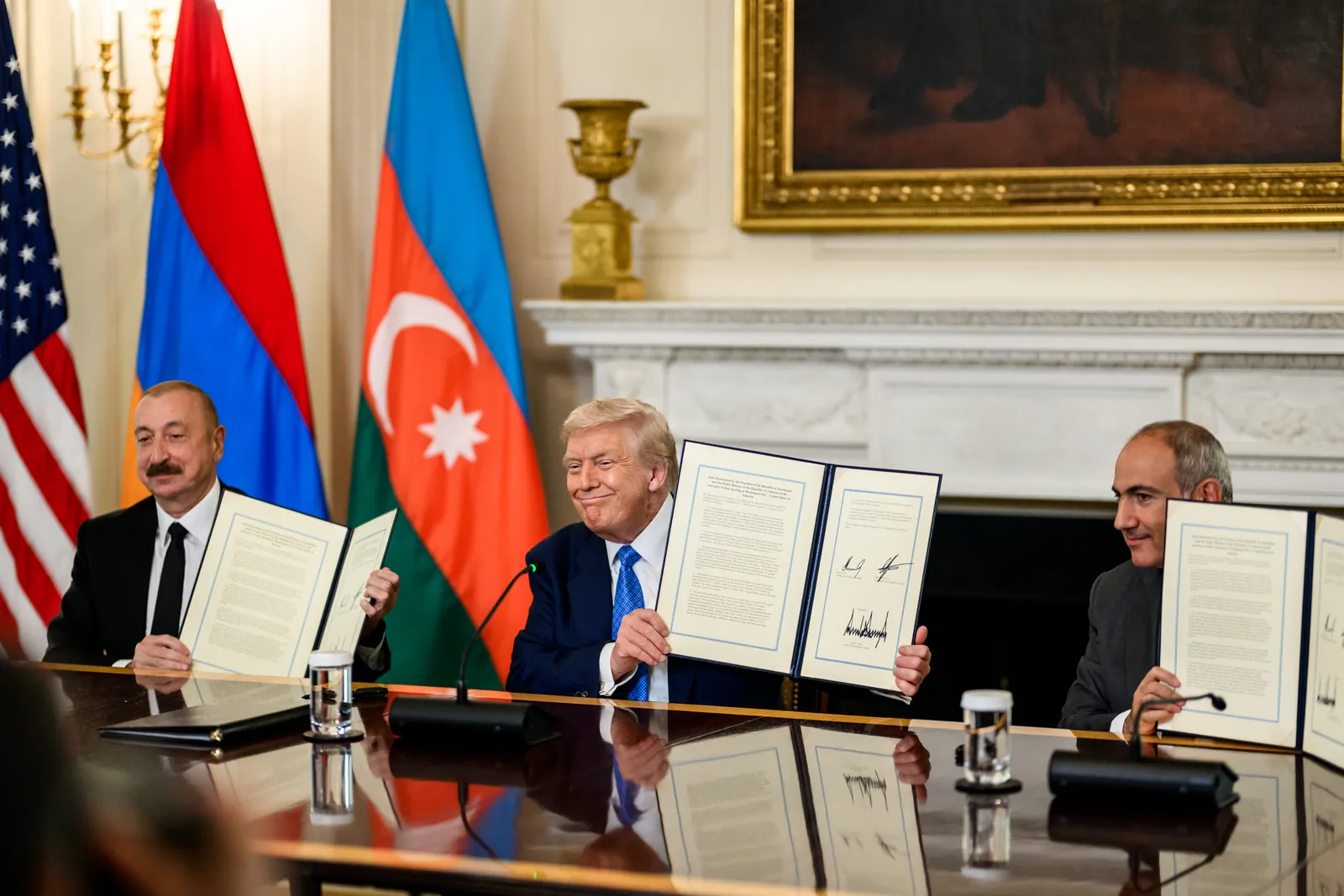
On August 8, 2025, the president of Azerbaijan and the prime minister of Armenia sat down in the White House, signed a declaration ending nearly forty years of conflict, and agreed to let an American company build a road and railway across southern Armenia. The route was named the Trump Route for International Peace and Prosperity. Russia, the dominant power in the region since 1828 and the guarantor of Armenia's security, was not in the room. Neither was Turkey. Neither was Iran.
Armenia, Azerbaijan, and Georgia hold about 17 million people between them. They matter because of what crosses them: the only land bridge between the Caspian Sea and the Black Sea that avoids both Russia and Iran. For two hundred years Moscow decided who used that ground. It does not anymore, and it never lost a battle there.
How Russia held the Caucasus for two centuries
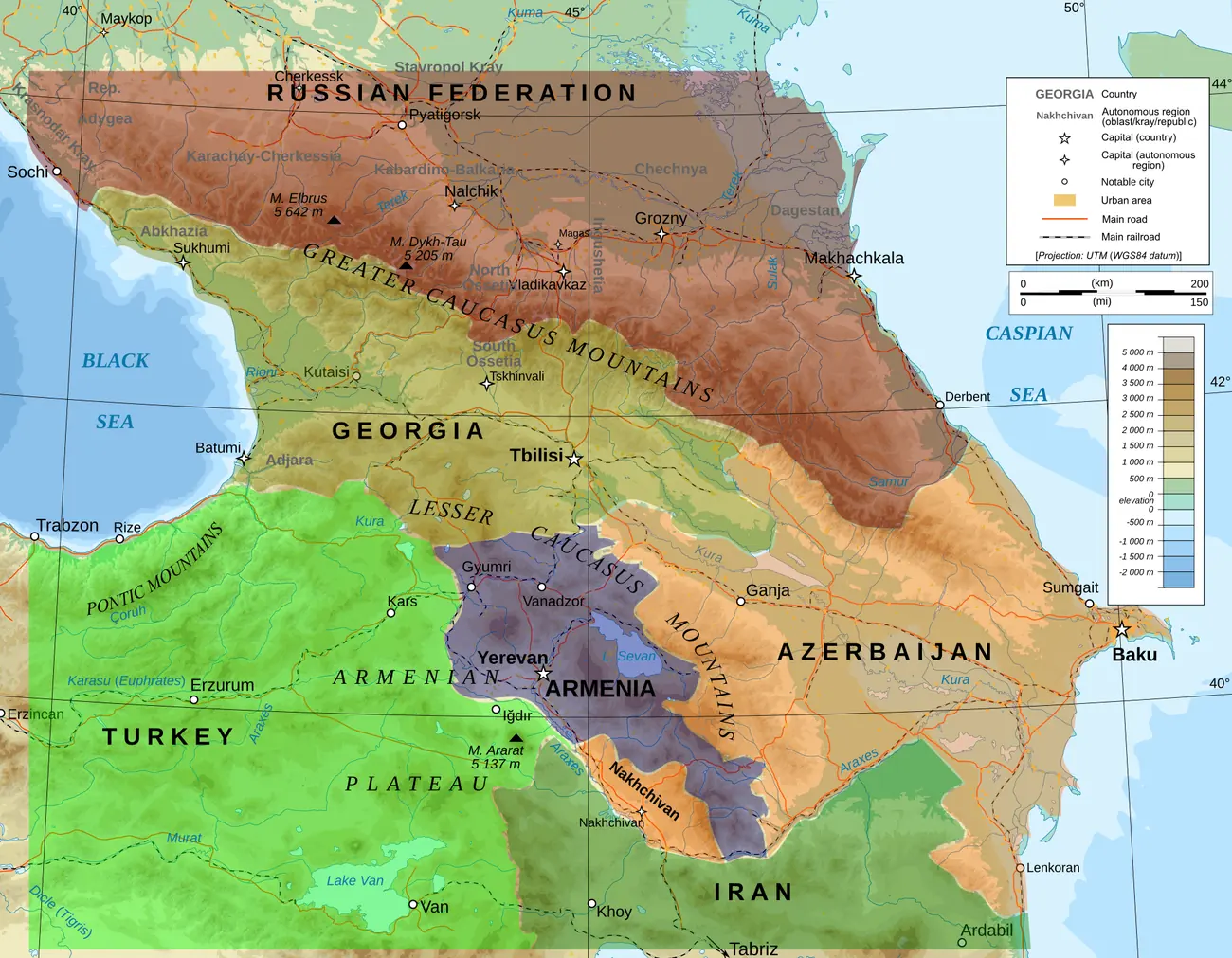
Russia took the region from Persia in two wars, the last ending in 1828. The Soviet Union then drew the internal borders that still cause the trouble, and two of them matter. The first put Nagorno-Karabakh, a mountain district with an Armenian majority, inside Soviet Azerbaijan rather than Soviet Armenia. The Bolsheviks' Caucasus Bureau voted on July 4, 1921 to give the district to Armenia, then reversed the decision the next day. The second left Nakhchivan, a piece of Azerbaijan with about 460,000 people, separated from the rest of the country by 40 kilometers of Armenian land. Stalin, a cobbler's son from the Georgian town of Gori who was then Moscow's commissar for nationalities, sat on that bureau.
Inside one country those lines were administrative. When the Soviet Union collapsed in 1991 they became international borders, and both decisions turned into wars. Armenia and Azerbaijan fought over Nagorno-Karabakh from 1988 to 1994, a war that killed about 30,000 people. Armenia won and held the district. Turkey shut its border with Armenia in 1993 to back Azerbaijan, and it is still shut.
That unresolved war was the source of Russian power. Armenia, with 3 million people against Azerbaijan's 10 million and Turkey behind them, needed a protector, so it joined Russia's military alliance and hosted a Russian base at Gyumri. Azerbaijan needed the opposite: Russia's goodwill, so that the treaty protecting Armenia would never be honored. Russia sold weapons to both.
How Azerbaijan ended the conflict Russia depended on
On September 27, 2020, Azerbaijan attacked. It had spent two decades of oil revenue on Turkish and Israeli drones, and Armenia's Soviet-era air defenses could not handle them. About 6,500 soldiers died in six weeks. The ceasefire Vladimir Putin brokered that November looked like a win for Moscow: it put 2,000 Russian peacekeepers inside Nagorno-Karabakh, where Russia had never had troops.
Azerbaijan then tested what those peacekeepers were for. In December 2022 it blocked the Lachin corridor, the only road connecting Nagorno-Karabakh to Armenia, and kept it blocked for nine months while food and medicine ran short. Keeping that road open was the peacekeepers' one written job, and they did not do it. On September 19, 2023, Azerbaijan shelled the district for a day and its Armenian authorities surrendered. Within a week, 100,400 people, about 99 percent of the population, drove out along that road into Armenia. Russia withdrew its peacekeepers the following April.
Russia did not lose the South Caucasus because it was beaten there. Its position rested on the conflict staying unsolved, because only while Nagorno-Karabakh was in dispute did Armenia need a protector, and Azerbaijan need that protector kept at bay. Azerbaijan settled it by force, in a week, while Russia was tied down in Ukraine. Once the conflict was over, so was the reason to pay Russia for anything.
Why Armenia turned toward Europe
Nikol Pashinyan, Armenia's prime minister since 2018, is an unlikely man to be dismantling his country's alliance with Russia. He edited an opposition newspaper, spent about a year in prison after Armenia's 2008 election crackdown, and came to power by walking across the country at the head of a protest movement.
Since the fall of Nagorno-Karabakh he has moved steadily. Armenia froze its participation in the Russian-led military alliance in February 2024 and stopped paying its dues. In April 2025 it passed a law starting the process of joining the European Union. In June 2026 Pashinyan's party won re-election against opponents who campaigned on repairing relations with Moscow. In September 2026 he said Armenia would not object if Russia closed its base at Gyumri.
The weapons tell the same story. Between 2011 and 2020, 94 percent of Armenia's major arms imports came from Russia. Russia stopped delivering after it invaded Ukraine in 2022, and Armenia now buys its artillery and air defenses from India and France.
What Armenia has not done is leave Russia's economy. It is still in Russia's trade union, Russia is still around 35 percent of its foreign trade, and its gas still comes from Gazprom. Armenia is trying to walk out of Russia's security system while staying inside its market.
Why Azerbaijan stopped deferring to Moscow
Azerbaijan is run by the closest thing the former Soviet Union has to a dynasty. Heydar Aliyev was a KGB general, then head of Soviet Azerbaijan, then a Politburo member in Moscow, then president of the independent country until he died in 2003. His son Ilham Aliyev has held the office ever since, and in 2017 he created the post of first vice president and gave it to his wife.
Azerbaijan's leverage is gas. It now sends Europe close to 13 billion cubic meters a year and has agreed to reach 20 billion by 2027. Europe's break with Russian gas made it more valuable, not less.
The break with Moscow came out of a plane crash. On December 25, 2024, an Azerbaijan Airlines jet approaching Grozny was hit by Russian air defenses firing at Ukrainian drones. It came down near Aktau in Kazakhstan, killing 38 of the 67 people aboard. Putin apologized for the "tragic incident" without admitting Russia had caused it. Ilham Aliyev refused to accept that, and ten months later Putin told him Russian air defenses were to blame and promised compensation. A country of 10 million had made Russia admit in public to shooting down its airliner.
Georgia is the one country moving closer to Russia
Georgia fought a war against Russia in 2008. Russia recognizes Abkhazia and South Ossetia as independent states and keeps troops in both, leaving roughly a fifth of Georgian territory outside the Georgian government's control. EU membership is written into the Georgian constitution, and support for it polls at around 80 percent. Georgia is also the country in the region now moving back toward Moscow.
The reason is one man and the party he built. Bidzina Ivanishvili, the billionaire who founded the ruling Georgian Dream party, made his fortune in Russia in the 1990s in metals and banking and is worth roughly a quarter of Georgia's annual economic output. He keeps a private zoo with penguins, and has run his party from outside the government since 2013.
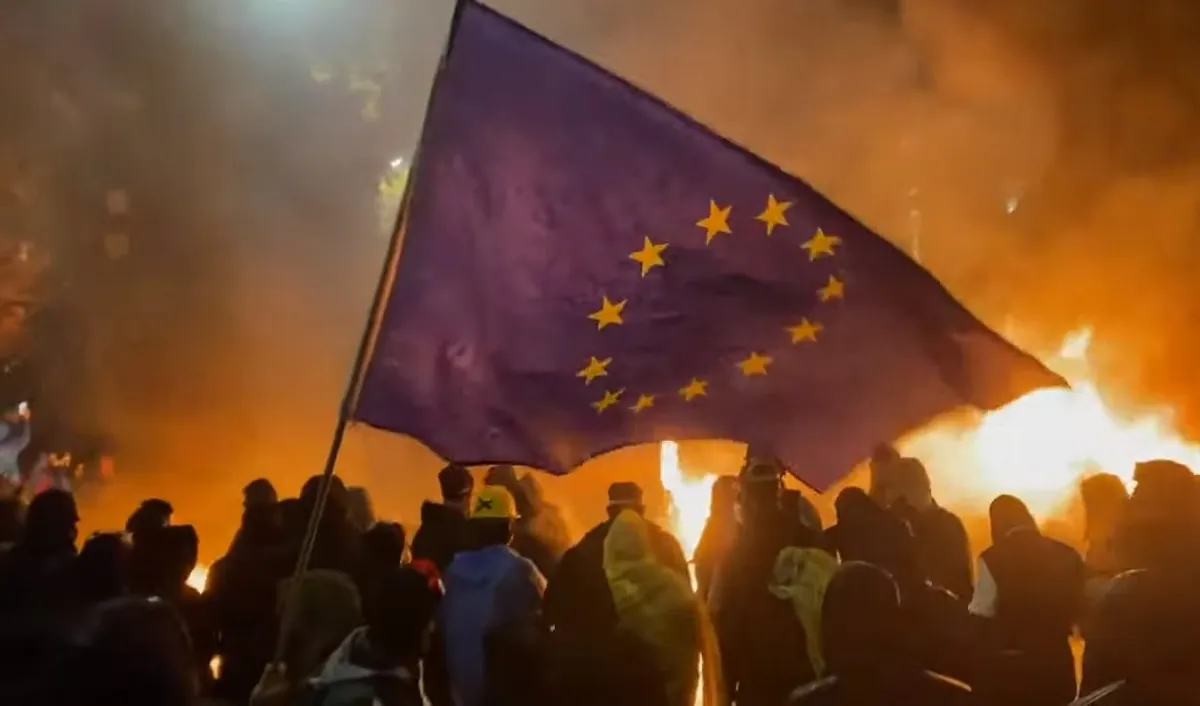
In May 2024 Georgian Dream passed a foreign agents law modeled on Russia's. After a disputed election that October, Prime Minister Irakli Kobakhidze suspended talks on joining the European Union until 2028, and protests have run in Tbilisi ever since. Georgian Dream is now asking the constitutional court to ban the main opposition parties outright.
Georgia is also being routed around. For thirty years it was the only way from Azerbaijan to Turkey and Europe that avoided Russia, Iran, and Armenia's sealed borders, which is why the Baku-Tbilisi-Ceyhan oil pipeline and the Baku-Tbilisi-Kars railway both run through it. At Davos in January 2026, Ilham Aliyev and Armenia's president discussed moving trade directly between their countries. Georgia was not part of the conversation.
Why everyone is arguing about 43 kilometers of southern Armenia
The corridor at the center of the Washington deal is short. It runs 43 kilometers through the Meghri district in Armenia's far south, along the Iranian border, carrying a railway and a road from Azerbaijan to Nakhchivan and on to Turkey, without touching Iran.
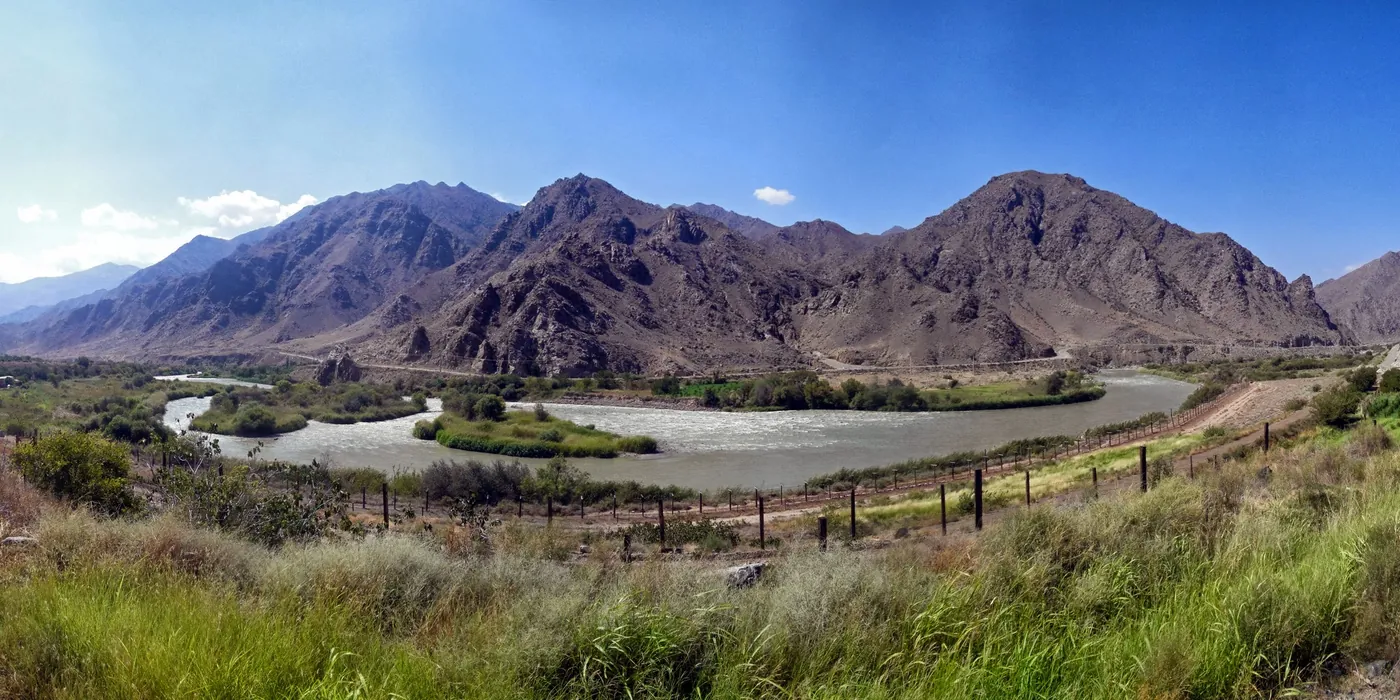
The ownership is unusual. The route stays Armenian sovereign territory, but an American-led company holding 74 percent of the venture would build and run it, with exclusive development rights for 99 years. Construction is due to start in the second half of 2026. Turkey, which shut its own border with Armenia in 1993, will reopen it only once the two countries sign a formal peace treaty, and the text they initialed in Washington is still unsigned.
Iran objects, because the corridor removes its only friendly land route into the Caucasus and puts American-run infrastructure on its northern border. Iranian security officials have called the planned railway a NATO line. Iran is also in no position to stop it. It has been at war with the United States and Israel since February 2026, and its supreme leader Ali Khamenei was killed in the opening strikes. When drones hit Azerbaijan's Nakhchivan exclave in March 2026, Ilham Aliyev blamed Iran and pulled his diplomats from Tehran.
What the Caucasus looks like now
Freight across the Caspian Sea and through the Caucasus has grown more than fivefold in seven years. With the Strait of Hormuz shut and the Red Sea unsafe, a land route from China to Europe that avoids both Russia and Iran is worth more every month, which is why China's Belt and Road planners keep coming back to it.
What replaces Russian dominance is not Western dominance. The strongest players in the South Caucasus today are Azerbaijan and Turkey, which won the argument on the ground and now write the terms. America's presence is a construction contract dependent on a peace treaty nobody has signed. The European Union has the most leverage over Georgia, whose citizens travel into the bloc without visas, and it has used almost none of it.
Russia's position in the Caucasus was never mainly about its bases or its troops. It rested on conflicts only Moscow could manage, and on two governments with nowhere else to go. Azerbaijan ended the largest of those conflicts without Moscow's help, and the rest of Russia's position went with it. What Moscow has left is Georgia, a country whose own voters mostly want the opposite, and two occupied territories nobody trades through.
Test what you learned
6 questions on this article. About two minutes, no signup.
Orbis teaches the history behind the news
Orbis covers the South Caucasus lesson by lesson, from the Soviet borders that created the conflict to the corridor now being cut through southern Armenia.