Why is South Korea's birth rate so low?
South Korea went from six children per woman to 0.72 in sixty years. The government has spent over $280 billion trying to reverse it.

In 2023, South Korea recorded a total fertility rate of 0.72 children per woman. That is the lowest rate ever measured in any country with reliable statistics. It is roughly one-third of the 2.1 rate needed to keep a population stable without immigration. Japan, which has been treated as the world's cautionary example of demographic decline for two decades, has a fertility rate of about 1.2. South Korea's is nearly half of that.
The country that went from poorer than Ghana to the world's 14th-largest economy in a single generation, that builds the world's most advanced memory chips and the world's largest ships, cannot get its people to have children. Since 2006 the government has spent an estimated 360 trillion won, roughly $280 billion, on cash bonuses, parental leave, and fertility programs. The birth rate kept falling.
The campaign that worked too well
The story starts with a deliberate policy choice. In 1960, South Korea's fertility rate was about 6.0, one of the highest in Asia. Park Chung-hee, the military dictator who seized power in 1961 and ran the country for eighteen years, saw big families as a brake on economic growth. Fewer children meant more household savings, more women available for the factories, and less strain on a government trying to build an industrial economy from almost nothing.
In 1962, Park's government launched a national family planning campaign as part of its first Five-Year Economic Plan. Activists went door to door in rural villages to lecture on contraception. Government posters showed a destitute family with many children next to a prosperous family with two, with slogans that left nothing to interpretation: "Don't discriminate between boys and girls, have only two children and raise them well." Men who got vasectomies were exempt from reserve military duty and given priority to buy a new apartment. By the 1980s, the official slogan had hardened to "Two is too many."
The campaign worked. South Korea's fertility rate fell from 6.0 to below the replacement level of 2.1 by 1983, a collapse that took most Western countries a century but took South Korea barely twenty years. The government declared victory and dismantled the program. But the social machinery that drove families toward fewer children, long work hours, rising costs, intense competition for education, kept running without it.
What a child costs in Seoul
The most common answer South Koreans give when asked why they are not having children is money. Specifically, housing and education.
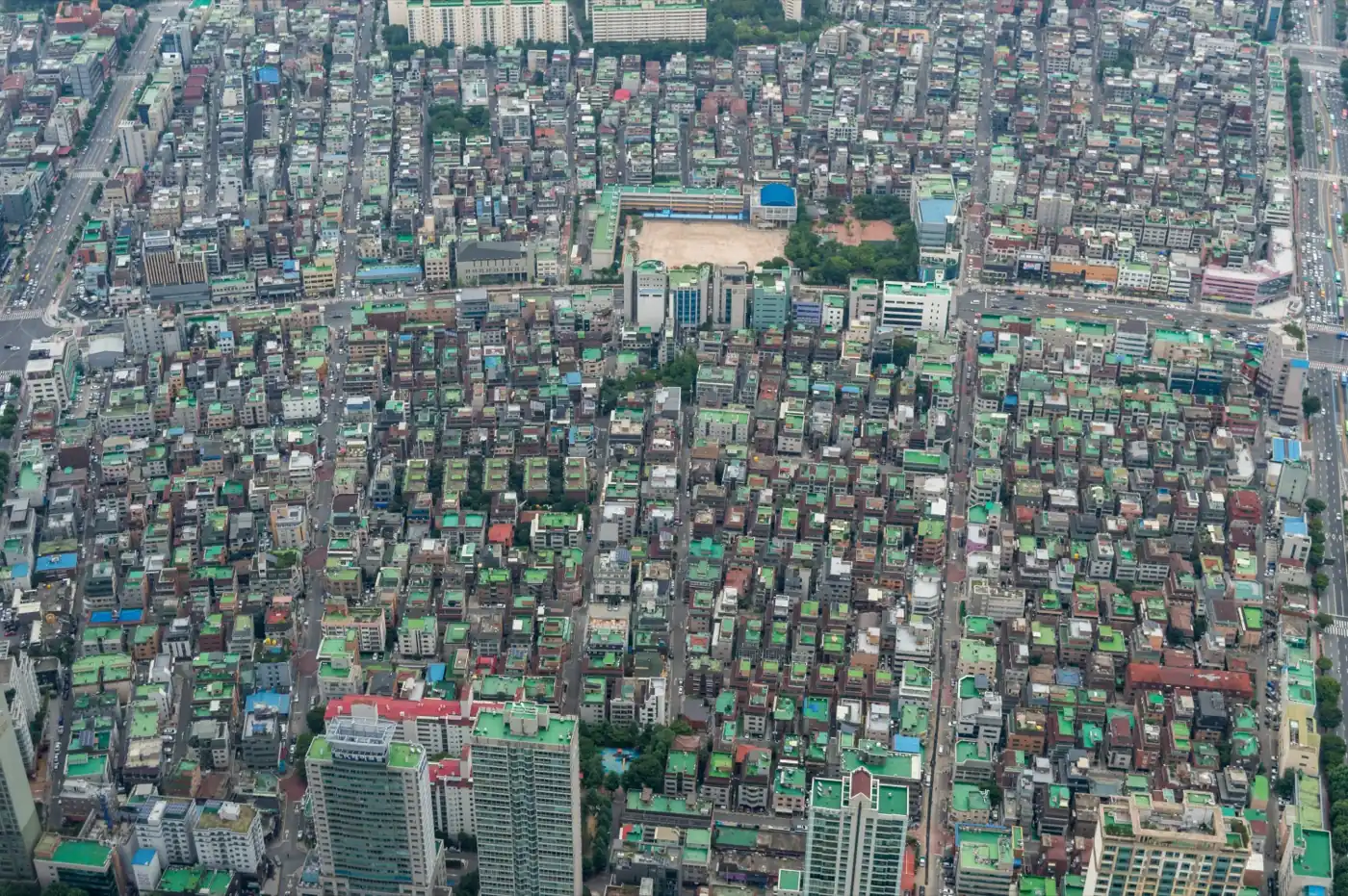
Buying a home in Seoul costs roughly 14 times the median household's annual income. That ratio is higher than London, higher than Tokyo, and roughly double the level that housing economists consider severely unaffordable. The traditional Korean rental system, called jeonse, requires tenants to hand over a lump sum deposit equal to 50 to 80 percent of the apartment's market value. A young couple saving for a home or a jeonse deposit has little left over.
Then there is education. South Korea spends more per child on private tutoring than any other country. The average household spends about 474,000 won per month, roughly $355, per child on after-school academies called hagwons. For high-income families the figure is closer to $500. "English kindergartens," where children as young as three attend all-day immersion programs, cost about 1.54 million won per month, more than $1,100. The total private tutoring market hit 29 trillion won ($20 billion) in 2024, up 60 percent from a decade earlier.
This spending is not optional. South Korean parents treat education as an arms race. University entrance determines career prospects, and career prospects determine everything from marriage eligibility to social standing. A family that does not send its children to hagwon is a family that has opted out of the competition. Most families cannot afford to opt out, and many cannot afford to opt in with more than one child.
The longest hours, the widest gap
South Koreans work about 1,865 hours a year, roughly 500 more than German workers and over 100 more than the OECD average. A 52-hour weekly cap introduced in 2018 brought the number below 2,000 for the first time, but the culture around work has been slower to change than the law.
For women, the math is worse. South Korea has the largest gender pay gap in the OECD. A study by the Korea Development Institute found that women's employment drops 47 percent in the years after childbirth. In Sweden the equivalent figure is about 5 percent. South Korean women are among the most educated in the world, but the workplace still forces a choice between career and children that women in most other rich countries no longer have to make in the same way. As women's education and career expectations rose across the 1990s and 2000s, more of them chose career.
Why $280 billion did not fix it
Starting in 2006, the South Korean government began spending heavily to raise the birth rate. Cash bonuses at birth rose from token amounts to 2 million won ($1,500) for a first child, with larger payouts for a second. Monthly stipends, subsidized childcare, and expanded parental leave followed. By 2023, Health Minister Cho Gyu-hong told the National Assembly that cumulative spending had passed 360 trillion won.
None of it worked, because the money did not touch the structural causes. Cash bonuses do not lower apartment prices, shorten the workday, or reform a hiring culture that penalizes mothers. A survey by the Korea Institute of Child Care and Education concluded that the expanded subsidies "will have little effect" on birth decisions. The rate fell in nearly every year the spending increased.
A term for this generation entered Korean slang in the early 2020s: sampo, meaning "giving up three things," dating, marriage, and children. The more pessimistic version, N-po, replaces the number with a variable: an unlimited number of things given up, including employment, home ownership, and hope. A 2024 survey found that about half of South Koreans in their early twenties had already given up on marriage and children. The average age of first marriage has climbed to 33.9 for men and 31.6 for women, up more than five years in a generation.
A country that is already shrinking
South Korea's population peaked around 2020 and is now declining. The country recorded more deaths than births that year for the first time, and the gap has widened every year since. Government projections estimate the population will fall from about 51.7 million today to 47 million by 2050 and 36 million by 2072. The share of working-age people, the ones who staff the factories, pay the taxes, and serve in the military, will drop from 72 percent to 51 percent by mid-century.
In 2025, the fertility rate ticked up slightly to about 0.80, and births rose 6.7 percent to 254,000. The government called it progress. Most demographers attributed the bump to an echo effect: children of the 1970s baby boom reaching the end of their fertile years and having the children they had postponed, not a reversal of the trend.
South Korea built the chaebols, the Korean Wave, and one of the most technically advanced economies on earth by demanding extraordinary sacrifice from its people. It asked them to work longer, study harder, and compete more fiercely than almost any other society. That system produced growth rates other countries could only study from a distance. It also produced a country where the cost of raising a child, in money, in time, in career, is high enough that an entire generation decided not to.
Test what you learned
5 questions on this article. About two minutes, no signup.
Orbis has a full course on this
The Korean Peninsula. 24 lessons, each ending with a quiz like this one.