Why is Taiwan called the Republic of China?
Taiwan's official name is the Republic of China, a government founded in 1912 on the mainland. The name followed the losers of a civil war across the strait.
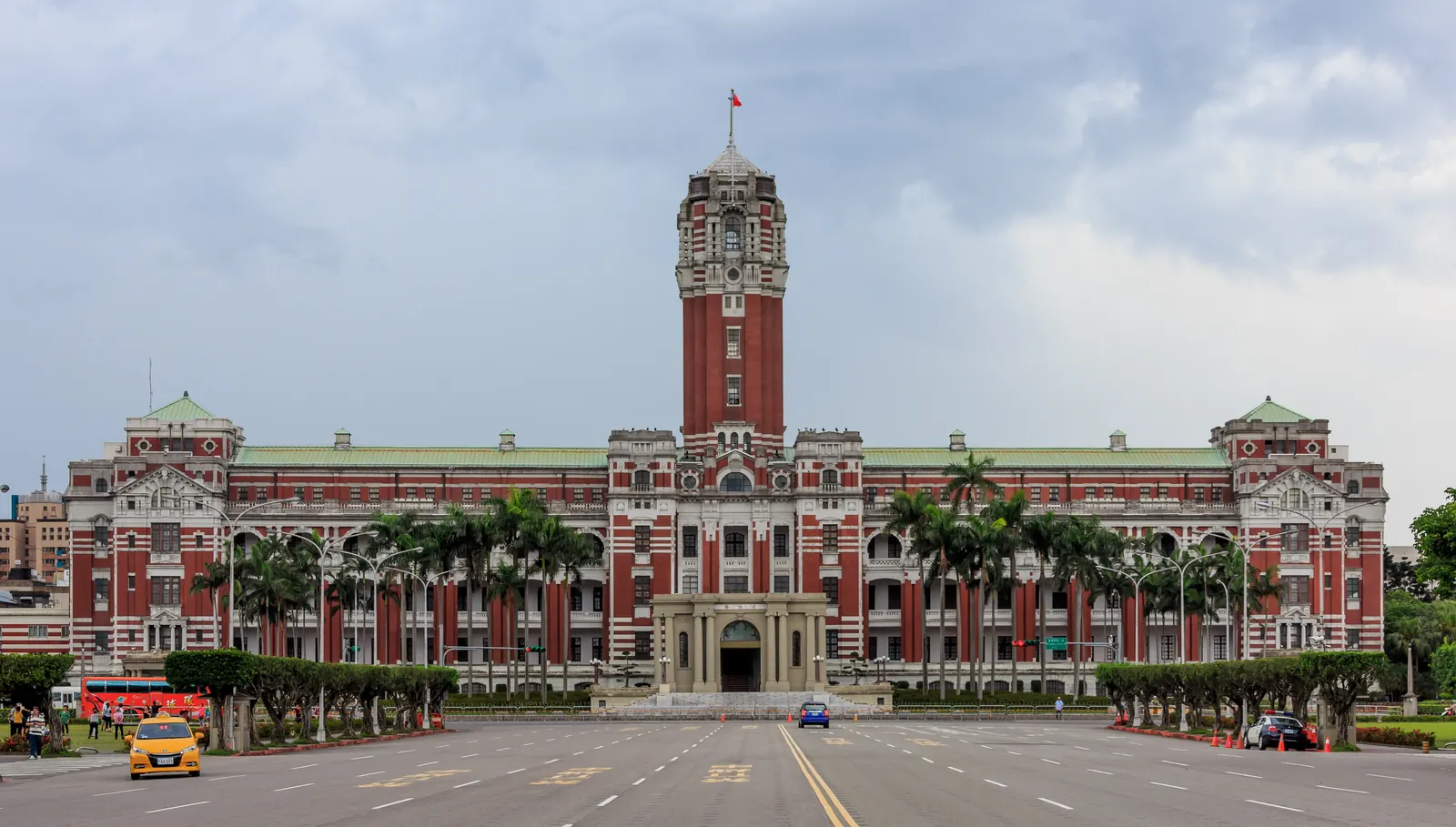
Taiwan's official name is the Republic of China. Its passport says so. Its constitution says so. The presidential building in Taipei flies a flag designed in 1928 for a government that once ruled Beijing, Shanghai, and Nanjing. The island itself is never mentioned in the constitution's text.
This is not a leftover that nobody has gotten around to fixing. The name is the single most sensitive political question in the Taiwan Strait, and changing it could start a war. To understand why, you need to know where it came from.
A republic born on the mainland
The Republic of China was proclaimed on January 1, 1912, in Nanjing. Sun Yat-sen, a doctor who had spent years organizing failed uprisings against the Qing dynasty, became its first provisional president. The Qing emperor abdicated six weeks later, ending over two thousand years of imperial rule in China.
The republic that replaced it was weak from the start. Sun held the presidency for barely two months before handing it to Yuan Shikai, a general who controlled the army. Within years, China fractured into warlord territories. Sun's Kuomintang (the Nationalist Party, or KMT) spent the 1920s fighting to reunify the country. After Sun died in 1925, Chiang Kai-shek took over the party and its army, and by 1928 the Republic of China governed most of China from its capital in Nanjing.
But Chiang also turned on his Communist allies. In 1927 his forces killed thousands of Communist organizers in Shanghai, and the survivors retreated into the countryside under Mao Zedong. That purge started the Chinese Civil War.
How the name crossed the strait
The civil war paused when Japan invaded China in 1937, and both sides fought the invaders for eight years. After Japan surrendered in 1945, the war resumed. Chiang had the larger army, more territory, and American backing. But his government was weakened by corruption, runaway inflation, and a population exhausted by a decade of war. Mao's forces had spent the war years winning support in the countryside. By 1948 the Communists were winning battle after battle.
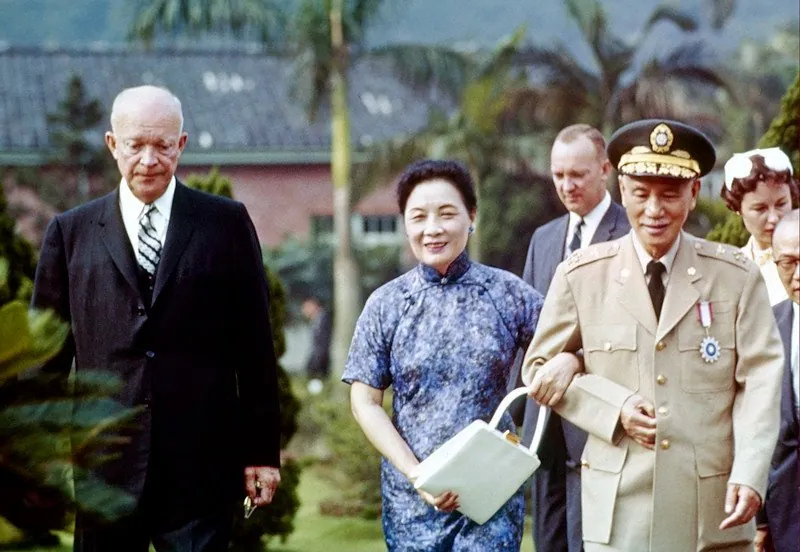
On October 1, 1949, Mao proclaimed the People's Republic of China in Beijing. Chiang evacuated to Taiwan with roughly two million soldiers and civilians, a large share of the national treasury, and thousands of crates of art from Beijing's imperial collections. He brought the government, the constitution, the flag, and the name.
Taiwan itself had not asked for any of this. The island had been a Japanese colony for fifty years. When the Nationalists took over in 1945, they imposed their language and their officials, crushed a popular uprising in the February 28 Incident of 1947, and declared martial law in 1949. It lasted 38 years.
Why both sides agreed on "one China"
Here is the part that surprises most people. For decades after 1949, Beijing and Taipei agreed on one thing: there was only one China, and Taiwan was part of it. They just disagreed on which government was the legitimate one.
Chiang insisted the Republic of China was the rightful government of all China, temporarily displaced. The legislature he brought from the mainland kept sitting in Taipei, with aging delegates representing provinces none of them would ever see again. Holding new elections for only Taiwanese seats would have admitted the obvious: the ROC governed only Taiwan. So the fiction held. Chiang promised to retake the mainland until the day he died in 1975.
The fiction had real consequences in the wider world. Because Chiang claimed to be China, and the United States backed that claim, the Republic of China held China's seat at the United Nations, including its permanent seat on the Security Council, until 1971. A government on an island of 15 million people represented a country of 800 million.
That ended when Richard Nixon went to Beijing. In the Shanghai Communiqué of 1972, the United States "acknowledged" that Chinese on both sides of the strait maintained there was one China. The verb was chosen carefully: it noted what the Chinese said without agreeing to it. In 1979, Washington formally recognized the People's Republic, cut diplomatic ties with Taipei, and passed the Taiwan Relations Act to keep selling the island weapons. The arrangement, called strategic ambiguity, has held since.
Why the name still has not changed
Taiwan became a democracy in the 1990s under President Lee Teng-hui, and today it functions as an independent country in every practical sense. It has its own military, its own currency, its own elections. Polls by Taiwan's Election Study Center show that about 63 percent of people on the island identify as Taiwanese, not Chinese, and only about 2.5 percent call themselves Chinese alone.
So why not just change the name? Because Beijing has made clear that a formal declaration of independence, which renaming the country would amount to, is a red line that could trigger military action. China's 2005 Anti-Secession Law authorizes the use of "non-peaceful means" if Taiwan moves toward formal independence. The One China policy that structures every major country's relationship with Beijing depends on nobody forcing the question.
The result is a country that acts independent, is governed independently, but officially calls itself the Republic of China and officially claims territory it lost in 1949. Taiwan's constitution still technically claims Mongolia. The name is a relic of a civil war that never formally ended, kept in place because removing it would be more dangerous than keeping it.
A name that means different things now
In 2005, Taiwan's government started printing "Taiwan" on its passports alongside "Republic of China." President Lai Ching-te, who took office in 2024, has leaned into the formulation that the Republic of China is a country that happens to be called Taiwan, threading the needle between the old name and the new identity.
The younger generation has no memory of the mainland and no attachment to the claim. But the name persists, because in the Taiwan Strait the gap between what is true and what can be said out loud is where the peace lives. The Republic of China is a name from 1912, carried to an island in 1949, kept alive by a war that never ended, and now held in place by the fear of what would happen if anyone tried to officially put it down.
Test what you learned
5 questions on this article. About two minutes, no signup.
Orbis has a full course on this
China-Taiwan: The Unfinished Civil War. 19 lessons, each ending with a quiz like this one.