China: The Return of the Middle Kingdom
When Mao Zedong died in 1976, China was shattered by famine and political terror and poorer per person than India. In a single lifetime it became the world's second-largest economy and the most serious challenger to American power since the Soviet Union.
1976 to 2026 · 5 parts · 30 lessons · about 3 hours
Free for 7 days, cancel anytime. iPhone and Android.
Questions this course answers
- How did Deng Xiaoping transform China after Mao?
- Why did the Chinese Communist Party survive when communism fell in Eastern Europe?
- How did Xi Jinping concentrate more power than any Chinese leader since Mao?
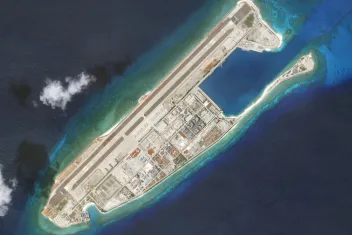
- Why did China build military bases in the South China Sea?
- Why does Beijing want Taiwan?
- Why is China's population shrinking?
Five parts, 30 lessons
 Part 1 · 1976 to 1989
Deng's Gamble
Mao Zedong left China nuclear-armed and poor. Under Deng Xiaoping the communes ended and foreign capital came in. In 1989 the army fired on protesters in Beijing.
-
1
5 min
The China Mao Left Behind
When Mao Zedong died in 1976, China had nuclear weapons but was poorer per person than India. Mao's campaigns had starved tens of millions.
-
2
6 min
Deng Xiaoping
Deng Xiaoping was purged three times, exiled to a tractor factory, and saw his son crippled by Red Guards. By 1978 he was running China.
-
3
5 min
The Secret Pact of Xiaogang
Eighteen farmers secretly divided their commune's land and pledged to raise each other's children if anyone was executed. Their harvest changed China.
-
4
5 min
Shenzhen
In 1979 Shenzhen was a town of about 30,000 people. Deng Xiaoping made it a Special Economic Zone for foreign companies. Today it has 18 million people.
-
5
6 min
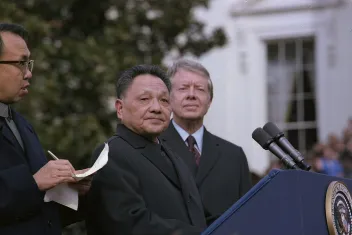
Deng Goes to America
Deng Xiaoping tried on a cowboy hat in Texas, toured a Boeing factory, and told President Carter that China intended to invade Vietnam.
-
6
7 min
Tiananmen
In spring 1989 a million people filled Tiananmen Square to protest corruption, inflation, and the lack of political reform. On 3 June the army opened fire.
 Part 2 · 1989 to 2012
The World's Factory
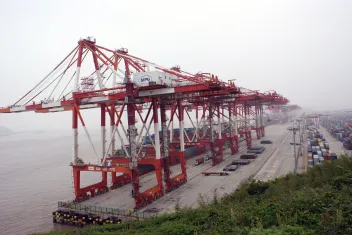
China's Communist Party survived by delivering growth. Beijing ended jobs for life, joined the World Trade Organization, and turned China into the world's factory.
-
7
6 min
Why the Party Survived
Every communist government in Eastern Europe fell. The Chinese Communist Party survived by delivering growth and replacing Marxist belief with nationalism.
-
8
6 min
Breaking the Iron Rice Bowl
Under Mao, your workplace gave you a job for life, a home, and healthcare. In the late 1990s the government smashed that system and laid off tens of millions.
-
9
5 min
The World's Factory
China joined the World Trade Organization in 2001. Over the next seven years its exports increased fivefold, lifting hundreds of millions out of poverty.
-
10
6 min
The Greatest Migration in History
Roughly 300 million rural Chinese workers moved to the cities, built the skylines, and powered the boom. A registration system made them permanent outsiders.
-
11
6 min
2008: The Year China Arrived
Beijing hosted the Olympics, survived an earthquake, and watched the Western financial system nearly collapse. China concluded the West was in decline.
-
12
6 min
The Bo Xilai Affair
In 2012 Chongqing's police chief fled to the American consulate, exposing a murder and a cover-up that ended Bo Xilai's career and gave Xi Jinping his opening.
 Part 3 · 2012 to 2026
Xi's China
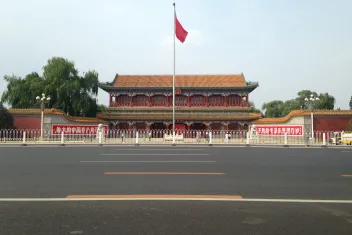
Xi Jinping launched the largest purge in the Party's modern history, abolished term limits, crushed Hong Kong's freedoms, and locked down a billion people.
-
13
6 min
Xi Jinping
Xi Jinping's father was a revolutionary hero. The Cultural Revolution destroyed the family and sent Xi to live in a cave in rural Shaanxi at fifteen.
-
14
6 min
How the Party Actually Rules
China has a parliament, a premier, and courts. None of them is where the real decisions happen. Behind every organ of the state stands the Communist Party.
-
15
6 min
Tigers and Flies
Xi Jinping's anti-corruption campaign has disciplined over seven million officials. It punished real corruption and removed every rival in Xi Jinping's path.
-
16
5 min
The Day Jack Ma Vanished
Jack Ma, China's richest man, told regulators they were wrong. Within weeks the Party killed Ant Group's share sale, and Ma vanished from public life.
-
17
6 min
Xinjiang
Beginning in 2017, China held an estimated million or more Uyghurs and other Muslims in camps across Xinjiang, alongside mass surveillance and forced labor.
-
18
6 min
Hong Kong
Britain handed Hong Kong back to China in 1997 with a promise of fifty years of freedoms. In 2020 Beijing imposed a security law that criminalized dissent.
-
19
5 min
Zero-COVID
For three years China sealed cities and tracked citizens by QR code. When Beijing reversed course overnight, a wave killed an estimated one to two million.
 Part 4 · 2008 to 2026
The Challenger
China built the world's largest navy, lent more to developing countries than the World Bank, and clashed with Washington over tariffs and chips.
-
20
6 min
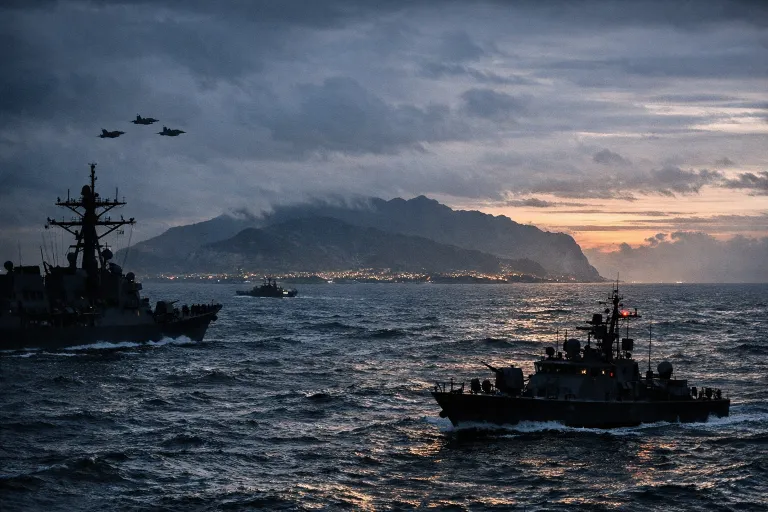
Building Islands, Building a Navy
Most of China's oil passes through waters ringed by American allies. Beijing dredged reefs into military bases and built the world's largest navy.
-
21
6 min
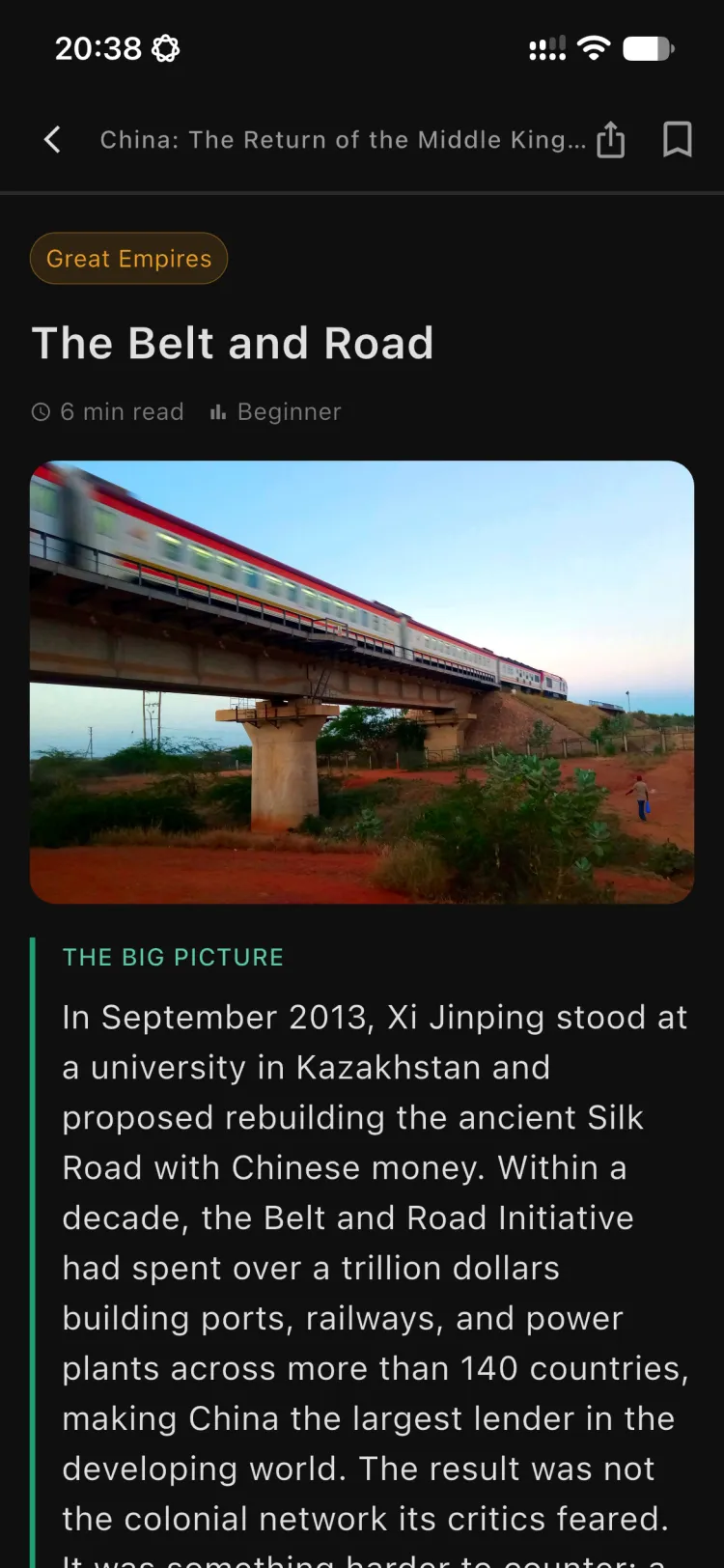
The Belt and Road
Xi Jinping proposed rebuilding the Silk Road with Chinese money. Within a decade, over a trillion dollars had flowed to more than 140 countries.
-
22
5 min
The Trade War
The bet that trade would pull China toward openness failed. Washington imposed tariffs in 2018. Full decoupling has proved far harder than either side expected.
-
23
5 min
Chips and AI
China spends more on importing chips than oil. Washington cut Beijing off from advanced chipmaking equipment. Huawei and DeepSeek showed the gap can narrow.
-
24
5 min
The Electric Superpower
China makes over 80% of the world's solar panels, and BYD overtook Tesla in electric car sales. It is also the world's largest carbon emitter.
-
25
7 min
Friends Without Limits
In 1969 China and the Soviet Union nearly went to nuclear war. In 2022 Xi Jinping and Vladimir Putin declared a partnership with 'no limits.'
-
26
5 min
Why Beijing Wants Taiwan
Beijing treats Taiwan as unfinished civil-war business. The Communist Party has staked its legitimacy on reunification, and reunification has never come.
 Part 5 · 2015 to 2026
Cracks in the Miracle
China's property bubble burst, its population began to shrink, and many young Chinese, disillusioned with work and marriage, chose what they call lying flat.
-
27
6 min
Evergrande
Property made up about a quarter of China's economy. In 2020 Beijing limited developer borrowing, Evergrande defaulted, and housing prices fell about 30%.
-
28
6 min
The One-Child Policy
In 1980 China ordered its citizens to have one child. The policy prevented hundreds of millions of births and left behind a shrinking, aging population.
-
29
5 min
Lying Flat
For forty years the deal was: work hard, stay out of politics, and each generation rises. The generation born after 1995 is the first to find that deal broken.
-
30
6 min
What Does China Want?
In November 2012, days after taking power, Xi Jinping called the great rejuvenation of the Chinese nation the greatest dream of the Chinese people.
Lessons you can finish in one sitting.
Each lesson tells one part of the story and explains why it happened, with maps, images and quotes from the sources. A few questions at the end check that it stuck, and the key facts go into the course's flashcards.
- 5 to 7 minutes a lesson
- Three to four questions after each lesson
- 211 flashcards for this course