World War II
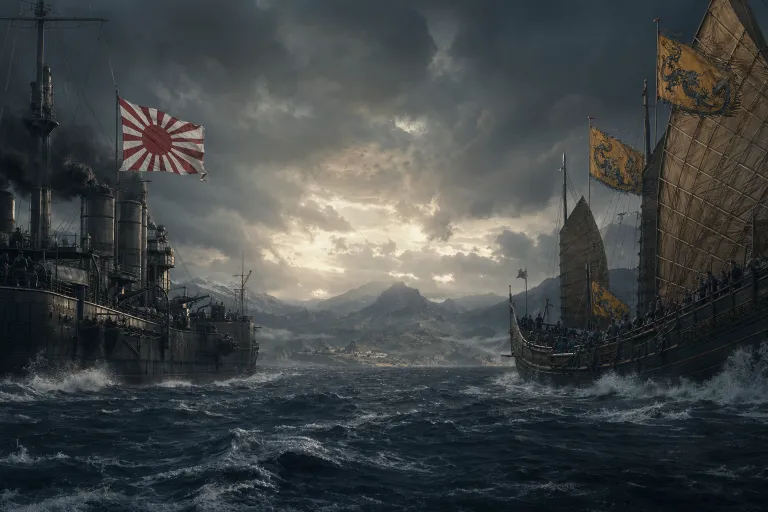
After the First World War, a humiliated Germany and a global depression opened the door to Adolf Hitler. Germany, Italy, and Japan then started a war that killed 70 to 85 million people, destroyed the old empires, and split the world between two superpowers.
1919 to 1946 · 6 parts · 32 lessons · about 3 hours
Free for 7 days, cancel anytime. iPhone and Android.
Questions this course answers
- How did Adolf Hitler go from appointed chancellor to unchecked dictator in eighteen months?
- Why did France fall in six weeks despite having one of the world's largest armies?
- What changed when Hitler declared war on the United States in December 1941?
- How did the Allies outproduce the Axis in factories and why did it decide the war?
- What was Operation Bagration and why is it called Germany's worst defeat?
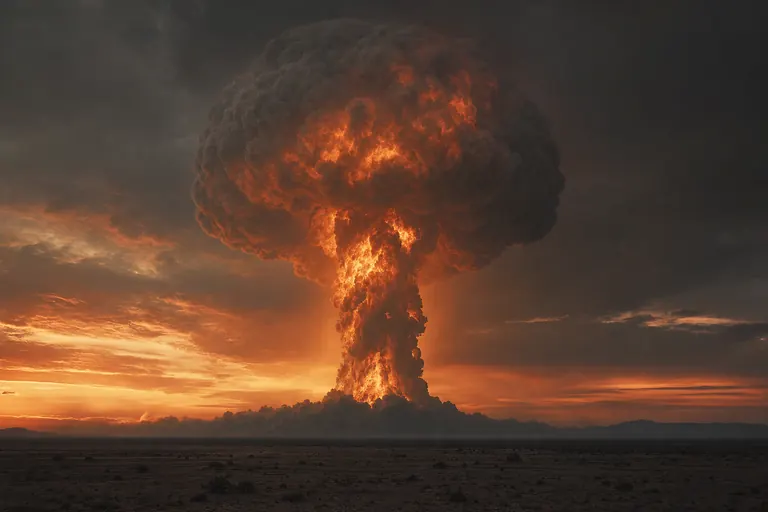
- What finally led Japan to surrender in 1945?
Six parts, 32 lessons
 Part 1 · 1919 to 1939
The Road to War
Versailles left Germany bitter, and the Depression brought Hitler to power. The League of Nations failed to stop aggression. In September 1939 Germany invaded Poland.
-
1
6 min
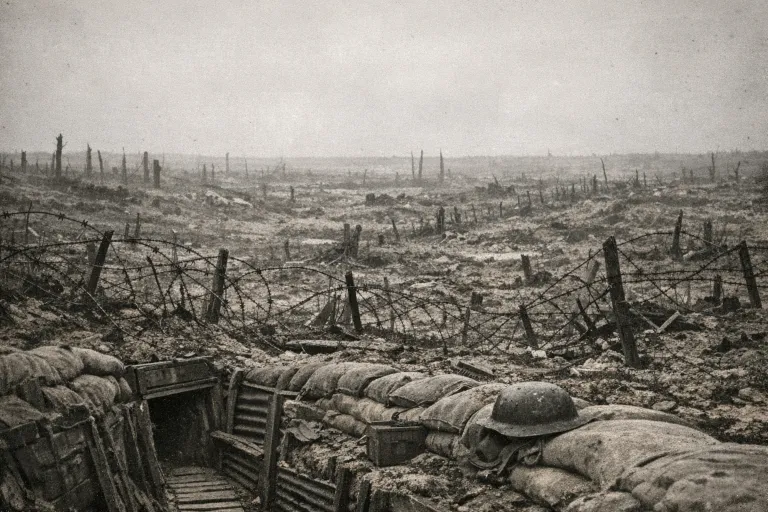
From Versailles to the Depression
Versailles was punishing enough to embitter Germany but not harsh enough to prevent its recovery. The Depression cut off the American loans propping Germany up.
-
2
7 min
Hitler Takes Germany
Hitler became chancellor on 30 January 1933 with no majority in parliament. Eighteen months later rival parties were dissolved and the army was sworn to him.
-
3
5 min
The Rise of the Axis, 1931–1936
Japan took Manchuria, Italy took Ethiopia, and Germany remilitarized the Rhineland. The League of Nations condemned each move but did nothing that mattered.
-
4
6 min
Japan Invades China, 1937
Japan expected China to fall in weeks. China threw its best troops into Shanghai, lost its capital at Nanjing, and retreated inland rather than surrender.
-
5
5 min
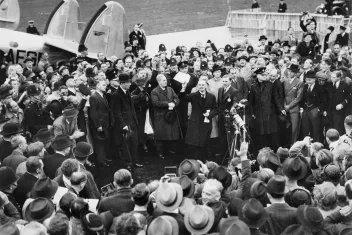
Appeasement: Austria to Munich
In twelve months Hitler took Austria and Czechoslovakia without a war. Britain and France let it happen, believing Hitler's demands would stop there.
-
6
5 min
The Nazi-Soviet Pact
Nazi Germany and the Soviet Union divided Eastern Europe in a secret protocol on 23 August 1939. Nine days later Germany invaded Poland.
 Part 2 · 1939 to 1941
Blitzkrieg
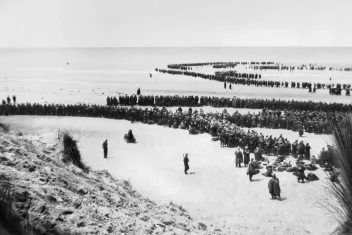
In nine months Germany conquered Poland, Denmark, Norway, the Low Countries, and France. Britain survived alone. Then Hitler invaded the Soviet Union and failed to win.
-
7
5 min
The Invasion of Poland
Germany attacked from the west, the Soviet Union from the east, exactly as the secret protocol planned. Britain and France declared war but did nothing.
-
8
6 min
The Fall of France
France had one of the world's largest armies and a fortified frontier, but Germany sent its armor through the Ardennes and conquered France in six weeks.
-
9
5 min
Britain Alone: The Battle of Britain and the Blitz
After France fell in 1940, Britain's choice to keep fighting was not obvious. It survived the Battle of Britain and eight months of bombing in the Blitz.
-
10
6 min
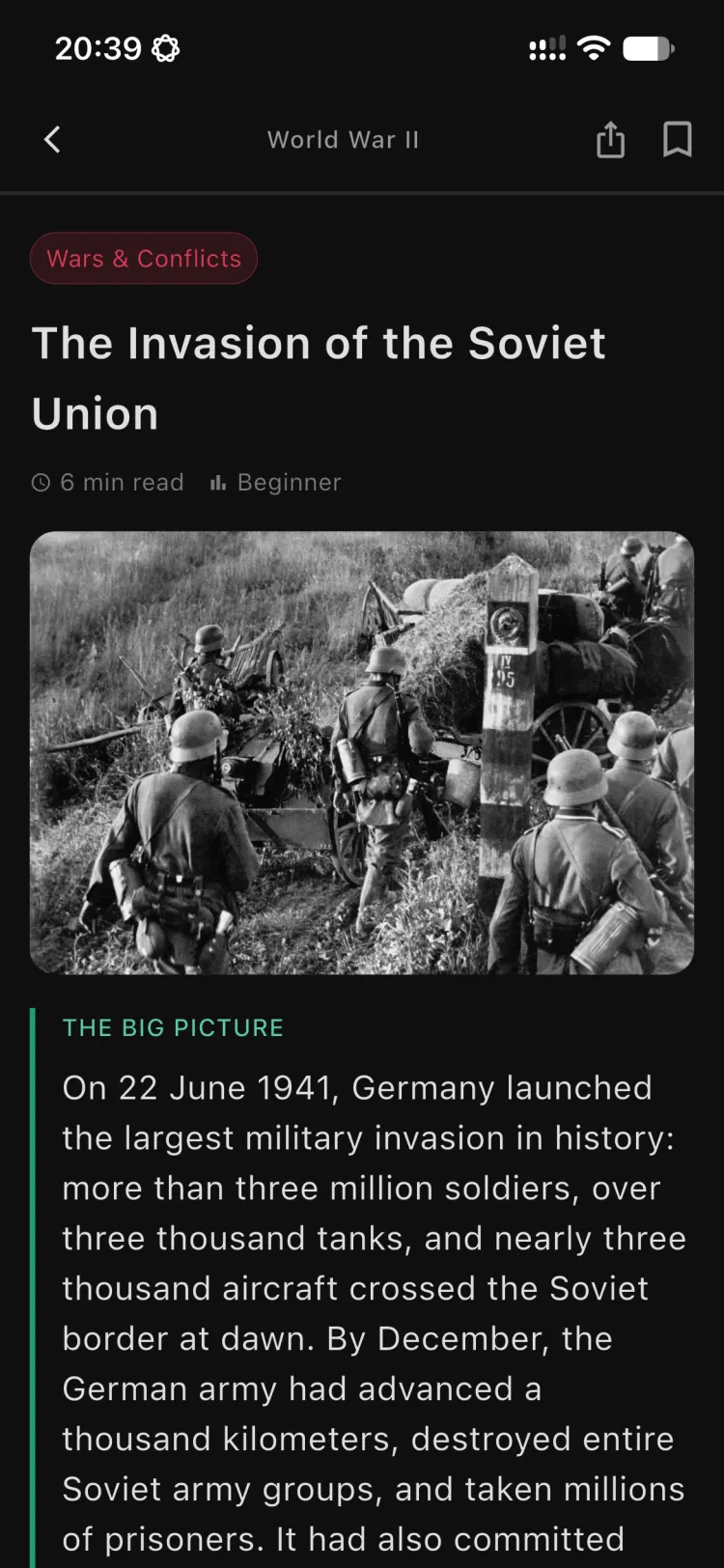
The Invasion of the Soviet Union
Over three million soldiers crossed the Soviet border on 22 June 1941. By December the German army had advanced a thousand kilometers and failed to win the war.
 Part 3 · 1941 to 1942
A World War
Pearl Harbor brought America in. Hitler declared war on the United States unprompted. By late 1942, the Axis had lost the initiative at Midway, Stalingrad, and El Alamein.
-
11
6 min
Japan's Road to Pearl Harbor
Japan's war in China used oil it did not produce. When Japan moved into French Indochina, America cut off Japan's oil, leaving roughly two years of reserves.
-
12
5 min
Pearl Harbor and Japan's Conquests
On 7 December 1941, Japan struck Pearl Harbor. Within six months it seized the Philippines, Malaya, Singapore, the Dutch East Indies, and Burma.
-
13
6 min
Hitler Declares War on America
Nothing required Hitler to declare war on the United States after Pearl Harbor. The decision united American opinion behind defeating Germany first.
-
14
7 min
Midway: The Carrier Battle That Turned the Pacific
On 4 June 1942, American dive bombers destroyed four Japanese carriers off Midway. Japan lost the initiative in the Pacific and never got it back.
-
15
6 min
The Battle of Stalingrad
Stalingrad on the Volga became the most destructive battle in history. Roughly two million people were killed, wounded, or captured by February 1943.
-
16
5 min
El Alamein and North Africa
After two years of fighting back and forth in the desert, Britain broke through at El Alamein in 1942 as Anglo-American forces landed in Morocco and Algeria.
 Part 4 · 1939 to 1945
Total War
The Holocaust murdered six million Jews. The Allies outproduced the Axis, German U-boats tried to starve Britain, and Allied bombers leveled German cities.
-
17
6 min
The Holocaust: Persecution to Mass Murder
The Holocaust did not begin with death camps. Between 1933 and 1941, each escalation, from boycotts to ghettos to mass shootings, made the next step thinkable.
-
18
6 min
The Holocaust: The Death Camps
In January 1942, fifteen senior Nazi officials coordinated the murder of eleven million people. Death camps in occupied Poland were running within months.
-
19
6 min
Occupied Europe: Collaboration and Resistance
From 1940 to 1944, Germany ruled most of Europe, working with willing partners in the west and imposing forced labor and mass killing in the east.
-
20
6 min
The War of Factories: How the Allies Outproduced the Axis
Once blitzkrieg failed and Pearl Harbor did not break American resolve, the war became a production contest. On those terms, the Allies were unbeatable.
-
21
6 min
The Battle of the Atlantic
Britain imported about two-thirds of its food and all of its oil. From the first day of the war to the last, German U-boats tried to sink its convoys.
-
22
6 min
Bombing the Cities: London to Dresden
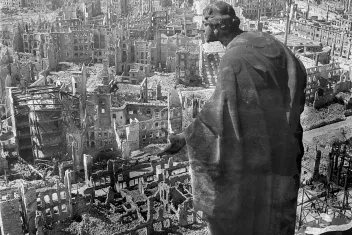
Allied bombing killed hundreds of thousands of German civilians and cost tens of thousands of aircrew. Its biggest effect came from targeting oil.
 Part 5 · 1943 to 1944
The Allies Advance
After Kursk, Germany never launched a major strategic offensive in the east again. D-Day opened a second front. Operation Bagration destroyed Army Group Center.
-
23
6 min
Kursk: Hitler's Last Offensive in the East
In July 1943 Germany attacked at Kursk, but the Soviets knew it was coming and built the deepest defenses in history. The attack gained nothing in twelve days.
-
24
6 min
Italy and the Fall of Mussolini
The invasion of Sicily brought down Mussolini after twenty-one years. Italy switched sides, Germany seized the north, and a two-year mountain slog followed.
-
25
5 min
D-Day: The Invasion of Normandy
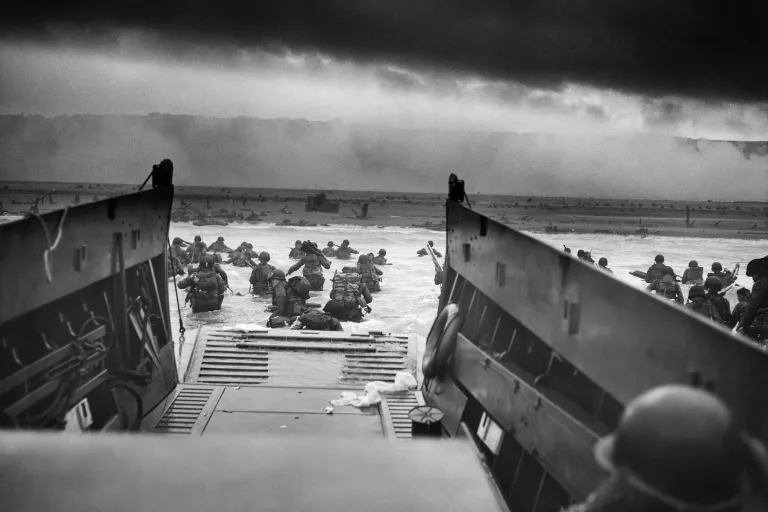
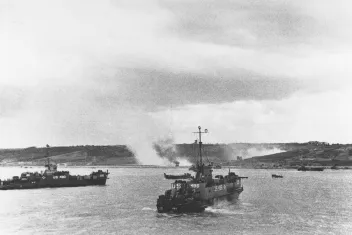
On 6 June 1944, the largest seaborne invasion in history landed in Normandy, opening the second front that Stalin had demanded for three years.
-
26
5 min
Operation Bagration: Germany's Worst Defeat
In June 1944, two weeks after D-Day, the Red Army destroyed Germany's Army Group Center in five weeks, the worst defeat in German military history.
-
27
6 min
China's War Against Japan, 1938–1945
After losing Wuhan in 1938, China's Nationalist government held out for seven years in Chongqing. The war killed roughly 15 to 20 million Chinese.
-
28
6 min
The Pacific War: Guadalcanal to Iwo Jima
After Midway, Japan still held thousands of islands. The Americans took only the ones with airfields, each island bringing bombers closer to Japan.
 Part 6 · 1945 to 1946
Endgame
The Red Army took Berlin. Japan endured firebombing and two atomic bombs before surrendering. Nuremberg held leaders accountable. The Cold War began.
-
29
6 min
The Fall of Berlin
The Red Army fought through Berlin block by block. The Western Allies halted on the Elbe. Where each army stopped became the map of Europe for forty-five years.
-
30
7 min
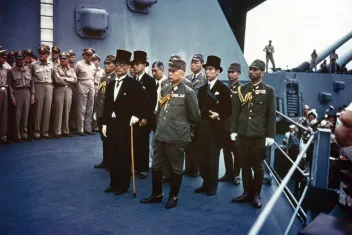
Japan's Surrender
Japan had lost its navy, air force, and empire but would not surrender. Two atomic bombs, a Soviet invasion, and Emperor Hirohito's intervention ended the war.
-
31
5 min
Nuremberg and the Tokyo Trials
At Nuremberg and Tokyo, the Allies put German and Japanese leaders on trial for crimes against peace and crimes against humanity.
-
32
6 min
The World the War Made
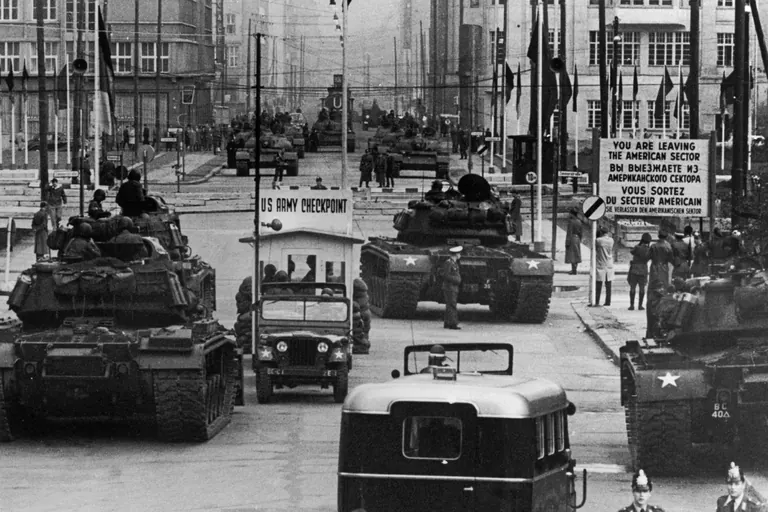
The war killed 70 to 85 million people and left the United States and the Soviet Union facing each other with no one between them. The Cold War followed.
Lessons you can finish in one sitting.
Each lesson tells one part of the story and explains why it happened, with maps, images and quotes from the sources. A few questions at the end check that it stuck, and the key facts go into the course's flashcards.
- 5 to 7 minutes a lesson
- Three to four questions after each lesson
- 226 flashcards for this course