
Alliance · Military
Warsaw Pact
Warsaw Treaty Organization
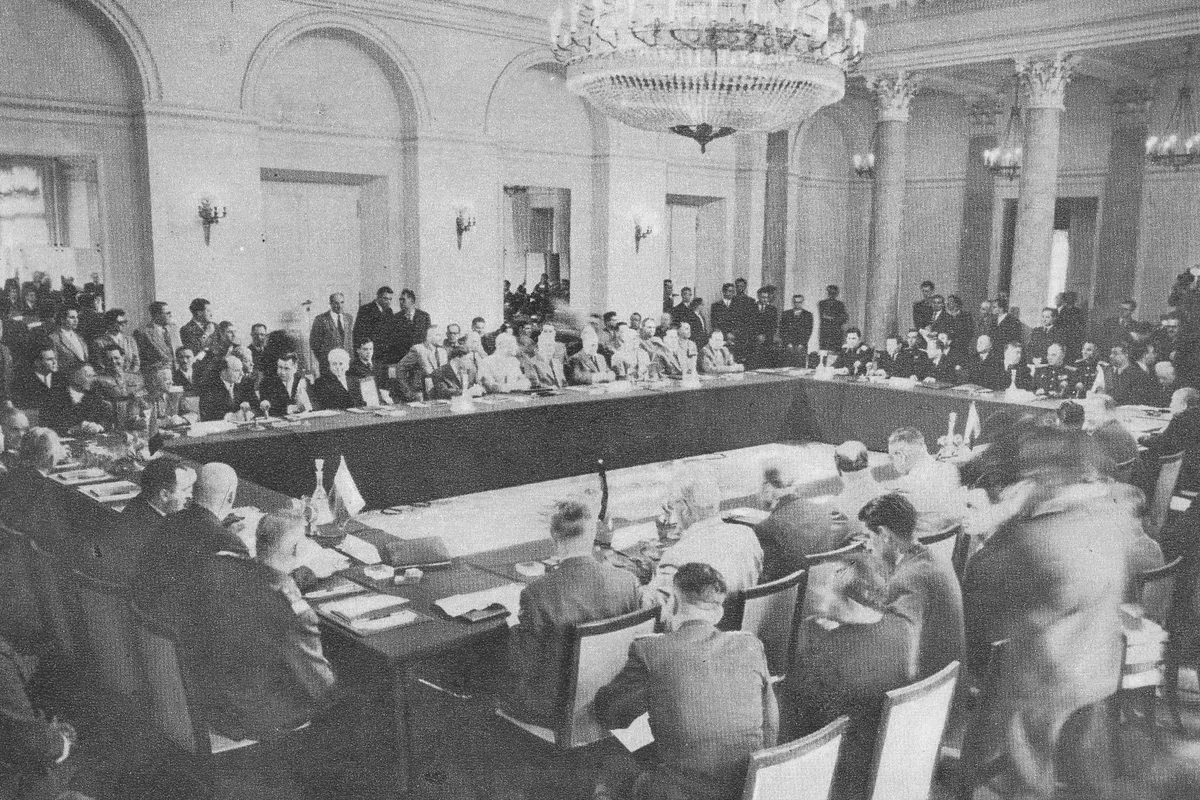
The Warsaw Pact was a military alliance of the Soviet Union and seven Eastern European states, signed on May 14, 1955 in Warsaw. Its treaty promised mutual defense, and a Soviet officer always commanded its forces. The only joint invasion was Czechoslovakia in 1968. Albania left in 1968 and East Germany in 1990. The military structures ended on March 31, 1991. The treaty was formally terminated on July 1, 1991 in Prague, almost six months before the Soviet Union itself ended.
- Members
- 8
- All signed on May 14, 1955
- Founded
- 1955
- In Warsaw, Poland
- Dissolved
- 1991
- Treaty ended July 1 in Prague
- Headquarters
- Moscow
- The unified command
- Invasions
- Twice
- Hungary 1956 (Soviet), Czechoslovakia 1968 (joint)
Which countries were in the Warsaw Pact?
Eight countries signed the treaty on May 14, 1955 in Warsaw: the Soviet Union, Poland, Czechoslovakia, Hungary, Romania, Bulgaria, Albania and East Germany. All eight joined in 1955. East Germany signed but had no army yet. The East German parliament passed the law creating its National People's Army on January 18, 1956. On January 28, 1956, the Political Consultative Committee formally brought East German forces into the alliance at its first meeting in Prague.
No state ever joined after 1955. The treaty allowed any state to accede with the consent of all parties, but none did. Mongolia applied in July 1963, but Romania objected and Soviet leader Nikita Khrushchev dropped the proposal. Albania stopped taking part in 1961 and formally withdrew in September 1968. East Germany left on September 24, 1990. Six members remained at dissolution in 1991.
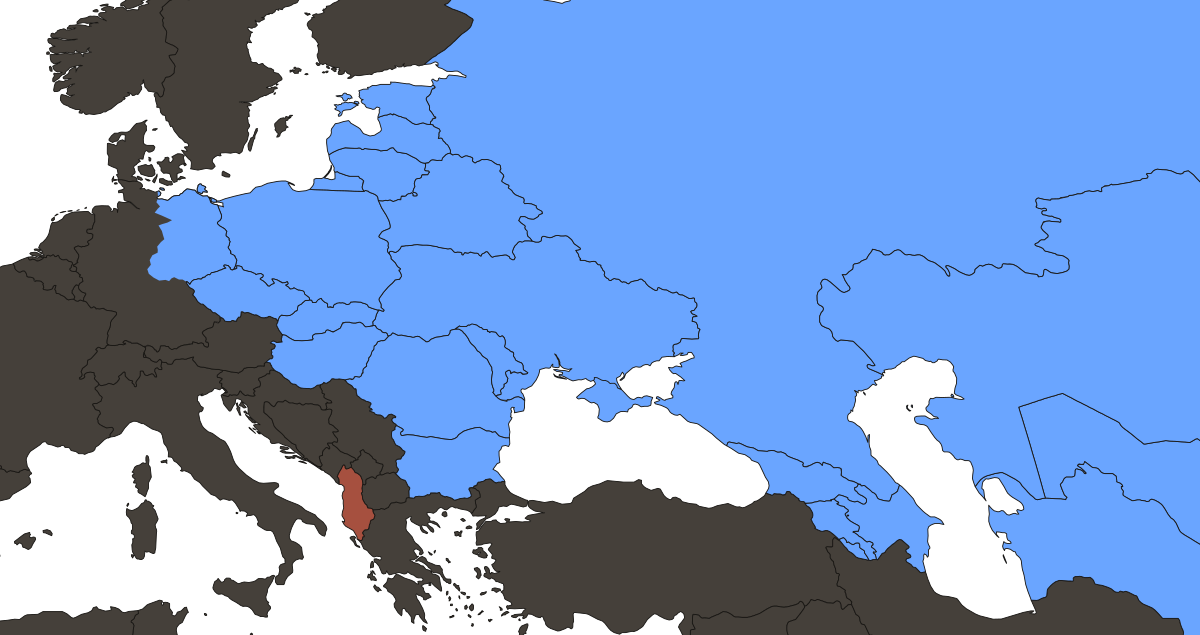
- Member
- Left before dissolution
- Not a member
Members of the Warsaw Pact
Countries that joined in each year, and the total after


 19558 founders
- 19687, Albania left
Why was the Warsaw Pact created?
West Germany joined NATO on May 9, 1955. Five days later, on May 14, the Soviet Union and its allies signed the Treaty of Friendship, Cooperation and Mutual Assistance in Warsaw. The US State Department says the Soviet Union feared a strengthened NATO and a rearmed West Germany. It also wanted to bind Eastern European governments more tightly to Moscow at a time of rising unrest.
The Soviet Union already had bilateral defense treaties with every Eastern European state except East Germany. The new pact supplemented those. Article 11 said the treaty would lapse automatically if an all-European security treaty entered into force. This meant the Soviet Union could offer to give up the Pact in return for a European security treaty. A Soviet officer always held the supreme command. The first was Marshal Ivan Konev.
In the event of armed attack in Europe on one or more of the Parties to the Treaty by any state or group of states, each of the Parties to the Treaty… shall immediately… come to the assistance of the state or states attacked with all such means as it deems necessary, including armed force.
Five commanders from 1955 to 1991. The first four were Marshals of the Soviet Union. The last, Pyotr Lushev, was an Army General.
At the Palace of the Council of Ministers in Warsaw, today Poland's Presidential Palace.
All eight signed in 1955. After Albania left in 1968, seven remained until East Germany left in 1990.
When did the Warsaw Pact invade its own members?
The Warsaw Pact jointly invaded one of its own members once: Czechoslovakia in 1968. In 1956 the Soviet Union invaded Hungary on its own. No other Pact member sent troops. Marshal Konev, the Pact's Supreme Commander, led the operation. In Poland in 1980 and 1981, many feared a Pact intervention against the Solidarity movement. No Pact troops entered. General Wojciech Jaruzelski declared martial law on December 13, 1981. He later said martial law prevented a Soviet invasion. Poland's Institute of National Remembrance says the documents show that neither the Soviet Union nor the Pact planned to intervene in 1981.
On December 4, 1989, Pact leaders meeting in Moscow condemned the 1968 invasion and repudiated the Brezhnev Doctrine.
-
Hungary1956, Soviet invasion
On November 1, 1956, Imre Nagy declared Hungary neutral and announced its withdrawal from the Pact. Moscow never recognized the withdrawal. Soviet forces invaded on November 4. About 2,700 Hungarians and about 720 Soviet soldiers were killed. About 200,000 Hungarians fled. Nagy was hanged after a secret trial on June 16, 1958.
-
Czechoslovakia1968, joint invasion
On the night of August 20 to 21, 1968, troops from the Soviet Union, Poland, Hungary and Bulgaria entered Czechoslovakia. About 250,000 troops crossed the border, rising to about 500,000. 137 Czechoslovaks were killed by the end of 1968. Historians Prokop Tomek and Ivo Pejčoch count about 400 more deaths during the occupation that followed.
-
RomaniaRefused
Romania refused to take part in the 1968 invasion. On August 21, Nicolae Ceausescu called it a "grave error" in a speech from the Central Committee balcony in Bucharest before about 100,000 people. Historians see the speech as the peak of his popularity.
-
Poland1981, martial law
A planned Pact exercise in December 1980 was widely seen as cover for intervention and was postponed. General Jaruzelski declared martial law on December 13, 1981. Nearly 10,000 people were interned and more than 90 killed. Martial law was lifted on July 22, 1983.
How did the Warsaw Pact end?
The Warsaw Pact was dissolved in two steps in 1991, after the revolutions of 1989 ended communist rule across Eastern Europe. East Germany left the Pact on September 24, 1990, ahead of German reunification on October 3. The six remaining members dissolved the military structures on February 25, 1991 in Budapest, effective March 31. On July 1, 1991, leaders met in the Czernin Palace in Prague and signed the protocol terminating the treaty. Czechoslovak President Vaclav Havel and Soviet Vice-President Gennady Yanayev were among the signatories.
The Soviet Union itself ended almost six months later, on December 25, 1991, when Mikhail Gorbachev resigned.
The end of the Warsaw Pact
- 1989Revolutions across Eastern Europe end communist rule
- 1989On October 25, Soviet spokesman Gennady Gerasimov coins the "Sinatra Doctrine": each country decides its own way
- 1989On December 4, Pact leaders condemn the 1968 invasion of Czechoslovakia
- 1990East Germany leaves the Pact on September 24. Reunification follows on October 3
- 1990The CFE Treaty is signed in Paris on November 19 by 16 NATO and 6 Pact states
- 1991Military structures dissolved on February 25 in Budapest, effective March 31
- 1991Treaty formally terminated on July 1 in Prague
- 1991The Soviet Union ends on December 25
Where are the Warsaw Pact countries now?
Every non-Soviet Warsaw Pact member except Albania is now in both NATO and the EU. Poland, Czechia and Hungary joined NATO in 1999. Bulgaria, Romania and Slovakia joined in 2004. Albania joined NATO in 2009 and is negotiating EU membership, with 4 of 33 chapters provisionally closed as of October 2026. The former East Germany entered NATO and the European Community, the EU's predecessor, through German reunification in 1990.
Of the former Soviet republics, the Baltic states (Estonia, Latvia and Lithuania) joined both NATO and the EU in 2004. No former non-Soviet Pact member is in the CSTO, Russia's current military alliance. Bulgaria joined the eurozone on January 1, 2026.
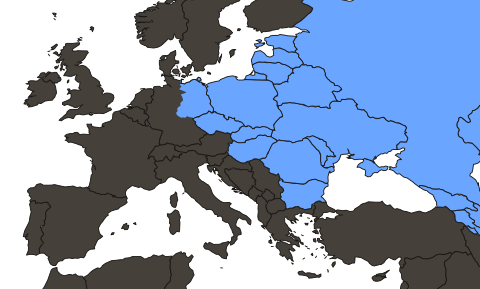
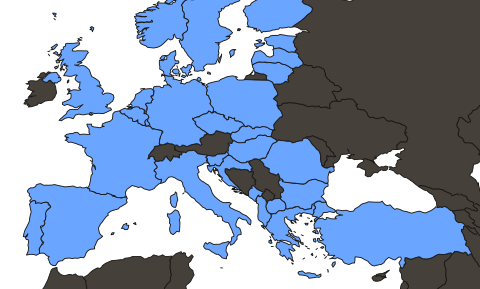
Was it in the Warsaw Pact?
Short answers for the countries people ask about most.

Was Yugoslavia in the Warsaw Pact?
NoYugoslavia was never a member. The Cominform expelled it on June 28, 1948 after the Tito-Stalin split. Yugoslavia co-founded the Non-Aligned Movement in 1961.
Was Albania in the Warsaw Pact?
LeftA founding member in 1955. Albania stopped taking part in 1961 and formally withdrew in September 1968, in protest at the invasion of Czechoslovakia. It joined NATO in 2009.
Was East Germany in the Warsaw Pact?
LeftA founding member in 1955. East Germany left on September 24, 1990. On October 3, it ceased to exist when Germany reunified.

Was Finland in the Warsaw Pact?
NoFinland was never a member. Its 1948 treaty with the Soviet Union kept it out of both blocs. That treaty ended in 1992. Finland joined NATO on April 4, 2023.

Was Austria in the Warsaw Pact?
NoAustria was never a member. Its parliament declared permanent neutrality on October 26, 1955. The Austrian State Treaty was signed the day after the Warsaw Pact.

Was Mongolia in the Warsaw Pact?
NoMongolia applied in July 1963 but Romania objected and the proposal was dropped. Mongolia was in Comecon, the separate economic bloc, from 1962.

Was Cuba in the Warsaw Pact?
NoCuba was never a member. It was in Comecon, a separate economic bloc, from 1972.

Was Vietnam in the Warsaw Pact?
NoVietnam was never a member. It joined Comecon in 1978.

Was China in the Warsaw Pact?
NoChina was never a member. It sent an observer to the first Political Consultative Committee meeting in Prague in January 1956.

Was North Korea in the Warsaw Pact?
NoNorth Korea was never a member of the Warsaw Pact.
Other alliances
All alliances →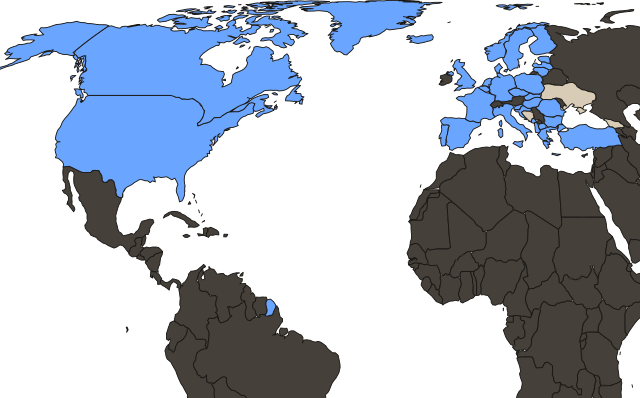 NATO
32 countries in Europe and North America. An attack on one counts as an attack on all.
 CSTO
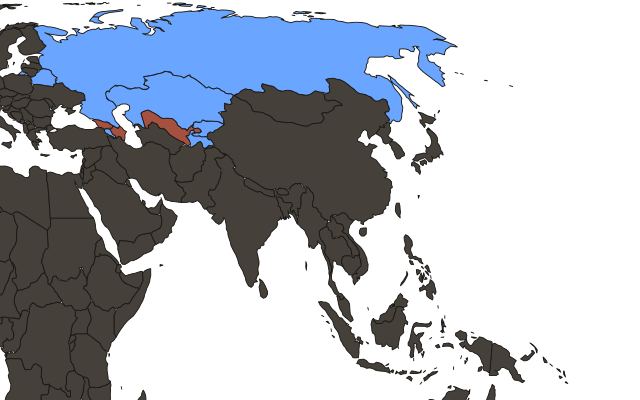
Russia and five former Soviet republics. Armenia froze its part in 2024 and lost its vote in 2026.
All alliances
Who belongs to what
Which alliances each country is in, and how big each one is.
See every country →