
Country profile · South Asia
 Bhutan
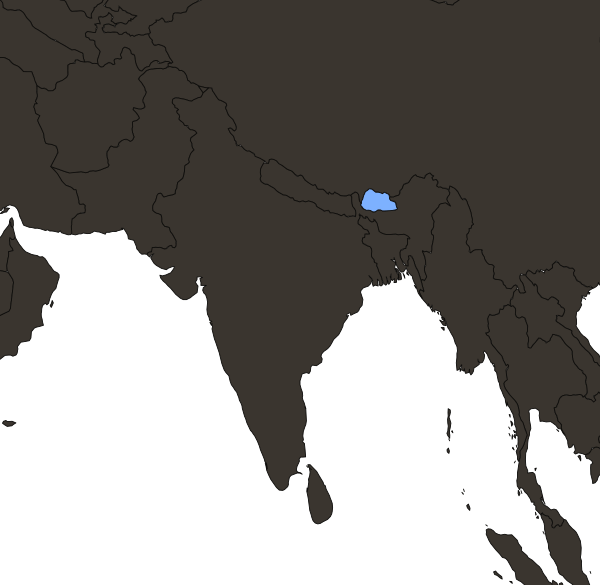
 is a Himalayan kingdom of about 800,000 people between India and China. King Jigme Khesar Namgyel Wangchuck is head of state. Prime Minister Tshering Tobgay leads the elected government. India is Bhutan's closest partner and buys most of its hydropower. Bhutan has no diplomatic relations with China, and the two countries are negotiating their border.
Where Bhutan ranks
All rankings →- #18of 186Government debt103.6%
- #126of 189GDP per person$4,394
- #164of 197Population0.8 million
- #41of 114UN peacekeepers183
- #35of 196Births per woman1.44
- #102of 196Life expectancy73.5 years
Which country has the biggest army? Largest armies in the world →
Who runs Bhutan?
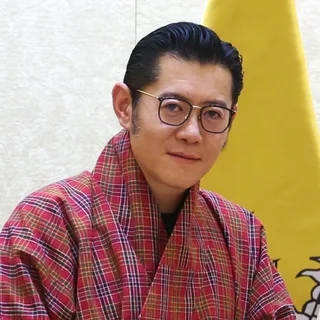
King Jigme Khesar Namgyel Wangchuck was born in Kathmandu on February 21, 1980. He studied in the United States and at Oxford. His father, Jigme Singye Wangchuck, gave up the throne in December 2006, and the new king was crowned on November 6, 2008. He married Jetsun Pema in 2011. They have three children. The constitution adopted on July 18, 2008 made Bhutan a constitutional monarchy. Under it the king must step down at 65. Prime Minister Tshering Tobgay, a mechanical engineer, led the government from 2013 to 2018 and again since January 28, 2024. His People's Democratic Party won 30 of 47 seats in the National Assembly in January 2024 and now holds 31 (chart). On August 19, 2026, Tempa Dorji of the opposition was elected Speaker by 24 votes to 23, the first opposition Speaker in Bhutan's history. In December 2023 the king announced Gelephu Mindfulness City, a special economic zone in the south.
- People's Democratic Party (Tobgay) 31
- Druk Thuendrel Tshogpa 16
Photo (December 2024): Prime Minister's Office of India, Wikimedia Commons, GODL-India (cropped)
How does Bhutan balance India and China?
A 1949 treaty said Bhutan would follow India's advice on foreign affairs. A revised treaty of February 8, 2007 dropped that clause. An Indian army training team has been based in Haa since 1962. India pledged 10,000 crore rupees for Bhutan's five-year plan of 2024 to 2029. Bhutan's currency, the ngultrum, is pegged one to one to the Indian rupee. Bhutan has no diplomatic relations with China, or with any permanent member of the UN Security Council. China and Bhutan have held 25 rounds of border talks since 1984, and expert meetings in Thimphu on October 13 to 15, 2026. They dispute about 269 sq km in the west and about 495 sq km in the north. A 2024 study by the researcher Robert Barnett counted 22 Chinese villages and settlements built on land Bhutan considers its own. In 2017 Indian and Chinese troops faced each other for 73 days at Doklam, a plateau claimed by both Bhutan and China.
Allies and partners
 IndiaClosest partner; buys Bhutan's hydropower
 BangladeshBhutan was first to recognize it, in 1971
 SingaporeRuns Gelephu Mindfulness City; tax treaty 2026
Tensions
 ChinaNo diplomatic ties; disputed border
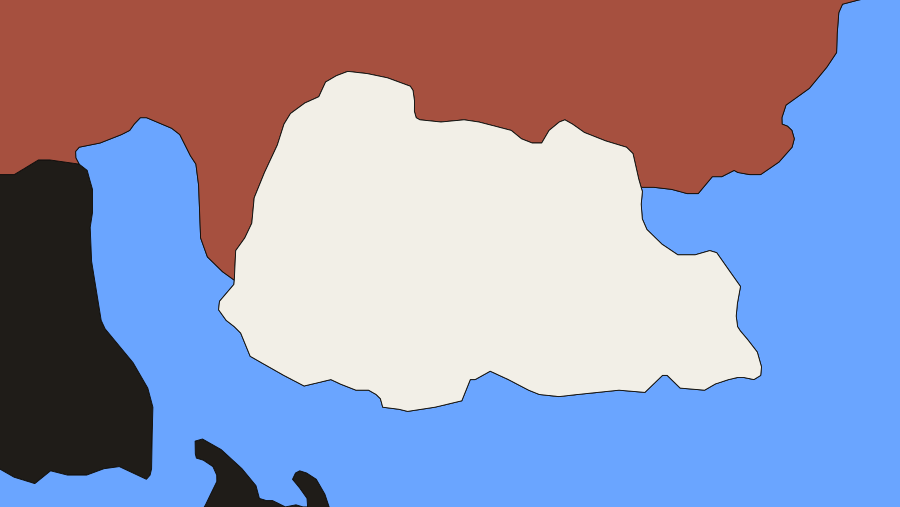
- Doklam Plateau claimed by Bhutan and China. Indian and Chinese troops faced each other here for 73 days in 2017.
- Pasamlung and Jakarlung Northern valleys of about 495 sq km claimed by both countries. China has built villages there.
- Gelephu Site of Gelephu Mindfulness City and a planned rail link to Kokrajhar in India.
- Sakteng Wildlife sanctuary that China added to its territorial claims in 2020.
- Bhutan
- Partner
- Tensions
Who does Bhutan trade with?
Not counting electricity, Bhutan exported $503 million of goods in 2025 and imported $2.05 billion (UN Comtrade). India bought 78.4% of these exports (chart) and Bangladesh 13.7%. India supplied 55.9% of imports and China 20.2%. Imports jumped in 2025 because Bitdeer, a foreign company, brought in nearly $500 million of crypto-mining machines. Electricity is Bhutan's largest export. It earned about 25 billion ngultrum in 2025, mostly from sales to India, ahead of ferrosilicon at 15.3 billion. Prime Minister Narendra Modi and King Jigme Khesar Namgyel Wangchuck opened the 1,020 MW Punatsangchhu II dam on November 11, 2025. Bhutan's state fund, Druk Holding and Investments, has mined bitcoin. Wallets tracked by Arkham held about 13,000 bitcoin in October 2024, worth about a quarter of GDP, and about 518 by September 2026. Visitors from outside India pay a fee of $100 a night until August 2027. Bhutan had 209,376 visitors in 2025, against 315,599 in 2019.
Sells to
Share of Bhutan's exports
- India78.4%
- Bangladesh13.7%
 United States2.4%
 South Korea1.8%
 Nepal1.3%


Goods, 2025, not counting electricity. UN Comtrade (Bhutan's own figures).
What is Gross National Happiness?
Bhutan's fourth king, Jigme Singye Wangchuck, put forward the idea of Gross National Happiness in the early 1970s. It holds that the state should aim for its people's wellbeing, not only economic growth. Article 9 of the 2008 constitution says the state shall strive to promote the conditions for the pursuit of Gross National Happiness. The GNH Index measures nine areas, including health, education, time use, good governance and the environment. The index rose from 0.743 in 2010 to 0.781 in 2022. In 2022, 48.1% of people were rated deeply or extensively happy, and 6.4% unhappy. The constitution requires at least 60% forest cover, and forests covered 69.71% of Bhutan in the 2023 inventory. Bhutan's forests absorb more carbon dioxide than the country emits. Television and the internet arrived only in 1999. The government closed its GNH Commission in October 2022. In May 2024 Prime Minister Tshering Tobgay said "we have failed economically" and launched a "GNH 2.0".
Why are so many Bhutanese leaving?
About one in ten Bhutanese now lives abroad, according to the World Bank, and about 57% of them live in Australia (Asian Development Bank). The number of Bhutan-born people in Australia rose from 12,002 in the 2021 census to 40,560 in June 2025. Many went as students and took their families. Monthly departures from Paro airport rose from under 500 before the pandemic to over 5,000 in early 2023. The government raised civil servants' pay by 54% to 75% in July 2023, and about 1,500 civil servants still resigned in 2024 and 2025. Bhutanese abroad sent home $342.9 million in 2025, $253.3 million of it from Australia. Youth unemployment was 13.4% in the second quarter of 2026. In 2026 Australia approved fewer Bhutanese student visas. An earlier exodus was forced. In the early 1990s more than 100,000 Lhotshampa, Nepali-speaking Bhutanese, fled or were expelled to camps in Nepal, and more than 113,000 were later resettled abroad, mostly in the United States.