
Country profile · South Asia
 Bangladesh
Bangladesh has 175.7 million people (2025), the 8th largest population in the world. Prime Minister Tarique Rahman of the Bangladesh Nationalist Party (BNP) has led the government since February 17, 2026. His party won the first election held since Sheikh Hasina, prime minister for 15 years, fled to India in August 2024.
Where Bangladesh ranks
All rankings →Which alliances is Bangladesh in?
All alliances →Who runs Bangladesh?
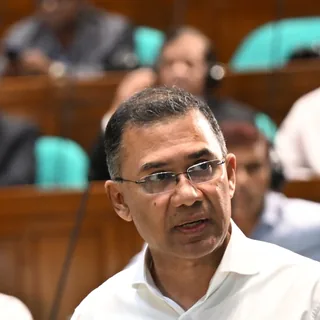
Prime Minister Tarique Rahman runs Bangladesh. He took office on February 17, 2026, after the BNP won the February 12 election with 49.97% of the vote. Sheikh Hasina's Awami League was banned from running. Jamaat-e-Islami, an Islamist party, became the main opposition for the first time. The BNP and its allies hold 250 of the 350 seats (chart), more than the two-thirds needed to change the constitution. In August 2026 parliament elected a BNP veteran president. Rahman is the son of two leaders. His father, Ziaur Rahman, was an army officer who became president and founded the BNP. He was killed in a failed coup in 1981. His mother, Khaleda Zia, was prime minister twice and died in December 2025. Rahman left for London in 2008, after 18 months in detention, and came home on December 25, 2025, after 17 years abroad.
- BNP and its allies (the government) 250
- Jamaat-e-Islami's 11-party alliance, including the students' National Citizen Party 90
- Independents, other parties and one vacant seat 10
Photo (2026): Press Information Department, Government of Bangladesh, Wikimedia Commons, public domain (cropped)
Who are Bangladesh's allies and rivals?
The BNP government calls its foreign policy "Bangladesh First" and keeps close ties with China, Japan and Saudi Arabia. India surrounds Bangladesh on three sides, along a 4,096 km border. Relations have been strained since Sheikh Hasina fled to India on August 5, 2024. Bangladesh's International Crimes Tribunal sentenced her to death in absentia in November 2025 for the crackdown on protesters, and Bangladesh has asked India to extradite her. India says it is examining the request. Since May 2025 India has blocked many Bangladeshi goods at its land border. Prime Minister Rahman's first visit to India was put on hold in August 2026. The 1996 treaty that shares the Ganges's dry-season water runs out on December 12, 2026. Ties with Pakistan, from which Bangladesh broke away in 1971, have warmed since 2024. Rebels of the Arakan Army have held the whole border with Myanmar since December 2024.
Allies and partners
 ChinaLargest import source; most arms imports
 JapanFunds the Matarbari deep-sea port
 Saudi ArabiaLargest source of remittances in 2025-26
 United StatesLargest export market
 PakistanDirect flights restored in January 2026
 TurkeyDefense talks agreed in June 2026
Tensions
 IndiaHosts Sheikh Hasina; Ganges treaty ends December 2026
- Arakan ArmyRebels holding the Myanmar border since 2024
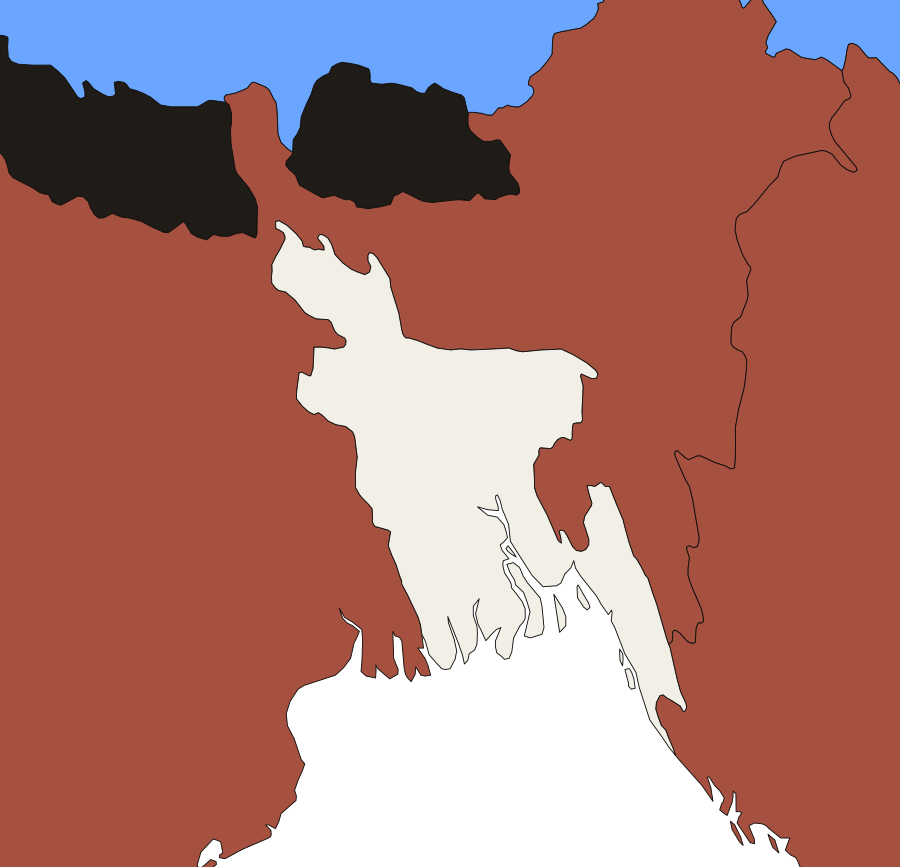
- Farakka Barrage India's dam on the Ganges, just upstream of the border. The 1996 treaty sharing its dry-season water runs out on December 12, 2026.
- Teesta River India and Bangladesh have not signed a deal on sharing its water since 2011. China agreed in June 2026 to support a project to manage the river.
- Mongla port China's Exim Bank lent $335.78 million in October 2026 for two container terminals, due by December 2028.
- Rohingya camps 33 camps near Cox's Bazar, home to about 1.15 million Rohingya refugees from Myanmar (UNHCR, February 2026).
- Bangladesh
- Partner
- Tensions
Who does Bangladesh trade with?
The United States is Bangladesh's largest export market (chart). It bought 18.9% of Bangladesh's goods exports in the year to June 2026. China supplied 27.0% of imports the year before, and India 14.2%. Clothing made up 80.6% of the $48.0 billion Bangladesh exported that year. In 2025 Bangladesh was the world's second-largest clothing exporter after China, just ahead of Vietnam (WTO). About 4 million people work in its garment factories, for a minimum wage of 12,500 taka a month. In 2013 the collapse of the Rana Plaza factory building killed 1,134 workers. Workers abroad sent home a record $35.6 billion that year, the largest share from Saudi Arabia. Since July 24, 2026 the United States has charged an extra 10% duty on Bangladeshi goods. Bangladesh is due to leave the UN's group of least developed countries on November 24, 2026. It has asked the UN to delay this to 2029.
Sells to
Share of Bangladesh's exports
- United States18.9%
 Germany9.8%
 United Kingdom9.7%
 Spain7.9%
 Netherlands5.1%
Buys from
Share of Bangladesh's imports
- China27.0%
- India14.2%
 Indonesia5.3%
 Singapore4.3%
- United States4.0%
 Brazil3.9%
Goods. Exports: fiscal year July 2025 to June 2026, Export Promotion Bureau (provisional). Imports: fiscal year July 2024 to June 2025, import payments by country, Bangladesh Bank.
How strong is Bangladesh's military?
Bangladesh's armed forces have about 171,250 active troops (IISS). The country spent $3.8 billion on its military in 2025, 0.8% of GDP (SIPRI). China supplied 72% of its arms imports in 2019 to 2023 (SIPRI), including two secondhand Ming-class submarines that joined the navy in 2017. The air force is negotiating for Chinese J-10CE fighters and talking to Pakistan about JF-17s, but no contract has been signed. Since independence the army has shaped politics. Officers killed the country's founding leader, Sheikh Mujibur Rahman, Sheikh Hasina's father, in a coup in 1975. An army-backed caretaker government ruled in 2007 and 2008. On August 4, 2024, the army chief, General Waker-Uz-Zaman, and his generals decided their troops would not fire on protesters. Sheikh Hasina fled the next day. Bangladesh is the 4th largest contributor of UN peacekeepers, with 4,003 in July 2026 (chart). The government says 175 Bangladeshi peacekeepers have died since 1988.
Largest contributors of UN peacekeepers, July 2026
Full ranking → Nepal4,285
- India4,260
 Rwanda4,016
- Bangladesh4,003
- Pakistan2,085
- Indonesia1,972
 Ghana1,929
- China1,651
UN Peacekeeping open data, on the Humanitarian Data Exchange, July 2026
Why are there a million Rohingya refugees in Bangladesh?
The Rohingya are a mostly Muslim minority from Rakhine state in Myanmar, which does not recognize them as citizens. About 190,000 already lived in Bangladesh in 2017. On August 25, 2017, after Rohingya militants attacked police posts, Myanmar's army began operations that drove more than 742,000 across the border. In February 2026 the UN refugee agency counted 1,184,864 Rohingya in Bangladesh, 178,757 more than a year earlier. Most of the newcomers fled fighting between Myanmar's army and the Arakan Army, a rebel group that now holds northern Rakhine. Bangladesh hosts the 8th most refugees in the world (chart). No organized return has taken place. Myanmar says it has verified 308,797 people as former residents, but will take them back only when Rakhine is safe. Since April 2026 about 70% of families get food rations worth $7 a person a month. The World Food Programme is funded only through November.

 Uganda
 Chad
Chad Peru
Peru