
Country profile · South Asia
 Nepal
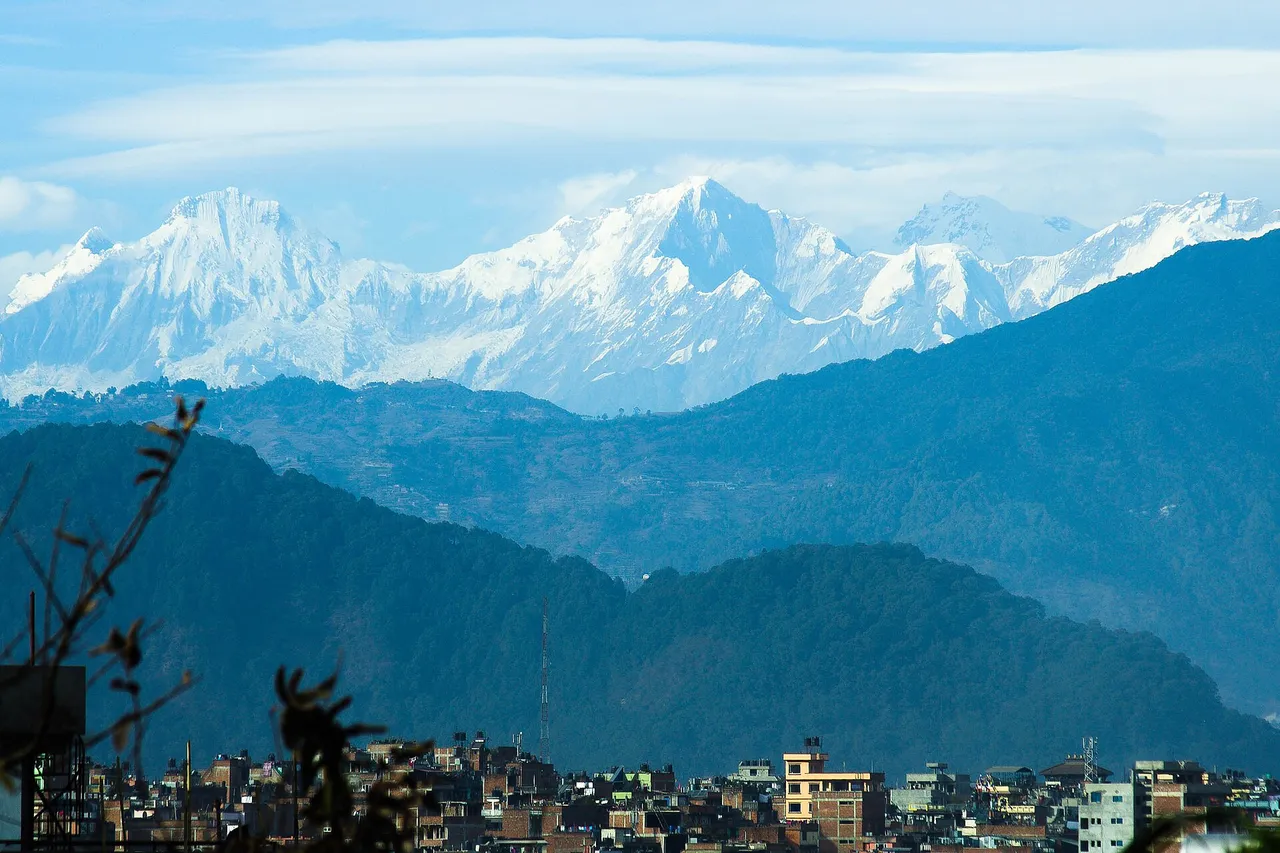
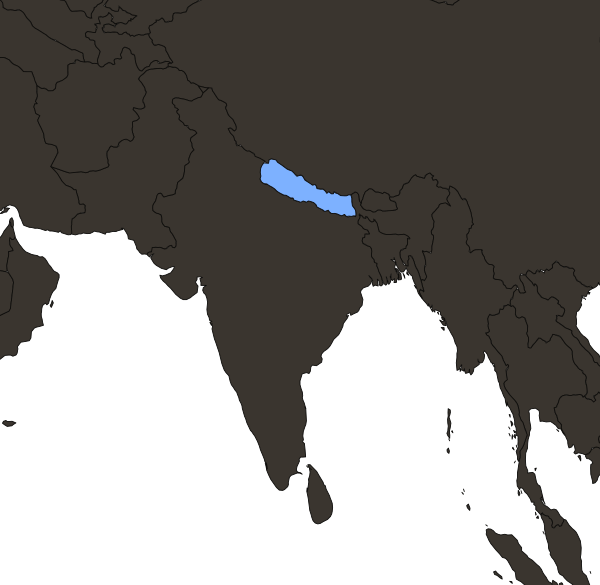
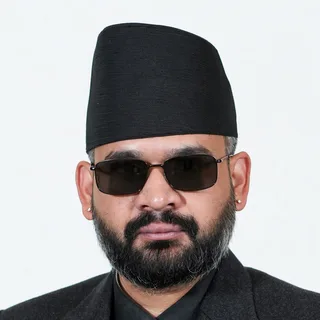
Nepal has about 29.6 million people and sits between India and China in the Himalayas. A youth uprising toppled its government in September 2025. In March 2026 voters gave the Rastriya Swatantra Party a landslide. Prime Minister Balen Shah, a 35-year-old former rapper, took office on March 27, 2026. Money sent home by Nepalis working abroad is worth about a third of the economy.
Where Nepal ranks
All rankings →Which alliances is Nepal in?
All alliances →Who runs Nepal?
On September 4, 2025, the government blocked 26 social media platforms, including Facebook and YouTube. Young people, calling themselves Gen Z, protested on September 8, and police fired on them. On September 9 crowds burned parliament, the Supreme Court and politicians' homes, and Prime Minister KP Sharma Oli resigned. About 76 people were killed. Sushila Karki, a former chief justice, became interim prime minister on September 12, Nepal's first woman in the post. In the election of March 5, 2026, the Rastriya Swatantra Party won 182 of 275 seats (chart), two short of a two-thirds majority. Balendra "Balen" Shah, a former rapper and mayor of Kathmandu, became prime minister on March 27, 2026, at 35 the youngest ever. The day after, police arrested Oli, but the Supreme Court ordered his release, and he has not been charged. In late August 2026 a glacial flood from Tibet down the Bhotekoshi river killed more than 1,400 people, Nepal's worst disaster since the 2015 earthquake.
- Rastriya Swatantra Party 182
- Nepali Congress 38
- CPN-UML 25
- Nepali Communist Party 17
- Shram Sanskriti Party 7
- Rastriya Prajatantra Party 5
- Independent 1
Official portrait (2026): Office of the Prime Minister of Nepal, Wikimedia Commons, CC BY-SA 4.0 (cropped)
How does Nepal balance India and China?
Nepal sits between India and China and tries to stay close to both. A 1950 treaty lets Nepalis live and work in India, the border is open, and India is Nepal's only supplier of fuel. In September 2015, after Nepal adopted a new constitution, protesters blocked the border crossings for over four months. Nepal blamed India, which denied any blockade. Nepal and India also dispute Kalapani, Lipulekh and Limpiyadhura, about 335 sq km that Nepal put on its official map in 2020. India and China reopened trade through the Lipulekh pass on August 1, 2026, over Nepal's protests. Nepal joined China's Belt and Road in 2017, but no project under it had been carried out by May 2026. China lent about $216 million for Pokhara's airport. The United States is paying $550 million for power lines and roads under a deal that parliament ratified in 2022 amid protests. Prime Minister Balen Shah's first official visit abroad is due in late November 2026, to India.
Allies and partners
 IndiaOpen border, sole fuel supplier, buys Nepal's power
 ChinaBelt and Road partner since 2017; lent for Pokhara airport
 United States$550 million for power lines and roads
 United KingdomAbout 4,000 Gurkhas serve in the British Army
 BangladeshBuys Nepali electricity through India since 2025
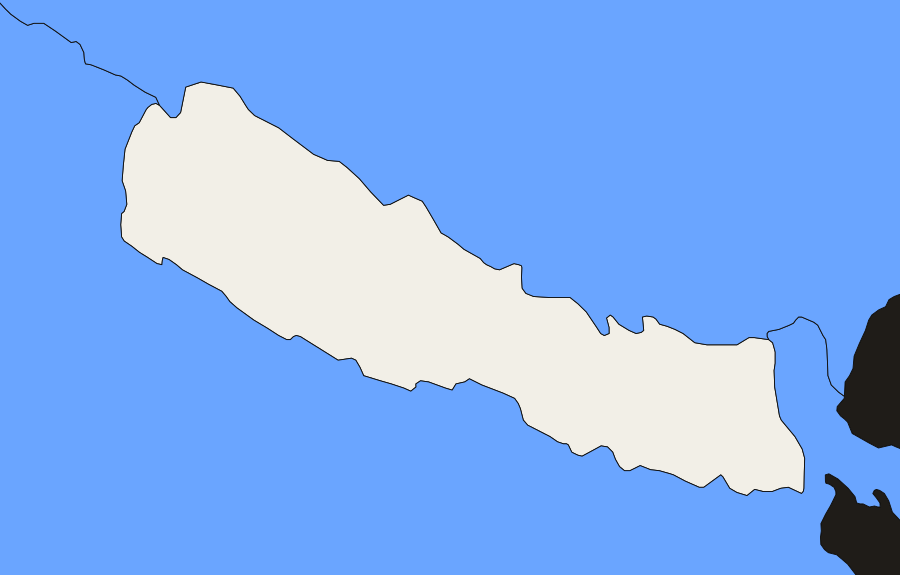
- Kalapani and Lipulekh About 335 sq km held by India and claimed by Nepal since its 2020 map. India and China reopened trade here in August 2026.
- Kathmandu The capital. Crowds burned parliament and the Supreme Court here on September 9, 2025.
- Rasuwagadhi Main road crossing to China. The August 2026 glacial flood swept away containers at the customs post.
- Pokhara Airport built with a Chinese loan of about $216 million. Its first daily international flight, to Dubai, began in September 2026.
- Nepal
- Partner
Who does Nepal trade with?
In the year to mid-July 2026, Nepal exported goods worth 315 billion Nepalese rupees and imported 2,096 billion rupees (Department of Customs). Imports were 6.6 times exports. India bought about 82% of exports and supplied about 58% of imports. China supplied about 20% (chart). The biggest export, about 41% of the total, is soybean oil refined from crude oil imported from Argentina and sold on to India. Diesel and petrol are the biggest imports. Nepal became a net exporter of electricity over the year in 2024/25, and in 2025/26 it sold 29.3 billion rupees of power to India and Bangladesh. The August 2026 flood knocked out about 430 MW, a tenth of capacity, and cut exports. Electric cars reached about 68% of new car sales in 2025, one of the highest shares in the world. The economy grew 3.85% in 2025/26. Since February 2025 Nepal has been on the FATF's grey list for weak controls on money laundering.
Sells to
Share of Nepal's exports
- India82.0%
- United States6.6%
 Germany1.6%
- United Kingdom1.0%
 Japan0.7%
Buys from
Share of Nepal's imports
- India57.7%
- China20.3%
 Argentina5.6%
 United Arab Emirates2.5%
- United States1.6%
Goods, fiscal year to mid-July 2026, Nepal's Department of Customs.
Why do so many Nepalis work abroad?
Nepal has few factory jobs, so young people leave to find work. In 2025/26 the government issued about 792,000 labor permits, counting renewals. The main destinations were the United Arab Emirates, Saudi Arabia, Qatar and Kuwait, followed by Romania, Japan, South Korea and Malaysia. Many more Nepalis work in India, where they need no permit. About 1.9 million Nepalis work in the Gulf, and they sent about 41% of the money in the first half of 2025/26. On the World Bank's 2025 figures, only Tajikistan and Tonga depend more on money sent home (chart). In the year to mid-July 2026 remittances reached a record $16.2 billion, which the World Bank puts at 35.8% of GDP. When the war with Iran began in 2026, Nepal stopped issuing permits for the Middle East from March 1 to April 20. The money keeps foreign reserves high, at $26.5 billion in mid-September 2026, enough for almost 18 months of imports.
Money sent home by migrants, share of GDP, 2025
Full ranking → Tajikistan57.7%
 Tonga39.3%
- Nepal32.3%
 Honduras30.1%
 El Salvador27.5%
 Gambia23.8%
World Bank World Development Indicators, from KNOMAD and IMF balance of payments data, October 2026
Why does Nepal send so many soldiers abroad?
Nepal has sent troops to UN missions since 1958. In July 2026 it had 4,285 soldiers and police in UN peacekeeping, the most of any country, just ahead of India and Rwanda (chart). The two largest Nepali contingents serve in South Sudan and the Central African Republic. UN budget cuts have shrunk the numbers: the UN counted 6,029 Nepalis in October 2025. The UN mission in Lebanon, where 553 Nepalis served in February 2026, ends on December 31, 2026. Nepal's Gurkhas also serve foreign armies under a 1947 agreement. About 4,000 are in the British Army and about 32,000 to 36,000 in the Indian Army. India has recruited no Nepalis since 2020, because Nepal rejects the short contracts India introduced in 2022. An estimated 1,500 Nepalis have joined Russia's army, and Nepal's foreign ministry counts at least 118 killed and 132 missing.
Uniformed UN peacekeepers, July 2026
Full ranking →- Nepal4,285
- India4,260
 Rwanda4,016
- Bangladesh4,003
 Pakistan2,085
 Indonesia1,972
UN Peacekeeping open data, on the Humanitarian Data Exchange, July 2026