
Country profile · East Africa
 Ethiopia
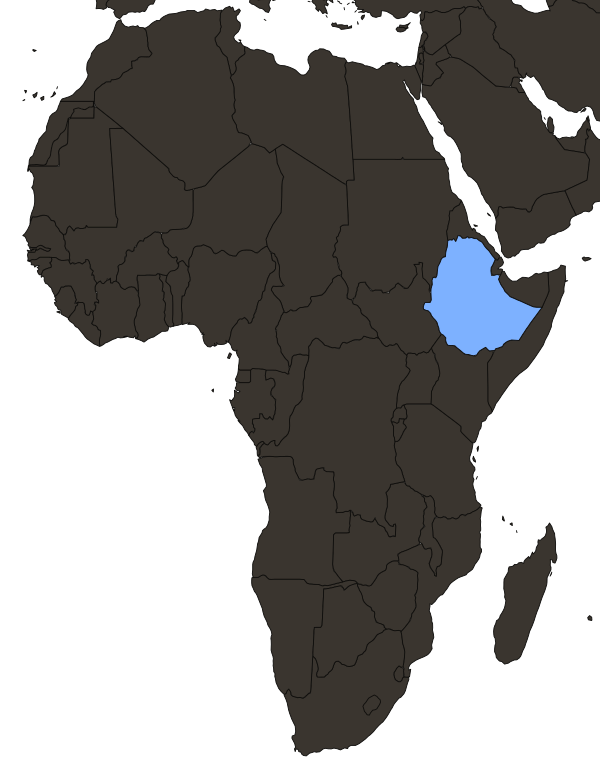
Ethiopia has 135.5 million people in 2025, the second most in Africa after Nigeria, and Africa's largest army, with 503,000 active troops. Prime Minister Abiy Ahmed has led it since 2018 and began a new term in October 2026. It has had no coast since Eritrea became independent in 1993. In September 2026 war returned to Tigray, in the north.
Where Ethiopia ranks
All rankings →Which alliances is Ethiopia in?
All alliances →How does Ethiopia vote at the UN?
Ethiopia's voting record →Share of recorded UN General Assembly votes on which Ethiopia and each country voted the same way, 2025.
Who runs Ethiopia?
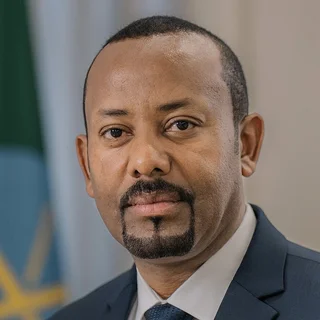
Prime Minister Abiy Ahmed runs Ethiopia. He took office on April 2, 2018. Abiy's father was a Muslim Oromo, and Abiy is a Pentecostal Christian. At about 14 he joined the armed fight against the Derg military regime as a radio operator. In October 2018 hundreds of soldiers marched on his office over pay, and he calmed them by doing push-ups with them. He won the 2019 Nobel Peace Prize for making peace with Eritrea. A year later he sent the army into the northern region of Tigray. Ghent University estimates that about 518,000 civilians died there in the two-year war, most of them from famine and the collapse of health care. His Prosperity Party won 438 of the 486 seats declared in the June 2026 election (chart). Tigray did not vote. The new parliament opened on October 5, 2026. On the same day it re-elected Abiy for a five-year term, and he took the oath of office.
- Prosperity Party 438
- Opposition parties and independents 48
- Not yet filled (no vote in Tigray and parts of Amhara, or reruns) 61
Official portrait (2025): Office of the Prime Minister of Ethiopia, Wikimedia Commons, public domain
Who are Ethiopia's allies and rivals?
Eritrea is Ethiopia's main rival. The two countries fought a border war from 1998 to 2000 in which an estimated 80,000 people died. Prime Minister Abiy made peace with Eritrea's President Isaias Afwerki in July 2018, and Eritrean troops fought on the federal side in the Tigray war. On October 1, 2026 Ethiopia expelled 10 Eritrean diplomats, and Eritrea cut all diplomatic ties. Egypt opposes the Grand Ethiopian Renaissance Dam on the Blue Nile, Africa's largest hydropower plant, which opened in September 2025. Egypt wants a binding agreement on how much water the dam releases in a drought. Ethiopia's army chief accuses Eritrea, Egypt and Sudan of backing the armed groups now fighting the government. All three deny it. The United Arab Emirates declared "full solidarity" with Ethiopia's government on September 30, 2026, and the United States lifted its arms embargo on Ethiopia on September 18.
Allies and partners
 United Arab EmiratesBacked the government in September 2026
 ChinaLargest bilateral lender, about $8.7 billion
 DjiboutiHandles about 97% of Ethiopia's sea cargo
 KenyaBuys Ethiopian electricity through a 1,045 km line
 TurkeySells drones; brokered a Somalia deal in 2024
 RussiaNavy training deal, March 2025


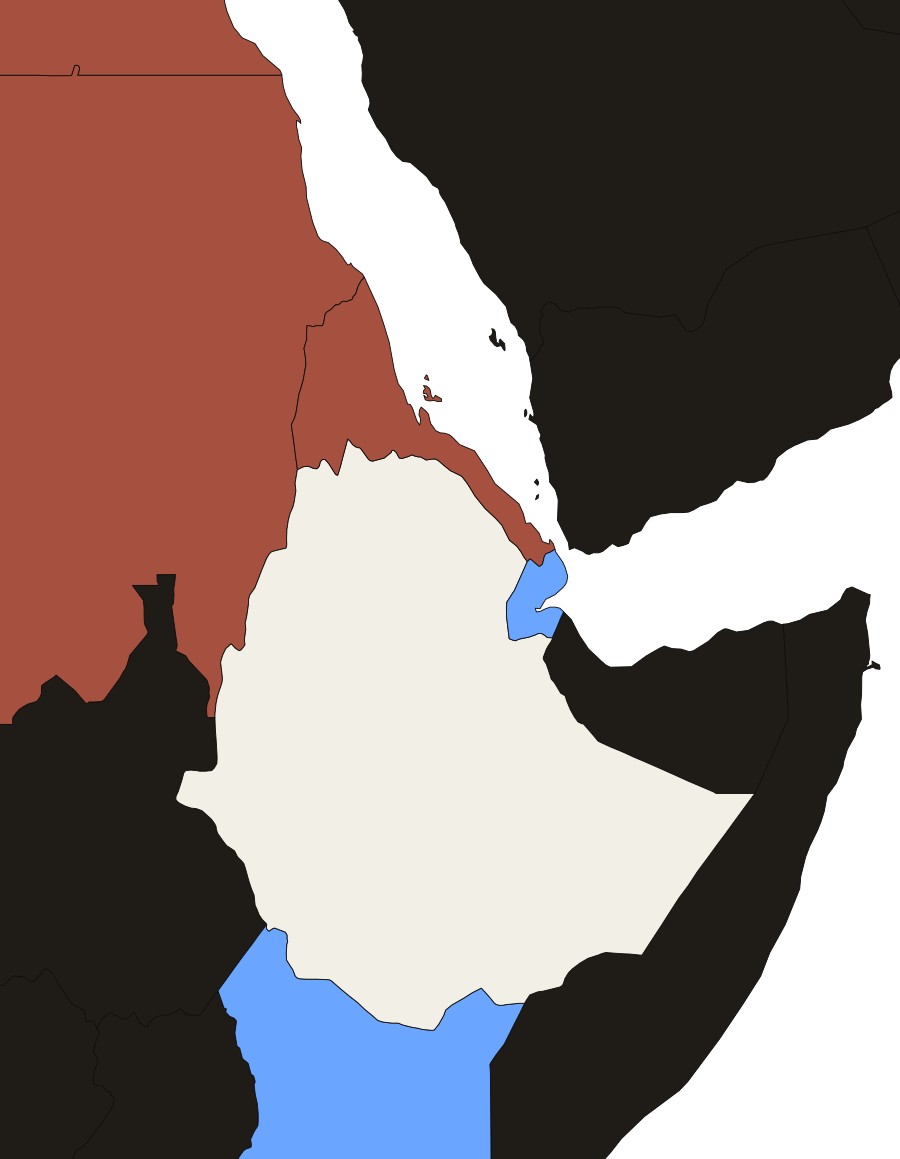
- Port of Assab Eritrean port about 70 km from Ethiopia's border. Ethiopia used it until the 1998 war.
- Port of Djibouti Handles about 97% of Ethiopia's sea cargo.
- Grand Ethiopian Renaissance Dam Africa's largest hydropower plant, 5,150 MW, opened September 2025. Egypt calls it a threat to its water security.
- Mekelle Capital of Tigray. Tigrayan forces seized its airport on September 23, 2026. Federal troops retook the city on October 3 and 4.
- Ethiopia
- Partner
- Rival
Who does Ethiopia trade with?
China is Ethiopia's largest supplier. It sold 32.6% of the goods Ethiopia imported in 2024, and the European Union bought 28.0% of the exports recorded by customs (chart). The chart leaves out gold sold abroad by the central bank, which is now the largest export. Gold earned $5.65 billion in the fiscal year to July 2026, about half of all exports, up from $409 million two years earlier. The IMF says part of that gold used to be smuggled out. Coffee earned a record of about $3.0 billion. Ethiopia is Africa's largest coffee producer and exporter. Exports grew after the government let the birr float on July 29, 2024, a reform backed by a $3.4 billion IMF loan. Imports, led by fuel, were $18.8 billion in 2024/25, more than twice exports. Ethiopia defaulted on a bond payment in December 2023 and is still restructuring its debt.
Sells to
Share of Ethiopia's exports
 European Union28.0%
 Saudi Arabia11.4%
 United States8.4%
- United Arab Emirates7.6%
 South Korea3.7%
Buys from
Share of Ethiopia's imports
- China32.6%
 Kuwait9.3%
 India8.6%
- European Union6.7%
- United States5.4%
Goods, 2024, as recorded by Ethiopia's customs (WTO). Gold sold abroad by the central bank is not included, so the export total is lower than the government's figure.
How strong is Ethiopia's military?
Ethiopia has the largest army in Africa: 503,000 active troops in 2026, the 9th most in the world (IISS; chart). SIPRI estimates its military spending at $924 million in 2025, 0.49% of GDP. The army relies on armed drones bought from Turkey, China and Iran, and since 2025 it also assembles drones at home. Ethiopia re-founded its navy in 2019, but it has no coast and no ships at sea. It has no nuclear weapons. Since 2023 the army has fought the Fano militia in the Amhara region, where drone strikes killed at least 669 people by mid-2025. On September 20, 2026 seven armed groups, among them the Tigray People's Liberation Front (TPLF), Fano and the Oromo Liberation Army, formed an alliance to overthrow Prime Minister Abiy. Three days later Tigrayan forces seized the airports of Mekelle, Axum and Shire. On October 3 the TPLF said it had withdrawn from Mekelle, the capital of Tigray, and would keep fighting from other positions. By October 4 federal troops controlled the city, together with the Tigray Peace Force, a group of former Tigrayan fighters who now fight on the government's side.
Active troops in Africa, 2026
Full ranking →

 Algeria
IISS, The Military Balance, 2024 to 2026 editions
Why does Ethiopia want access to the sea?
Ethiopia lost its coast when Eritrea became independent in 1993. Ethiopia kept using Eritrea's port of Assab until the border war of 1998. Since then almost all its sea trade has gone through Djibouti: about 97% of its sea cargo. In October 2023 Prime Minister Abiy told lawmakers: "A population of 150 million can't live in a geographic prison." On January 1, 2024 he signed a deal with Somaliland, a breakaway region of Somalia, to lease 20 km of coast for a naval base. Turkey brokered a settlement in December 2024 that promised Ethiopia sea access through Somalia, but no port deal has been signed. In a television interview in September 2025 Abiy said: "The Red Sea was in our hands 30 years ago. That history was yesterday's mistake. Tomorrow it will be corrected." At the opening of Ethiopia's navy headquarters that month, Brigadier General Bulti Tadesse said: "Our eyes are on the Red Sea. Our heart is on Assab."