
Country profile · South America
 Guyana
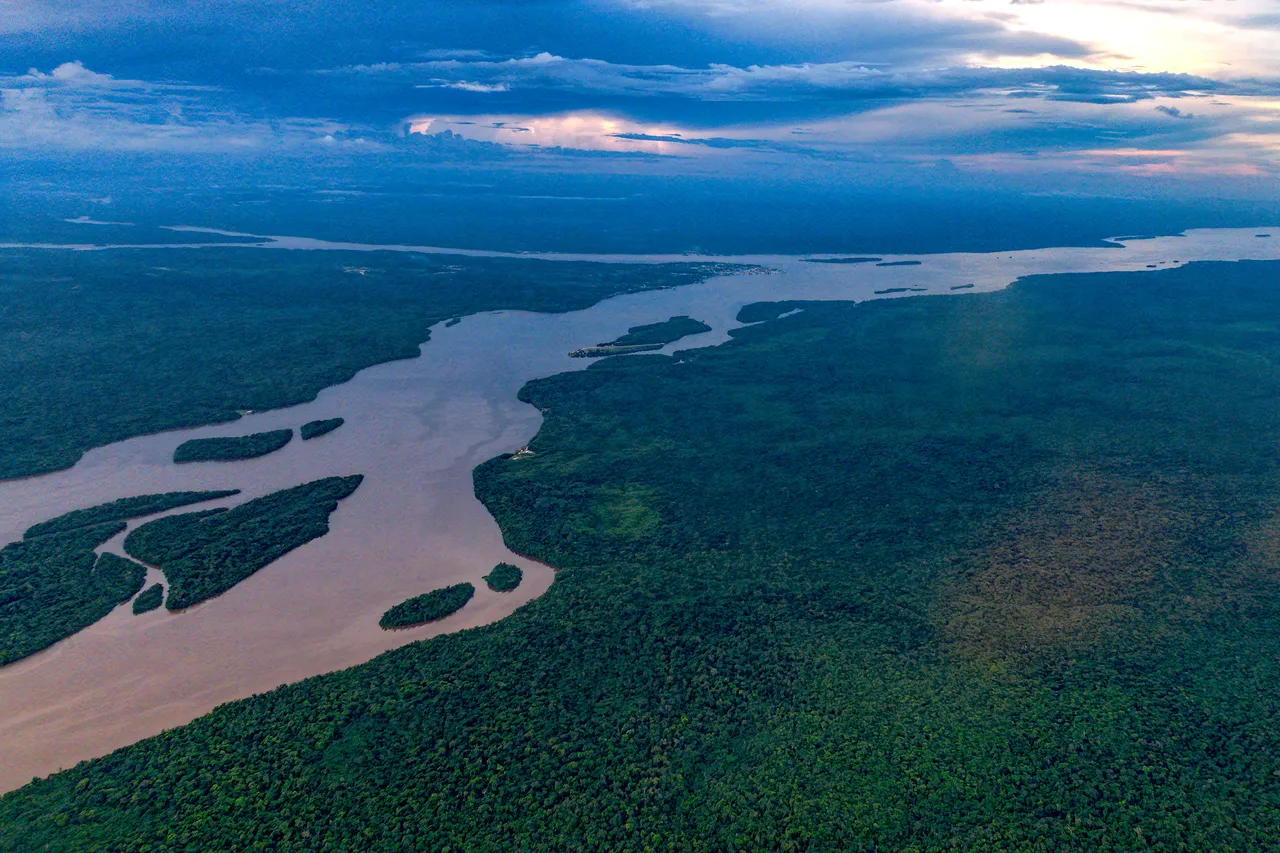
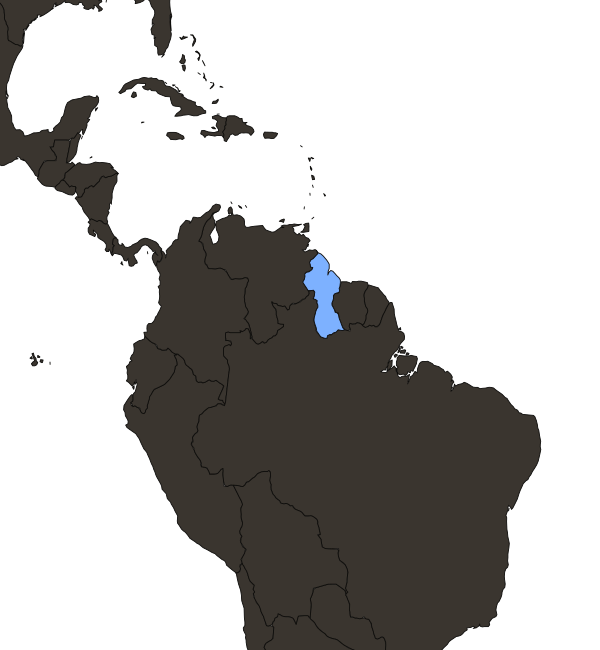
Guyana has about 836,000 people (UN, 2025). Forest covers about 87% of its land. Oil began to flow off its coast in December 2019, and Guyana now pumps more oil per person than any other country. Venezuela claims Essequibo, more than two-thirds of Guyana's land. President Irfaan Ali has led Guyana since August 2020.
Where Guyana ranks
All rankings →Disputed territories involving Guyana
All disputed territories →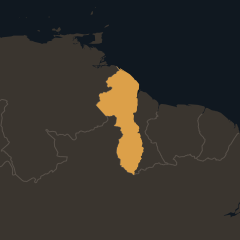
Who runs Guyana?
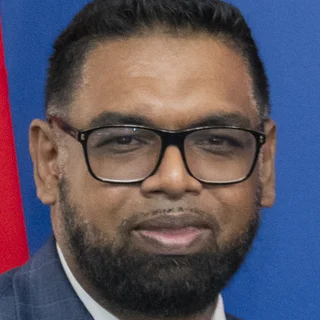
President Irfaan Ali has led Guyana since August 2, 2020. He was born on April 25, 1980, in Leonora, on the coast west of Georgetown, and holds a doctorate in urban and regional planning. His People's Progressive Party/Civic (PPP/C) won the election of March 2020, but a dispute over the count delayed his swearing-in by five months, until a national recount settled it. In the election of September 1, 2025, the PPP/C won 55% of the vote and 36 of the 65 seats (chart). Bharrat Jagdeo, president from 1999 to 2011, is vice president and the party's general secretary. A new party, We Invest in Nationhood (WIN), came second. Its leader, the gold trader Azruddin Mohamed, became opposition leader in January 2026. The United States sanctioned Mohamed in 2024 and charged him with money laundering and fraud in 2025. Guyana's courts are hearing a US request to extradite him. Politics has long followed ethnic lines. In the 2012 census, 40% of Guyanese were of Indian descent and 29% of African descent.
- People's Progressive Party/Civic (PPP/C) 36
- We Invest in Nationhood (WIN) 16
- A Partnership for National Unity (APNU) 12
- Forward Guyana Movement 1
Photo (July 2023): US Department of State / Ron Przysucha, public domain (cropped)
Who are Guyana's allies and rivals?
Venezuela is the main threat. It claims Essequibo, the land west of the Essequibo River, and part of the sea off it. On March 1, 2025, a Venezuelan navy boat approached oil production ships in Guyana's waters. Since February 2025, gunmen firing from the Venezuelan bank of the Cuyuni River have wounded at least eight Guyanese soldiers. Guyana's army has about 3,400 active soldiers, against about 123,000 in Venezuela's armed forces (IISS). So Guyana relies on the United States. The American companies ExxonMobil and Chevron own 75% of Guyana's main oil block. In Georgetown in March 2025, Secretary of State Marco Rubio warned that an attack would mean "a very bad day" for Venezuela's government. US forces captured Venezuela's president, Nicolás Maduro, in January 2026. The acting president, Delcy Rodríguez, has kept the claim. Britain, the former colonial power, sent a warship in December 2023, and Brazil moved armored vehicles to the border. China's CNOOC owns the other 25% of the oil block.
Allies and partners
 United StatesExxonMobil and Chevron own 75% of the oil block
 BrazilSent armored vehicles to the border in 2023
 United KingdomFormer colonial power; sent a warship in 2023
 ChinaCNOOC owns 25% of the oil block
Rivals and tensions
 VenezuelaClaims Essequibo, more than two-thirds of Guyana
 SurinameClaims the New River Triangle in the southeast
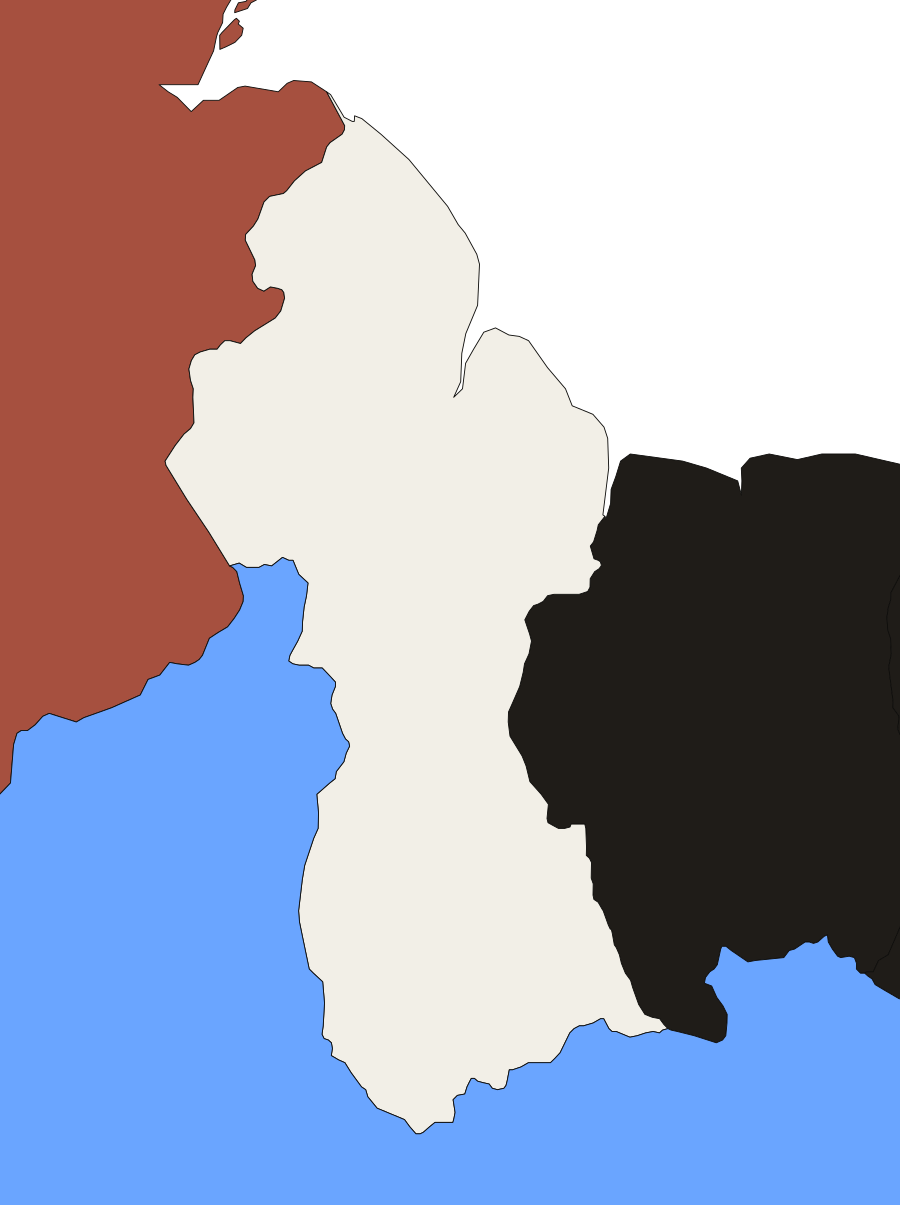
- Essequibo About 159,500 sq km west of the Essequibo River. Held by Guyana and claimed by Venezuela.
- Stabroek oil block ExxonMobil's offshore block produces all of Guyana's oil. Venezuela's sea claim overlaps part of it.
- Ankoko Island Venezuelan troops have held the Guyanese half of this river island since 1966.
- New River Triangle Claimed by Suriname. Held by Guyana since a clash in 1969.
- Guyana
- Partner
- Rival
Who does Guyana trade with?
Guyana exported $20.1 billion of goods in 2025, and crude oil made up 88% of that (Bureau of Statistics). The United States bought the most, ahead of Panama and China (chart). Gold earned $1.6 billion and rice $238 million. Guyana imported $10.2 billion of goods. The largest item was an oil production ship from Singapore, valued at $2.5 billion, which the chart leaves out. Most other imports come from the United States, China and Trinidad and Tobago. Under the 2016 contract for the main oil block, ExxonMobil and its partners recover their costs from up to 75% of the oil. The rest is split equally with Guyana, which also gets a 2% royalty. In August 2026 the government said the oil companies had recovered their past costs, so Guyana's share had risen to about 40% of the oil. Its oil fund held $4.9 billion at the end of August 2026. Since July 24, 2026 the United States has charged a 12.5% tariff on Guyanese goods, but not on oil and gold.
Sells to
Share of Guyana's exports
- United States19.8%
 Panama10.6%
- China9.1%
 Netherlands8.2%
 Poland7.7%
Buys from
Share of Guyana's imports
- United States26.7%
- China16.6%
 Trinidad and Tobago15.6%
 Japan4.2%
- Brazil3.9%
Goods, 2025; imports without ships ($2.6 billion, mostly an oil production ship from Singapore). UN Comtrade, as reported by Guyana.
How much oil does Guyana produce?
ExxonMobil announced the first big oil find off Guyana in May 2015, and oil began to flow in December 2019. Four floating production ships now pump oil from the Stabroek block, and in September 2026 they passed one billion barrels. Guyana produced about 715,000 barrels a day in 2025 (government) and about 891,000 from January to August 2026. A fifth ship arrived in August 2026, and its first cargo is planned for December. That should take Guyana past one million barrels a day. Guyana already pumps more oil per person than any other country. Its economy grew 63% in 2022 and 44% in 2024 (IMF), faster than any other country in either year. The government spends the oil money on roads, housing and a cash grant of G$100,000, about $480, to every adult. But the World Bank's last estimate, from 2019 data, found about 48% of Guyanese living in poverty. Guyana now pumps about as much oil as Colombia (chart).
Oil production in the Americas, 2025
Full ranking →- United States13,586,000
 Canada4,964,000
- Brazil3,769,000
 Mexico1,726,000
- Venezuela973,000
 Argentina794,000
- Guyana747,000
 Colombia746,000
 Ecuador441,000
US Energy Information Administration, International Energy Statistics
Why does Venezuela claim Essequibo?
Britain took over the Dutch colonies that became Guyana in the early 1800s, and their western border with Venezuela was disputed. An international tribunal in Paris fixed it on October 3, 1899. Venezuela accepted that border for decades. In 1949 a memo by Severo Mallet-Prevost, an American lawyer who had represented Venezuela, was published after his death. It claimed the award was a political deal. In 1962 Venezuela declared the award void. In the Geneva Agreement of February 17, 1966, months before Guyana's independence, the two sides agreed to seek a settlement. In 2018 the UN Secretary-General sent the case to the International Court of Justice. On December 3, 2023, Venezuela held a referendum on making Essequibo a Venezuelan state. In May 2025 it held a vote for a "governor" of the territory, against the court's orders. The court heard the case in May 2026, and Guyana's government expects a ruling between November 2026 and early 2027. Venezuela says it will not accept a ruling that upholds the 1899 border.