
Ranking · Food, industry and space
Satellites by country
The United States has 12,934 working satellites as of October 13, 2026, far more than any other country. About 11,100 of them belong to a single network, SpaceX's Starlink. China is second with 1,417, and the United Kingdom is third with 710, mostly from the OneWeb broadband constellation. GCAT counts 16,670 working satellites in all.
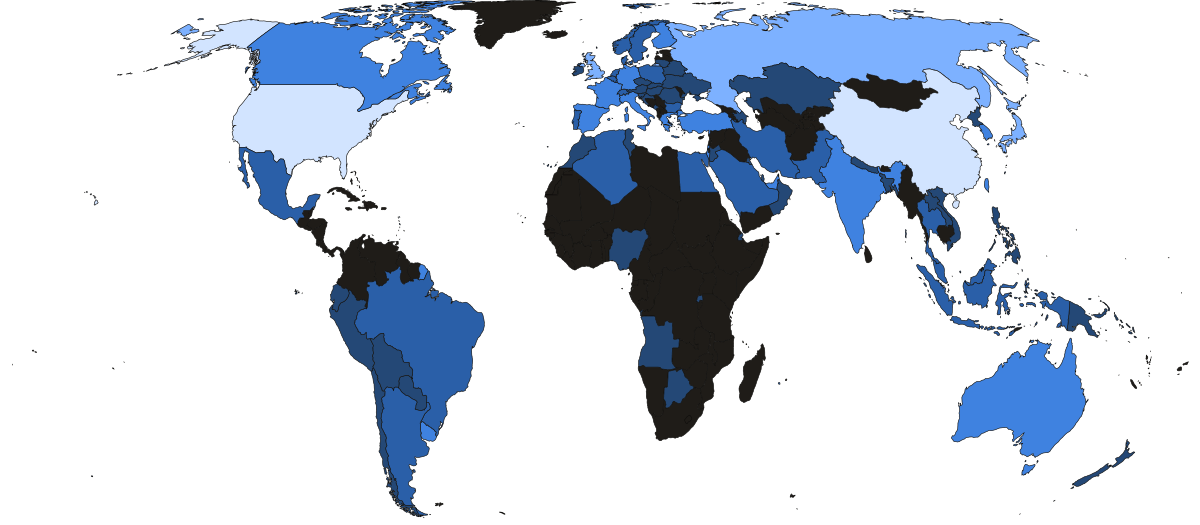
- Under 5
- 5–20
- 20–100
- 100–1,000
- Over 1,000
- Not in this ranking
- Under 3
- 3–10
- 10–30
- 30–100
- Over 100
- Not in this ranking
- Under 2
- 2–5
- 5–20
- 20–50
- Over 50
- Not in this ranking
| # | Country | Satellites | Launched | Launches |
|---|---|---|---|---|
| 1 |  United States United States |
12,934 | 3,710 | 177 |
| 2 |  China China |
1,417 | 371 | 92 |
| 3 |  United Kingdom United Kingdom |
710 | 12 | · |
| 4 |  Russia Russia |
359 | 88 | 17 |
| 5 |  Japan Japan |
131 | 35 | 4 |
| 6 |  France France |
95 | 25 | 7 |
| 7 |  Italy Italy |
85 | 31 | · |
| 8 |  South Korea South Korea |
77 | 23 | 2 |
| 9 |  Germany Germany |
74 | 19 | 1 |
| 10 |  India India |
69 | 12 | 5 |
| 11 |  Canada Canada |
56 | 6 | · |
| 12 |  Spain Spain |
47 | 15 | · |
| 13 |  Turkey Turkey |
41 | 22 | · |
| 14 |  Luxembourg Luxembourg |
34 | 4 | · |
| 15 |  Finland Finland |
33 | 10 | · |
| 16 |  Australia Australia |
30 | 12 | 1 |
| 17 |  Taiwan Taiwan |
28 | 9 | · |
| 18 |  United Arab Emirates United Arab Emirates |
25 | 13 | · |
| 19 |  Greece Greece |
21 | 6 | · |
| 20 |  Israel Israel |
20 | 11 | 1 |
| 21 |  Uruguay Uruguay |
20 | 4 | · |
| 22 |  Norway Norway |
18 | 4 | · |
| 23 |  Brazil Brazil |
17 | · | · |
| 24 |  Poland Poland |
16 | 7 | · |
| 25 |  Iran Iran |
12 | 4 | 1 |
| 26 |  Indonesia Indonesia |
11 | 2 | · |
| 27 |  Singapore Singapore |
11 | 1 | · |
| 28 |  Switzerland Switzerland |
11 | 4 | · |
| 29 |  Portugal Portugal |
10 | 2 | · |
| 30 |  Egypt Egypt |
9 | 1 | · |
| 31 |  Netherlands Netherlands |
9 | 1 | · |
| 32 |  Pakistan Pakistan |
9 | 4 | · |
| 33 |  Malaysia Malaysia |
8 | 3 | · |
| 34 |  Thailand Thailand |
8 | 2 | · |
| 35 |  Belgium Belgium |
7 | 1 | · |
| 36 |  Saudi Arabia Saudi Arabia |
7 | 2 | · |
| 37 |  Sweden Sweden |
7 | · | · |
| 38 |  Algeria Algeria |
6 | · | · |
| 39 |  Mexico Mexico |
6 | 1 | · |
| 40 |  Argentina Argentina |
5 | · | · |
| 41 |  Bulgaria Bulgaria |
5 | 1 | · |
| 42 |  Denmark Denmark |
5 | 2 | · |
| 43 |  Austria Austria |
4 | · | · |
| 44 |  Belarus Belarus |
4 | 2 | · |
| 45 |  Czechia Czechia |
4 | 3 | · |
| 46 |  Hungary Hungary |
4 | 3 | · |
| 47 |  Kazakhstan Kazakhstan |
4 | · | · |
| 48 |  Morocco Morocco |
4 | · | · |
| 49 |  Rwanda Rwanda |
4 | 5 | · |
| 50 |  Azerbaijan Azerbaijan |
3 | 1 | · |
| 51 |  Chile Chile |
3 | · | · |
| 52 |  Nigeria Nigeria |
3 | · | · |
| 53 |  Vietnam Vietnam |
3 | · | · |
| 54 |  Kuwait Kuwait |
2 | 1 | · |
| 55 |  Romania Romania |
2 | · | · |
| 56 |  Slovakia Slovakia |
2 | · | · |
| 57 |  Slovenia Slovenia |
2 | · | · |
| 58 |  Ukraine Ukraine |
2 | · | · |
| 59 |  Angola Angola |
1 | · | · |
| 60 |  Bahrain Bahrain |
1 | 1 | · |
| 61 |  Bangladesh Bangladesh |
1 | · | · |
| 62 |  Bolivia Bolivia |
1 | · | · |
| 63 |  Botswana Botswana |
1 | 1 | · |
| 64 |  Croatia Croatia |
1 | · | · |
| 65 |  Djibouti Djibouti |
1 | · | · |
| 66 |  Ecuador Ecuador |
1 | 1 | · |
| 67 |  Ireland Ireland |
1 | · | · |
| 68 |  Jordan Jordan |
1 | · | · |
| 69 |  Laos Laos |
1 | · | · |
| 70 |  Lithuania Lithuania |
1 | · | · |
| 71 |  Monaco Monaco |
1 | · | · |
| 72 |  Montenegro Montenegro |
1 | 1 | · |
| 73 |  Nepal Nepal |
1 | 1 | · |
| 74 |  New Zealand New Zealand |
1 | 1 | 17 |
| 75 |  North Korea North Korea |
1 | · | · |
| 76 |  Oman Oman |
1 | · | · |
| 77 |  Papua New Guinea Papua New Guinea |
1 | · | · |
| 78 |  Paraguay Paraguay |
1 | · | · |
| 79 |  Peru Peru |
1 | · | · |
| 80 |  Philippines Philippines |
1 | · | · |
| 81 |  Qatar Qatar |
1 | 1 | · |
| 82 |  Solomon Islands Solomon Islands |
1 | 1 | · |
| 83 |  Tunisia Tunisia |
1 | 1 | · |
| # | Country | Launched | Satellites | Launches |
|---|---|---|---|---|
| 1 | United States |
3,710 | 12,934 | 177 |
| 2 | China |
371 | 1,417 | 92 |
| 3 | Russia |
88 | 359 | 17 |
| 4 | Japan |
35 | 131 | 4 |
| 5 | Italy |
31 | 85 | · |
| 6 | France |
25 | 95 | 7 |
| 7 | South Korea |
23 | 77 | 2 |
| 8 | Turkey |
22 | 41 | · |
| 9 | Germany |
19 | 74 | 1 |
| 10 | Spain |
15 | 47 | · |
| 11 | United Arab Emirates |
13 | 25 | · |
| 12 | United Kingdom |
12 | 710 | · |
| 13 | India |
12 | 69 | 5 |
| 14 | Australia |
12 | 30 | 1 |
| 15 | Israel |
11 | 20 | 1 |
| 16 | Finland |
10 | 33 | · |
| 17 | Taiwan |
9 | 28 | · |
| 18 | Poland |
7 | 16 | · |
| 19 | Canada |
6 | 56 | · |
| 20 | Greece |
6 | 21 | · |
| 21 | Rwanda |
5 | 4 | · |
| 22 | Luxembourg |
4 | 34 | · |
| 23 | Uruguay |
4 | 20 | · |
| 24 | Norway |
4 | 18 | · |
| 25 | Iran |
4 | 12 | 1 |
| 26 | Switzerland |
4 | 11 | · |
| 27 | Pakistan |
4 | 9 | · |
| 28 | Malaysia |
3 | 8 | · |
| 29 | Czechia |
3 | 4 | · |
| 30 | Hungary |
3 | 4 | · |
| 31 | Indonesia |
2 | 11 | · |
| 32 | Portugal |
2 | 10 | · |
| 33 | Thailand |
2 | 8 | · |
| 34 | Saudi Arabia |
2 | 7 | · |
| 35 | Denmark |
2 | 5 | · |
| 36 | Belarus |
2 | 4 | · |
| 37 | Singapore |
1 | 11 | · |
| 38 | Egypt |
1 | 9 | · |
| 39 | Netherlands |
1 | 9 | · |
| 40 | Belgium |
1 | 7 | · |
| 41 | Mexico |
1 | 6 | · |
| 42 | Bulgaria |
1 | 5 | · |
| 43 | Azerbaijan |
1 | 3 | · |
| 44 | Kuwait |
1 | 2 | · |
| 45 | Bahrain |
1 | 1 | · |
| 46 | Botswana |
1 | 1 | · |
| 47 | Ecuador |
1 | 1 | · |
| 48 | Montenegro |
1 | 1 | · |
| 49 | Nepal |
1 | 1 | · |
| 50 | New Zealand |
1 | 1 | 17 |
| 51 | Qatar |
1 | 1 | · |
| 52 | Solomon Islands |
1 | 1 | · |
| 53 | Tunisia |
1 | 1 | · |
| # | Country | Launches | Satellites | Launched |
|---|---|---|---|---|
| 1 | United States |
177 | 12,934 | 3,710 |
| 2 | China |
92 | 1,417 | 371 |
| 3 | Russia |
17 | 359 | 88 |
| 4 | New Zealand |
17 | 1 | 1 |
| 5 | France |
7 | 95 | 25 |
| 6 | India |
5 | 69 | 12 |
| 7 | Japan |
4 | 131 | 35 |
| 8 | South Korea |
2 | 77 | 23 |
| 9 | Germany |
1 | 74 | 19 |
| 10 | Australia |
1 | 30 | 12 |
| 11 | Israel |
1 | 20 | 11 |
| 12 | Iran |
1 | 12 | 4 |
Why they rank where they do
-
United States
About 11,100 of the 12,934 are SpaceX's Starlink broadband satellites, so the US has 1,813 without Starlink. SpaceX's Nasdaq listing in June 2026 raised $75 billion, the largest IPO ever.
-
China
China made a record 92 orbital launches in 2025, up from 68 in 2024. Most of the growth came from two state-backed broadband constellations, Guowang and Qianfan.
-
United Kingdom
The UK's count comes almost entirely from more than 600 OneWeb satellites, registered in the UK but owned by France's Eutelsat. The UK government holds 10.89% of Eutelsat and a golden share in OneWeb.
-
Russia
Russia made 17 launch attempts in both 2024 and 2025, down from 22 in 2019. Bureau 1440 began launching Russia's Rassvet broadband satellites in March 2026.
-
Japan
Japan's H3 rocket failed on December 22, 2025, and the Michibiki 5 navigation satellite never reached its planned orbit. The H3 flew again successfully on June 12, 2026.
-
Italy
Italy's IRIDE Earth-observation program put 16 satellites into orbit in 2025. Italy's post-COVID recovery plan pays for IRIDE, and ESA coordinates it with the Italian Space Agency.
-
South Korea
South Korea's Nuri rocket put 13 satellites into orbit on November 27, 2025. Startup Innospace's Hanbit-Nano failed shortly after liftoff from Brazil on December 22, 2025.
-
India
India's PSLV rocket failed twice in a row: PSLV-C61 in May 2025 and PSLV-C62 in January 2026. The PSLV-C62 failure lost 16 satellites.
-
Luxembourg
SES, based in Luxembourg, completed its takeover of Intelsat in July 2025. The combined company operates about 120 satellites in geostationary and medium Earth orbit.
-
Finland
Finnish radar-satellite company ICEYE said it had launched 22 satellites in 2025 by late November. Some were built for customers in other countries, including Greece and Poland.
-
Taiwan
Formosat-8A, the first of a planned 8-satellite optical constellation, launched on a Falcon 9 in November 2025. The full constellation is due by 2031.
-
Uruguay
Uruguay is home to Satellogic's plant in Montevideo, where the Earth-imaging company has built satellites since 2015. Satellogic is now legally based in Delaware.
-
New Zealand
All 17 launches were Rocket Lab Electron flights from Mahia. Rocket Lab is an American company; New Zealand ranks only because the launch pad is there.
Which country has the most satellites in orbit?
The United States has 12,934 working satellites, about 78% of the world's 16,670. But 11,121 of them are Starlink broadband satellites owned by SpaceX. Without Starlink, the US total drops to 1,813, still more than China's 1,417 but not as far ahead. By Jonathan McDowell's count, 87% of satellites deployed in 2025 were commercial. The UK ranks third with 710, almost all from OneWeb, a broadband constellation registered in the UK but owned by the French company Eutelsat.
- United States12,934
- China1,417
- United Kingdom710
- Russia359
- Japan131
- France95
- Italy85
- South Korea77
How many rocket launches were there in 2025?
GCAT counts 325 orbital launch attempts in 2025, up from 255 in 2024 and 85 in 2015. The United States made 177, with SpaceX alone making 167. China made 92, a national record. Russia and New Zealand made 17 each. All of New Zealand's launches were flown by Rocket Lab, an American company, from its pad at Mahia. Other counters give 2025 totals between 324 and 329. On September 28, 2026, SpaceX's Starship reached orbit for the first time, on its 14th flight.
- United States177
- China92
- Russia17
- New Zealand17
- France7
- India5
- Japan4
- South Korea2
Can any constellation challenge Starlink?
Several are trying. China has two state-backed networks, Guowang and Qianfan. Chinese state broadcaster CGTN reported that Qianfan had 200 satellites in orbit by early June 2026. Amazon Leo, called Project Kuiper until November 2025, had 331 satellites in orbit in June 2026. Its US license required 1,616 in orbit by July 30, 2026. On June 5, 2026, the FCC gave Amazon more time, with conditions, and kept the final deadline of July 2029. Russia's Bureau 1440 launched its first 16 Rassvet broadband satellites in March 2026. Russian officials say service needs about 250 satellites and should start in 2027. None is close to Starlink's 11,121.
United States12,934
The next five countries together2,712
China, United Kingdom, Russia, Japan and France
Which countries launched the most new satellites in 2025?
The United States launched 3,710 satellites in 2025, most of them Starlinks. China was second with 371 and Russia third with 88. Some countries that rank high in working satellites launched few new ones in 2025. The UK launched only 12, because OneWeb finished launching its first-generation constellation in March 2023. Italy launched 31, and Italy's IRIDE Earth-observation program alone sent up 16 satellites in 2025. By Jonathan McDowell's count, four countries got their first satellites of their own in 2025: Botswana, Bahrain, the Solomon Islands and Montenegro.
- United States3,710
- China371
- Russia88
- Japan35
- Italy31
- France25
- South Korea23
- Turkey22