How did Putin come to power?
In August 1999, barely 2% of Russian voters had heard of Vladimir Putin. Six months later he was president. The chain of events that got him there reshaped the world.
In August 1999, Vladimir Putin was a former intelligence officer with no public profile as a politician. In polls, roughly 2 percent of Russian voters said they would choose him for president. He had never run for office, never led a political party, never given a speech that anyone remembered. Six months later he was president of Russia. Within three years he had silenced independent television, broken the billionaires who thought they owned the Kremlin, and built a system of personal rule that nobody has successfully challenged since.
Every step was technically legal. That is what makes the story worth understanding.
The quiet officer
Putin spent sixteen years in the KGB, the Soviet intelligence service. Most of that career was unremarkable. He trained in Leningrad and Moscow, then was posted to Dresden in East Germany in 1985. It was a backwater assignment, far from the agency's real centers of power in Berlin or Washington. When the Berlin Wall fell in November 1989, he watched the East German state collapse around him. He later said he called Moscow for instructions and was told nothing. "Moscow is silent," he recalled.
He returned to Leningrad, now renamed St. Petersburg, and attached himself to Anatoly Sobchak, the city's reformist mayor. Through the early 1990s Putin ran the city's committee for foreign relations, handling business permits and foreign investment. It was a mid-level municipal job. When Sobchak lost his reelection in 1996, Putin was out of work. He moved to Moscow and took a position in the presidential property office, a bureaucratic role so minor that no one outside the Kremlin would have recognized his name.
From there he rose with startling speed. In less than two years he moved through several Kremlin staff posts. In July 1998, President Boris Yeltsin made him director of the FSB, the domestic successor to the KGB. In August 1999, Yeltsin named Putin prime minister. He was the fourth prime minister Yeltsin had burned through in eighteen months.
The bombings that made him
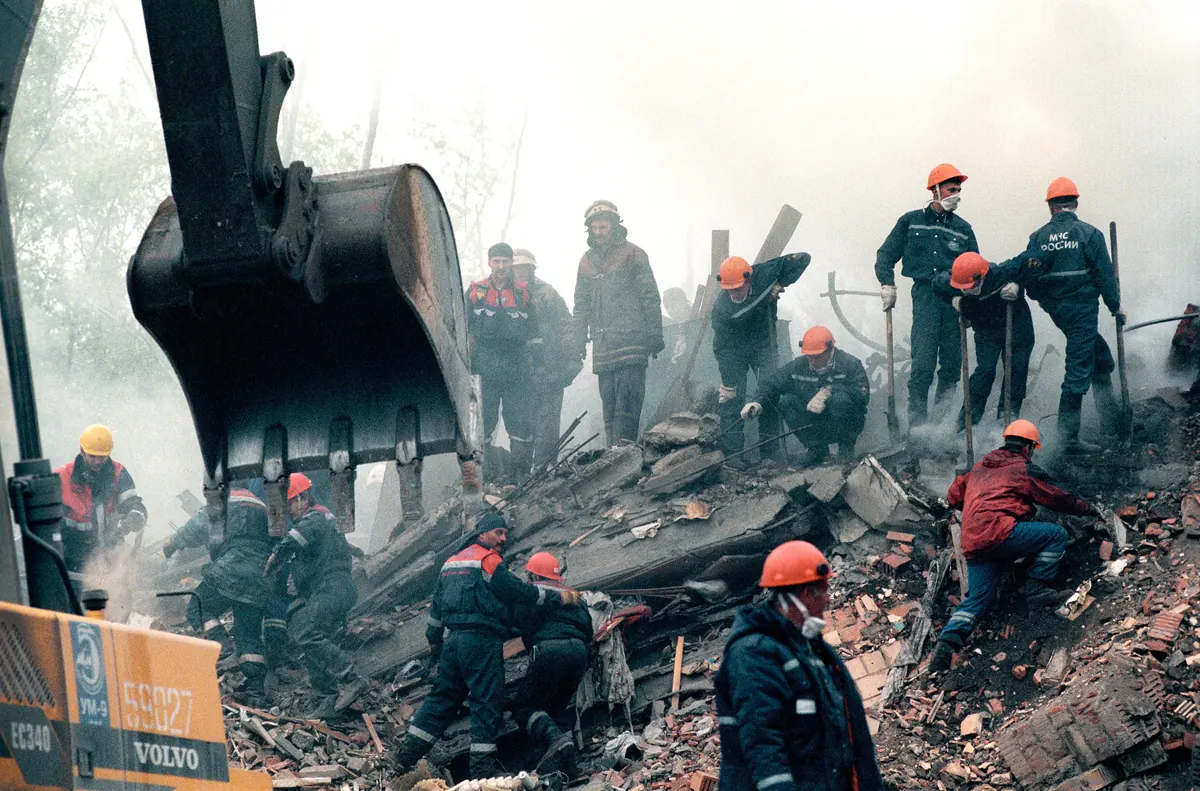
In September 1999, a series of bombs destroyed apartment buildings in Moscow, Buynaksk, and Volgodonsk, killing more than 300 people. The government blamed Chechen militants. Russia was terrified. Putin, one month into his job as prime minister, ordered a full-scale military invasion of Chechnya: the Second Chechen War.
The war was brutal and it was popular. Russians had spent the 1990s watching their savings vanish to hyperinflation, their army humiliated in the first Chechen war, and their president appear unsteady on the world stage. Putin spoke without hesitation. When a journalist asked about the air strikes on Grozny, he said he would hunt the attackers "in the outhouse" if he had to. The coarse language was deliberate. After a decade of Yeltsin's incoherent speeches, Russians heard a leader who sounded like he meant what he said. By November, Putin's approval rating had passed 80 percent.
The bombings themselves remain one of Russia's most disturbing unsolved cases. In the city of Ryazan, residents spotted men planting sacks in an apartment building basement. Police identified the substance as hexogen, a military explosive, and evacuated thousands. Two days later, the FSB called the whole thing a "training exercise" and said the sacks contained sugar. The bomb disposal expert who examined the sacks insisted they were real. No independent investigation was ever completed.
New Year's Eve
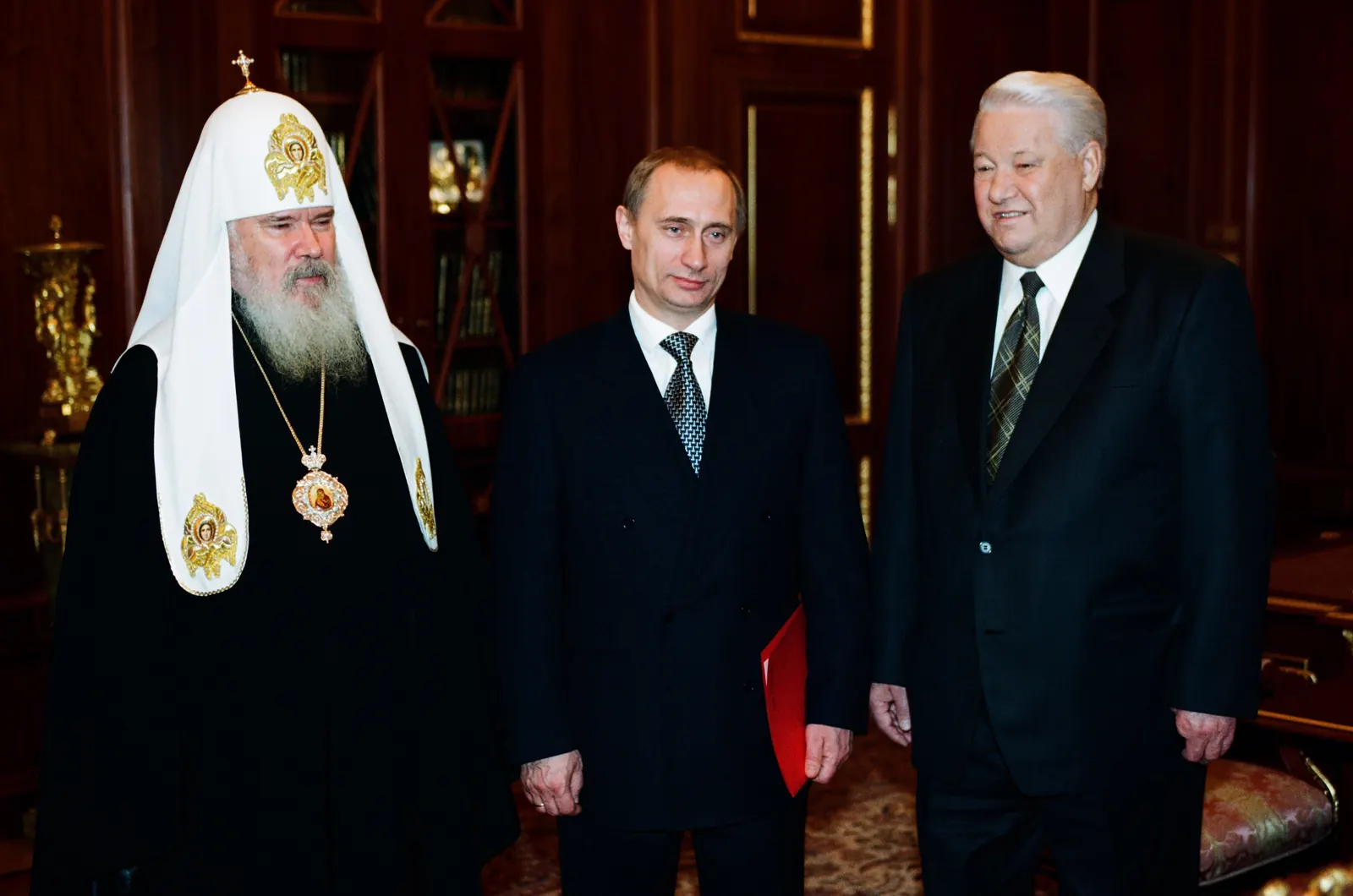
On December 31, 1999, Boris Yeltsin appeared on television and did something nobody expected. He resigned, effective immediately. He was sick, politically exhausted, and deeply unpopular. He was also facing corruption investigations that could reach his family.
Under Russia's constitution, the prime minister automatically became acting president when the president left office. Putin took over that afternoon. His first official act made the arrangement plain: he signed a decree granting Yeltsin and his family full immunity from criminal prosecution. Yeltsin had chosen a successor who would protect him. In return, Putin got the presidency three months early.
The early resignation was a tactical move. Election law required a snap vote within three months, which pushed the presidential election from June to March 2000. The compressed timeline gave the opposition almost no time to organize against a sitting president who had wartime popularity and the full machinery of the state behind him. Putin won in the first round with 53 percent of the vote. Six months earlier, almost no one had considered him a serious candidate.
Breaking the oligarchs
In July 2000, two months after his inauguration, Putin summoned about two dozen of Russia's richest men to the Kremlin. These were the oligarchs, the businessmen who had acquired vast state assets for almost nothing during the chaotic privatizations of the 1990s and used their media empires to make and break politicians. The terms that came out of the meeting were simple: stay out of politics, and your wealth will not be touched.
Two oligarchs tested the line. Vladimir Gusinsky owned NTV, the only major television network not controlled by the state and the one that had aired critical coverage of the Chechen war. He was arrested in June 2000. Within months, the state gas company Gazprom seized his media holdings. He went into exile. Boris Berezovsky, who had helped engineer Putin's rise, broke with the new president almost immediately. He too fled the country.
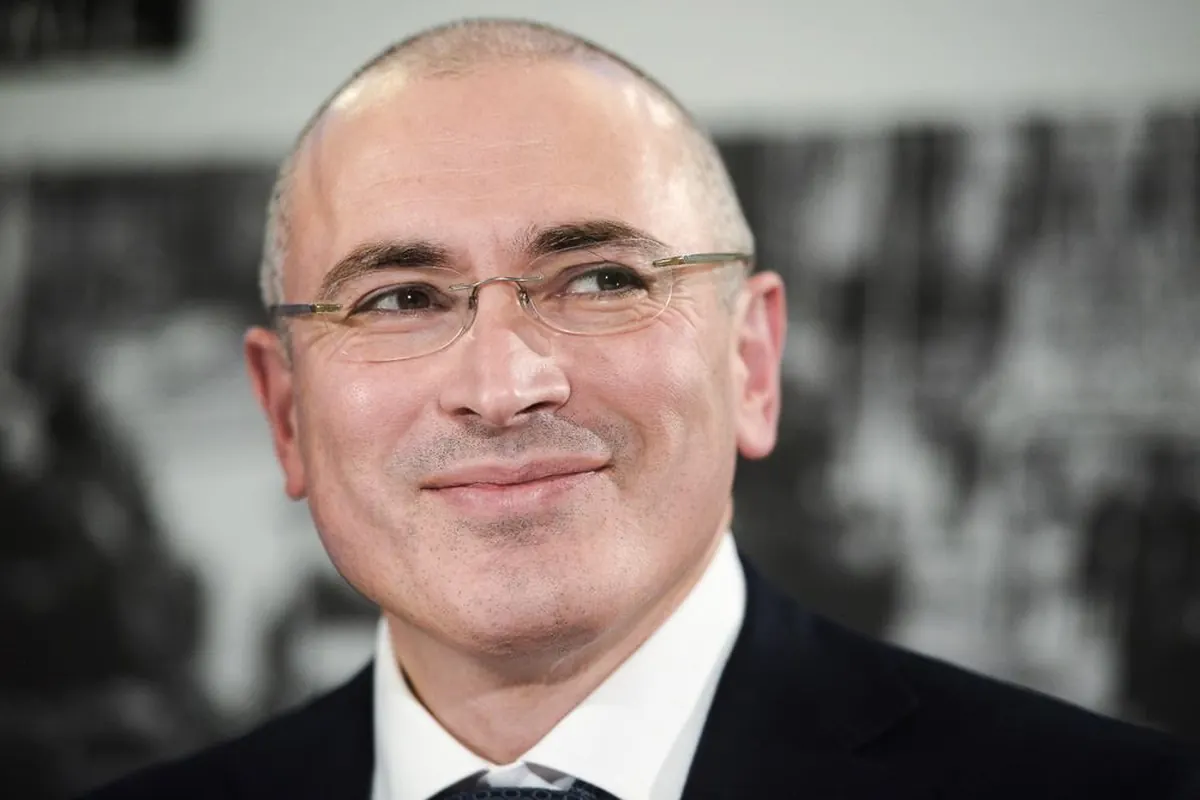
The final example was the most dramatic. Mikhail Khodorkovsky was Russia's richest man, the owner of the oil company Yukos. In 2003 he did what the Kremlin meeting had warned against: he funded opposition parties and publicly accused Putin's government of corruption. In October, masked FSB agents stormed his private jet at a Siberian airport and arrested him. He was convicted of fraud and spent ten years in prison. Yukos was broken up and its assets transferred to state-controlled companies.
No oligarch openly challenged Putin again.
The system
Putin's first three years built a template that political scientists now study alongside other cases of authoritarian consolidation. The formula has three parts. First, a security crisis that demands a strongman. The apartment bombings and the Chechen war gave Putin his emergency and the public support to act without constraints. Second, control of information. By 2001, every major television network in Russia was either state-owned or run by Kremlin allies. The opposition did not need to be banned. It just needed to be invisible to the roughly 90 percent of Russians who got their news from television. Third, make the economic elite dependent on the state. The 1990s oligarchs had controlled Yeltsin. Putin reversed the relationship. After Khodorkovsky, every businessman in Russia understood that his wealth existed at the Kremlin's pleasure.
That structure has not changed in any fundamental way since. In 2020, Putin amended the constitution to reset his term limits, allowing himself to remain president until 2036. In 2022, the system he built launched the full-scale invasion of Ukraine, a war that continues. No institutional checks, no independent media, no rival center of power. Everything visible in Russia today was already assembled by 2003, before the world understood what it was looking at. The gray blur, as Stalin was once called, finds its echo in the quiet officer nobody noticed until it was too late.
Test what you learned
5 questions on this article. About two minutes, no signup.
Orbis has a full course on this
Russia: Empire to Superpower. 38 lessons, each ending with a quiz like this one.