How did Stalin come to power?
The Bolsheviks gave Stalin the General Secretary job in 1922 because nobody else wanted it. By 1929 every rival who had dismissed him was gone.
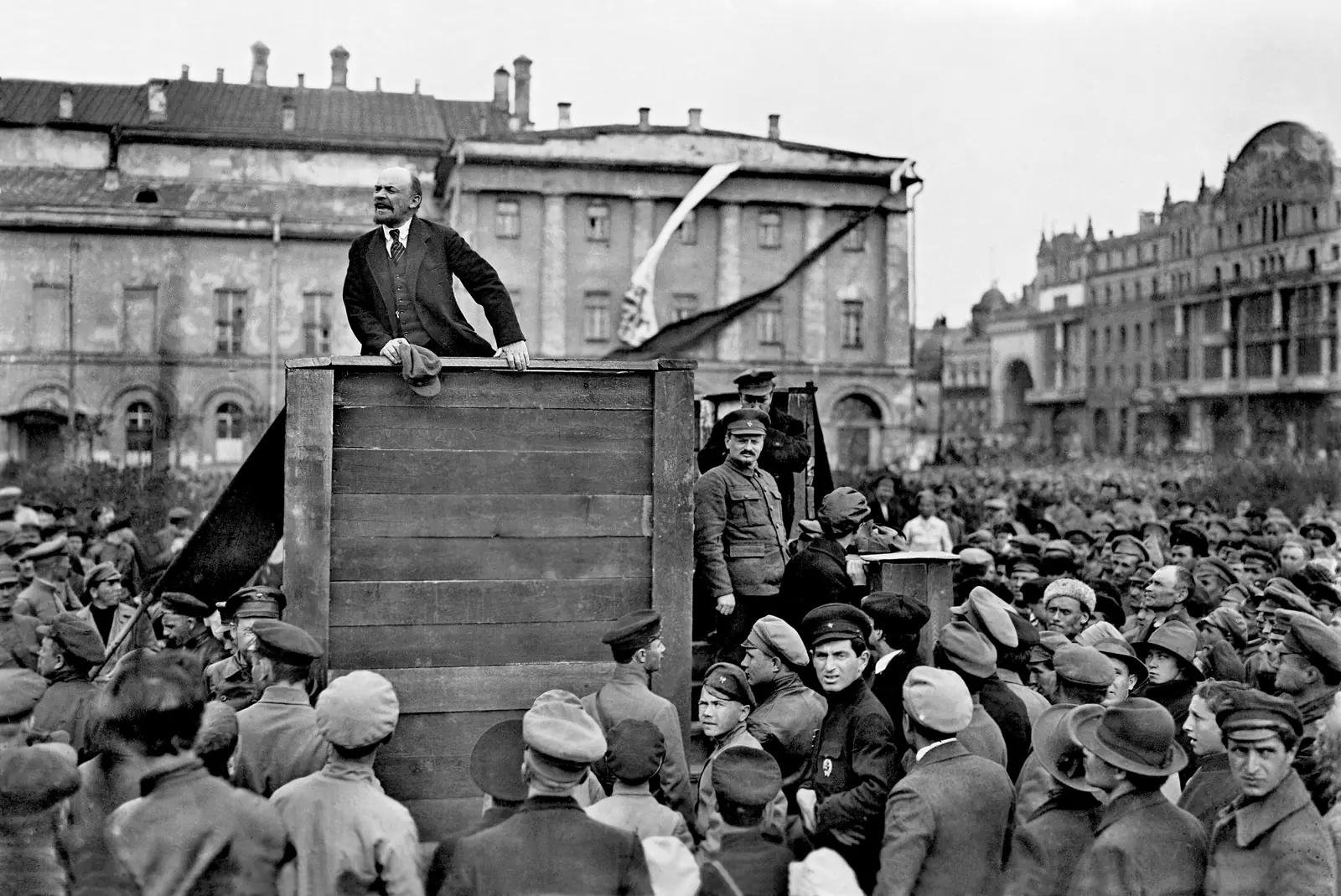
On the day the Bolsheviks seized power in October 1917, almost nobody noticed Joseph Stalin. A fellow revolutionary named Nikolai Sukhanov later described him as a "grey blur" who flickered across the scene and left no trace. The man who organized the insurrection was Leon Trotsky. The man who led the party was Vladimir Lenin. Stalin edited the party newspaper. Within seven years of Lenin's death, the grey blur had eliminated every rival and held more personal power than any Russian ruler before him. His advantage was the party's own bureaucracy, which he controlled because the job of running it had seemed too boring for anyone else to want.
The cobbler's son
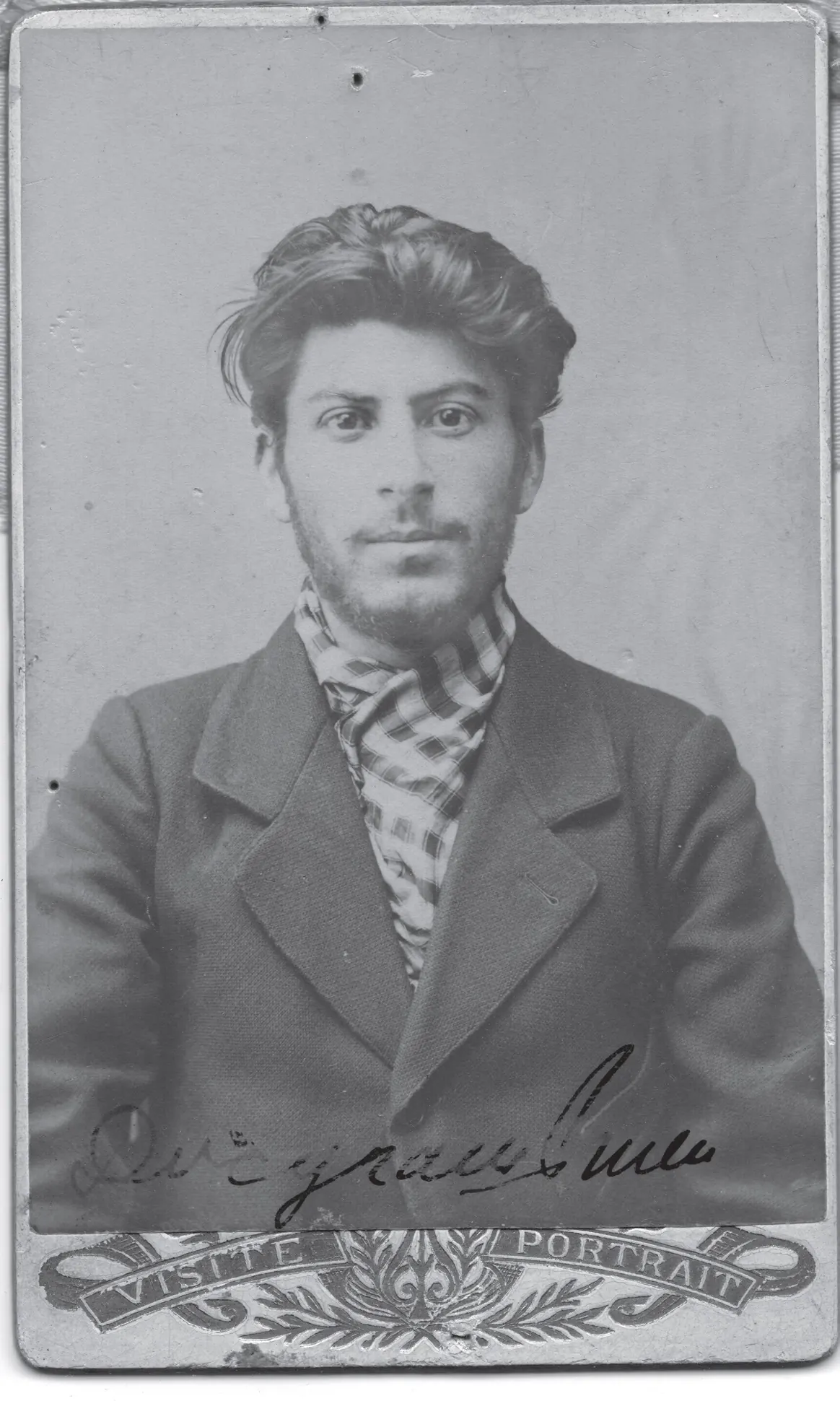
Stalin was not Russian. He was born Ioseb Jughashvili in 1878 in Gori, a small town in Georgia, then part of the Russian Empire. His father, Besarion, was a cobbler whose business failed. He drank, beat his wife and son, and eventually left the family. Stalin's mother, Ekaterine, moved through nine different rented rooms raising him alone before scraping together enough to send her son to the Tiflis Theological Seminary on a scholarship in 1894.
The seminary was supposed to produce Orthodox priests. Instead it radicalized its students. The Russian imperial authorities ran it as a tool of Russification, suppressing the Georgian language, and the students responded by reading banned books. Stalin left in 1899, officially for missing his final exams, though the Soviet version later claimed he was expelled for spreading Marxism. Either way, by his early twenties he was a full-time revolutionary: organizing strikes, printing illegal newspapers, and raising money for the Bolshevik wing of the Russian Social Democrats.
The fundraising included armed robbery. On June 26, 1907, a gang led by Stalin's associate Kamo attacked a bank convoy in the center of Tiflis with bombs and pistols, killing about 40 people and stealing roughly 241,000 rubles. Stalin helped plan the operation. Between 1902 and 1913 the tsarist authorities arrested and exiled him at least seven times. He escaped from most of them. The last exile, to the remote settlement of Turukhansk in Siberia, held him until the February Revolution of 1917 freed every political prisoner in the empire.
By then he had dropped his Georgian name entirely. He had gone by "Koba" for years, after a Robin Hood figure in Georgian folk literature. Around 1912 he started signing articles "Stalin," from the Russian word for steel. He spoke Russian with a heavy Georgian accent for the rest of his life, his face was badly pockmarked from childhood smallpox, and his left arm was slightly withered from a carriage accident as a boy. Nothing about him suggested a future dictator.
The job nobody wanted
During the Civil War that followed the revolution, Trotsky built the Red Army and became the second most famous Bolshevik in the country. Stalin served on various military councils and clashed with Trotsky over strategy. He was not a gifted commander. What he was good at was organization: managing people, tracking loyalties, remembering who owed what to whom.
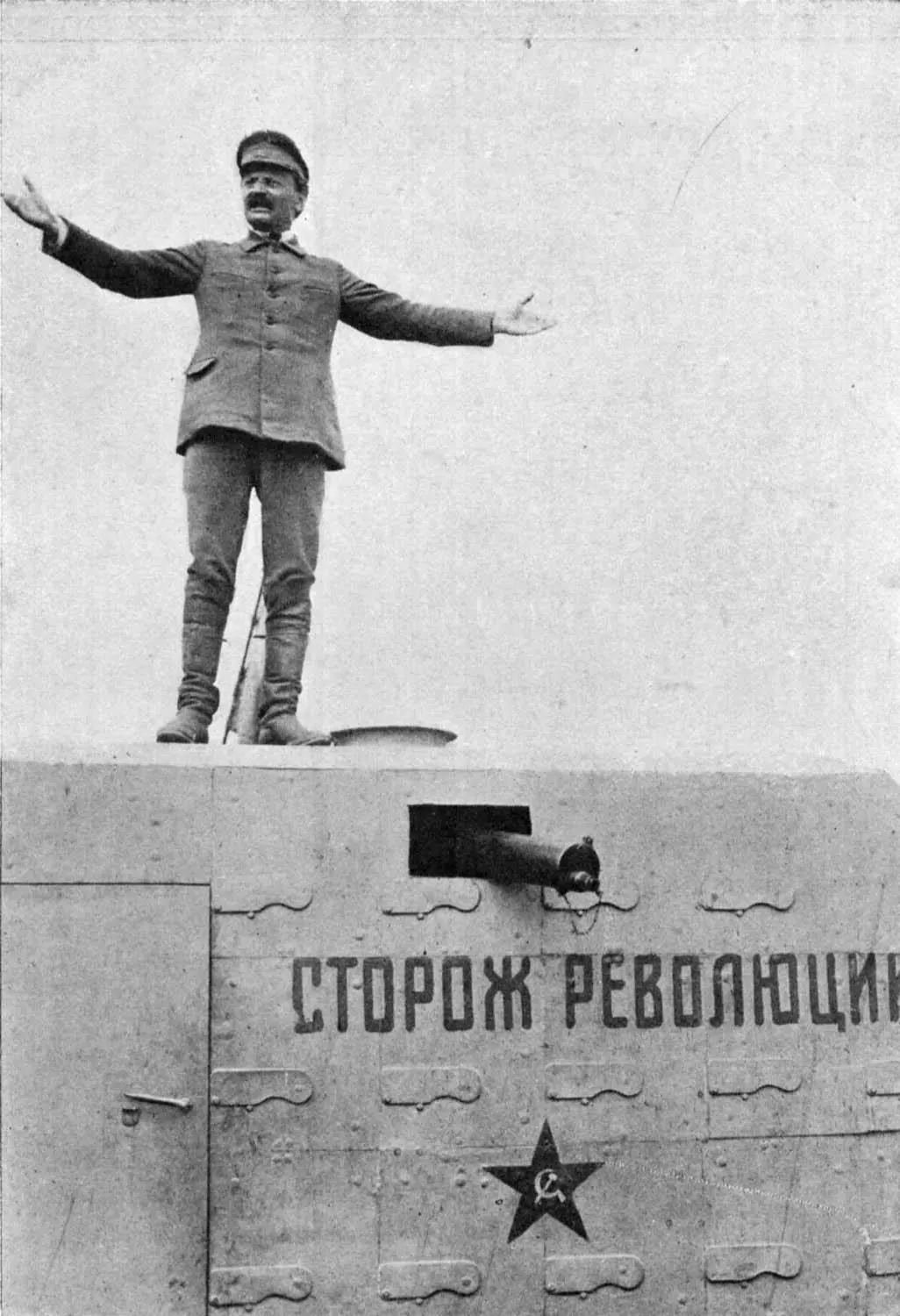
On April 3, 1922, the Central Committee gave Stalin a new title: General Secretary of the Communist Party. Lenin supported the appointment. The job was supposed to be administrative: managing files, scheduling meetings, assigning party members to posts across the country. The real power, everyone assumed, lay in the Politburo, where Lenin, Trotsky, Zinoviev, Kamenev, and Bukharin debated policy. The General Secretary handled the filing.
Stalin saw what the others missed. In a one-party state, the person who decides who gets which job controls the party. He used his position to place loyalists in key posts across the Soviet Union, from provincial party secretaries to factory managers. By the time his rivals noticed, hundreds of local officials owed their careers to Stalin personally.
Lenin noticed first. In December 1922, partly paralyzed by a stroke, he dictated a document the party later called his Testament. He assessed each senior leader and reserved his sharpest words for Stalin: "Comrade Stalin, having become General Secretary, has concentrated enormous power in his hands, and I am not sure that he always knows how to use that power with sufficient caution." In a postscript added in January 1923, Lenin was blunter: "Stalin is too rude, and this defect becomes intolerable in the office of General Secretary. I therefore propose to the comrades to think of a way to transfer Stalin from this position."
Lenin died on January 21, 1924, before he could act. His widow, Nadezhda Krupskaya, delivered the Testament to the Central Committee. At the 13th Party Congress in May, selected leaders read it behind closed doors. Stalin offered to resign. The other leaders, who feared Trotsky's ambition and his command of the Red Army more than they feared Stalin's rudeness, told him to stay. The Congress voted to suppress the document. It was one of the most consequential personnel decisions of the twentieth century.
How he destroyed them one by one
Stalin eliminated his rivals in three rounds, always allying with one faction to destroy another, then turning on his allies.
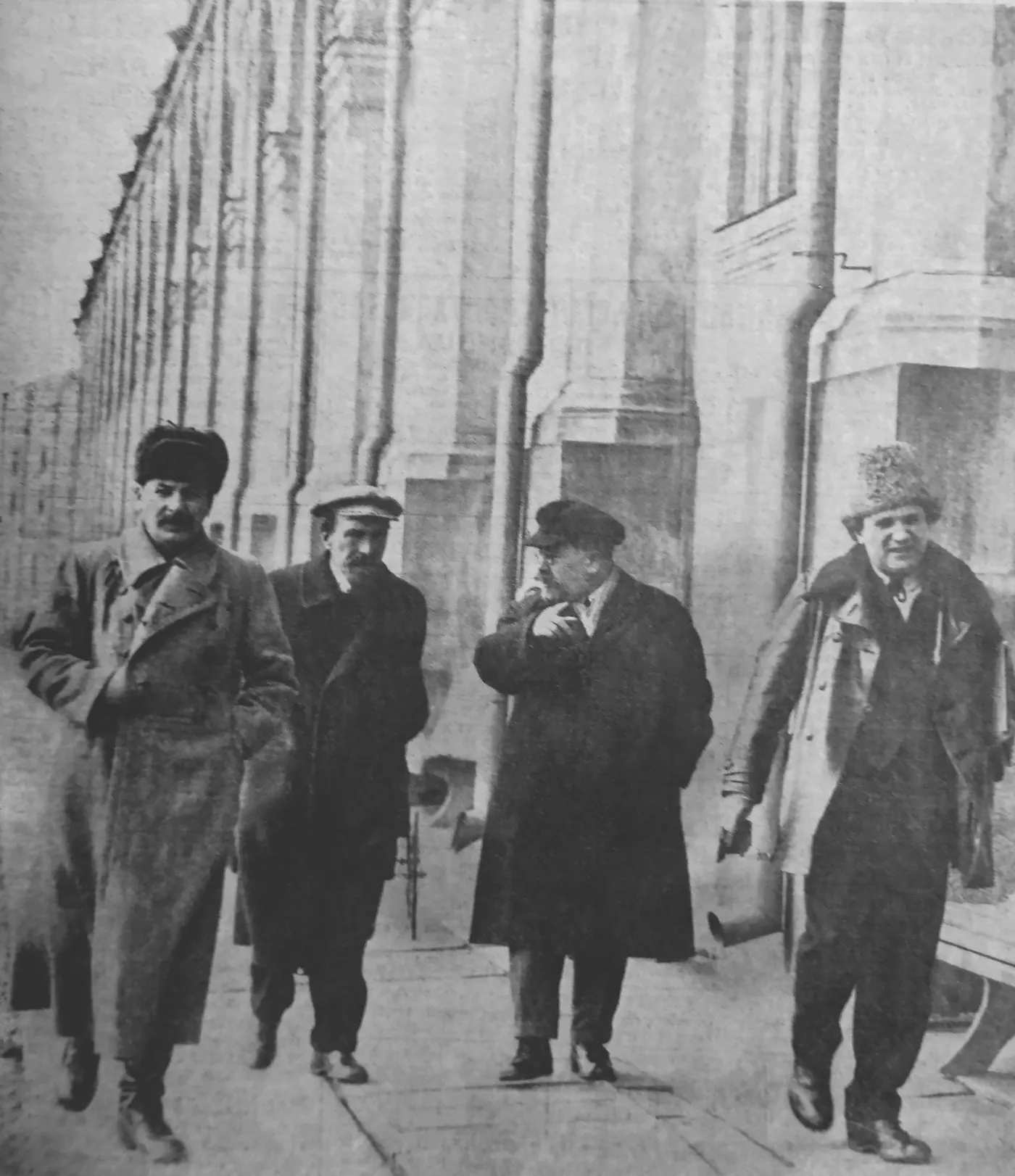
First he joined with Grigory Zinoviev, who ran the Leningrad party organization, and Lev Kamenev, who ran Moscow's, to isolate Trotsky. The ideological weapon was a debate over the future of the revolution. Trotsky argued for "permanent revolution": socialism in the Soviet Union could survive only if revolution spread to the industrialized West. Stalin countered with "socialism in one country," the claim that the Soviet Union could build socialism within its own borders. It was the more optimistic message, and it appealed to party members tired of waiting for German and British workers to rise up. In January 1925, Trotsky was stripped of his post as Commissar for War.
Then Stalin turned on Zinoviev and Kamenev. They had expected to share power as equal partners. Instead they discovered that Stalin's control of appointments had quietly filled the party apparatus with his supporters, not theirs. In desperation, they formed a "United Opposition" with Trotsky, the man they had just helped to destroy. It was too late. At the 15th Party Congress in December 1927, all three were expelled from the party. Zinoviev and Kamenev capitulated almost immediately, writing humiliating letters of self-criticism to win readmission. Trotsky refused. He was exiled to Alma-Ata in January 1928, then expelled from the Soviet Union entirely in February 1929.
The last target was Nikolai Bukharin, the party's leading theorist and the man who had helped Stalin defeat the left. Bukharin wanted to continue Lenin's New Economic Policy, which allowed small-scale private farming and trade. Stalin wanted rapid industrialization and forced collectivization of agriculture. By November 1929, Bukharin had been removed from the Politburo. Stalin, at fifty, was the unchallenged ruler of the Soviet Union.
What the grey blur built
The cost of Stalin's power became clear almost immediately. Starting in 1929, the First Five-Year Plan forced the Soviet Union through a crash industrialization that turned a peasant economy into an industrial power within a decade. Forced collectivization stripped millions of farmers of their land and grain. The resulting famine killed between five and seven million people in Ukraine and Kazakhstan alone. The Gulag labor camp system expanded into a network through which roughly eighteen million people passed between 1930 and 1953. And in 1936 Stalin launched the Great Purge, a wave of show trials and mass executions that killed at least 680,000 people in two years, including most of the original Bolshevik leadership.
The rivals who had dismissed him as a grey blur did not survive. Zinoviev and Kamenev were put on trial in August 1936, forced to confess to conspiracies they had not committed, and shot. Bukharin followed in March 1938. Trotsky, who had fled to Mexico, was tracked down by an NKVD agent named Ramon Mercader, who killed him with an ice axe on August 20, 1940.
The pattern Stalin set, that control of a party machine outweighs charisma, intellect, or popular support, has repeated wherever a single organization monopolizes political power. In post-Soviet Russia, Vladimir Putin rose as a quiet functionary from the security services, promoted to prime minister in 1999 because Boris Yeltsin's circle thought he could be managed. The oligarchs and opposition politicians who underestimated him learned what Trotsky, Zinoviev, and Bukharin had learned seven decades earlier: in a system built on appointments and loyalty, the person who controls the appointments does not need to win the argument. Stalin's rivals understood ideas, warfare, and public speaking. Stalin understood personnel.
Test what you learned
5 questions on this article. About two minutes, no signup.
Orbis has a full course on this
Russia: Empire to Superpower. 38 lessons, each ending with a quiz like this one.