Why are Turkey and Greece enemies?
Greece broke away from the Ottoman Empire in 1830. Two centuries later, it and Turkey still cannot agree on a border, an island, or the airspace between them.
In January 1996, Greek and Turkish warships squared off in the Aegean Sea over two rocks barely large enough to land a helicopter on. Greece calls them Imia. Turkey calls them Kardak. Both countries planted flags on them. Three Greek officers died during the standoff, and the United States had to step in to prevent two NATO allies from going to war.
The crisis should not have surprised anyone. Greece and Turkey have been building toward confrontations like this for two hundred years.
From subjects to enemies
For roughly four hundred years, Greece was part of the Ottoman Empire. Greeks were not equal subjects (they paid extra taxes and could not serve in the military), but they held a privileged place among the empire's Christians. Greek merchants ran much of Ottoman trade. Greek bankers helped finance the sultan's government. The Ottoman capital, Constantinople, had a Greek population that had been there since before the Ottomans arrived.
The Greek War of Independence, which began on March 25, 1821, broke that arrangement apart. After nearly a decade of fighting and intervention by Britain, France, and Russia, whose combined fleet destroyed the Ottoman navy at Navarino in 1827, Greece became the first nation to break away from the Ottoman Empire. The new state was small, covering only the southern tip of the Balkans, but it carried a powerful idea: that the Greek nation existed wherever Greek-speaking Orthodox Christians lived, including deep inside Ottoman territory.
That idea, called the Megali Idea ("the Great Idea"), drove Greek foreign policy for the next century. The goal was to bring all Greek-speaking lands under one state, eventually including Constantinople itself. Each generation pushed the border further: Thessaly in 1881, Crete in 1908, Macedonia and much of Thrace in the Balkan Wars of 1912-13. Each expansion came at Ottoman expense. By the time the Ottoman Empire collapsed after World War I, Greece saw its chance to claim the greatest prize of all: the Anatolian coast.
The war that ended coexistence
In May 1919, with Allied encouragement, Greek troops landed at Smyrna (now Izmir) on Turkey's western coast. Smyrna had a large Greek community, possibly the city's largest, and Greece claimed it under the Treaty of Sèvres, which carved the defeated Ottoman Empire into pieces.
The landing set off the Turkish War of Independence. Mustafa Kemal, a decorated Ottoman general, rallied what was left of the army in Anatolia's interior and built a nationalist movement that rejected the treaty entirely. For three years the two armies fought across western Anatolia. By August 1922, Kemal's forces had broken the Greek front and the Greek army was retreating to the coast.
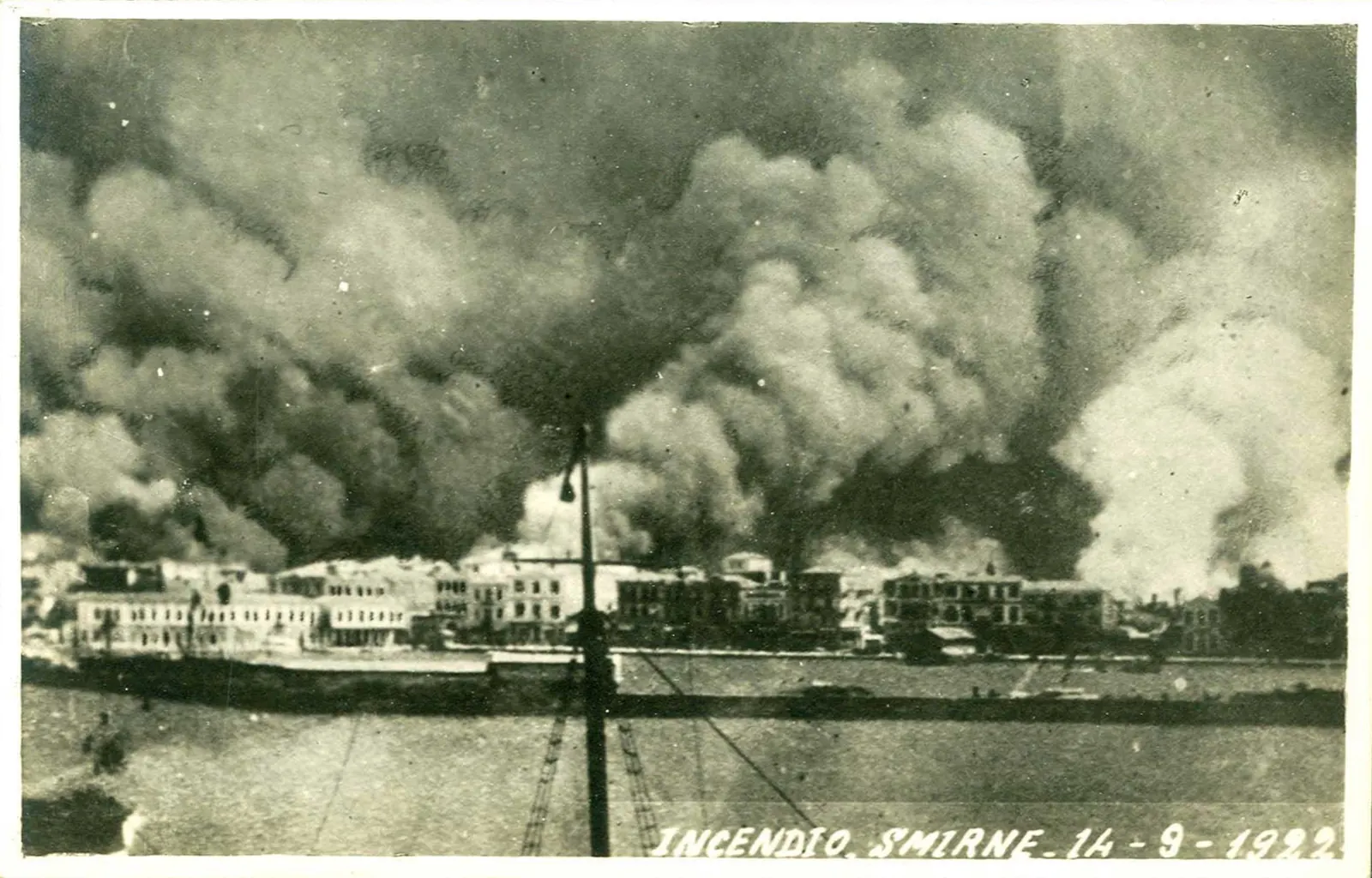
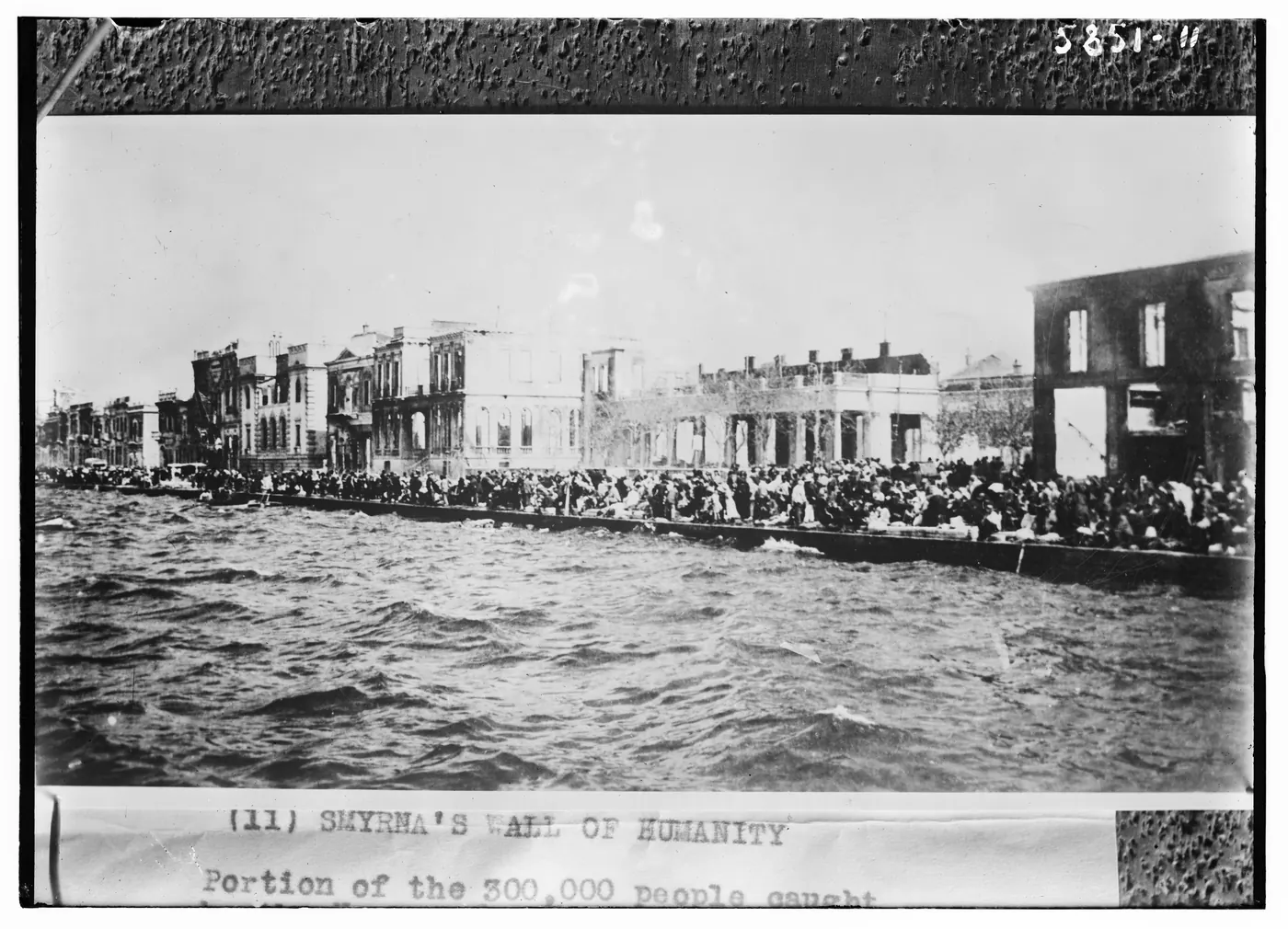
On September 13, 1922, a fire broke out in Smyrna's Armenian and Greek quarters. It burned for days, destroying most of the city. Hundreds of thousands of civilians crowded the waterfront, trapped between the flames and the sea. Allied warships sat in the harbor and did not intervene. The death toll is still disputed, but the outcome is not: Smyrna's Greek and Armenian communities, which had been there for centuries, were gone.
The Treaty of Lausanne in 1923 settled the borders. Greece gave up its claims in Anatolia. The two countries then agreed to what diplomats called a "population exchange": roughly 1.2 million Orthodox Christians were expelled from Turkey to Greece, and about 400,000 Muslims from Greece to Turkey. Many of these people had lived in their homes for centuries. Greece's population grew by about a quarter overnight. The exchange was meant to end the conflict by separating the two peoples for good. Instead, it created a generation of refugees on both sides who never forgave what they had lost.
The island that split the map
Cyprus, an island in the eastern Mediterranean, had a population about 77 percent Greek Cypriot and 18 percent Turkish Cypriot when it became independent from Britain in 1960. Greek Cypriots wanted union with Greece. Turkish Cypriots wanted partition. Neither side got what it wanted.
On July 15, 1974, the Greek military junta in Athens backed a coup against Cyprus's president, Archbishop Makarios. The goal was union with Greece. Five days later, Turkey invaded. The operation came in two phases: the first seized a strip around the northern port of Kyrenia, and the second, on August 14, expanded Turkish control to about 36 percent of the island. About 200,000 Greek Cypriots were displaced from the north.
Turkey established the Turkish Republic of Northern Cyprus, which no country except Turkey has ever recognized. The UN buffer zone that resulted, called the Green Line, still runs through the middle of the capital, Nicosia. It is the last divided capital in Europe.
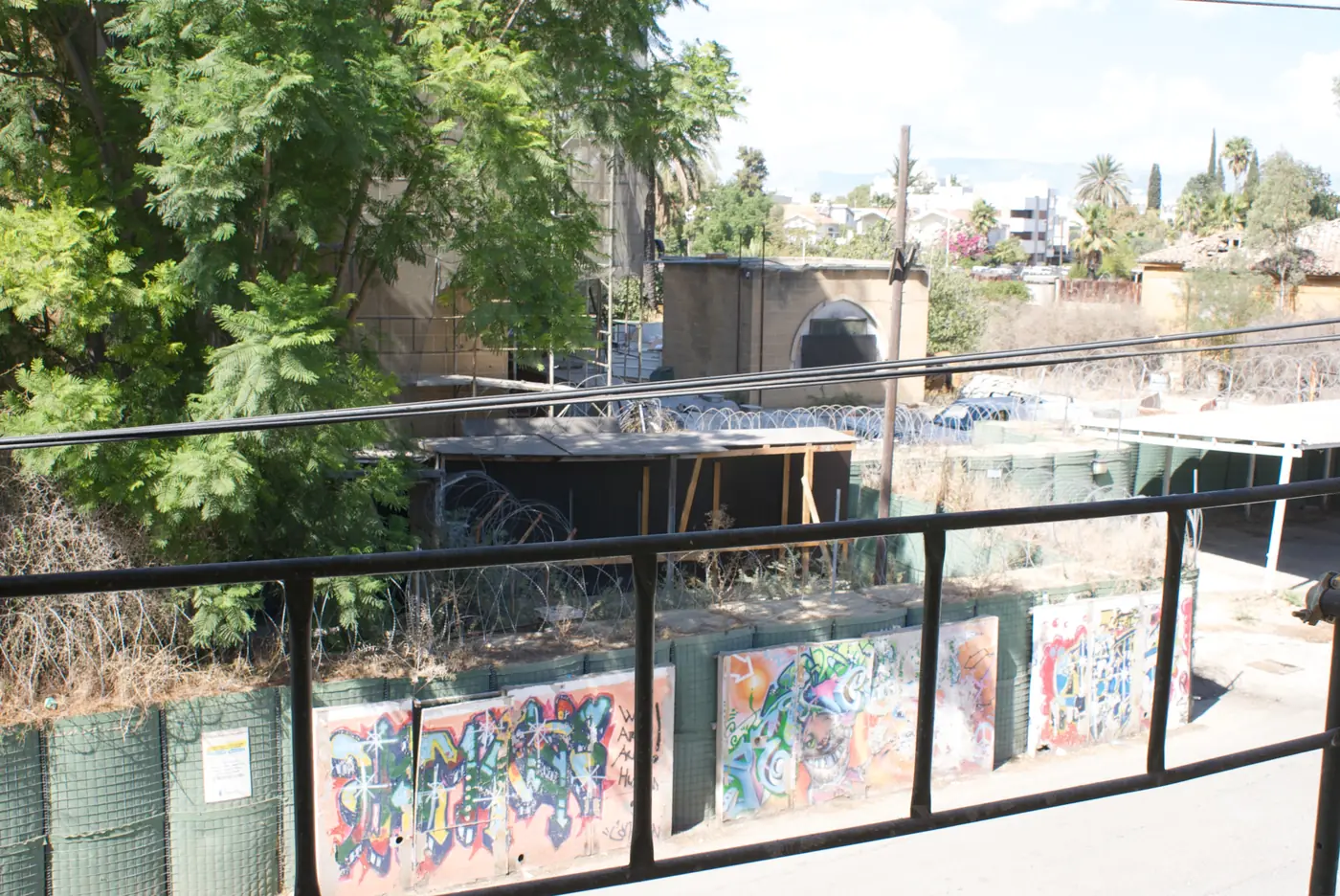
Cyprus made every other dispute between Greece and Turkey harder to solve. Turkey will not discuss the Aegean until Cyprus is settled. Greece will not discuss Cyprus until Turkey withdraws. The island turned a bilateral rivalry into a deadlock.
A sea full of arguments
The Aegean Sea sits between the two countries, and it contains most of their disputes.
Under the Treaty of Lausanne, Greece controls nearly all of the Aegean's roughly 2,000 islands and islets. Some of them sit less than four miles from the Turkish coast. If Greece exercised its right under international law to extend its territorial waters from 6 to 12 nautical miles around each island, Turkey would lose access to much of the open Aegean. In 1995, the Turkish parliament passed a resolution giving the government "all necessary powers," including military ones, to respond to any such extension. Greece treats the resolution as a threat of war.
The two countries also disagree over drilling rights beneath the seabed. Turkey has not signed the UN Convention on the Law of the Sea and rejects the legal framework Greece relies on. Greece took the dispute to the International Court of Justice in 1976, but the court ruled in 1978 that it had no jurisdiction. Since then, the two countries have not gone back to the court together, because they cannot agree on what questions it should answer.
Then there is the airspace. Greece claims a 10-mile air zone around its territory and islands. Turkey does not recognize it, and Turkish military jets fly through it routinely. On a single day in April 2022, Greek officials logged 126 Turkish violations of their airspace over the Aegean. Greek jets scramble to intercept. The two air forces have been playing this game for decades.
Why it never ends
In August 1999, a devastating earthquake hit the Turkish city of Izmit, killing more than 17,000 people. Greece was one of the first countries to send rescue teams. Three weeks later, an earthquake hit Athens, and Turkey returned the favor. The moment of solidarity became known as "earthquake diplomacy," and it led to real progress: new trade agreements, Greek support for Turkey's EU candidacy, and years of reduced tension.
It did not last. By the 2010s, the discovery of natural gas in the eastern Mediterranean had raised the stakes, and Turkey was pressing its maritime claims harder than ever. The relationship collapsed again: Turkey sent survey ships into disputed waters, Greek and Turkish warships shadowed each other, and France deployed an aircraft carrier to back Greece up.
The pattern repeated in February 2023, when another devastating earthquake hit Turkey and Greece again sent immediate aid. Within months the two leaders were meeting in Athens, signing a declaration on good neighborly relations, and talking about a new era. By late 2025, Turkish jets were back over the Aegean. In 2026, Greece logged violations month after month.
Greece and Turkey joined NATO on the same day: February 18, 1952. They trade billions of dollars a year. Millions of Turks vacation on Greek islands, and Greeks vacation on the Turkish coast. By every rational measure, they should have resolved their differences decades ago. But the rational measure keeps losing to geography that puts two thousand Greek islands within sight of the Turkish coast, to a history that neither side remembers the same way, and to the politics of two countries that defined themselves in opposition to each other from the start. The Aegean is about 250 miles wide. It has never been wide enough.
Test what you learned
5 questions on this article. About two minutes, no signup.
Orbis teaches the history behind the news
Orbis covers the fall of the Ottoman Empire and the Cold War rivalry that made Turkey a NATO member, lesson by lesson.