Why is Turkey in NATO?
Turkey controls Russia's only sea route to the Mediterranean. That is why it joined NATO in 1952, and why the alliance puts up with it today.
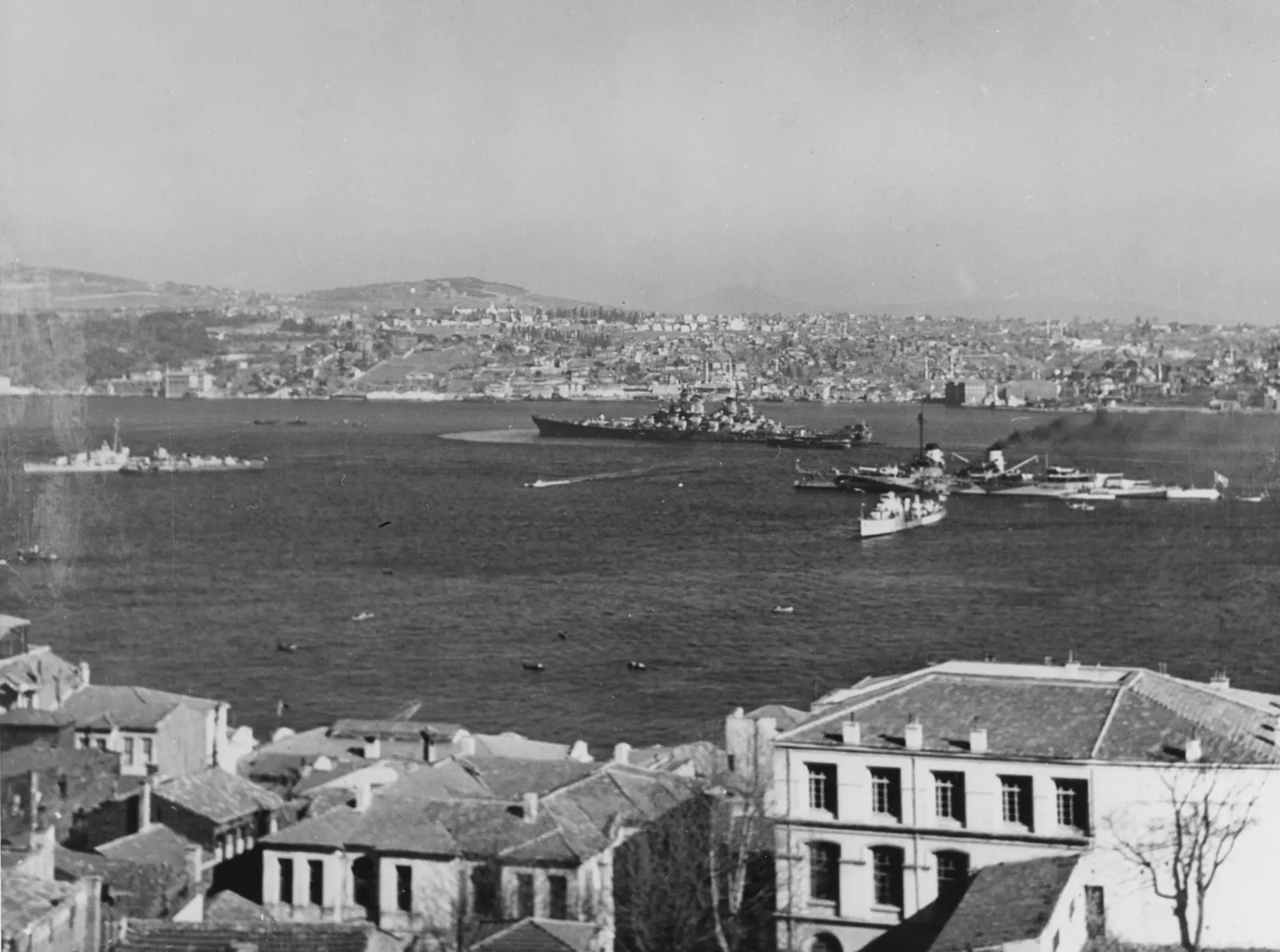
In April 1946, the United States sent the battleship Missouri to Istanbul. The official reason was to return the body of Münir Ertegün, Turkey's ambassador to Washington, who had died during the war. The real reason was that Joseph Stalin had just demanded control of the Turkish Straits, and the Truman administration wanted to show him what the answer looked like. Within six years, Turkey was a member of NATO. It has been the alliance's most strategically valuable and most difficult member ever since.
What Stalin wanted from Turkey
The Soviet Union and Turkey had been friendly for decades. Lenin and Atatürk signed a treaty of friendship in 1921, and the Soviet Union was one of the first countries to recognize the new Turkish republic. Stalin ended that.
In 1945, Moscow told Ankara it would not renew the friendship treaty. Then came the demands. The Soviet Union wanted a new arrangement for the Turkish Straits, the Bosphorus and the Dardanelles, that would give it a military base on the waterway and a say in who passed through. It also wanted Turkey to return two northeastern provinces, Kars and Ardahan, that Soviet Russia had ceded in 1921. Together, the demands would have put Soviet troops on the straits that connect the Black Sea to the Mediterranean and redrawn Turkey's eastern border.
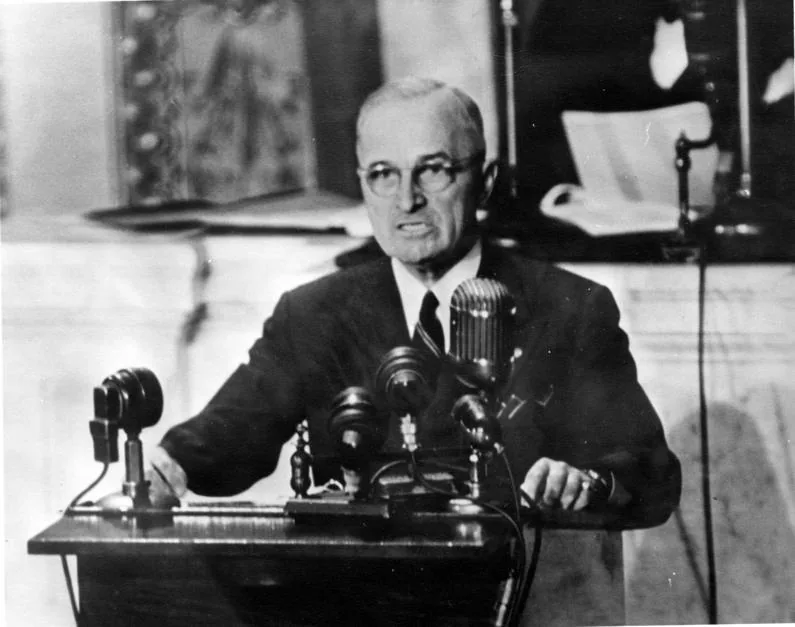
Turkey refused, but it could not hold the line alone. Britain, exhausted by the war, told Washington in February 1947 that it could no longer support Turkey or Greece. President Truman went to Congress on March 12 and asked for $400 million in aid to both countries, $100 million for Turkey and $300 million for Greece. The speech became known as the Truman Doctrine, and it was the moment the United States committed to stopping Soviet expansion wherever it appeared. Turkey was the first place that commitment was tested.
How Turkey fought its way into the alliance
When NATO was founded in April 1949, Turkey was not invited. The original twelve members were Western European countries, the United States, and Canada. Turkey applied, but the Western Europeans considered it a Middle Eastern country, and Washington was not ready to guarantee the defense of a state that bordered the Soviet Union directly.
The Korean War changed the math. When North Korea invaded the South in June 1950, Turkey was one of the first countries to offer troops. It sent a brigade of roughly 5,000 soldiers. At the Battle of Kunuri in November 1950, the Turkish brigade fought a rearguard action against Chinese forces that had surrounded retreating UN troops. The brigade lost about a fifth of its strength in a few days: roughly 218 killed, 455 wounded, and 94 missing. Over the full war, 721 Turkish soldiers were killed and more than 2,100 were wounded. 462 are buried at the UN Memorial Cemetery in Busan, South Korea.
Turkey had answered the question NATO needed answered: would it fight? On February 18, 1952, Turkey and Greece joined the alliance together.
Why Turkey's geography made it irreplaceable
Turkey's value to NATO was never mainly about its army. It was about the map. The Bosphorus and the Dardanelles are the only passage between the Black Sea and the Mediterranean. Every Russian warship leaving the Black Sea Fleet's base at Sevastopol has to pass through Turkish waters. During the Cold War, NATO's ability to bottle up the Soviet fleet depended entirely on Turkey.
The American military built on that geography. Incirlik Air Base, in southern Turkey, put American aircraft within range of the Soviet Union's southern border. In 1962, the United States stationed 15 Jupiter nuclear missiles at Çiğli Air Base near Izmir, close enough to hit targets deep inside Soviet territory.
Those missiles helped trigger the Cuban Missile Crisis. When the Soviet Union placed nuclear weapons in Cuba, Nikita Khrushchev pointed to the American missiles in Turkey as the mirror image. The crisis ended with a public deal, the Soviets withdrawing from Cuba, and a secret one: the United States quietly pulled its Jupiter missiles out of Turkey by April 1963. Turkey was not consulted on either deal. The lesson was painful. Being a NATO frontline state meant your own security could be traded away when the stakes got high enough.
Today, Incirlik still hosts an estimated 20 to 30 American B61 nuclear bombs under NATO's nuclear sharing arrangement. Turkey's active military, at roughly 355,000 troops, remains the alliance's second-largest after the United States.
The ally that keeps saying no
Turkey's value gives it leverage, and it uses that leverage in ways that infuriate its allies. The pattern started in 1974, when Turkey invaded northern Cyprus after a Greek-backed military coup tried to unite the island with Greece. Congress imposed an arms embargo on Turkey in February 1975. Turkey responded by restricting American access to its military bases. The embargo lasted three years and pushed Turkey to build its own defense industry from scratch, a decision still paying off decades later.
In March 2003, Turkey's parliament voted on whether to allow 62,000 American troops to use Turkish territory as a northern invasion route into Iraq. The motion fell three votes short. Polls at the time showed 94 percent of Turks opposed the war. The vote forced the United States to invade Iraq from one direction instead of two.
The most recent confrontations have been sharper. In 2019, Turkey took delivery of the Russian S-400 air defense system despite years of American warnings. Washington removed Turkey from the F-35 fighter program immediately and imposed sanctions in December 2020. Six F-35 jets Turkey had already paid for remain in the United States. Then, in 2022, Turkey blocked Sweden and Finland from joining NATO for over a year, citing their tolerance of Kurdish groups that Turkey considers terrorists. Finland was admitted in March 2023. Sweden had to wait until January 2024.
Why NATO still needs Turkey
Every few years, someone in Washington or Brussels argues that Turkey no longer belongs in the alliance. The argument never goes anywhere, because the geography that brought Turkey into NATO in 1952 has not changed.
Turkey still controls the only exit from the Black Sea. Since Russia's full-scale invasion of Ukraine in 2022, Turkey has used the Montreux Convention to restrict warship transits through the straits, limiting Russian naval reinforcements. It sold armed Bayraktar drones to Ukraine that became famous early in the war, while also maintaining enough of a relationship with Moscow to broker the 2022 grain corridor that kept Ukrainian wheat moving to world markets.
That balancing act, selling drones to Ukraine while buying air defense systems from Russia, is what makes Turkey both infuriating and irreplaceable. No other NATO member has working diplomatic relationships with both Moscow and Kyiv. No other NATO member has the geographic position to close the Black Sea. And no other NATO member has a military large enough to anchor the alliance's entire southeastern flank without American troops on the ground.
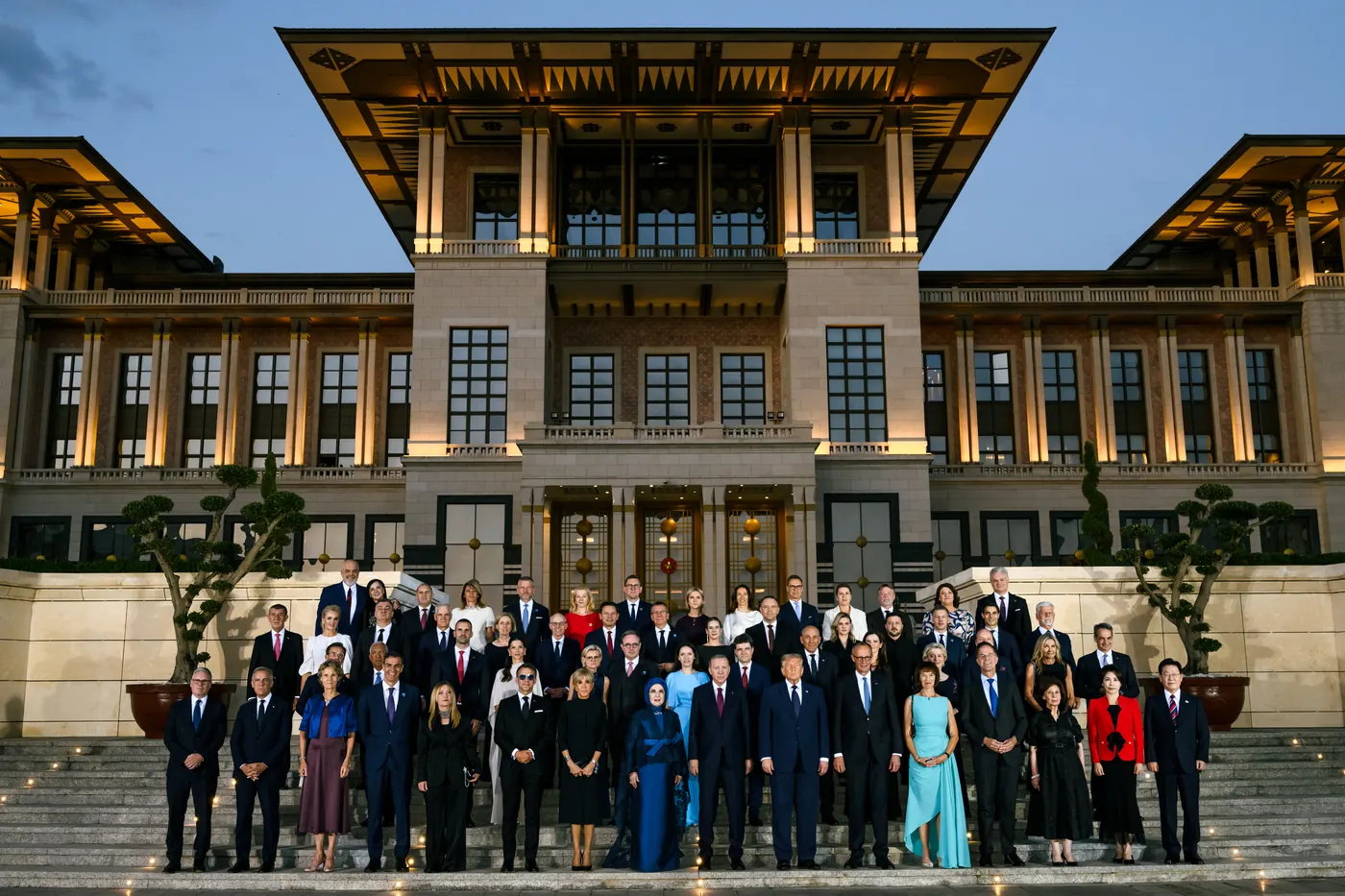
In June 2026, NATO held its summit in Ankara, the first time Turkey hosted the meeting. The choice of venue was itself the point. Turkey joined NATO because it needed protection from the Soviet Union. It remains because NATO needs what only Turkey's map provides. That tradeoff has kept Turkey inside the alliance for 74 years, and no amount of Russian missiles or blocked membership bids has changed it yet.
Test what you learned
5 questions on this article. About two minutes, no signup.
Orbis has a full course on this
The Cold War. 22 lessons, each ending with a quiz like this one.