Why did the Ottoman Empire fall?
The Ottoman Empire lasted six centuries. It fell because it could not fix its army, hold its borders, or modernize fast enough to survive World War I.
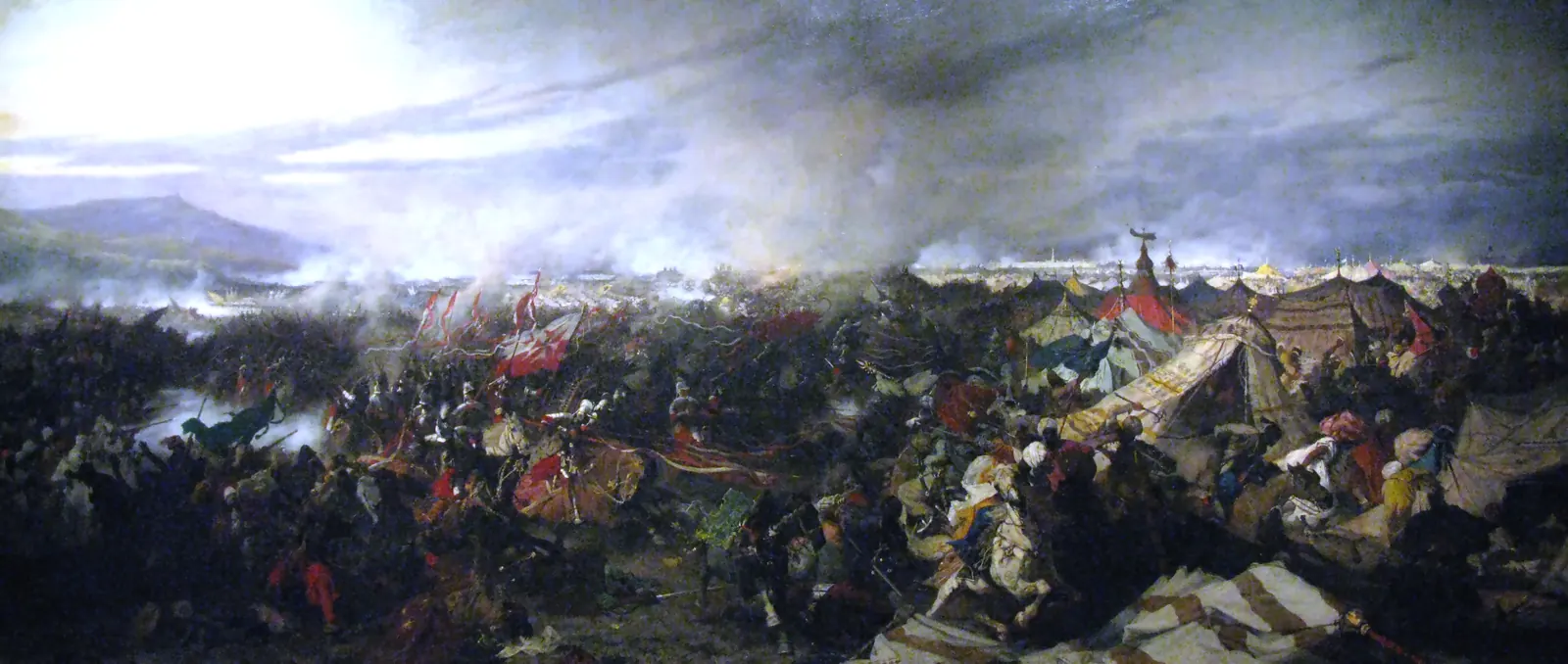
In 1683, an Ottoman army of roughly 150,000 men camped outside the walls of Vienna. Grand Vizier Kara Mustafa Pasha was certain the city would fall. On September 12, a Polish cavalry charge led by King Jan III Sobieski broke the Ottoman lines. The siege failed. It was the last time the Ottoman Empire seriously threatened the heart of Europe, and it marks the point where the empire's six-century arc turned downward.
It took 235 years to get from the walls of Vienna to the armistice that ended it all in 1918. But the causes run through the whole period: a military that fell behind and refused to reform, a wave of nationalism the empire had no answer for, modernization that came too late and was paid for with borrowed money, and a final, catastrophic gamble on World War I.
The army that could not change
The Janissaries were once the most feared infantry in Europe. Recruited as boys from Christian families in the Balkans, converted to Islam, and trained from childhood, they were among the first soldiers to use firearms in organized formations.
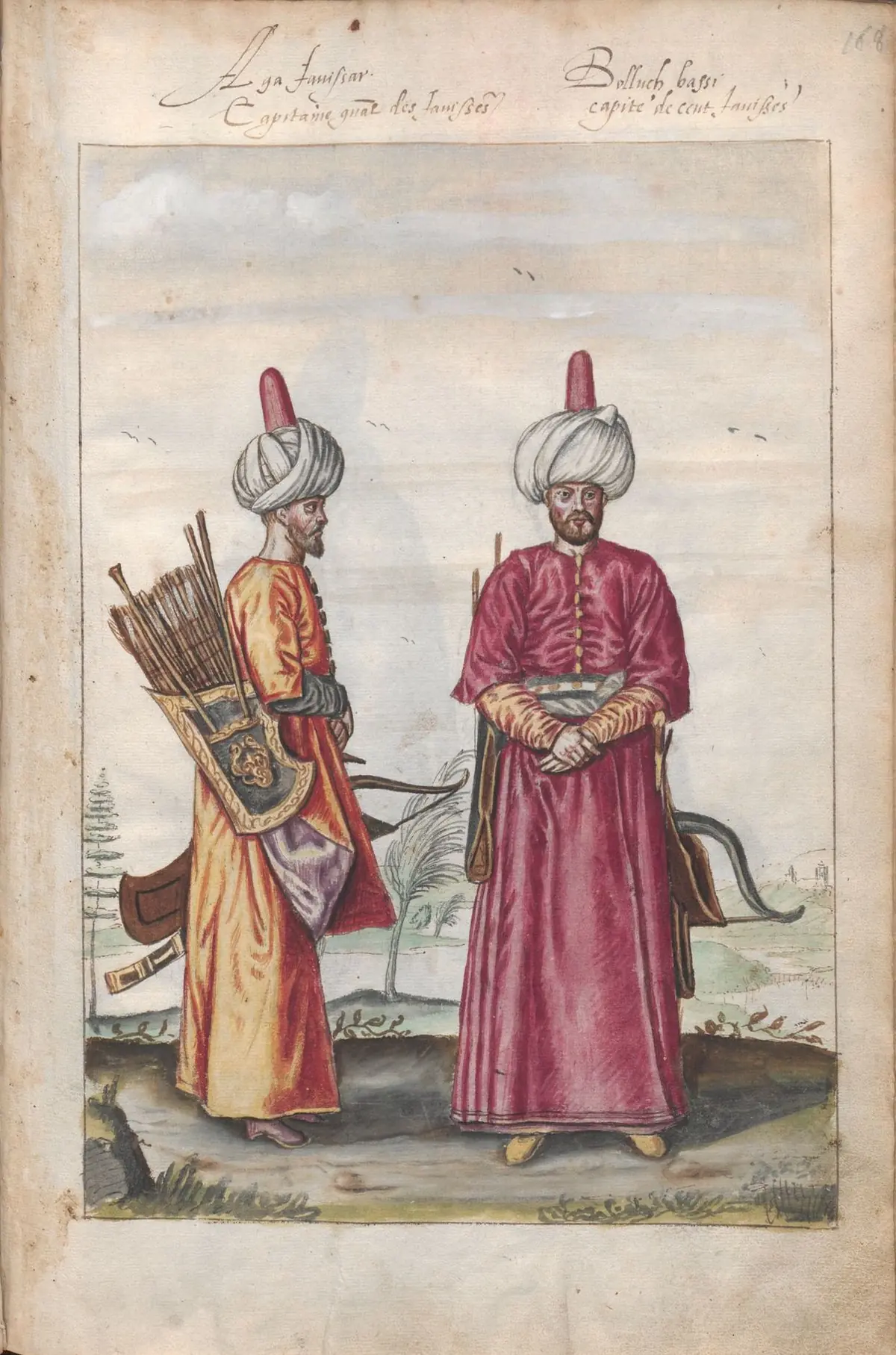
By the 1600s, they had become the problem. The Janissaries won the right to marry, pass their positions to their sons, and run businesses on the side. They became a political class, not a fighting force. When sultans tried to build new, European-style military units, the Janissaries revolted. They murdered Sultan Osman II in 1622 for trying to replace them. They murdered Sultan Selim III in 1808 for the same reason.
Meanwhile, Europe's armies were transforming. The military revolution of the 1600s and 1700s produced star-shaped fortifications that Ottoman siege tactics could not crack, professional supply chains, and linear infantry drilled to fire in coordinated volleys. At the Siege of Malta in 1565, a single fort held out for a month against an army that outnumbered its garrison roughly thirty to one. The gap only widened.
In 1826, Sultan Mahmud II finally destroyed the Janissaries in what the Ottomans called the "Auspicious Incident." He provoked them into revolt, then turned his artillery on their barracks. Thousands were killed and the corps was abolished. It was the right decision, two centuries too late.
Nationalism pulls the empire apart
The Ottoman millet system governed subjects by religious community, not by ethnicity or language. Greeks, Armenians, Jews, and Arabs each ran their own courts and schools. The system held for centuries, but it had no answer for the idea that swept Europe in the 1800s: that people who share a language and a culture should govern themselves.
Greece set the template. An uprising in 1821, Ottoman atrocities that horrified European opinion, great-power intervention, and independence by 1832. Serbia followed. Romania followed. At the Battle of Navarino in 1827, a combined British, French, and Russian fleet destroyed 60 of 89 Ottoman-Egyptian warships without losing a single ship. European powers would back Christian independence movements, and the empire could not stop them.
The worst came in the Balkan Wars of 1912 and 1913. In seven months, the empire lost roughly 83 percent of its remaining European territory. Salonica, the birthplace of the Young Turk movement, became Greek. A state that had besieged Vienna in 1683 now barely held a strip of land west of Istanbul.
Reforms that arrived on borrowed money
Ottoman leaders understood the problem. The Tanzimat reforms, launched in 1839, were the most ambitious modernization effort in the empire's history. Sultan Abdulmecid I was sixteen years old when he proclaimed equal legal treatment for all subjects regardless of religion.
The achievements were real. The empire built secular courts, a conscript army trained by Prussian officers, 1,700 kilometers of railway, and a telegraph network. But all of it cost money the empire did not have. The first foreign loan came in 1854, to pay for the Crimean War. By 1875, the debt had reached 200 million pounds, and debt service consumed more than half of government revenue. The empire defaulted. In 1881, European creditors created the Ottoman Public Debt Administration, which directly collected Ottoman tax revenue. The empire was modernizing, but its creditors owned the money that was supposed to pay for it.
The closest the empire came to political reinvention was the constitution of 1876. A reformist grand vizier pushed through an elected parliament. Delegates arrived from across the empire: Muslims and Christians, Turks and Arabs and Greeks. It lasted thirteen months. Sultan Abdulhamid II suspended it in February 1878, citing the Russo-Turkish War, and ruled as an autocrat for thirty years. He banned the word "constitution" from newspapers.
The Young Turks and the road to destruction
In 1889, a group of medical students in Istanbul founded the Committee of Union and Progress. By 1908, CUP officers in Macedonia forced Abdulhamid to restore the constitution. For a few weeks, the streets of Istanbul saw something unprecedented: Turks and Armenians embraced, Greeks and Jews marched alongside Muslims.
It did not last. The Balkan Wars shattered what remained of Ottomanism. The Committee's leaders concluded that a multi-ethnic empire was finished and shifted toward Turkish nationalism. On January 23, 1913, a 31-year-old officer named Enver led an armed raid on the Sublime Porte, the seat of Ottoman government. The war minister was shot dead at his desk. Enver was now effectively in charge. He was certain that an alliance with Germany would restore the empire's strength.
On August 2, 1914, the empire signed a secret alliance with Germany. That same day, Britain requisitioned two battleships the Ottomans had ordered from British shipyards, paid for in part by public donations. The seizure infuriated the public and played into Enver's hand. On October 29, he ordered German warships flying Ottoman flags to bombard Russian ports on the Black Sea. Russia declared war. Britain and France followed. The empire had entered World War I, and most of its own cabinet had not agreed to it.
A gamble that killed an empire
The war destroyed the Ottoman Empire faster than two centuries of decline had managed. Enver personally commanded an offensive against Russia in the Caucasus in the winter of 1914. Roughly 90,000 soldiers marched into the mountains in summer uniforms, with no winter equipment. An estimated 25,000 froze before the fighting started. Only about 18,000 came back. Enver blamed Armenian treachery for the disaster, a lie that helped justify the genocide that followed in 1915, in which an estimated 1 to 1.5 million Armenians were killed.
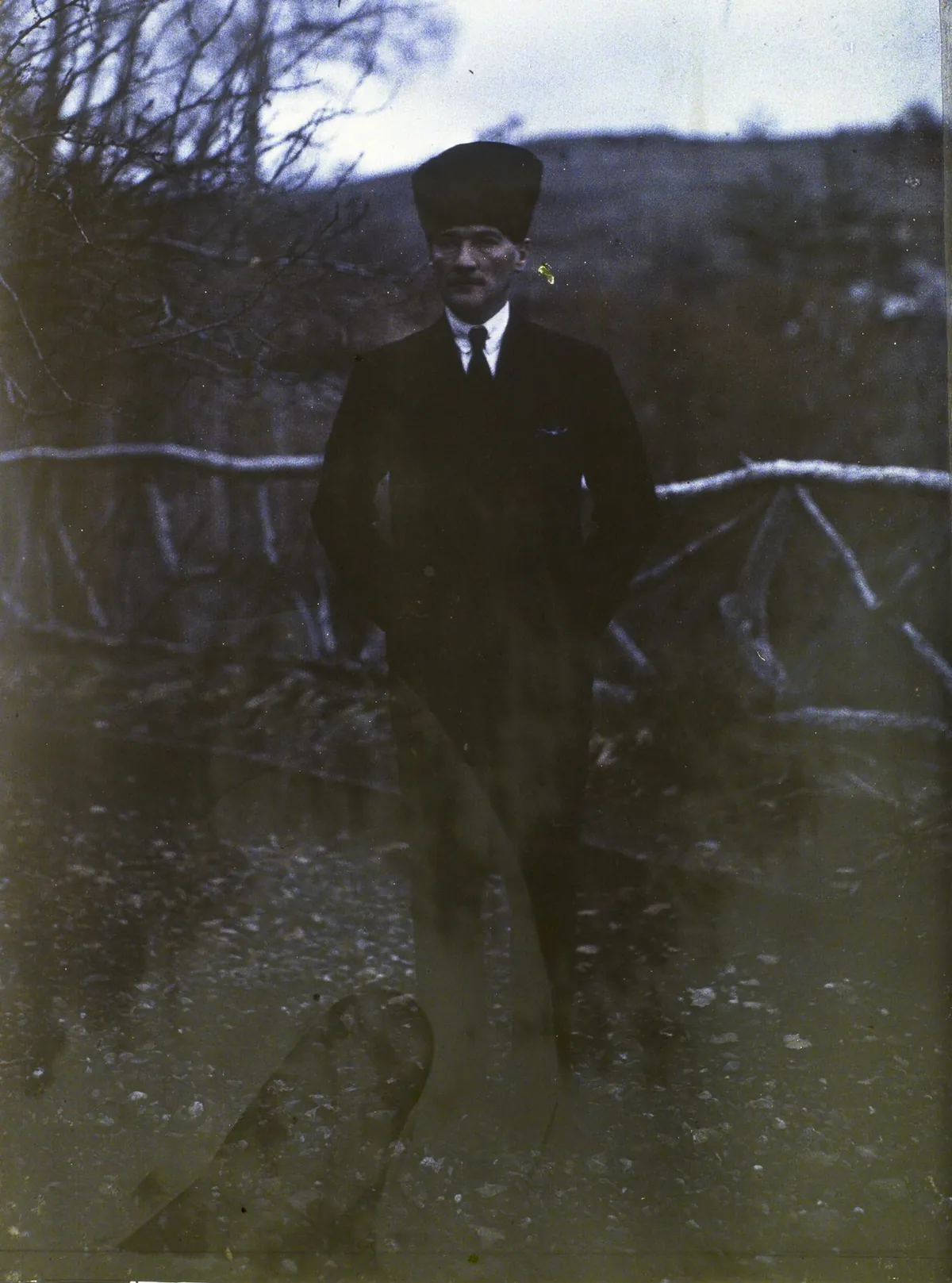
One front produced the empire's greatest military moment and the man who would replace it. At Gallipoli in 1915, Colonel Mustafa Kemal held the ridgeline against a British and ANZAC invasion force for eight months. A piece of shrapnel hit him in the chest; a pocket watch in his breast pocket stopped it. The 57th Regiment, which he commanded during the critical hours, took near-total casualties. The Turkish Army has never reused the number. Gallipoli saved Istanbul, but it could not save the empire. By 1918, British forces had taken Palestine, Syria, and Mesopotamia. On October 30, 1918, the Ottoman government signed the Armistice of Mudros. An empire that had lasted more than six centuries was finished.
What replaced six centuries
The Allies imposed the Treaty of Sèvres in 1920, which would have reduced Turkey to a rump state in central Anatolia. Mustafa Kemal rejected it. He fought a three-year war of independence, drove Greek forces out of Anatolia, and in 1923 negotiated the Treaty of Lausanne, which recognized the borders of a new, secular Turkish republic. In 1922, the sultanate was abolished. The last sultan left Istanbul on a British warship. In 1924, the caliphate followed. An institution that had governed three continents for six centuries was replaced by a nation-state built on a single identity.
The pattern is clear. The empire's military fell behind Europe and its own soldiers blocked every attempt to catch up. Nationalism offered subject peoples a more powerful idea than the millet system could contain. Reforms arrived late and were financed by debt that gave European creditors control over Ottoman revenue. And when the Young Turks bet the empire on World War I, they lost it all in four years. The borders that replaced it, drawn by Britain and France in a secret wartime deal, created the modern Middle East and the conflicts that still run through it. Turkey is the only successor state that emerged on its own terms. In 2026, Erdogan's government still invokes the Ottoman past to justify its reach into Syria, Libya, and the eastern Mediterranean. Six centuries of empire do not fade from the political imagination in a single century of absence.
Test what you learned
5 questions on this article. About two minutes, no signup.
Orbis has a full course on this
The Ottoman Empire. 32 lessons, each ending with a quiz like this one.